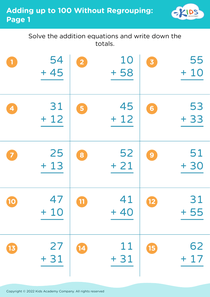
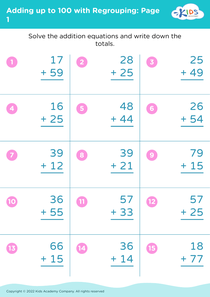
Reading comprehension Grade 2 Adding up to 100 Misc Worksheets
3 filtered results
-
From - To
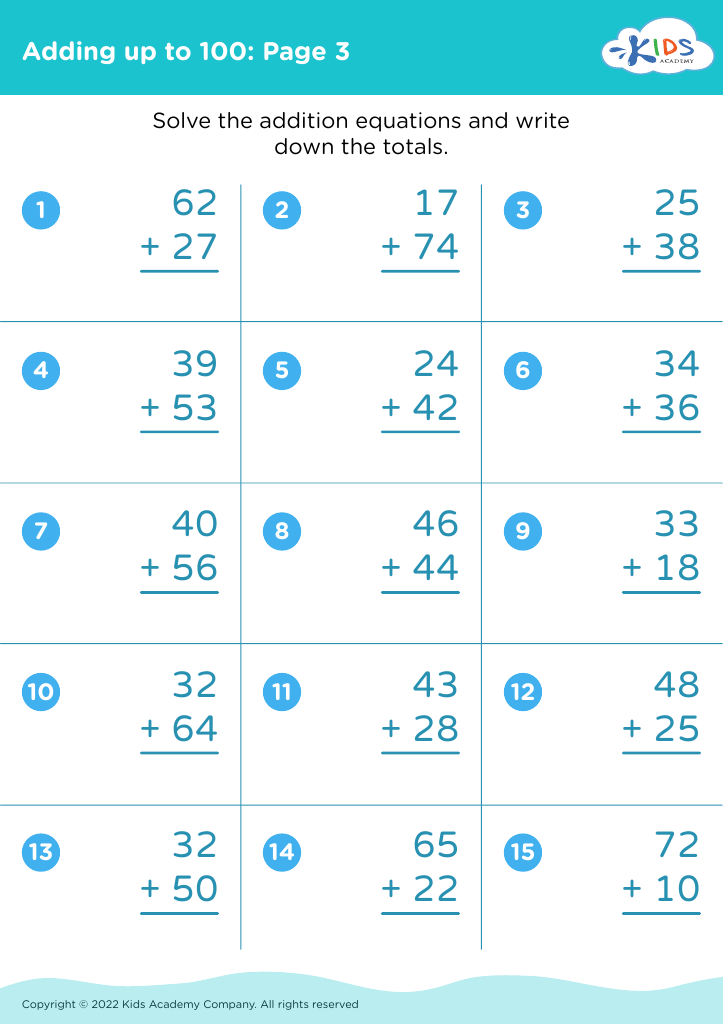
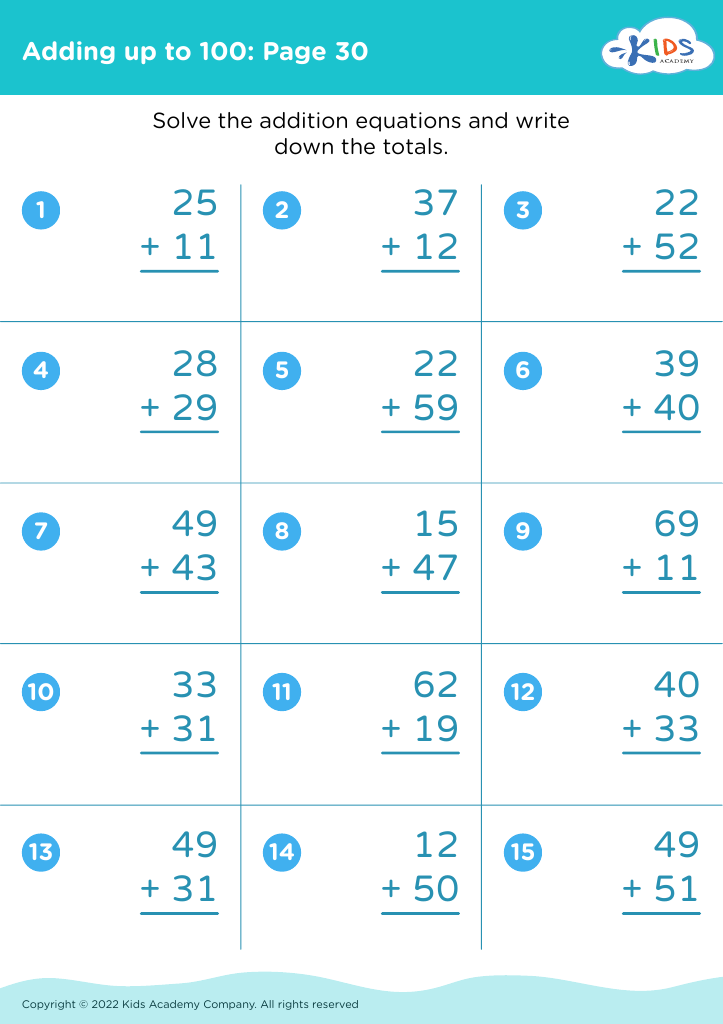
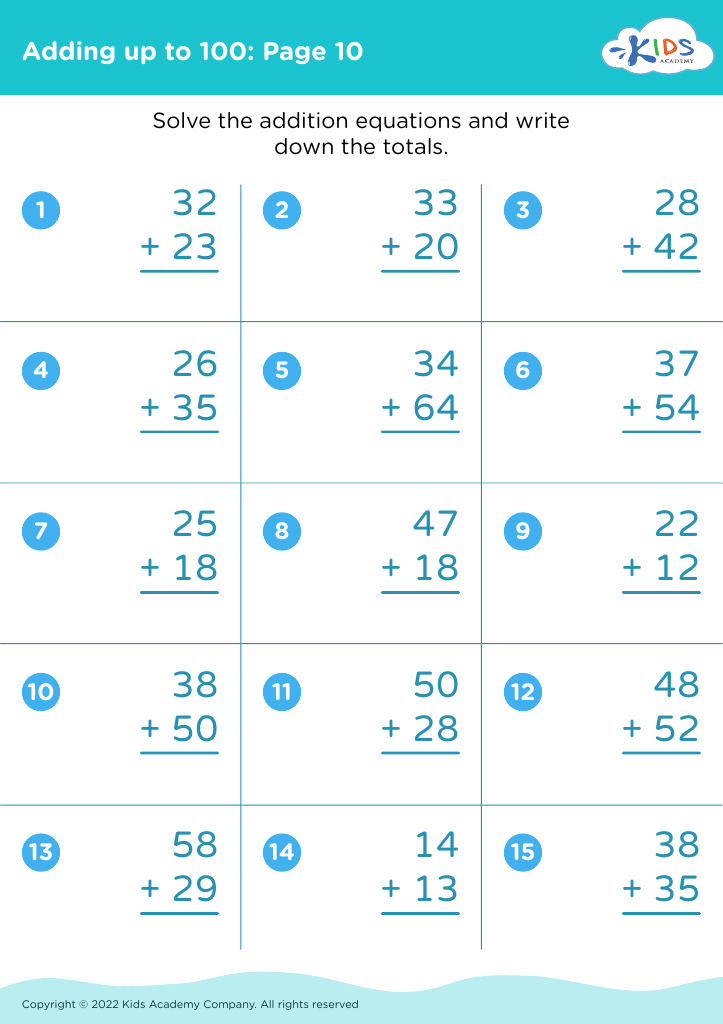
Enhance your second grader's reading comprehension skills with our "Adding Up to 100" miscellaneous worksheets. Designed to align with educational standards, these engaging activities combine math and literacy, helping students practice addition while developing their understanding of key reading concepts. Each worksheet features interactive problems that encourage critical thinking, all tailored for Grade 2 learners. Perfect for classroom settings or at-home practice, these resources foster a love for learning and boost confidence in both reading and math. Download these fun, curriculum-based worksheets and watch your child excel as they explore the world of numbers and stories simultaneously!


Reading comprehension is a critical skill that forms the foundation for a child's academic success, particularly in Grade 2. At this stage, children are transitioning from learning to read to reading to learn. Strong reading comprehension skills enable them to understand and interpret information, navigate various subjects, and think critically.
Parents and teachers should pay close attention to reading comprehension because it directly impacts students' overall learning experience. When children struggle to comprehend what they read, their ability to engage with challenging material diminishes, which can lead to frustration and a lack of confidence. This, in turn, can affect their motivation to read and explore new ideas.
Furthermore, literacy is essential in all academic subjects. For example, proficient reading skills allow students to tackle math word problems, follow scientific instructions, and understand historical contexts, reinforcing the interdisciplinary nature of education. Equipping Grade 2 students with solid reading comprehension skills helps them develop vital life skills such as critical thinking and problem-solving.
Ultimately, parents and teachers play a crucial role in fostering a love for reading and ensuring that students have the necessary tools to succeed academically. Nurturing these skills at a young age paves the way for lifelong learning and achievement.