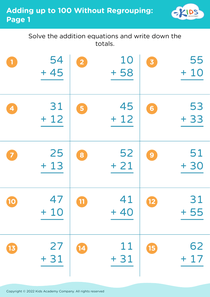
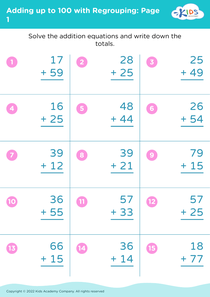
Recognizing Patterns Grade 2 Adding up to 100 Misc Worksheets
3 filtered results
-
From - To
Unlock your child's math potential with our "Recognizing Patterns Grade 2 Adding up to 100 Miscellaneous Worksheets"! Designed for second graders, these engaging worksheets focus on identifying and understanding patterns while practicing addition up to 100. Fun and interactive, each activity helps solidify essential math skills, boosting both confidence and proficiency. Students explore various patterns in numbers, enhancing their problem-solving abilities and fostering a deeper understanding of mathematical relationships. Perfect for classroom use or homework, these printables make learning enjoyable and effective. Equip your child with the tools they need to excel in math through pattern recognition and addition practice!
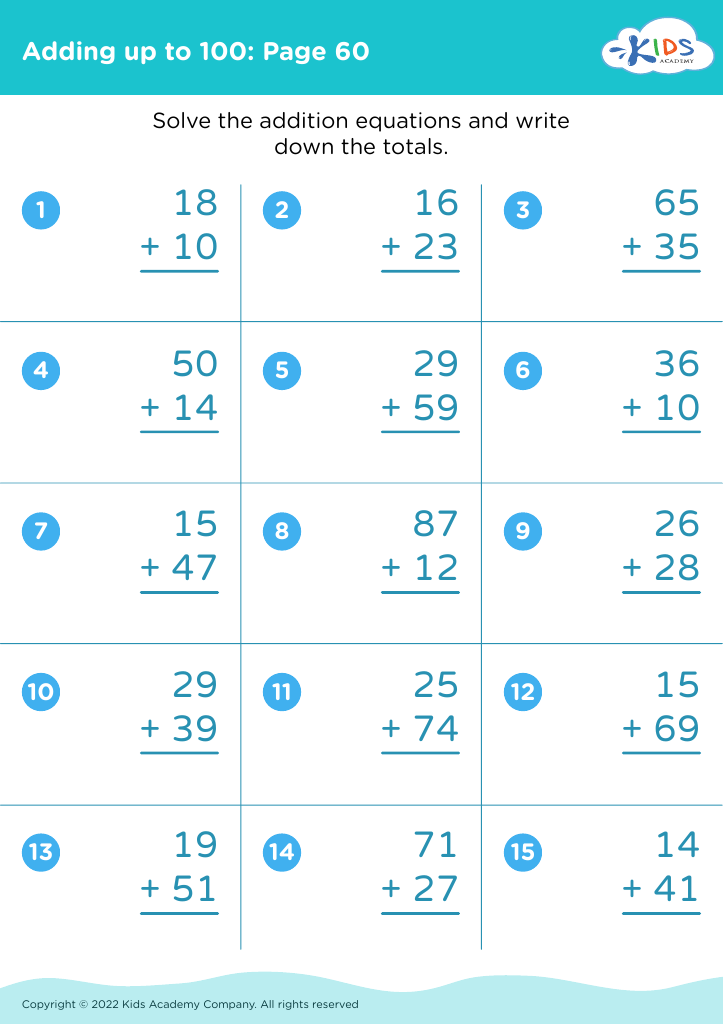
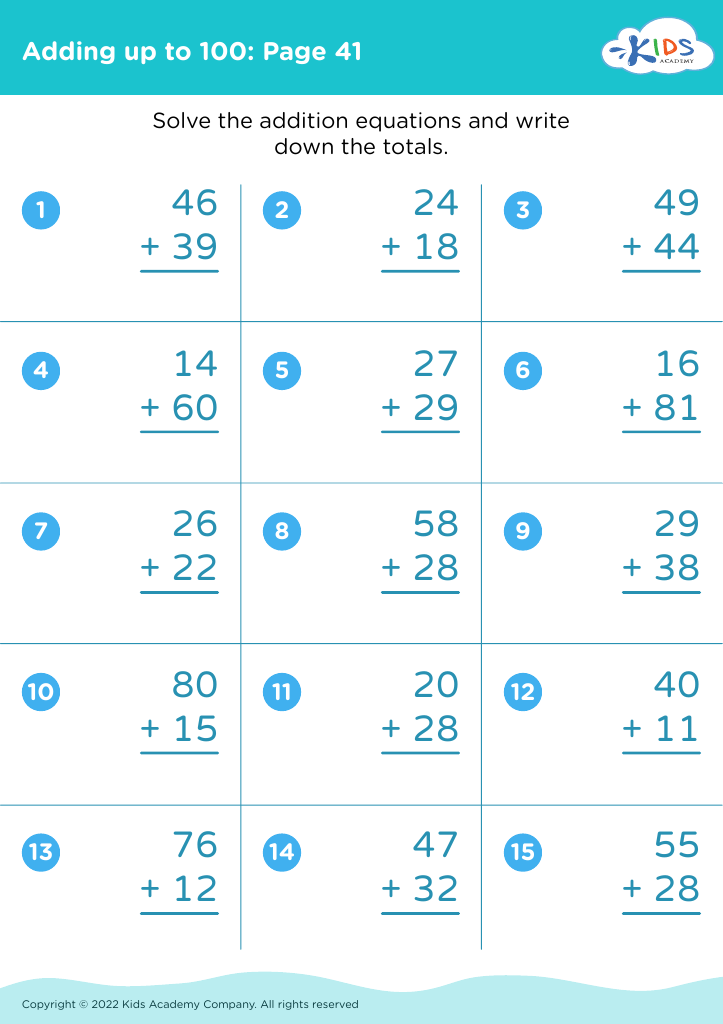
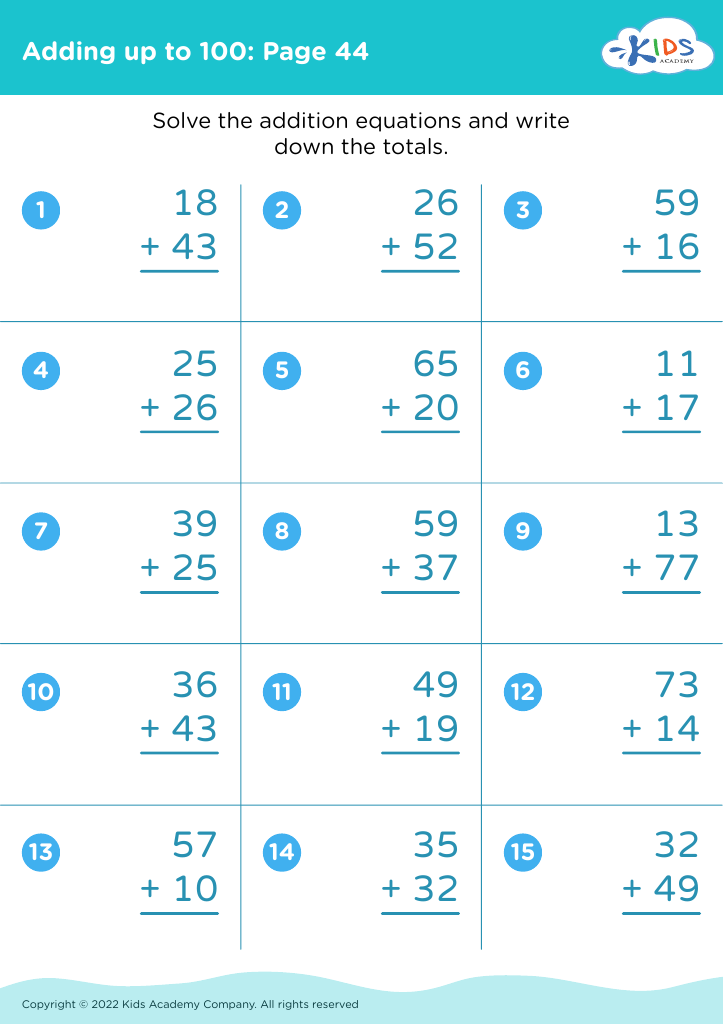


Recognizing patterns, especially in mathematics, is a crucial skill for Grade 2 students as it lays the foundation for more complex problem-solving abilities later on. When students learn to identify patterns, such as those involved in adding numbers to reach 100, they develop critical thinking skills and a deeper understanding of numerical relationships. This proficiency not only helps students perform addition tasks more efficiently but also fosters their instinct to look for solutions in varied contexts, enhancing their overall mathematical fluency.
Moreover, teachers and parents should appreciate the often-hidden learning opportunities that arise from mastering patterns. These encounters build students' confidence and can lead to increased engagement in their studies. They also improve memory retention as children become adept at recalling strategies related to addition.
Involving children in activities that promote recognizing patterns—whether through games, puzzles, or real-world applications—creates a supportive learning environment. Such engagement not only boosts academic performance in mathematics but also encourages a love for learning, preparing them for future challenges. Ultimately, by valuing the importance of recognizing patterns in Grade 2, educators and parents contribute to children's holistic development and success in academics and beyond.