Recognizing shapes Grade 2 Adding up to 100 Misc Worksheets
4 filtered results
-
From - To
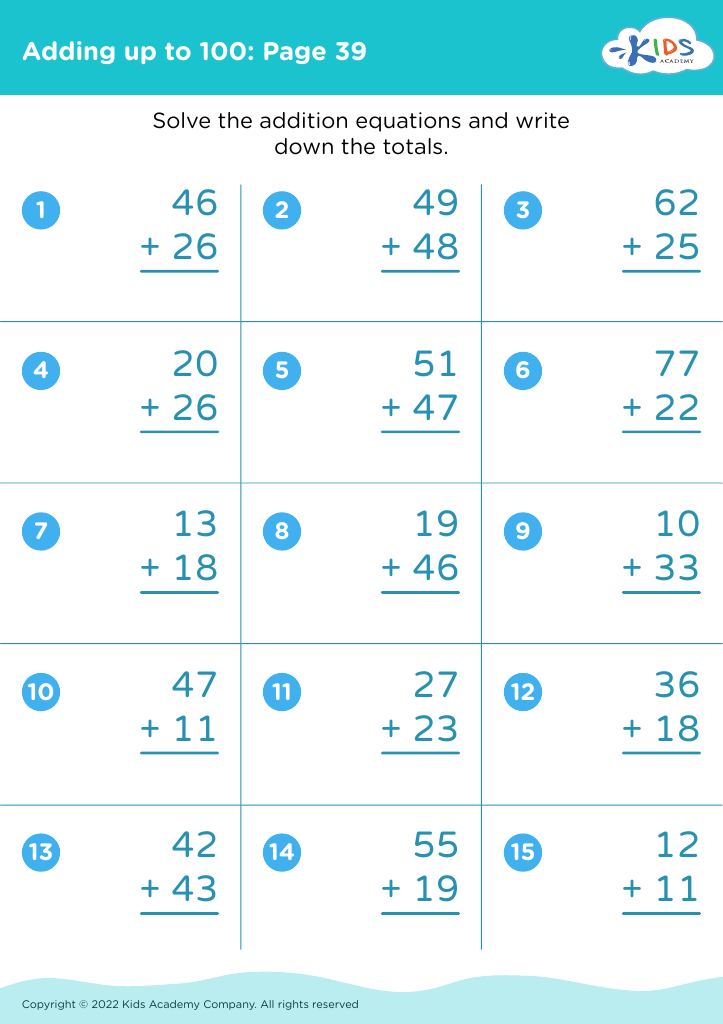
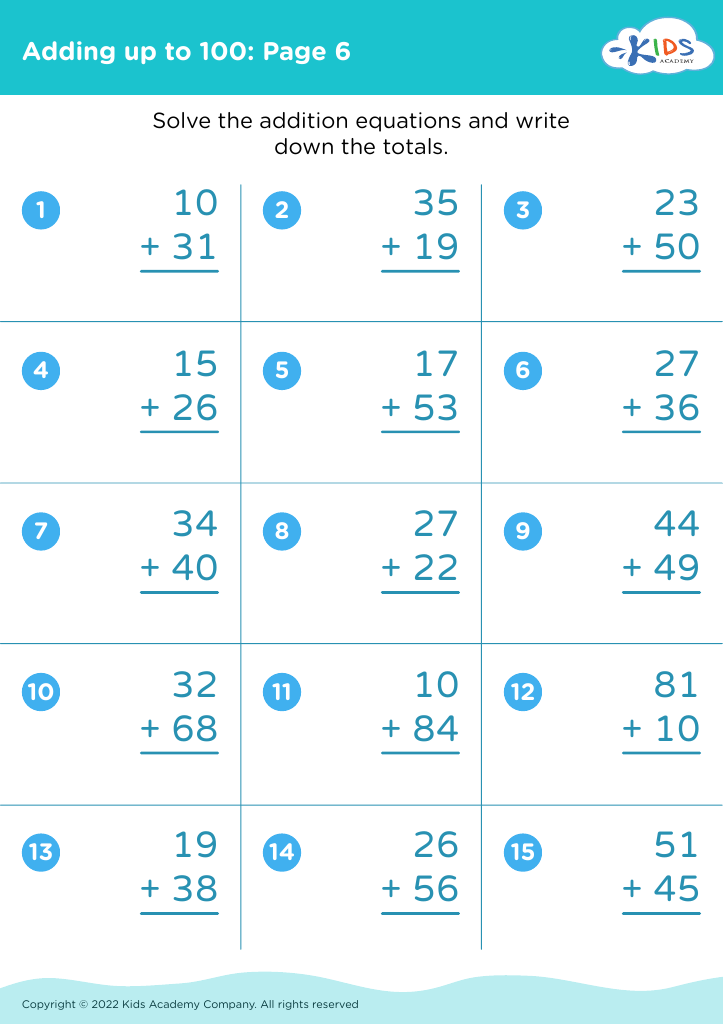
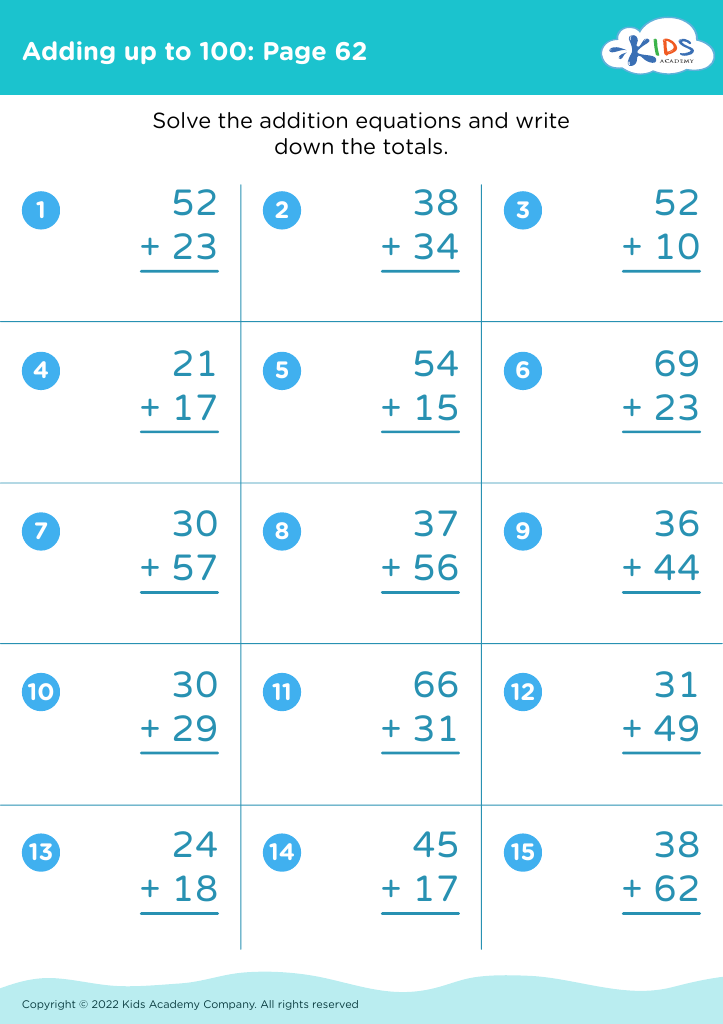
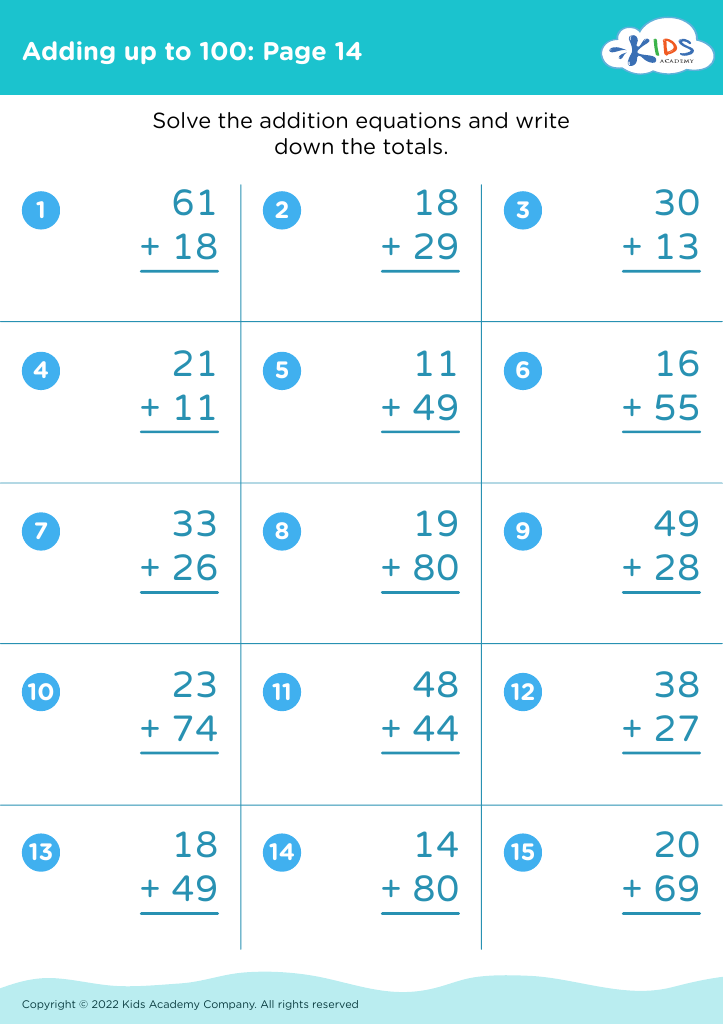
Enhance your second grader's math skills with our "Recognizing Shapes" worksheets, perfectly designed to supplement adding up to 100 exercises. These engaging and visually appealing printable worksheets help students identify geometric shapes while practicing their addition skills. Incorporating fun illustrations, these activities ensure that learning remains enjoyable and interactive. Each worksheet encourages students to recognize shapes within math problems, reinforcing their understanding of both geometry and basic arithmetic. Ideal for classroom or home use, these resources are perfect for reinforcing essential skills in a comprehensive manner. Download our worksheets today and watch your child gain confidence in both math and geometry!


Recognizing shapes and understanding numbers are fundamental skills that shape a child’s cognitive development. For parents and teachers of Grade 2 students, focusing on recognizing shapes and mastering addition to 100 is crucial for several reasons.
Firstly, recognizing shapes helps children develop spatial awareness and understanding of their environment. It aids in visual learning and problem-solving skills, essential for subjects like math and art. When children can identify shapes, they begin to understand more complex concepts such as symmetry, patterns, and geometric properties, laying the groundwork for future mathematical learning.
Secondly, mastering addition up to 100 is a critical step in building strong foundational math skills. It encourages fluency in basic arithmetic, which is essential for more advanced calculations later on. Additionally, being able to add quickly and accurately builds confidence and enthusiasm for math, enhancing a child's overall academic performance.
Integrating these two skills encourages holistic development, promoting both creativity and analytical thinking. In summary, recognition of shapes coupled with adding up to 100 prepare students not just for standardized tests, but for real-world problem solving and logical reasoning, fostering a love for learning that can last a lifetime. It's essential for parents and teachers to cultivate these skills in young learners.