Understand fractions Grade 2 Adding up to 100 Misc Worksheets
3 filtered results
-
From - To
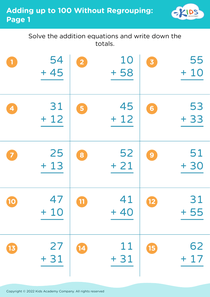
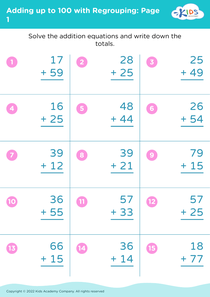
Boost your second grader's math skills with our “Understand Fractions Grade 2 Adding up to 100 Misc Worksheets.” Specially designed for young learners, these comprehensive worksheets make learning fractions fun and engaging. With exercises tailored to reinforce key concepts, students will gain the confidence needed to tackle fractions with ease. These resources combine colorful illustrations, practical activities, and step-by-step instructions to help children understand how to add fractions up to 100. Perfect for classroom or home practice, these worksheets provide an interactive and effective way for second graders to master fractions and improve their math proficiency. Download now and watch their skills grow!
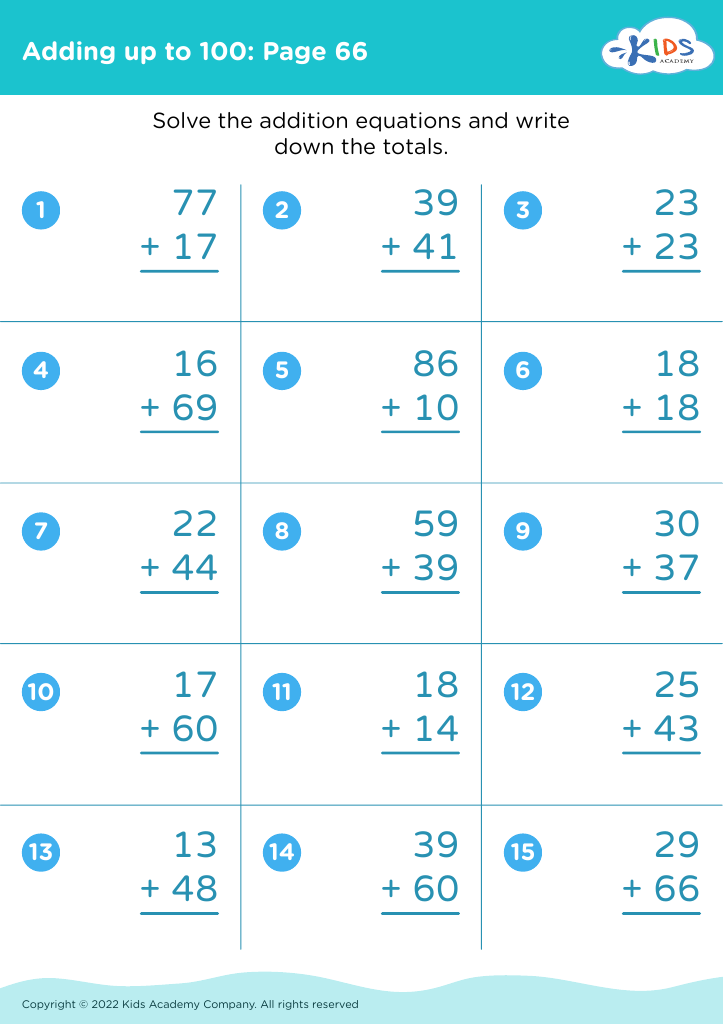
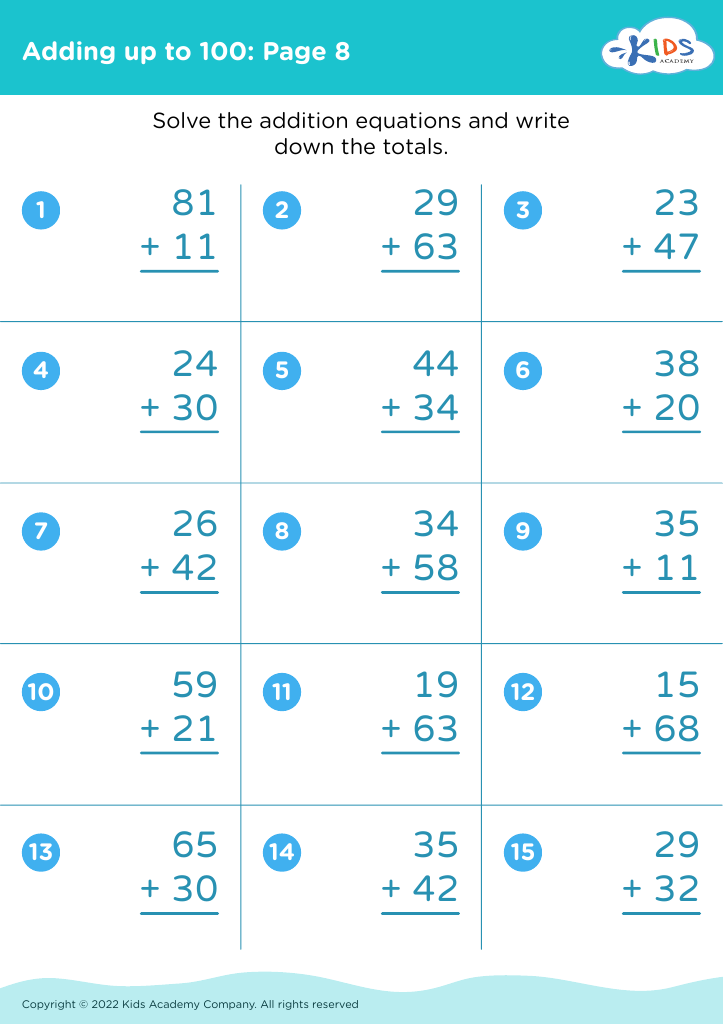


Understanding fractions and the ability to add numbers up to 100 are foundational math skills that play a critical role in a child’s overall mathematical development. When parents and teachers emphasize these areas in Grade 2, they set the stage for future success in more complex mathematical concepts.
Fractions introduce children to the idea that numbers can represent parts of a whole, which is a vital concept for subsequent math topics—like decimals, percentages, and ratios—as well as real-world applications, such as measuring ingredients in a recipe or dividing a pizza. Developing a solid understanding of fractions at an early age helps students build strong number sense, spatial reasoning, and problem-solving skills.
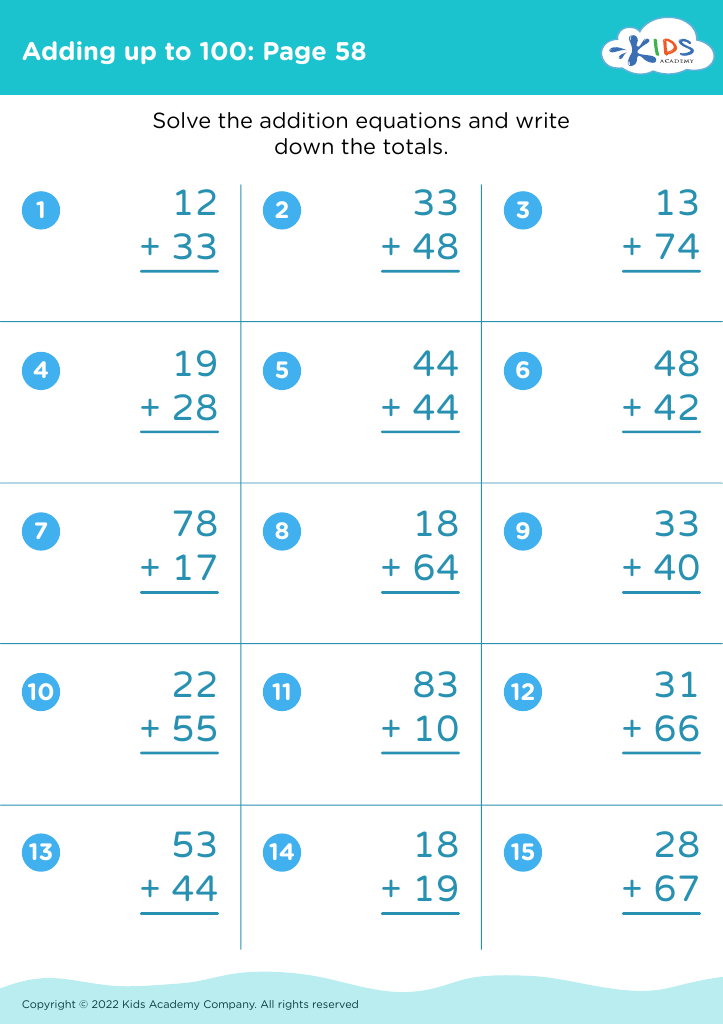
Similarly, adding numbers up to 100 builds essential arithmetic capabilities. Mastery of these basic addition skills enhances children's confidence in handling larger numbers and prepares them for multi-digit addition and subtraction, an important competency in daily life and future academic pursuits. Both areas incorporate various cognitive processes that improve memory, logical reasoning, and analytical thinking.
By prioritizing these skills, parents and teachers ensure that students gain the necessary numerical literacy to excel academically. Encouraging children to practice these concepts not only aids in their immediate educational success but also lays a crucial groundwork for more advanced studies in mathematics and science.