Understanding fractions Grade 2 Adding up to 100 Misc Worksheets
16 filtered results
-
From - To
Welcome to our “Understanding Fractions for Grade 2” section! This resource is specially designed to help young learners grasp the concept of fractions while engaging in addition problems that total up to 100. Our variety of worksheets includes colorful illustrations and interactive exercises that make learning fun and effective. Students will explore partitioning numbers, recognizing fractions, and how they fit into the world of whole numbers. Whether in the classroom or at home, these worksheets provide excellent practice for developing essential math skills while building confidence in understanding fractions. Start your child's math journey today with our comprehensive materials!
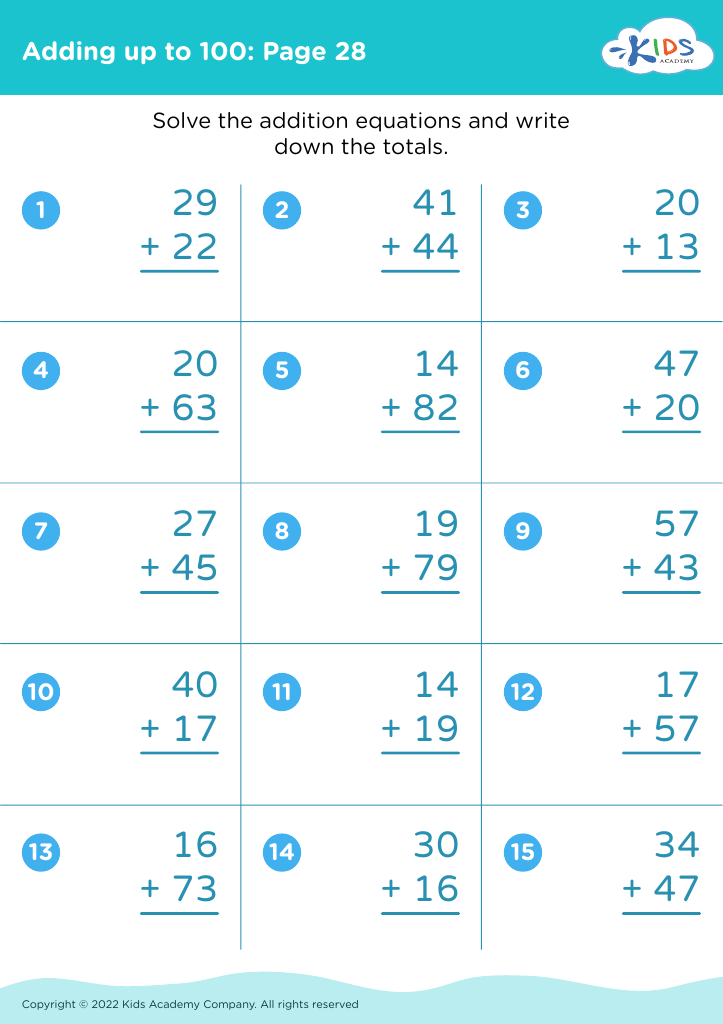
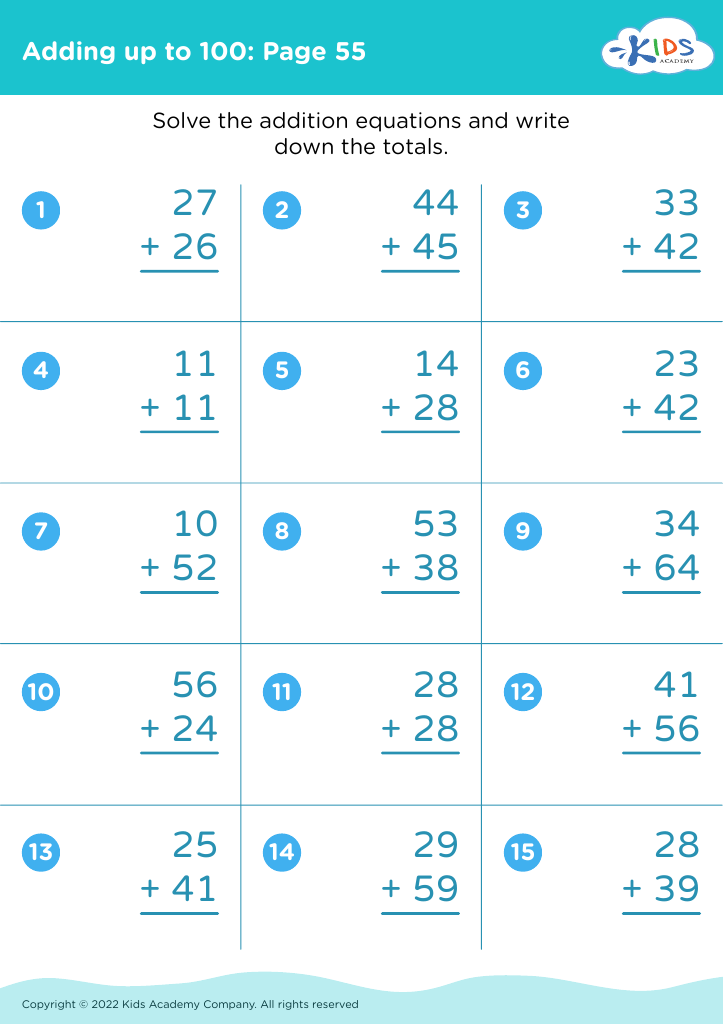
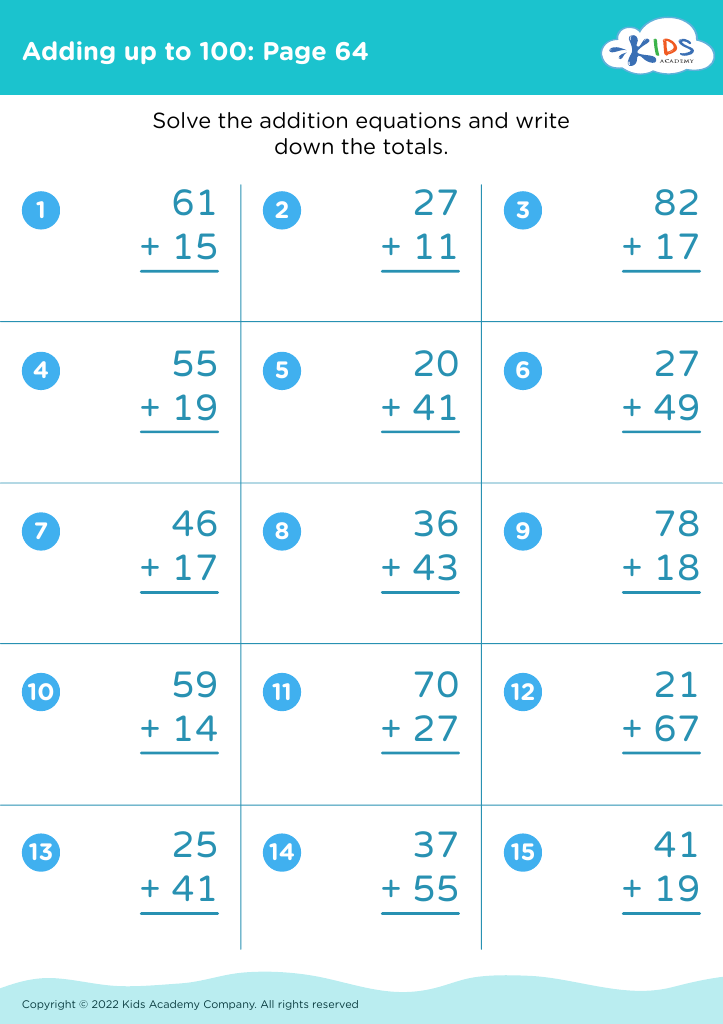
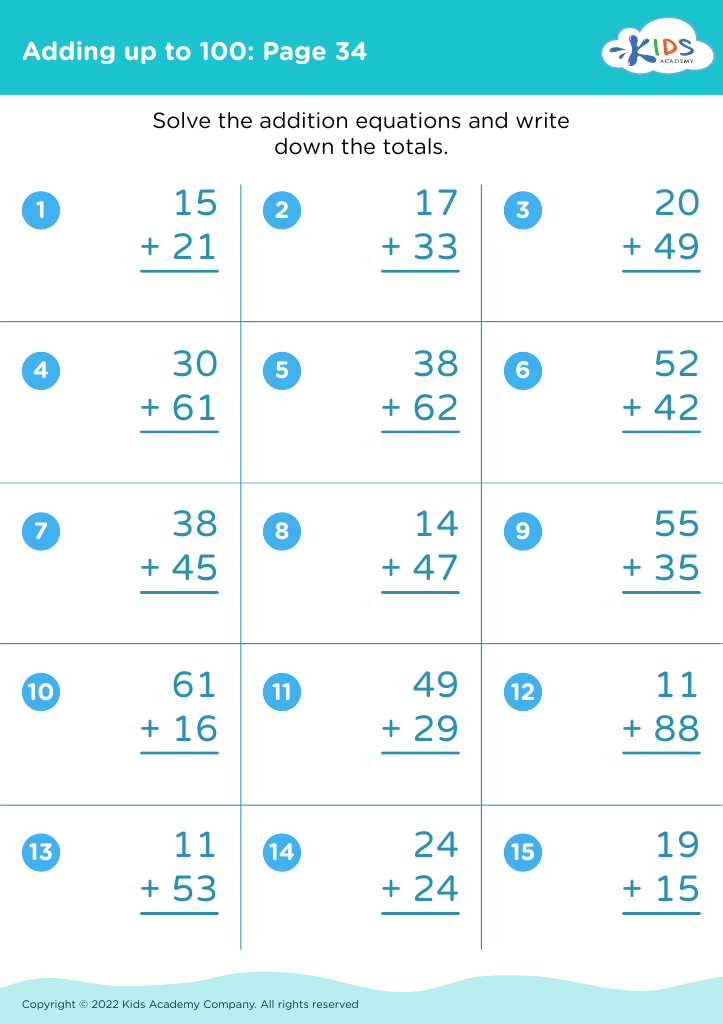
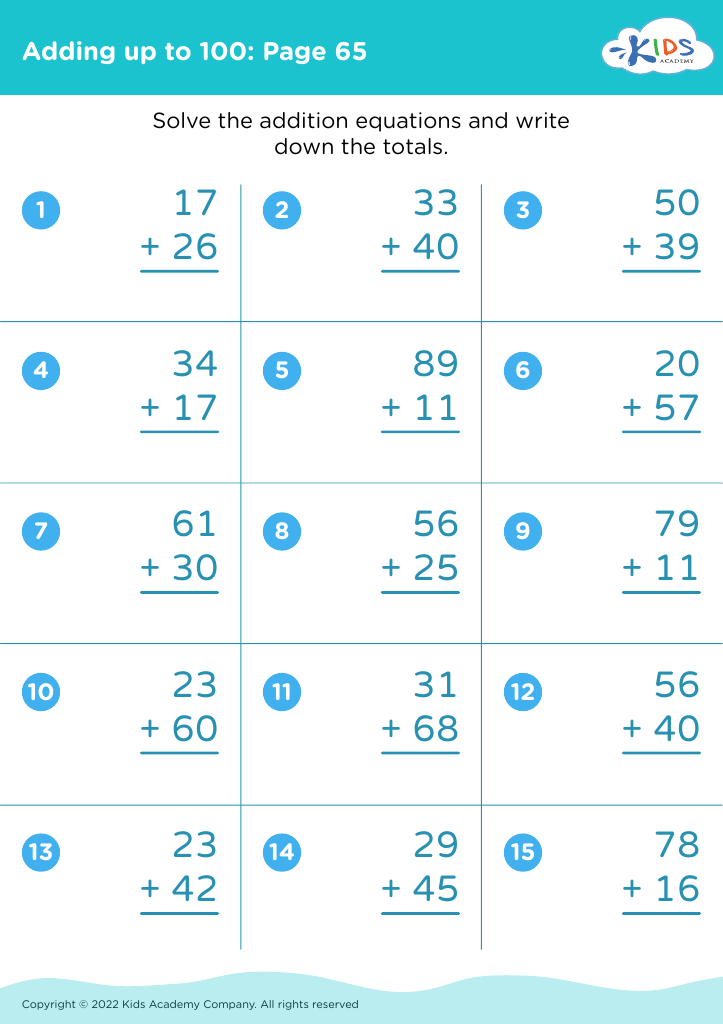
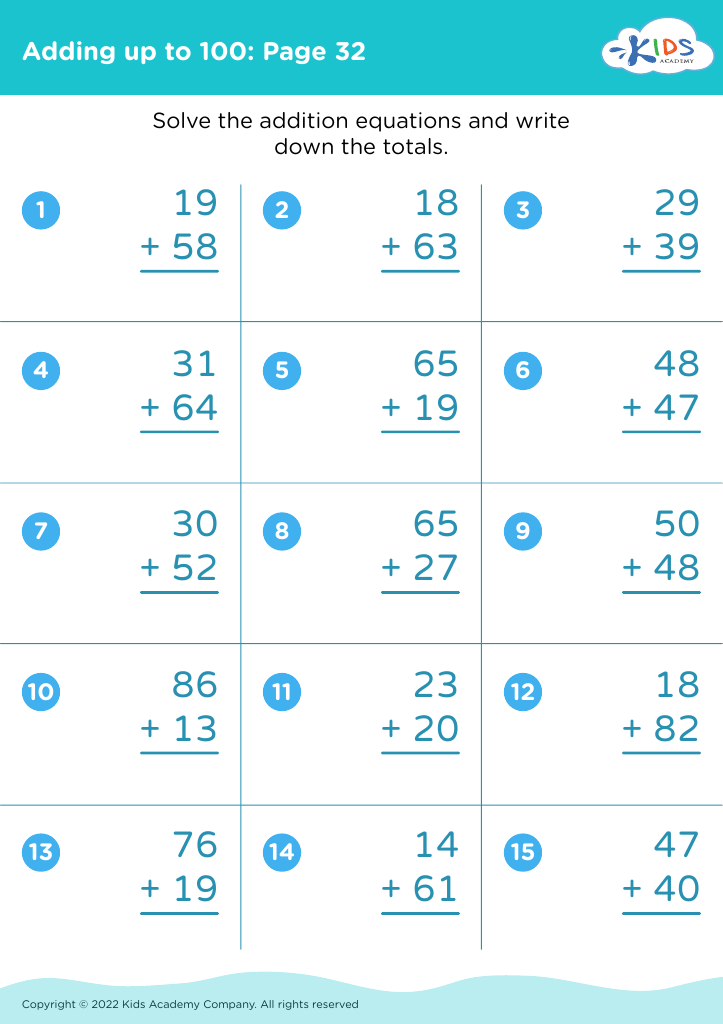
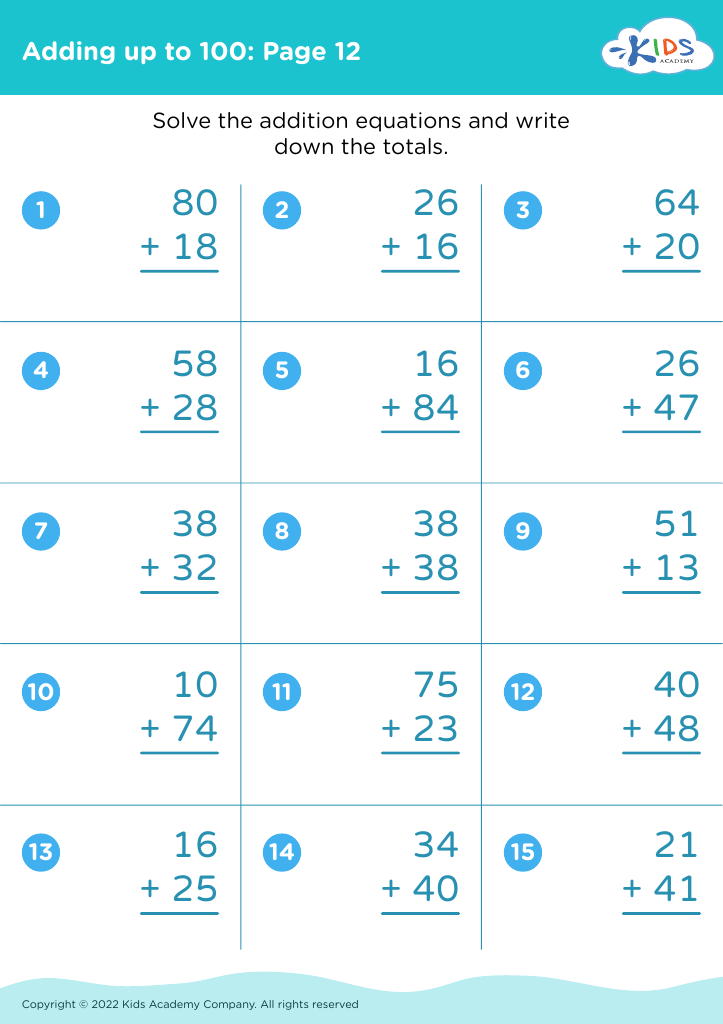
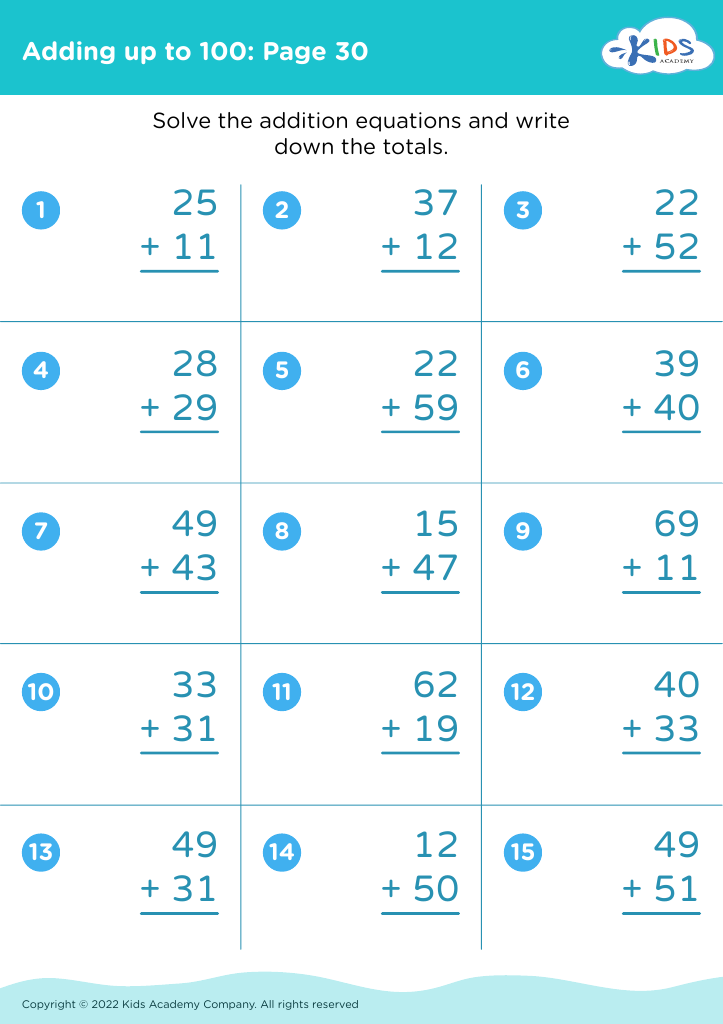
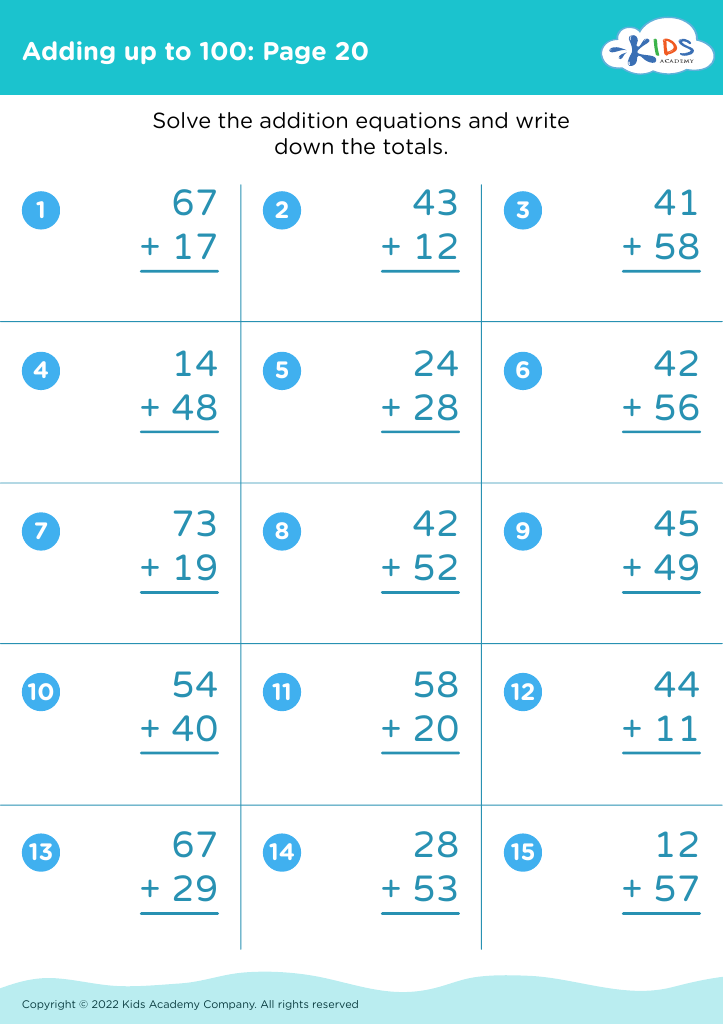
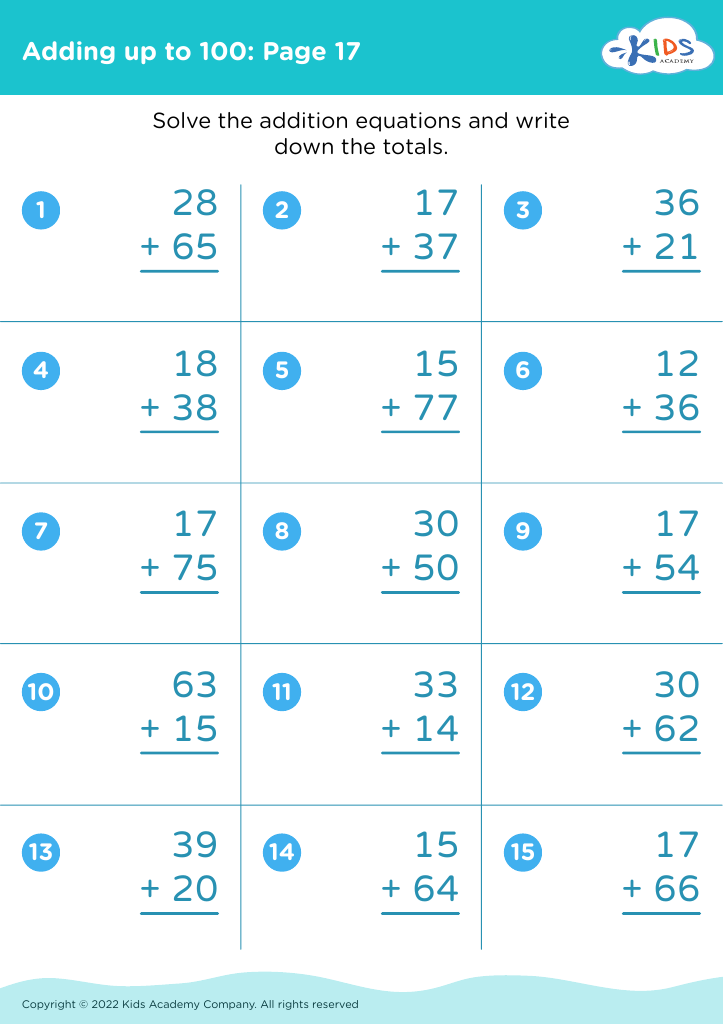
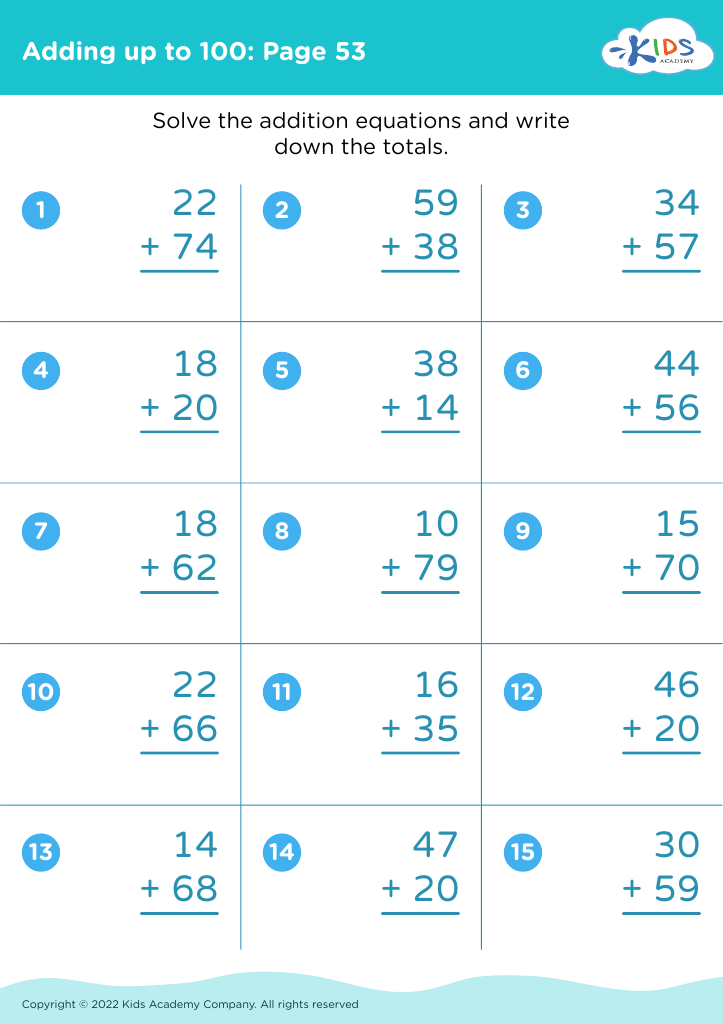
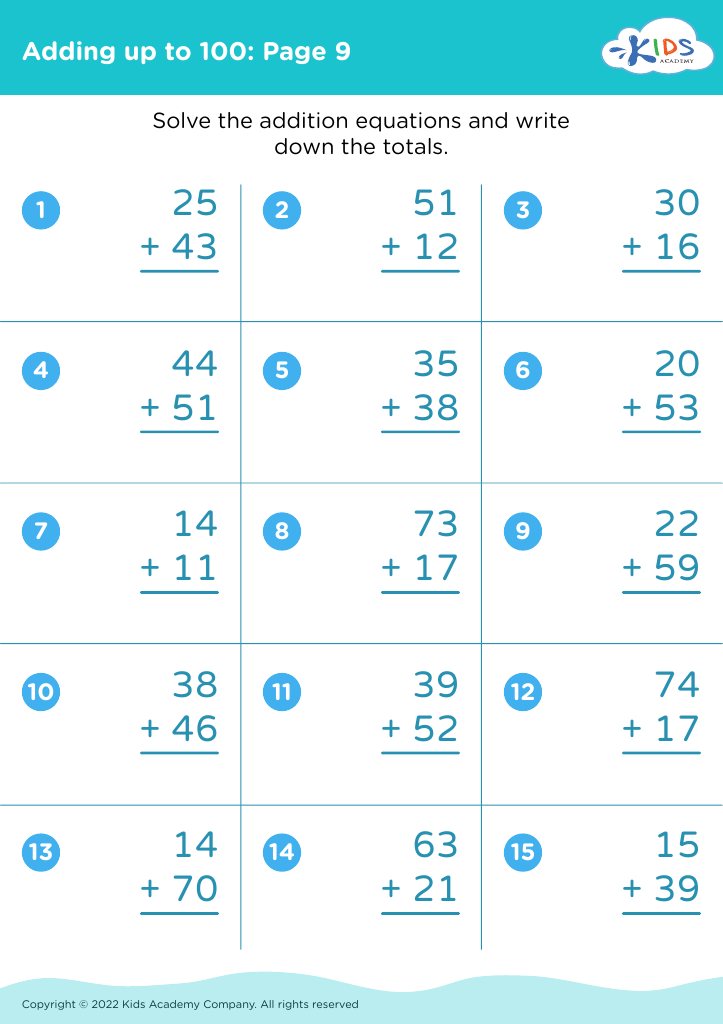
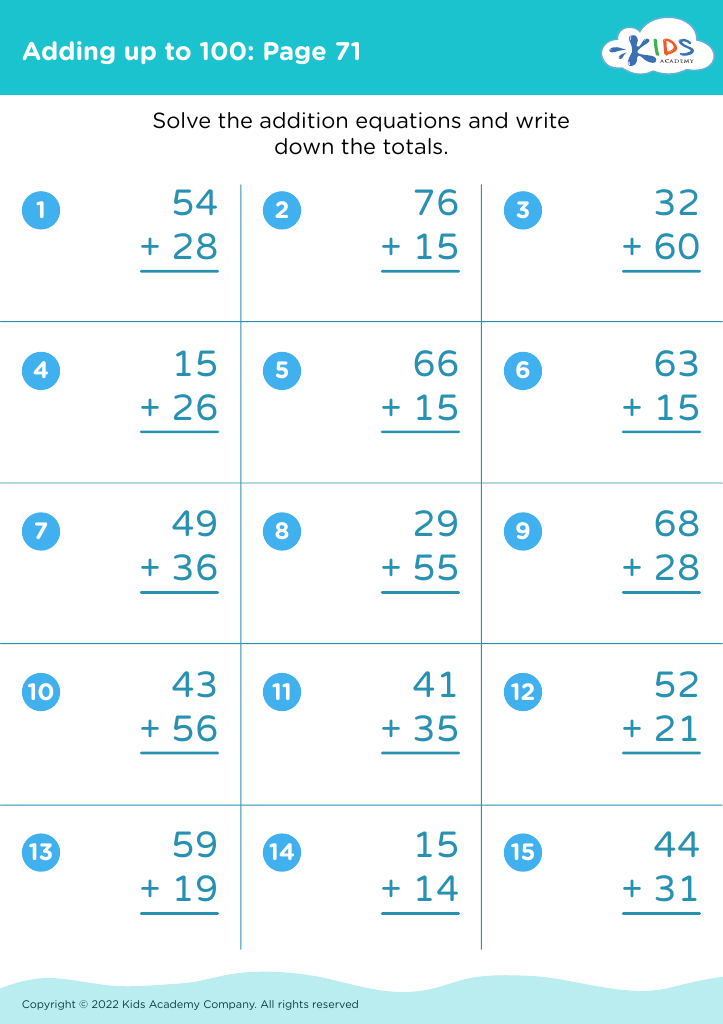
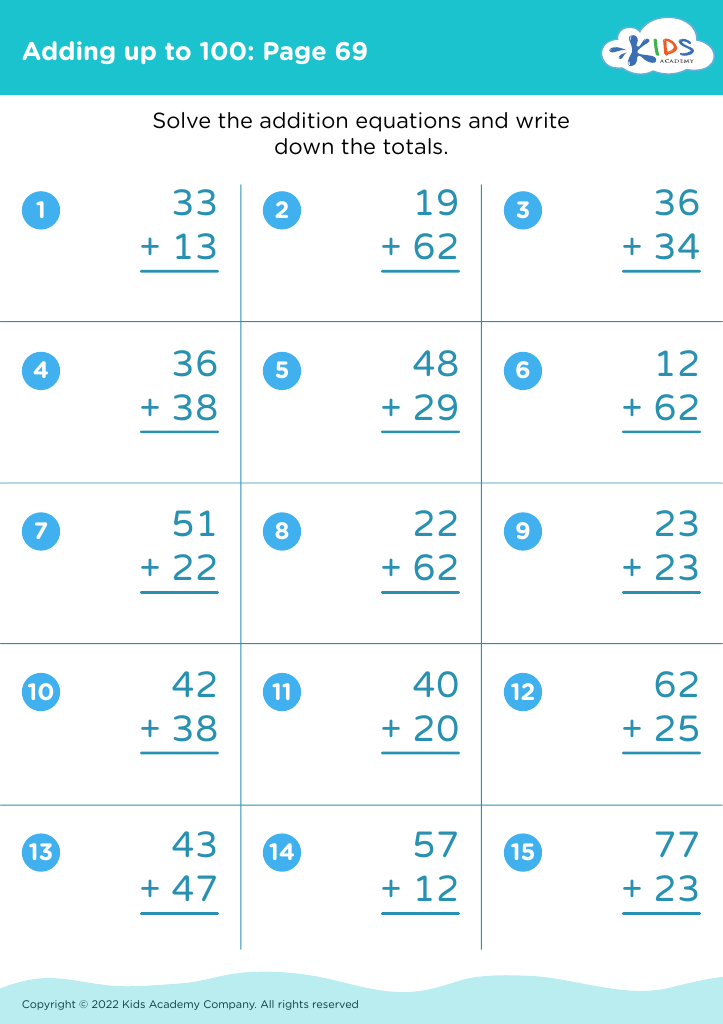
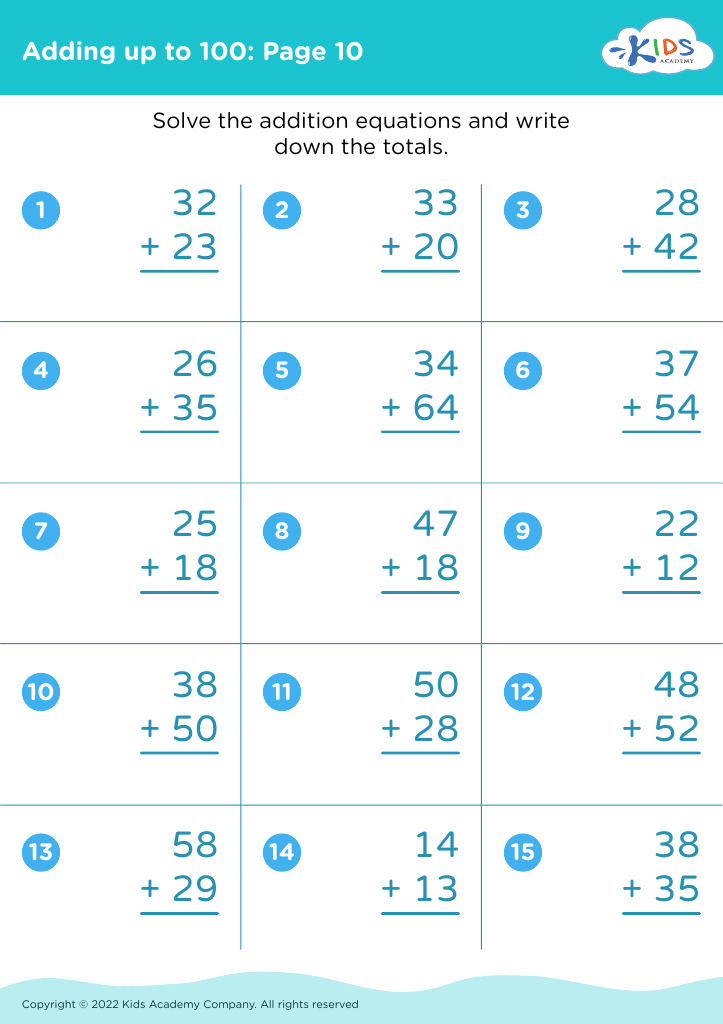
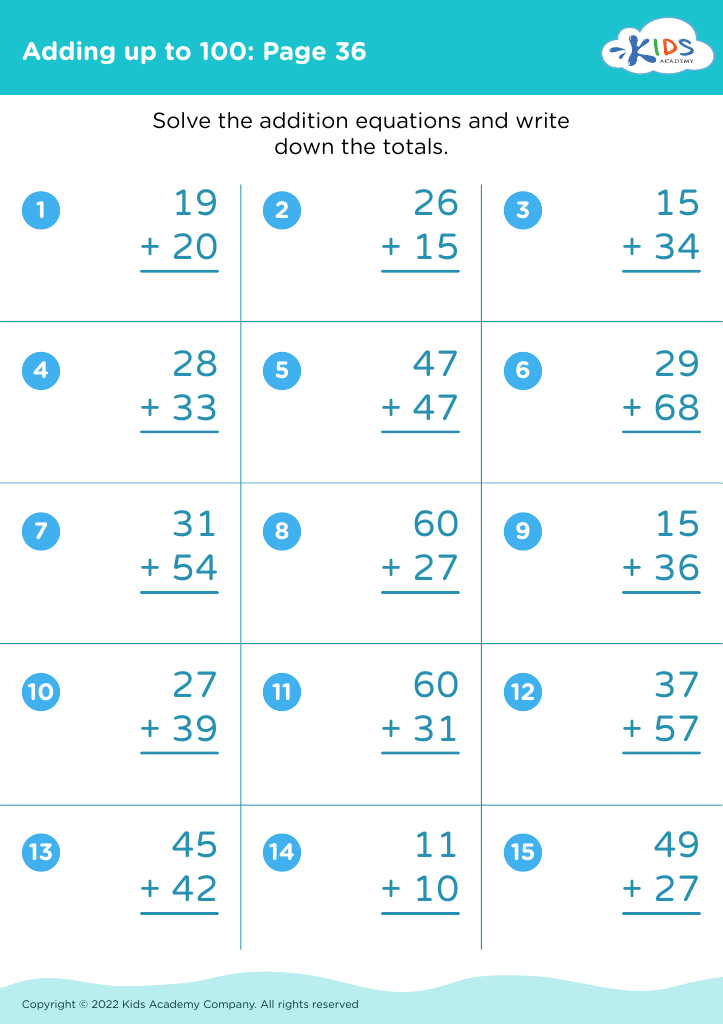


Understanding fractions and the concept of numbers adding up to 100 are essential skills for second graders, forming a foundational block for their future mathematical knowledge. For parents and teachers, caring about these concepts is vital because they not only introduce basic arithmetic but also foster critical thinking and problem-solving skills.
In the realm of fractions, children learn to recognize parts of a whole, which enhances their ability to grasp more complex mathematical ideas later on, such as ratios and percentages. It helps them develop a strong number sense, enabling them to relate numbers to real-world contexts, which is crucial for everyday decision-making.
Moreover, the ability to add up to 100 is equally significant. It helps children understand place value, enhance their mental math skills, and boosts their confidence as they complete simple arithmetic tasks with ease. Understanding this concept also allows students to engage with more complex math operations, aiding their overall skill development in mathematics.
By prioritizing these areas of learning, parents and teachers empower children with the tools they need to succeed academically and build a positive attitude towards math, setting the stage for a lifelong appreciation and competence in the subject.