Understanding patterns Grade 2 Adding up to 100 Misc Worksheets
6 filtered results
-
From - To
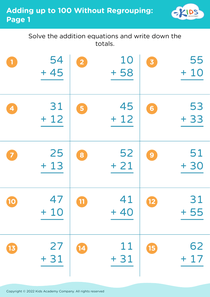
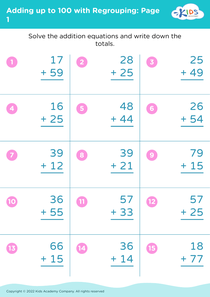
Explore our "Understanding Patterns: Grade 2 Adding Up to 100 Misc Worksheets" for engaging math practice! Designed for second-graders, these worksheets help students recognize and apply patterns in numbers and addition, strengthening their arithmetic skills while making learning fun. With a variety of exercises, from identifying patterns to solving addition problems up to 100, these resources cater to different learning styles. Perfect for classroom use or at-home reinforcement, our worksheets foster critical thinking and improve mathematical fluency. Dive into this enchanting world of patterns with your child and make their journey toward mastering addition both enjoyable and effective!
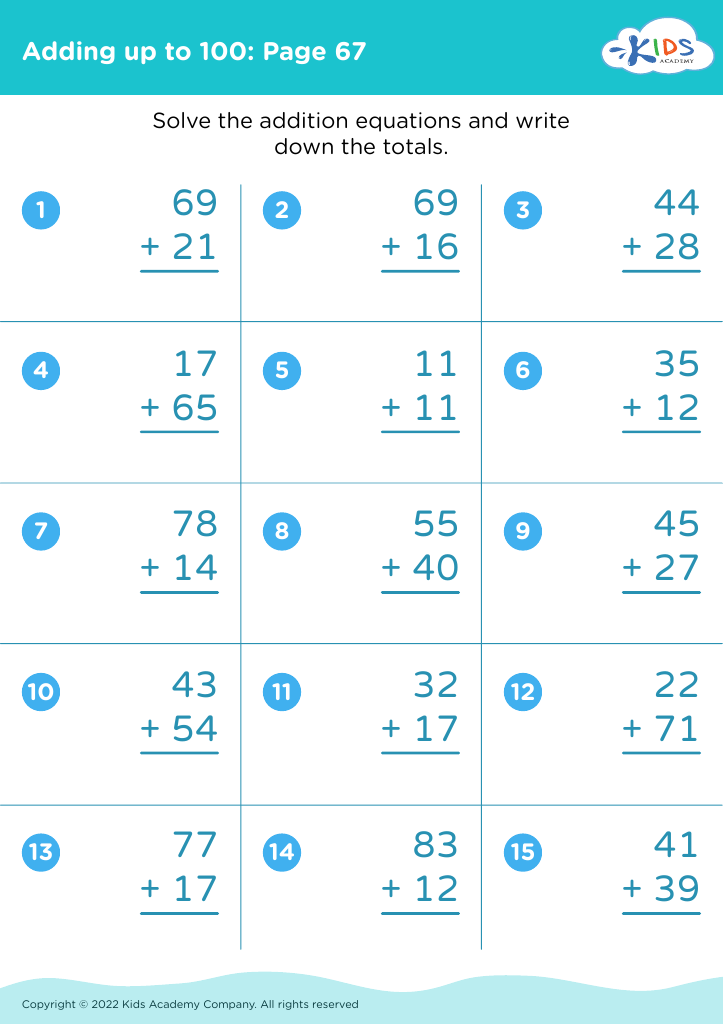
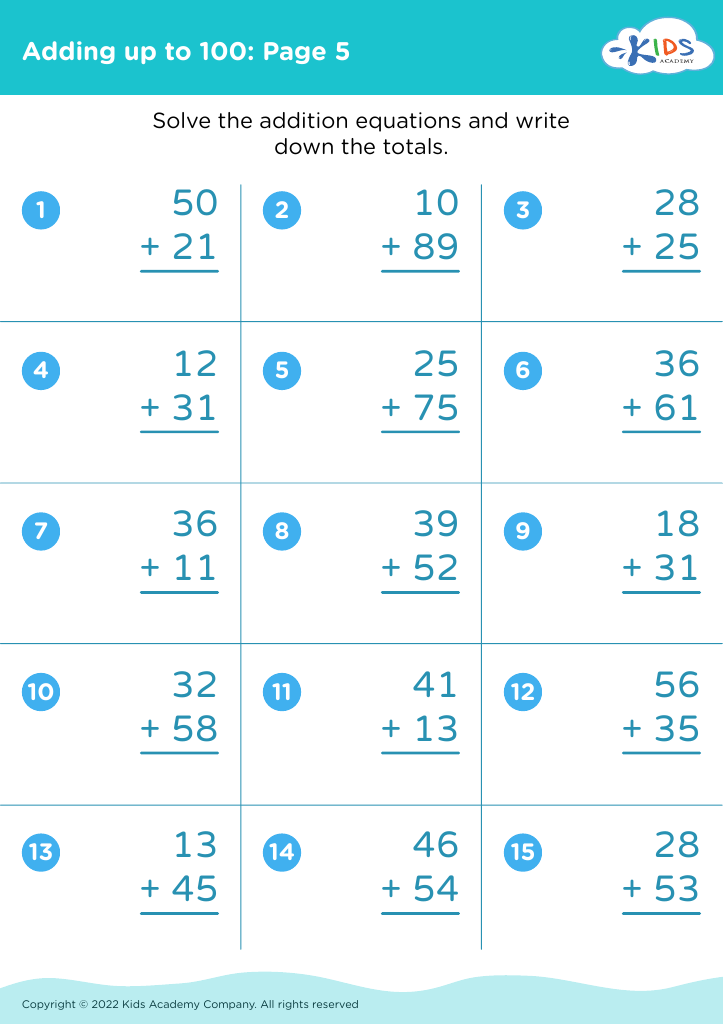
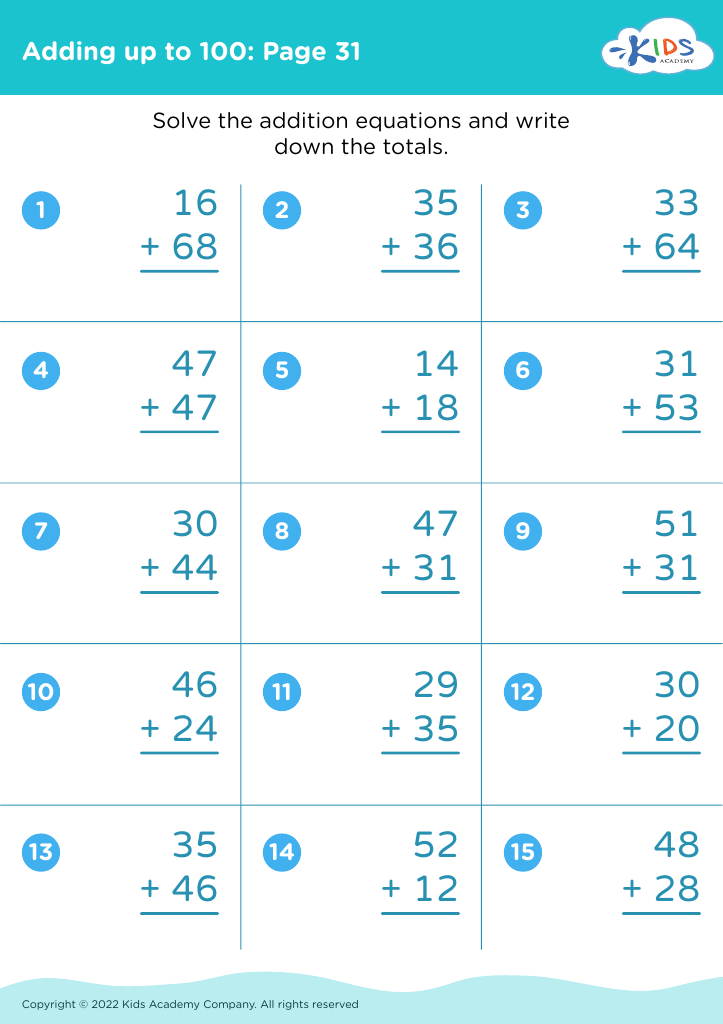
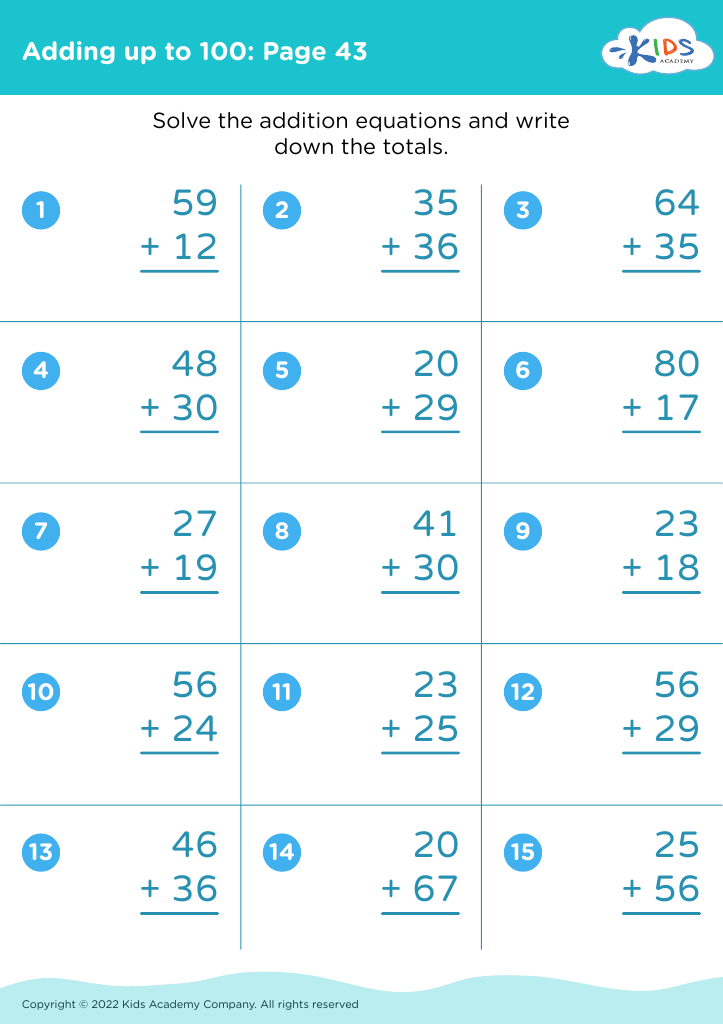
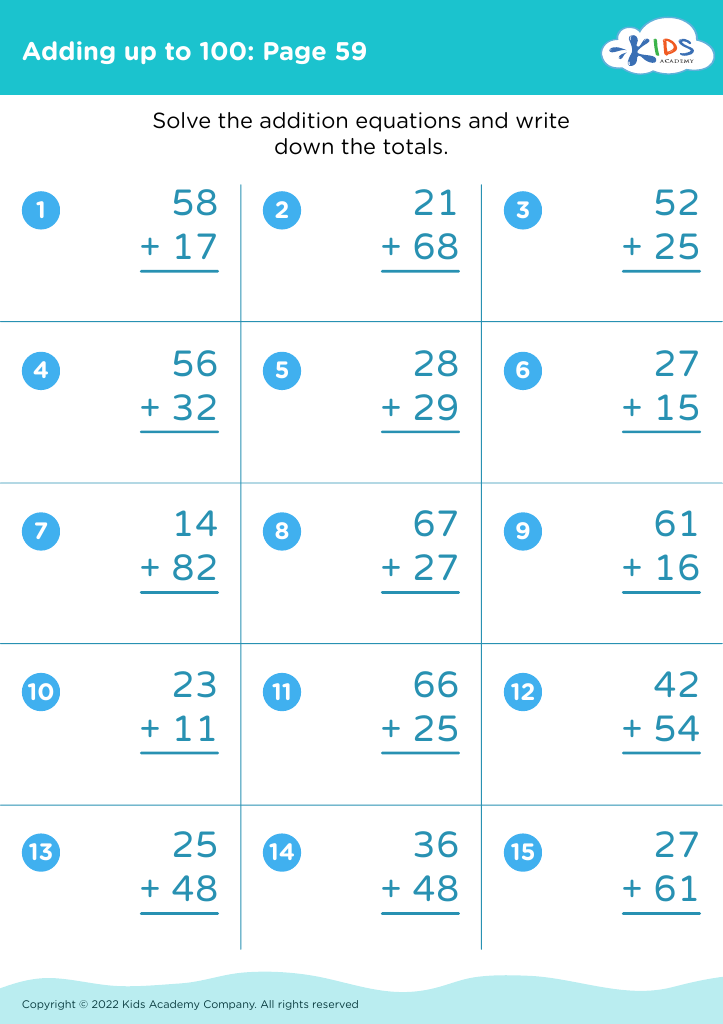
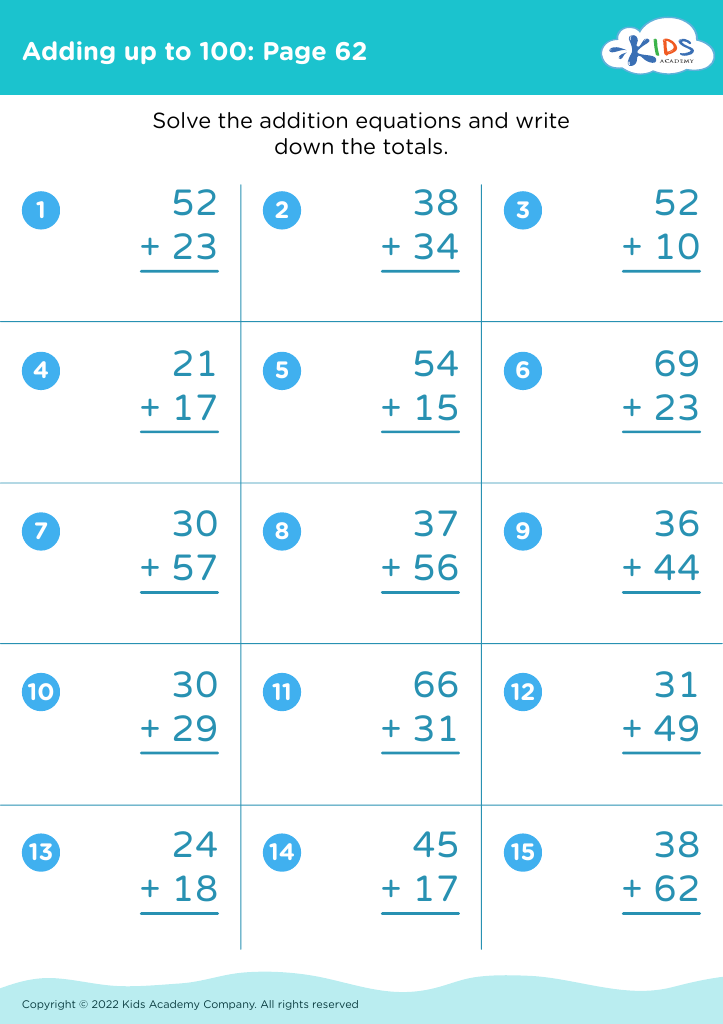


Understanding patterns, particularly with adding up to 100 in Grade 2, is crucial for both parents and teachers for several reasons. Firstly, recognizing numerical patterns lays the foundation for more complex mathematical concepts. When students learn to identify and build upon patterns, they develop problem-solving skills that are essential in mathematics and other subjects.
In addition, mastering addition strategies that sum to 100 helps students gain confidence and fluency in basic arithmetic. This confidence aids in their ability to tackle more challenging math problems in later grades. Empirical studies have shown that students who grasp patterns and numbers early on perform better in math throughout their schooling.
Moreover, discussing these concepts can engage parents in their child’s learning process, fostering a supportive educational environment at home. Engaged parents are more likely to reinforce these skills by providing additional practice through everyday experiences.
Lastly, teaching children to recognize patterns aids in developing analytical thinking, preparing them not just for math but for a variety of real-life situations, such as budgeting, meal planning, or even scheduling. Overall, reinforcing such foundational skills provides a pathway for academic success and practical life applications.