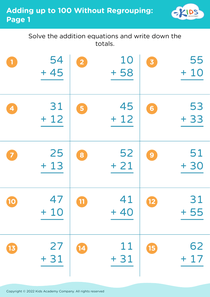
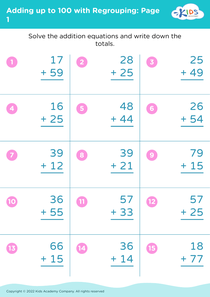
Understanding Sequences Grade 2 Adding up to 100 Misc Worksheets
4 filtered results
-
From - To
Discover a fun and educational way to enhance your second grader’s math skills with our 'Understanding Sequences: Grade 2 Adding up to 100 Misc Worksheets'. These engaging, easy-to-use worksheets are perfect for helping young learners grasp the concept of numerical sequences and addition up to 100. Through a variety of carefully designed exercises, students will develop their ability to identify and complete sequences which will strengthen their number sense and logical thinking skills. Ideal for classroom use or additional practice at home, these worksheets will make learning sequences both enjoyable and effective for every young mathematician.
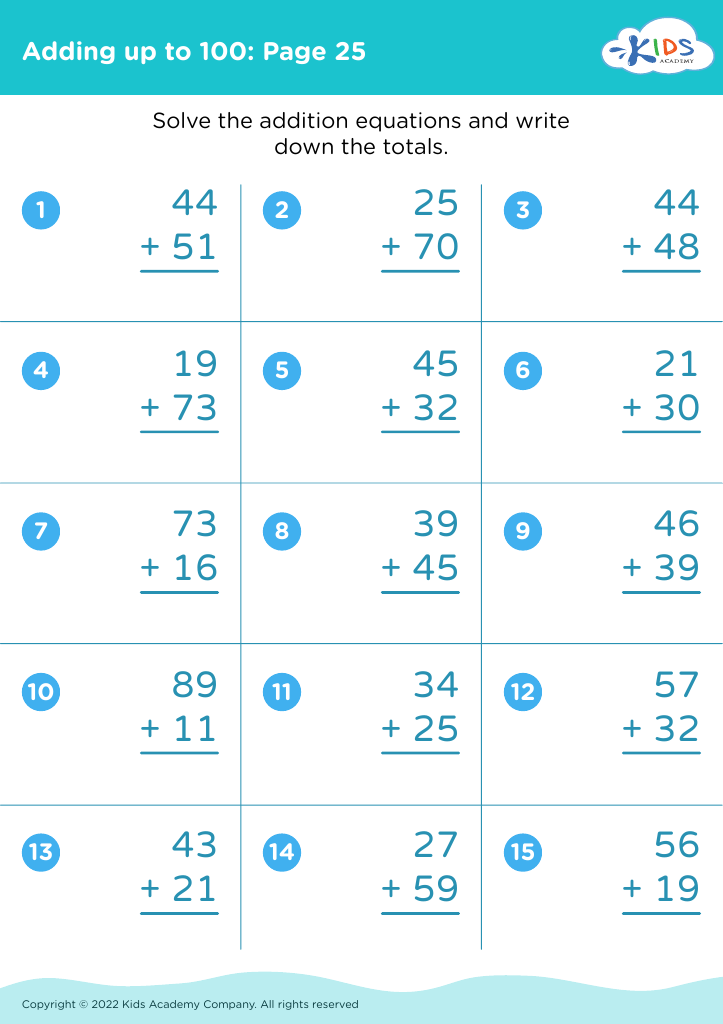
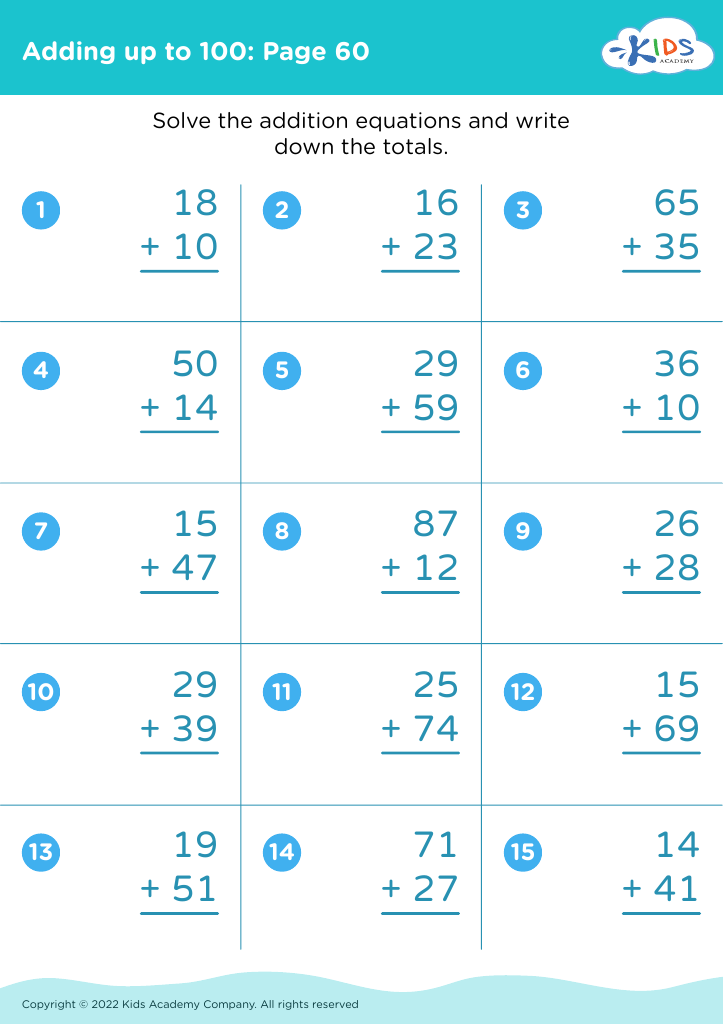
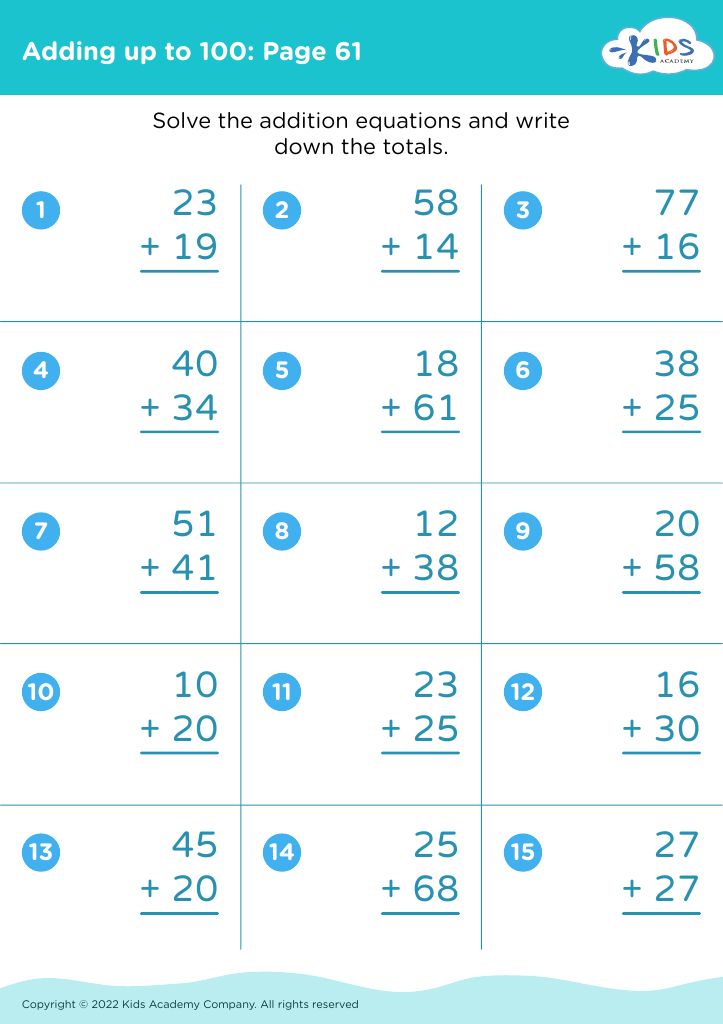
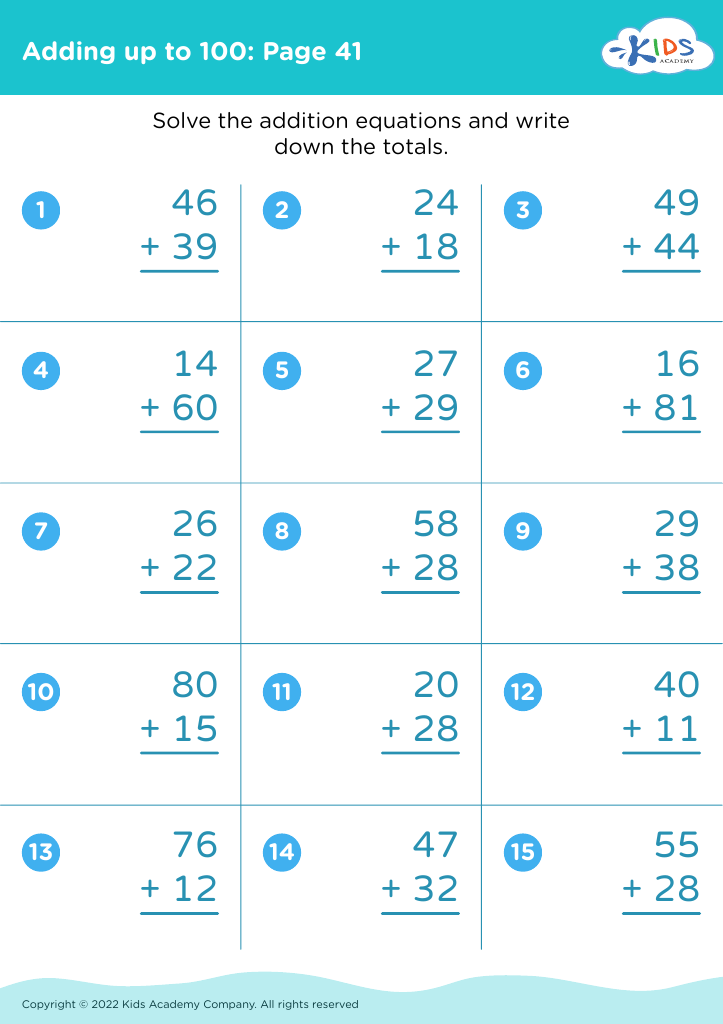


Understanding sequences, especially those involving addition up to 100, is a pivotal concept for second graders, and parents and teachers should certainly care about it. Firstly, grasping sequences helps children develop a strong foundation in number sense, which is crucial for more complex mathematical concepts they will encounter in later grades. It enhances their ability to recognize patterns and predict outcomes, fostering critical thinking and problem-solving skills.
Moreover, proficiency in sequences and simple addition aids in understanding arithmetic operations' commutative and associative properties. This strengthens their mental math capabilities, allowing for quicker and more accurate calculations. When children achieve fluency in adding numbers up to 100, they gain confidence and independence in their mathematical abilities, which encourages a positive attitude towards learning math overall.
Parents and teachers play an integral role in supporting and nurturing these skills. By providing guidance and practice opportunities, they can help children master these essential concepts. Additionally, recognizing milestones and celebrating successes boosts children's motivation and reinforces the importance of perseverance and practice in learning.
In conclusion, understanding sequences and addition to 100 equips children with essential cognitive tools, laying a robust mathematical foundation. This not only aids immediate learning but also sets them up for future academic success, making the attention and care from parents and teachers profoundly impactful.