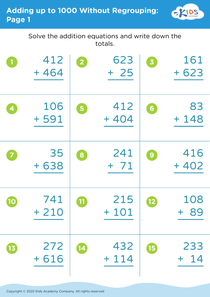
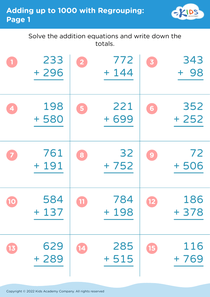
Comparing Fractions Grade 2 Adding up to 1000 Misc Worksheets
5 filtered results
-
From - To
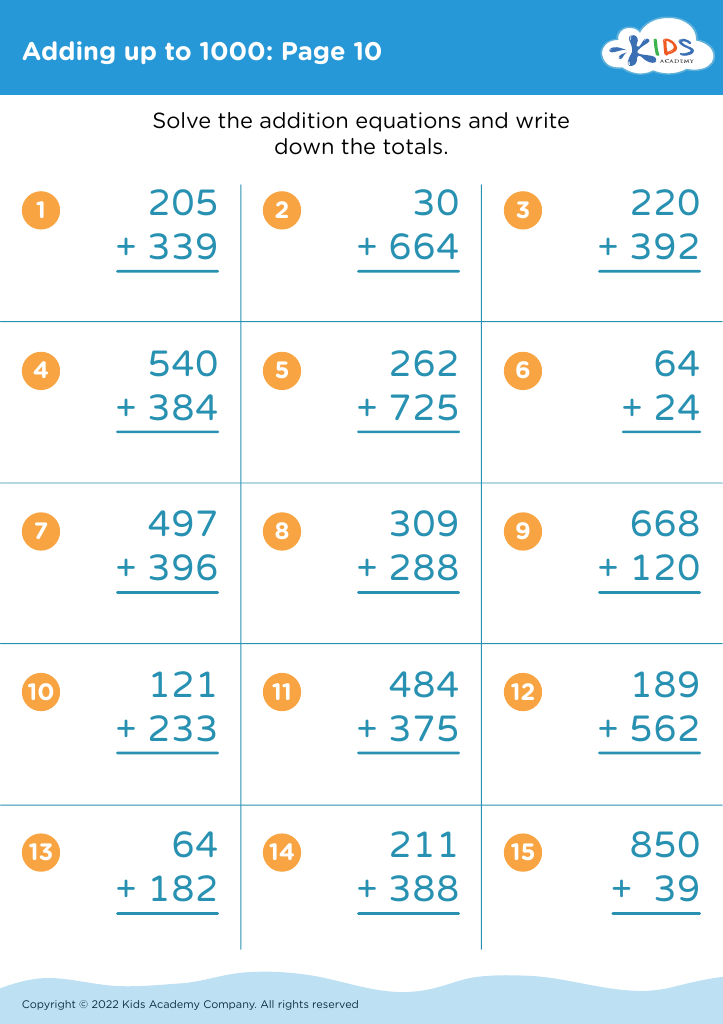
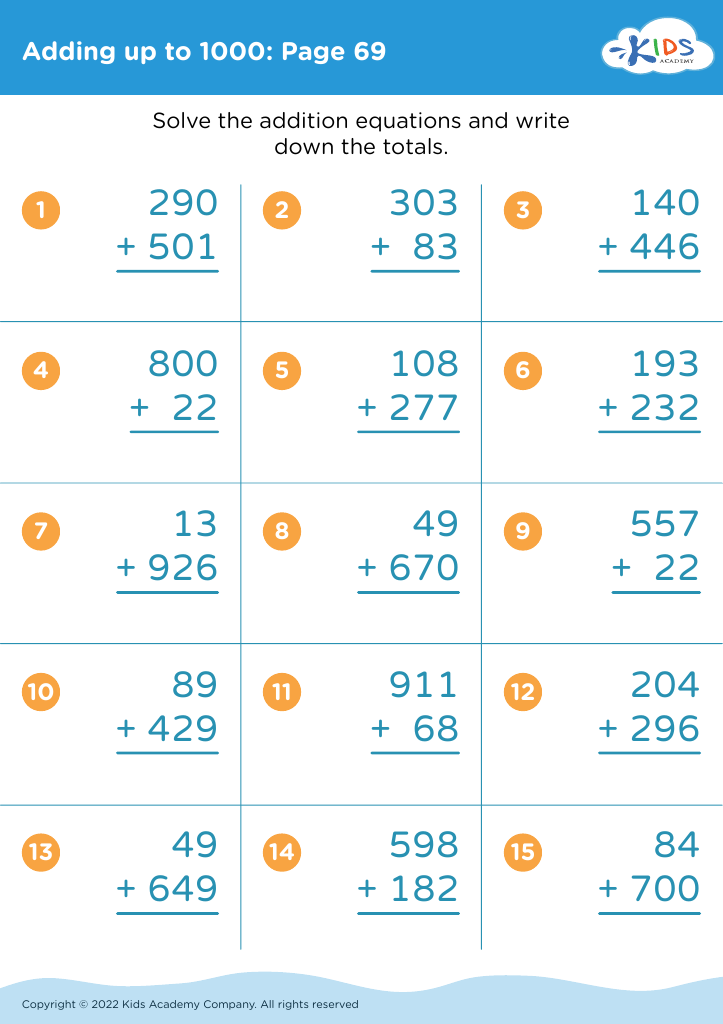
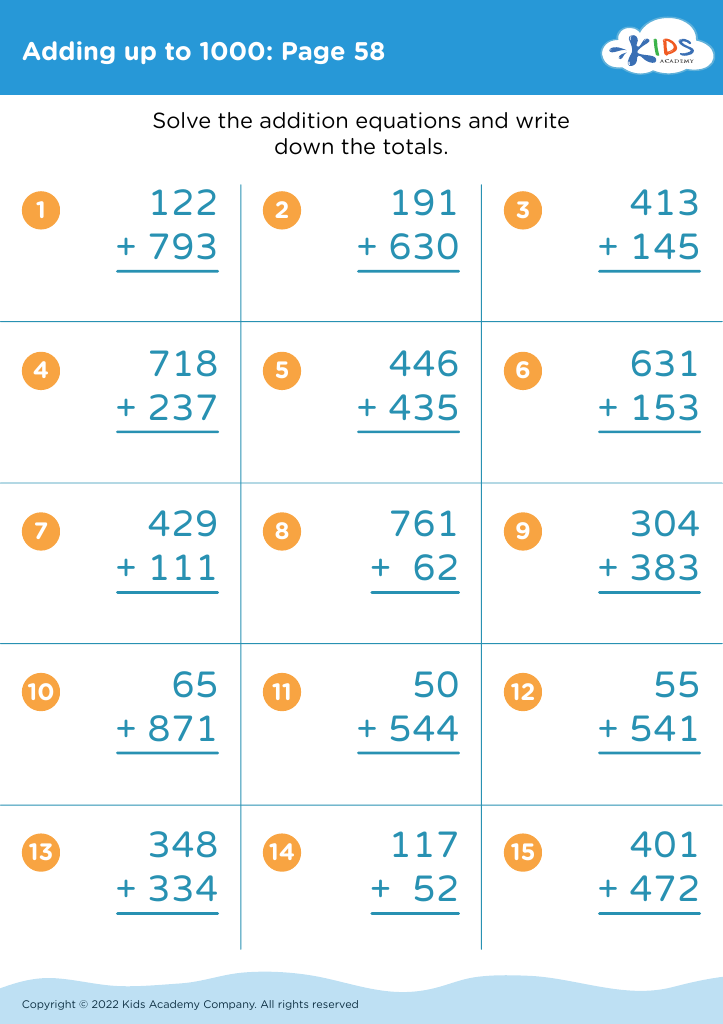
Explore our engaging "Comparing Fractions Grade 2" worksheets designed to enhance your students’ mathematical skills! These printable worksheets will help second graders grasp the concept of fractions by comparing them in various contexts. Our resources align with curriculum standards and are perfect for developing critical thinking. From straightforward comparison tasks to visually appealing fraction visuals, these worksheets make learning fun and effective. Additionally, they offer opportunities for practice with addition up to 1000, ensuring a complete learning experience. Help your students build confidence in math while mastering fraction comparison with our thoughtfully crafted materials. Perfect for classroom use or homework assignments!
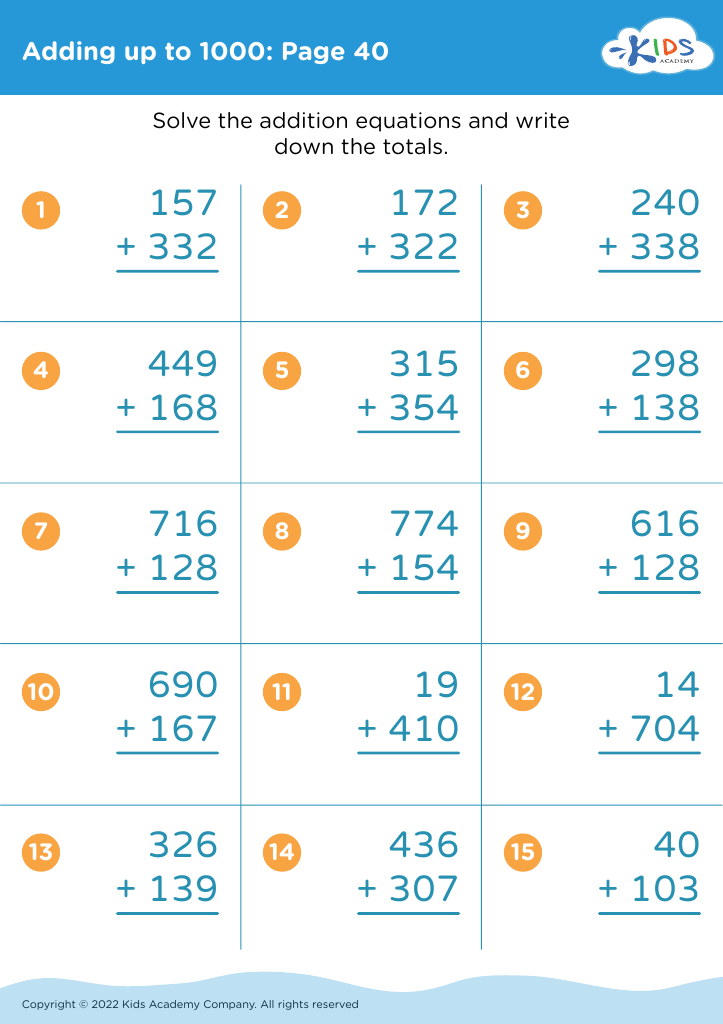
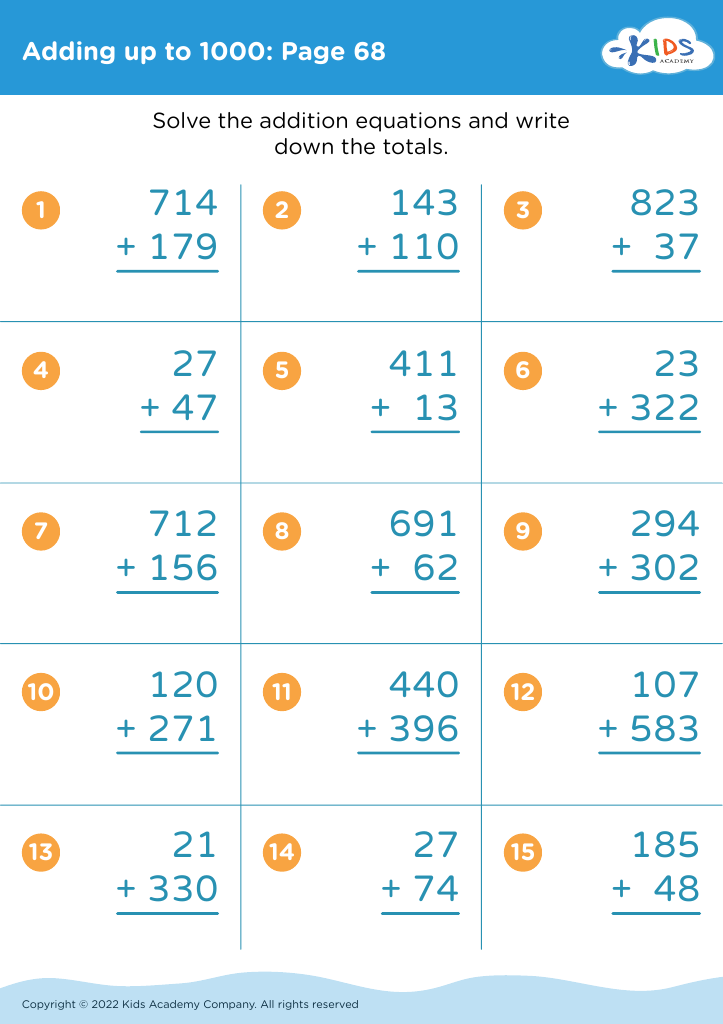


Understanding how to compare fractions is crucial for grade 2 students as it lays the foundation for their mathematical reasoning and problem-solving skills. Parents and teachers should care about this concept because it helps children develop essential number sense, which is vital for higher-level math skills they'll need in their educational journey. For example, when students grasp comparisons, they can better understand quantities, which is useful in everyday life, from cooking to budgeting.
Incorporating engaging activities around comparing fractions also makes learning more enjoyable and interactive. When parents participate in these learning experiences by playing games or solving problems together, it strengthens the parent-child bond and fosters a positive attitude towards math.
Furthermore, fractions are often foundational for more complex subjects like geometry and algebra in later grades. Thus, mastering this topic early on primes children for future success. If parents and teachers prioritize comparing fractions, they can ensure students have the confidence and skills necessary to tackle mathematical challenges in school and everyday life, ultimately promoting a lifelong appreciation for learning and math.