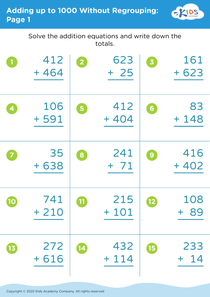
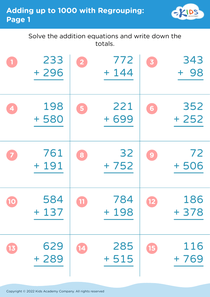
Critical Thinking Grade 2 Adding up to 1000 Misc Worksheets
3 filtered results
-
From - To
Unlock the power of critical thinking in your second graders with our "Critical Thinking Grade 2 Adding Up to 1000 Misc Worksheets." Designed to enhance problem-solving skills and mathematical reasoning, these engaging worksheets provide a variety of challenges that encourage students to think analytically while practicing addition up to 1000. With colorful visuals and stimulating exercises, children will explore concepts such as number patterns, word problems, and multi-step equations. Ideal for classroom use or at-home learning, these worksheets foster a deeper understanding of math while boosting confidence and creativity. Help your students excel today and make math enjoyable!
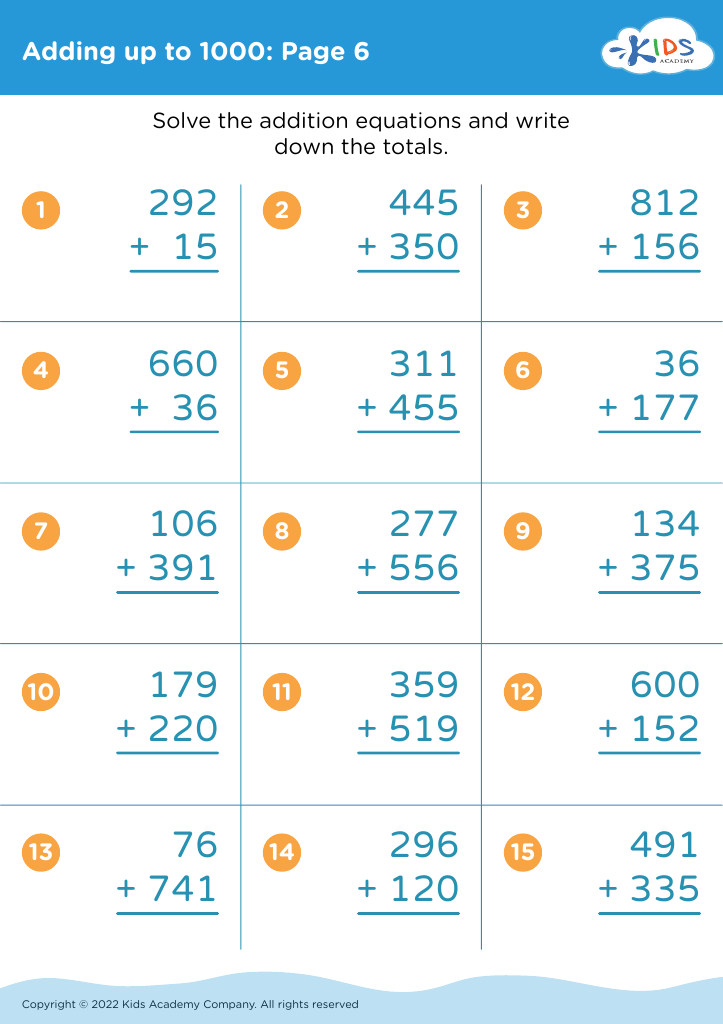
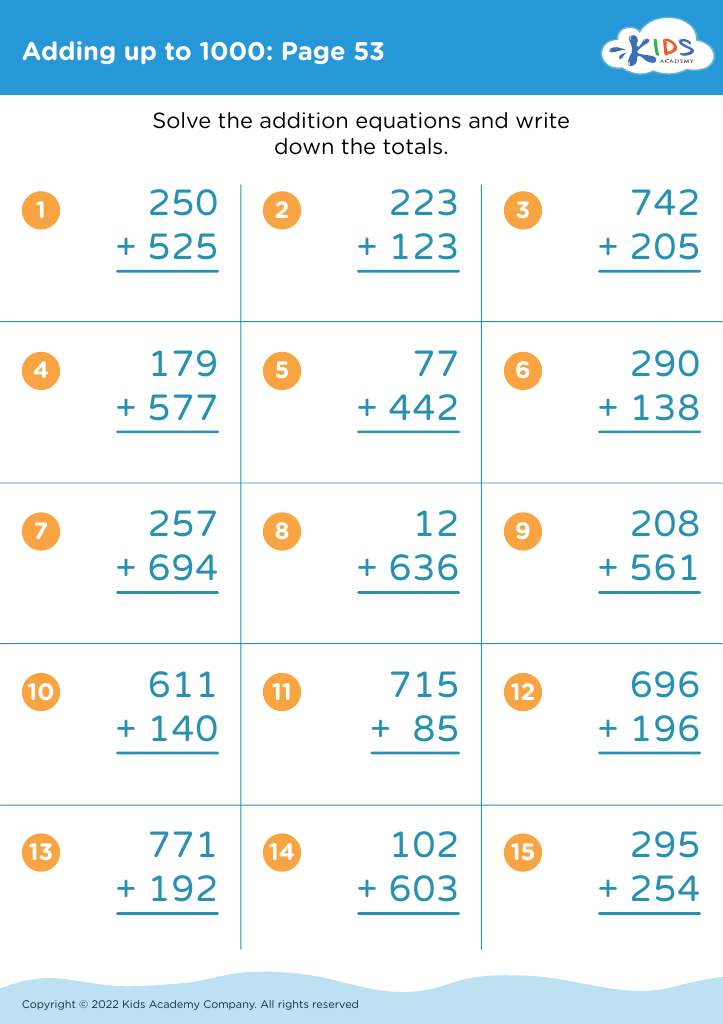
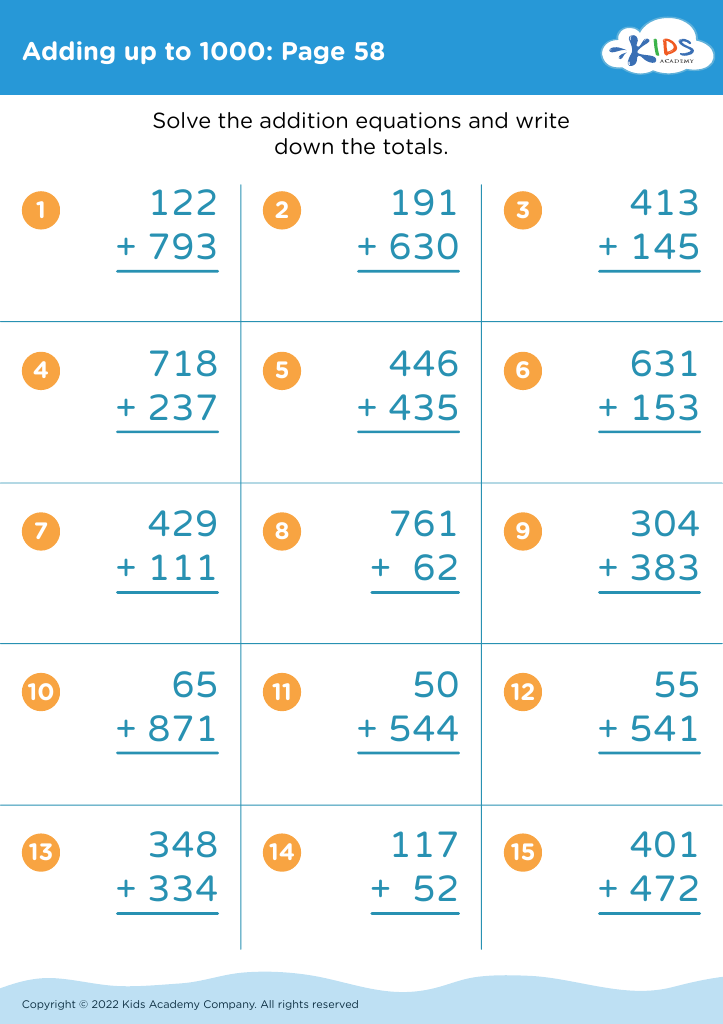


Critical thinking is a crucial skill that deeply impacts a child's educational journey and overall development, starting from an early age like Grade 2. Teaching students to think critically about numeric values, especially in tasks like "Adding up to 1000," encourages them to analyze, evaluate, and synthesize information rather than rely on rote memorization.
For parents and teachers, nurturing critical thinking skills helps children develop reasoning abilities that are essential in problem-solving. By engaging in activities that require them to strategize about numbers and relationships, students not only grasp mathematical concepts but also learn how to approach challenges logically and creatively. This method empowers them to function more effectively in academic settings and real-world scenarios.
Moreover, fostering critical thinking helps build children's confidence in their cognitive skills, as they learn to articulate their thought processes and justify their solutions. By making mathematics interactive and dialogue-driven, students are more likely to view learning positively and enthusiastically. Ultimately, investing time in developing critical thinking skills at this foundational stage lays the groundwork for lifelong learning and informed decision-making, cultivating mature learners prepared for future complexities.