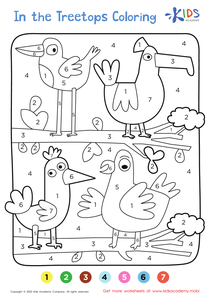
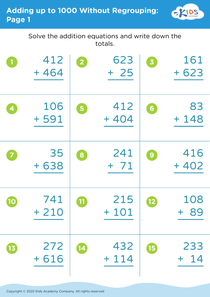
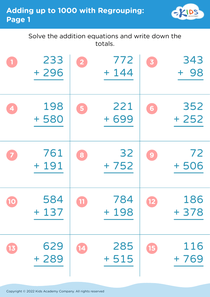
Improve reading skills Grade 2 Adding up to 1000 Misc Worksheets
3 filtered results
-
From - To
Enhance your second grader's reading abilities with our "Improve Reading Skills" worksheets, designed specifically to complement math practice, like adding up to 1000. Our diverse collection of printable worksheets offers a unique blend of math and literacy exercises that foster both numerical skills and reading comprehension. Combining engaging activities with clear instructions, these worksheets help children develop crucial reading strengths while tackling math challenges. Ideal for teachers and parents, our resources support foundational learning in a fun and interactive way, promoting independent learning and confidence in Grade 2 students. Visit Kids Academy to empower your child’s educational journey seamlessly!
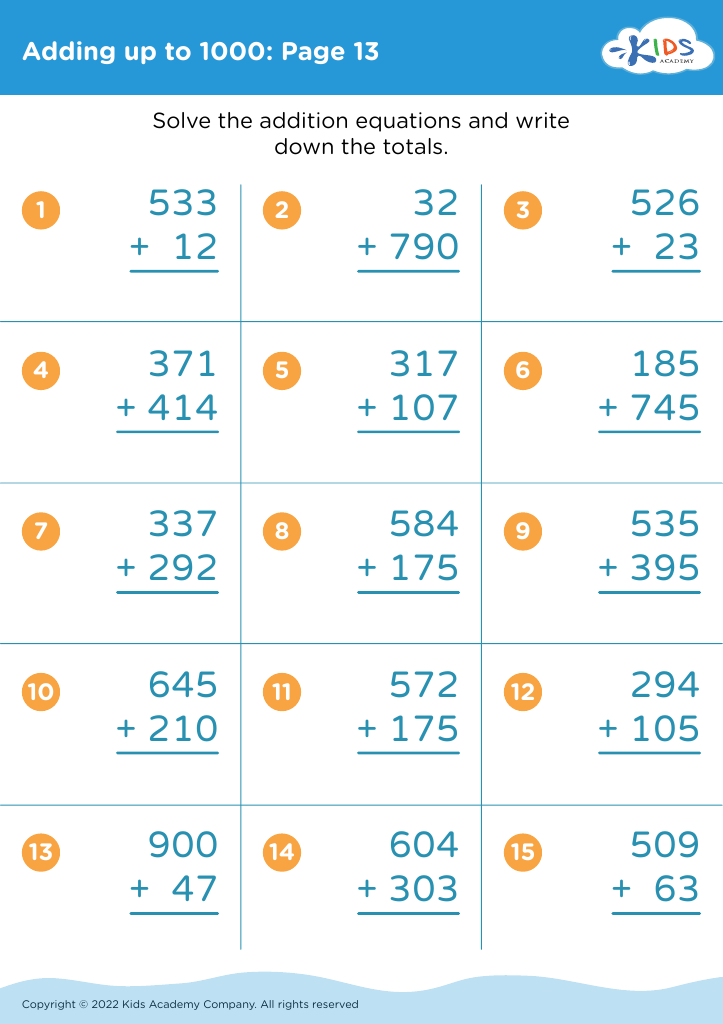
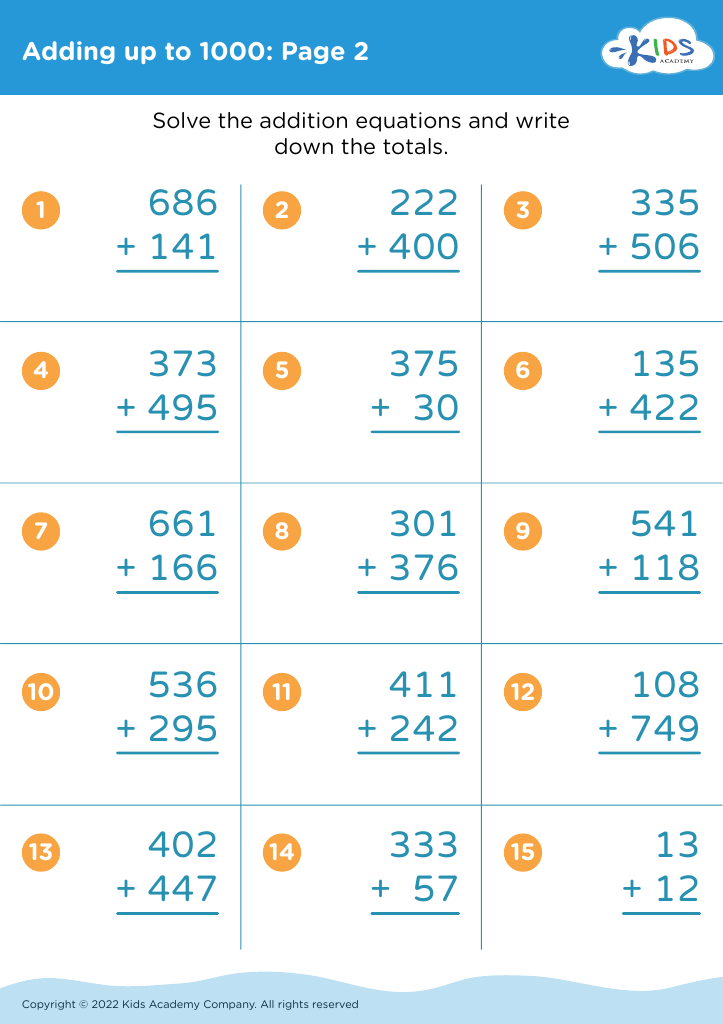
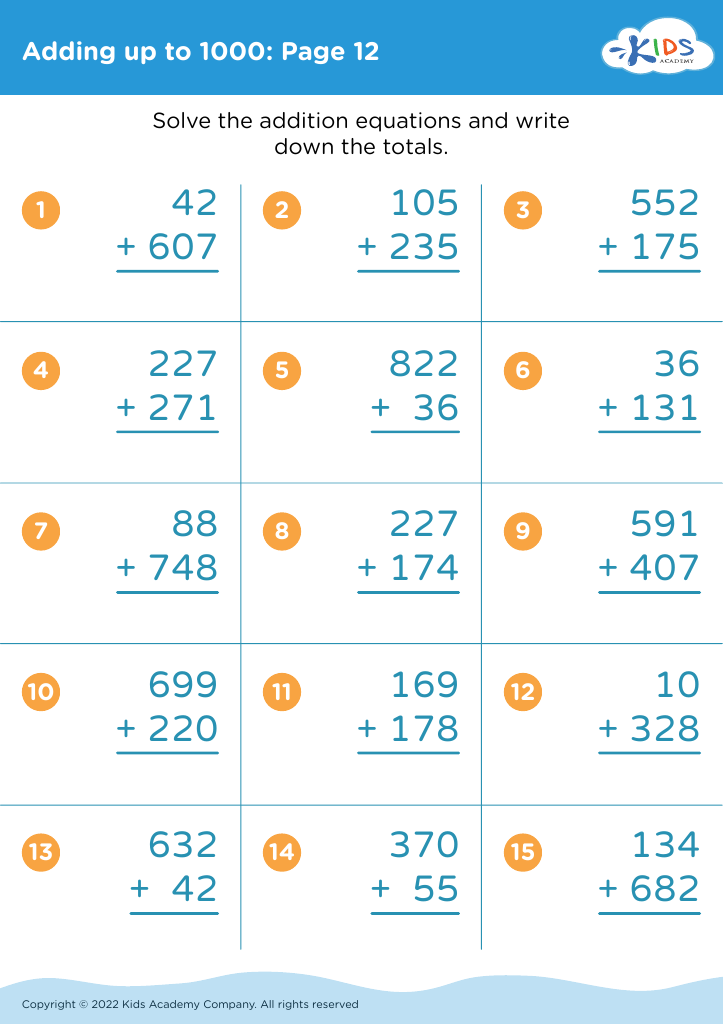


Parents and teachers should prioritize improving reading skills and mastering basic math, such as adding up to 1000, for second-grade students for several compelling reasons. Reading proficiency is the cornerstone of academic success and lifelong learning. At this stage, students transition from learning to read to reading to learn. Strong reading skills enhance comprehension, critical thinking, and vocabulary acquisition, empowering children to excel across various subjects, including science and social studies.
On the other hand, proficiency in basic math acts as a building block for more advanced mathematical concepts. Adding up to 1000 is a crucial step in developing numerical fluency and understanding place value, which are fundamental for solving real-world problems. These skills support logical thinking and problem-solving abilities essential for daily activities and future educational pursuits.
Additionally, improving reading and math skills in early grades increases self-confidence, fosters a love for learning, and reduces the risk of academic struggles later. By investing time and resources in bolstering these foundational skills, parents and teachers play a critical role in shaping well-rounded, capable, and confident learners prepared for the complexities of future education and life challenges.