Reading comprehension Grade 2 Adding up to 1000 Misc Worksheets
4 filtered results
-
From - To
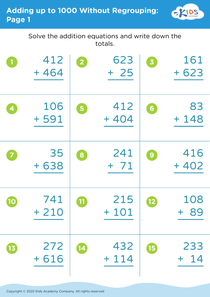
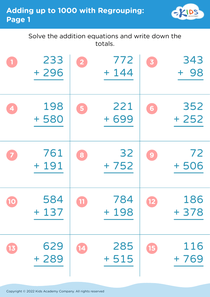
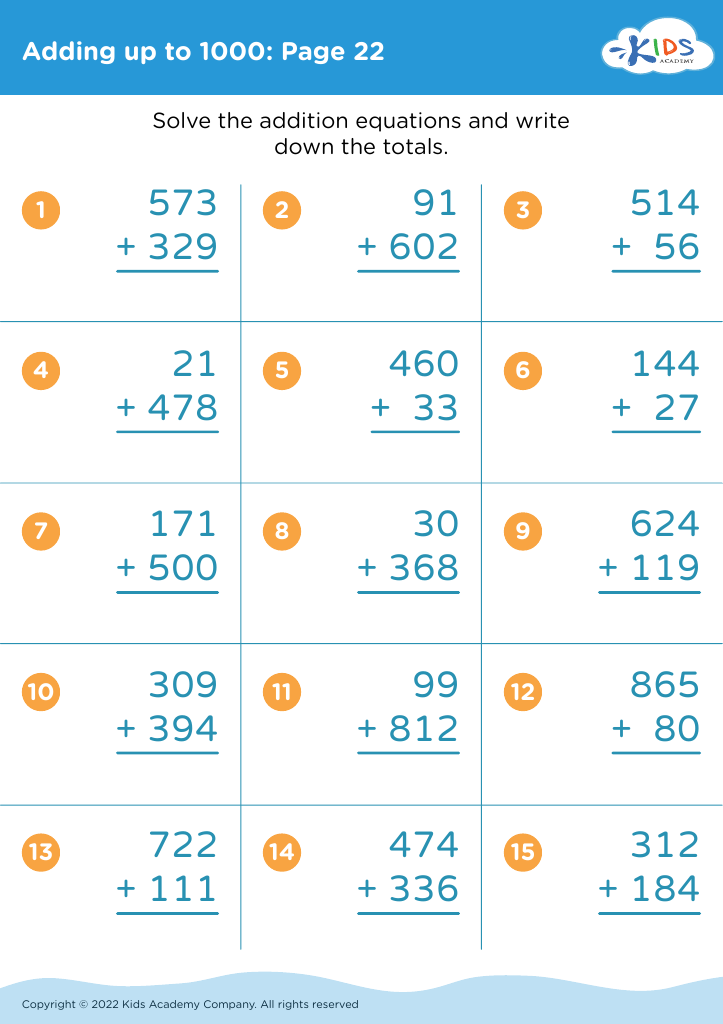
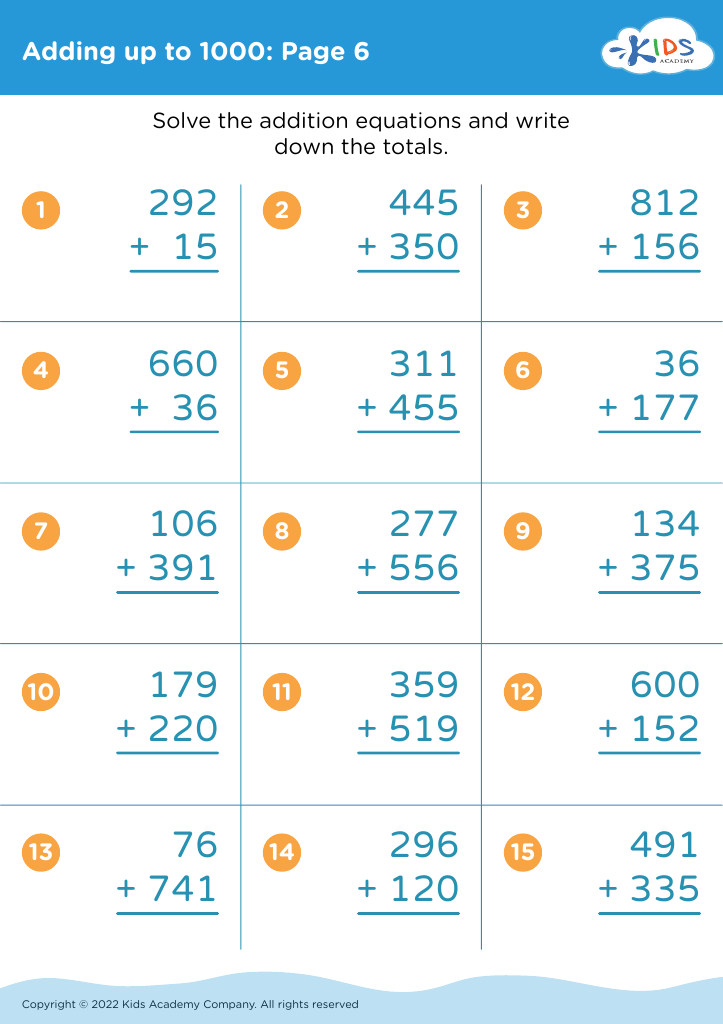
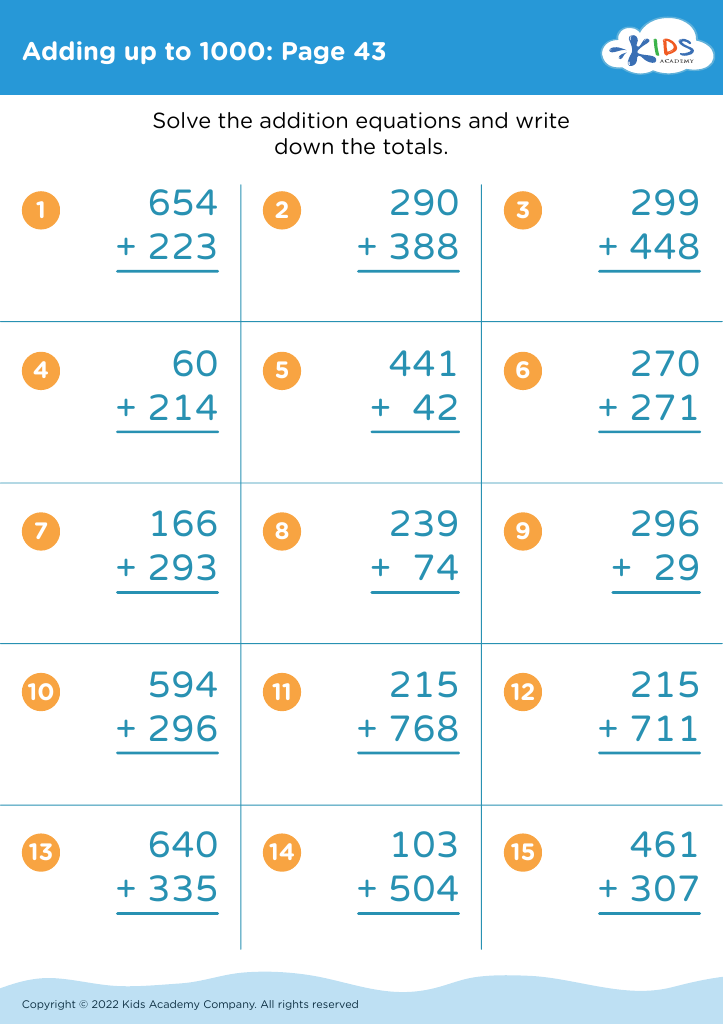
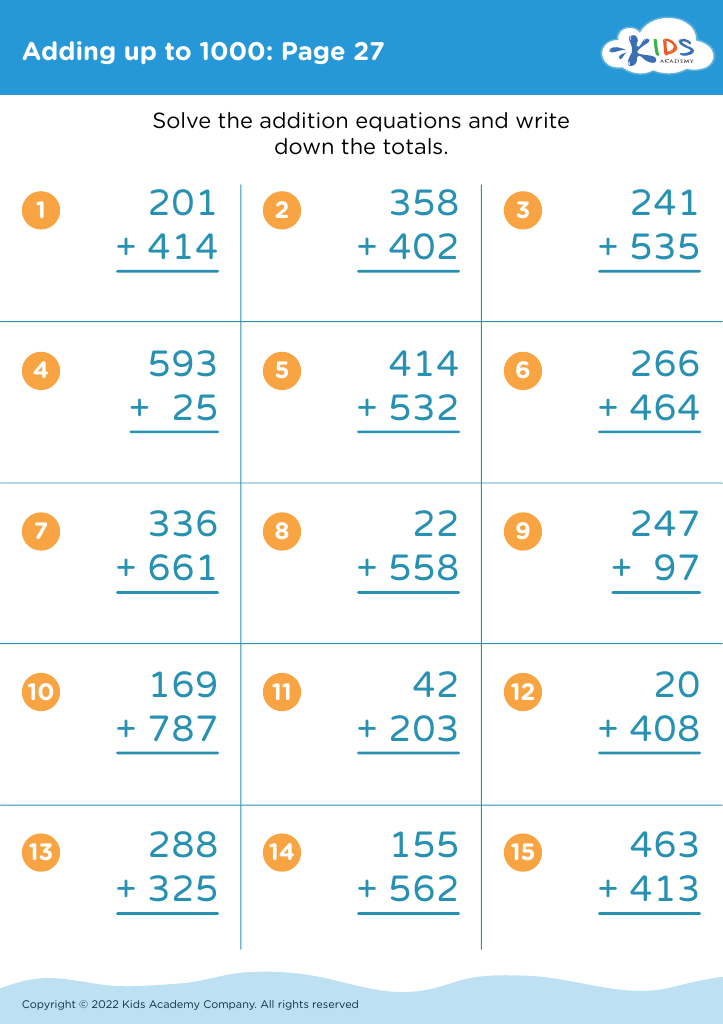
Welcome to our "Reading Comprehension Grade 2: Adding Up to 1000" worksheets! Designed for young learners, these engaging materials help enhance reading skills while exploring math concepts. Each worksheet features a blend of fun, interactive reading passages and challenging questions that reinforce students' abilities to comprehend text and solve problems related to addition up to 1000. Ideal for classroom activities or at-home practice, these worksheets promote critical thinking and build confidence in young readers and mathematicians. Encourage your child's academic growth and make learning enjoyable with our comprehensive, easy-to-use resources tailored for second graders!


Reading comprehension in second grade is vital for children's overall academic success and future learning. At this stage, students transition from learning to read to reading to learn. Developing strong reading skills ensures that they engage with increasingly complex texts across all subjects, forming the foundation for critical thinking and analytical skills.
Parents and teachers should be particularly attentive to students' ability to comprehend what they read, as it directly impacts their learning experience. For instance, understanding math problems requires strong reading skills, especially when adding numbers and grasping word problems. When young learners can read and interpret information accurately, they can solve problems effectively, such as those that require them to add up to 1,000 or understand mixed content involving numbers.
Moreover, strong reading comprehension fosters a love for reading and learning. Children who can understand and discuss what they've read are more likely to enjoy reading and become lifelong learners. As they encounter diverse topics, their vocabulary and general knowledge expand, further benefiting their overall education. Therefore, parents and educators must prioritize enhancing these critical reading skills to ensure a well-rounded education and establish a solid groundwork for future success.