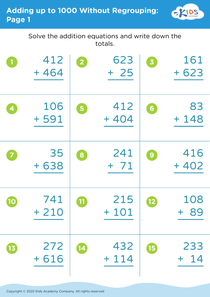
Addition Practice Grade 2 Adding up to 1000 with Regrouping Worksheets
3 filtered results
-
From - To
Welcome to our "Addition Practice Grade 2: Adding up to 1000 with Regrouping" worksheets! Designed for second graders, these engaging resources help students master addition through fun and challenging problems. As children progress, they'll learn the essential skill of regrouping, enabling them to solve larger addition problems confidently. Our worksheets are tailored to enhance math fluency while promoting critical thinking. Each worksheet encourages practice at varying difficulty levels, ensuring that all learners are supported. Perfect for classroom use or at-home learning, our addition practice is a great way to build a solid foundation in mathematics. Let's make math a thrilling adventure for your child!
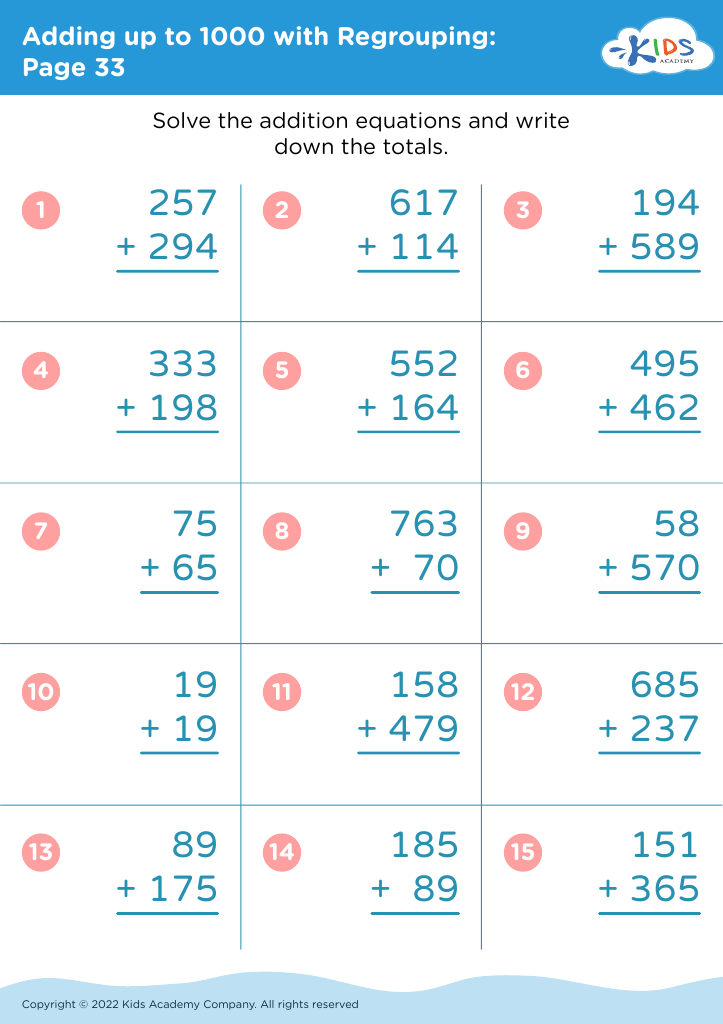
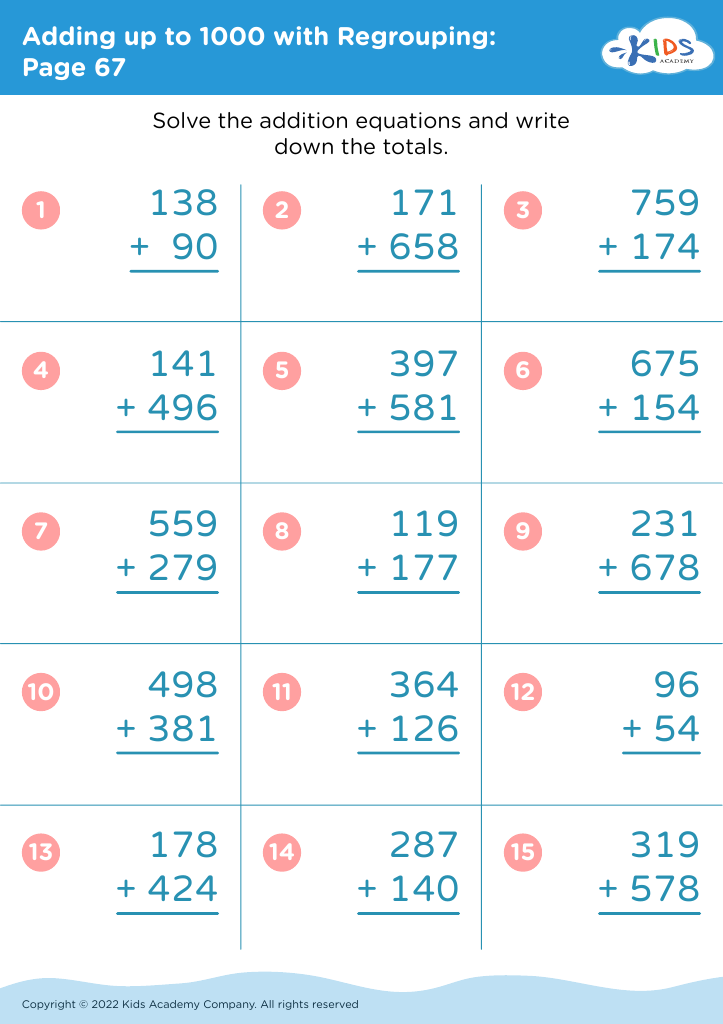
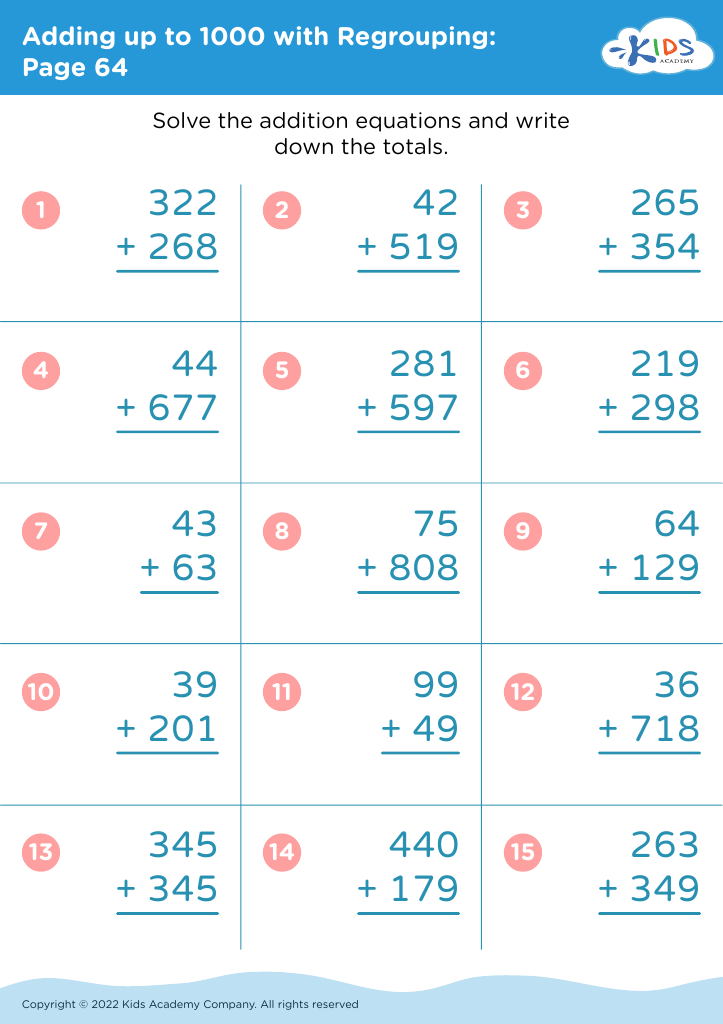


Parents and teachers should prioritize addition practice, particularly for Grade 2 students learning to add up to 1000 with regrouping, for several vital reasons. Firstly, this foundational math skill significantly enhances students' understanding of numbers and their relationships, fostering a solid mathematical base for future learning. Mastering addition through regrouping also develops critical problem-solving skills and promotes logical thinking, which are essential for more advanced mathematical concepts.
Moreover, proficiency in addition boosts student confidence and reduces math anxiety. As students feel more competent in their abilities, they are more likely to engage actively in classroom activities, participate in discussions, and tackle challenges eagerly. Furthermore, practice aids retention and fluency, ensuring that students can perform addition quickly and accurately, which is crucial for daily life situations.
Supporting students' addition practice also encourages positive parent-teacher collaboration. When parents engage in their children's learning, it demonstrates to students that education is valued and reinforced at home. Ultimately, focusing on this skill in Grade 2 helps cultivate a generation of confident, competent math learners who are well-prepared for future academic and real-world challenges.