Alphabet Recognition Grade 2 Adding up to 1000 Without Regrouping Worksheets
3 filtered results
-
From - To
Explore our comprehensive “Alphabet Recognition Grade 2 Adding up to 1000 Without Regrouping Worksheets.” Designed specifically for second graders, these worksheets provide a unique combination of alphabet recognition activities and math exercises. Engaging and educational, they help young learners master letters while practicing addition without regrouping. With vibrant illustrations and step-by-step guidance, children can strengthen their phonics and arithmetic skills simultaneously. Ideal for both classroom and home use, these worksheets ensure an enjoyable and effective learning experience. Set your child on the path to academic success with these expertly crafted resources perfect for developing essential literacy and numeracy competencies.
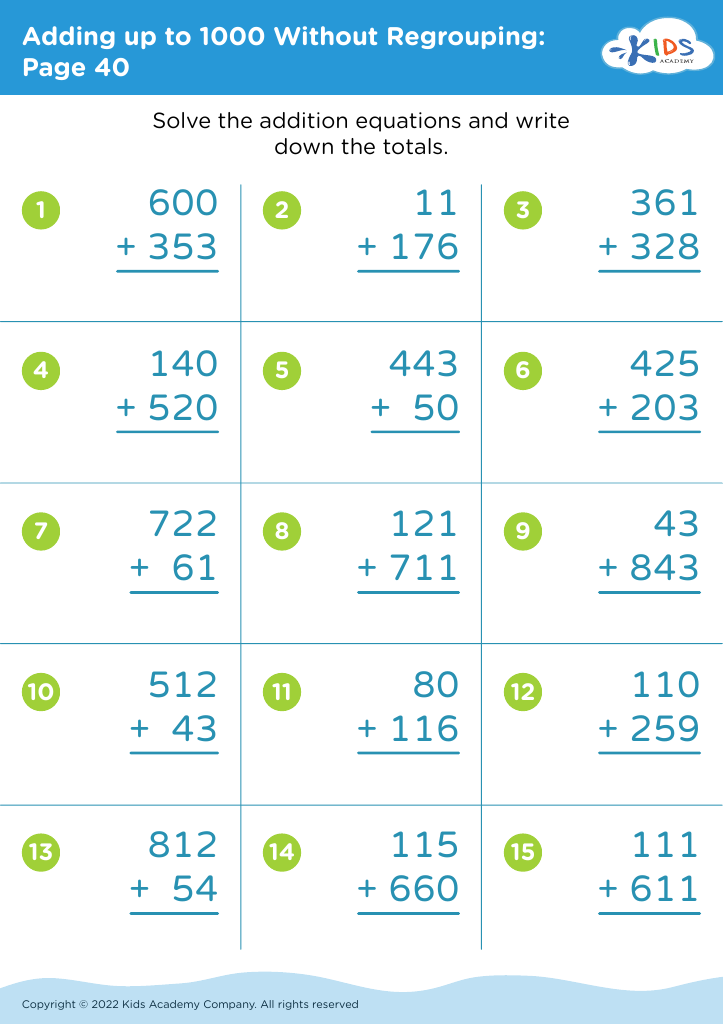
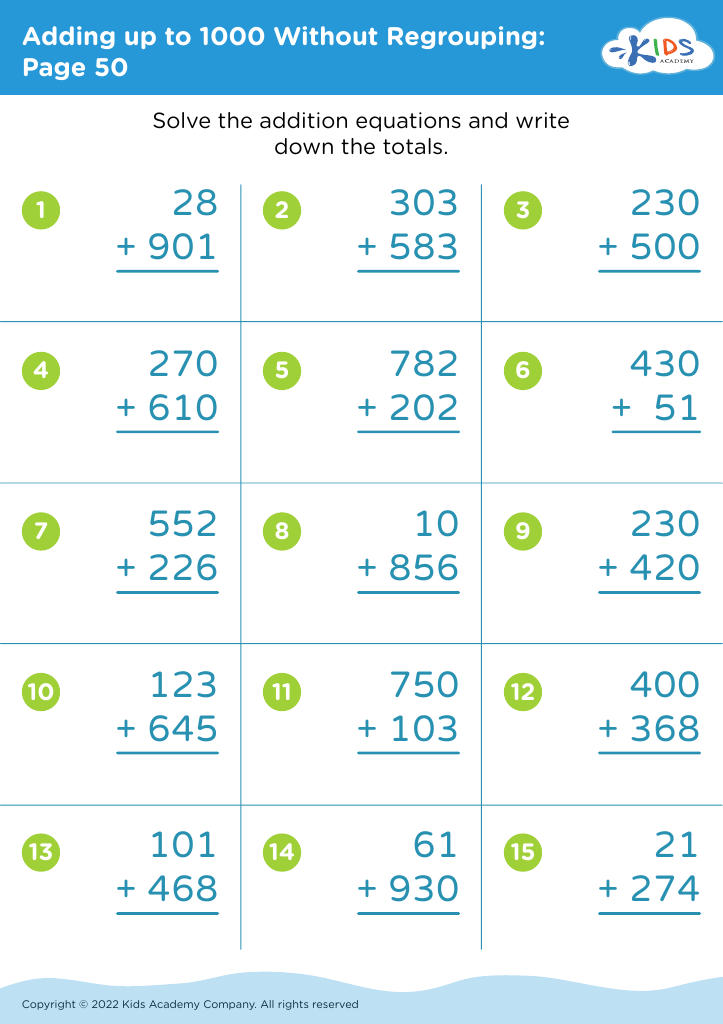
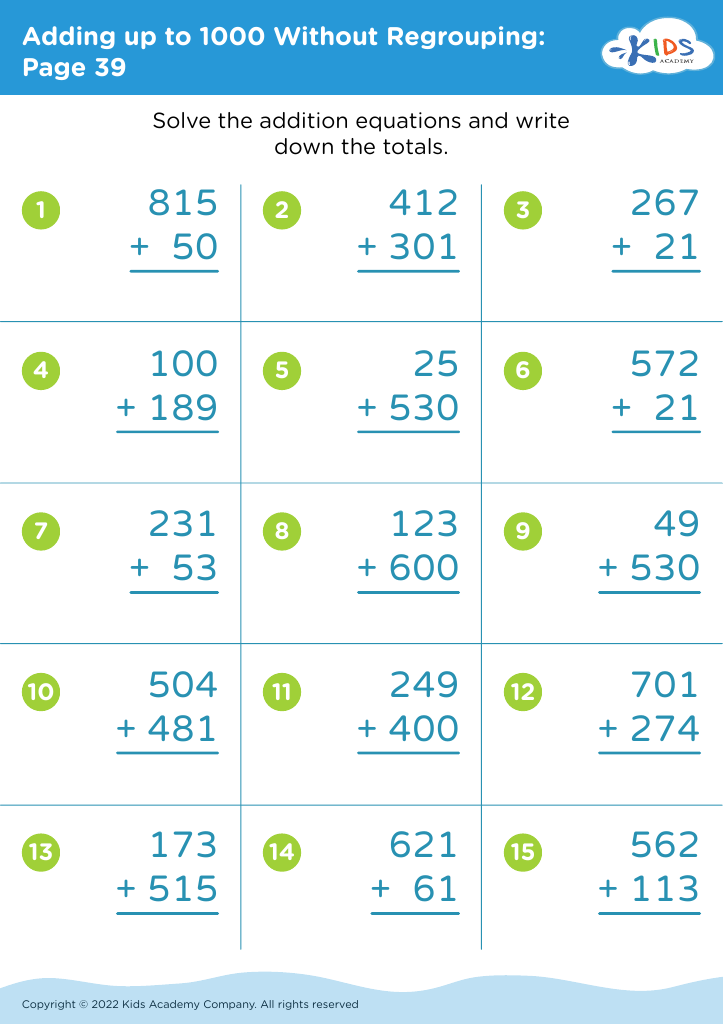


Parents and teachers play a key role in the early foundational stages of a child's education, particularly in areas like alphabet recognition and basic arithmetic, such as adding up to 1000 without regrouping.
Alphabet recognition is crucial because it lays the groundwork for literacy. When children can readily recognize letters and their corresponding sounds, they can more swiftly progress to reading and writing skills. A strong grasp of the alphabet aids in word formation, vocabulary building, and comprehension—all critical components for academic success and effective communication.
Arithmetic skills, such as adding up to 1000 without regrouping, are equally essential. In Grade 2, children transition from basic counting to more complex addition problems. This step is foundational for future math concepts like regrouping, multiplication, and division. Proficiency in adding without regrouping fosters confidence and ensures students have a solid understanding of place value, number operations, and basic problem-solving skills. It allows them to handle more advanced math tasks with ease in subsequent grades.
Therefore, nurturing these skills early on sets children up for a lifetime of learning. Parents’ involvement through learning activities at home, alongside teachers’ structured guidance in the classroom, ensures a well-rounded and robust educational foundation for young learners.