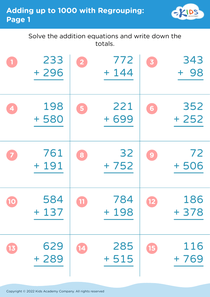
Develop counting skills Grade 2 Adding up to 1000 Without Regrouping Worksheets
3 filtered results
-
From - To
Boost your second grader's mathematics proficiency with our "Develop Counting Skills: Adding Up to 1000 Without Regrouping" worksheets! These engaging resources are specifically designed to help young learners master addition while enhancing their counting skills. Featuring a variety of structured exercises, our worksheets provide children with ample practice problems that require no regrouping, allowing for a smoother learning experience. Perfect for classroom use or at-home practice, these worksheets encourage independent learning, critical thinking, and confidence in math. Instill a love for numbers and ensure a strong foundation in addition with our user-friendly and effective worksheets tailored for Grade 2 students!
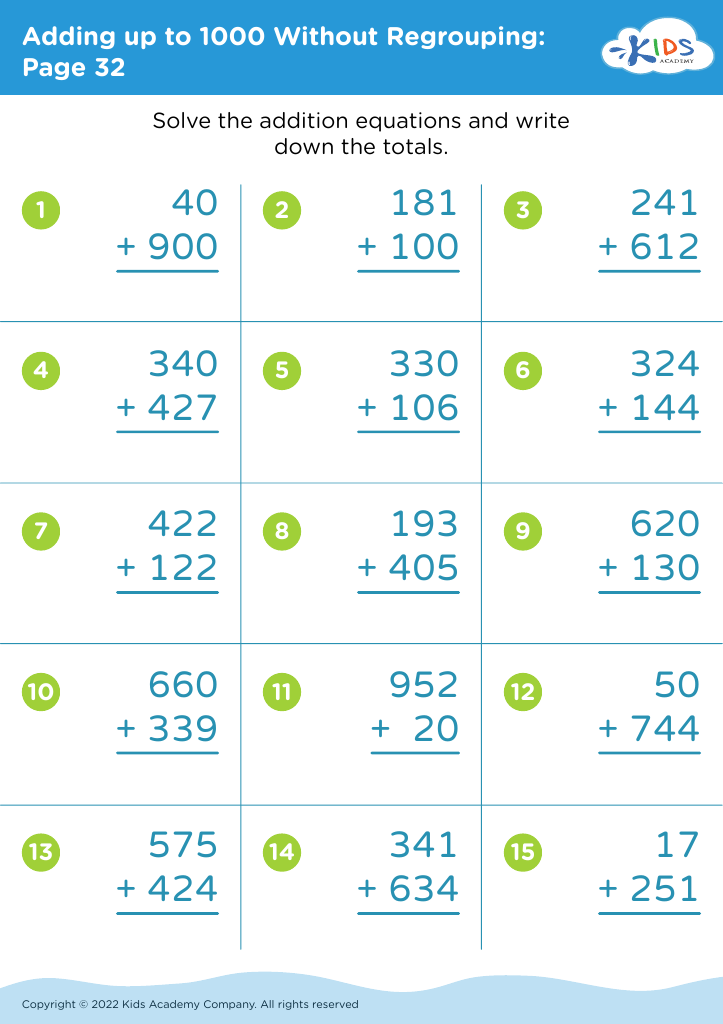
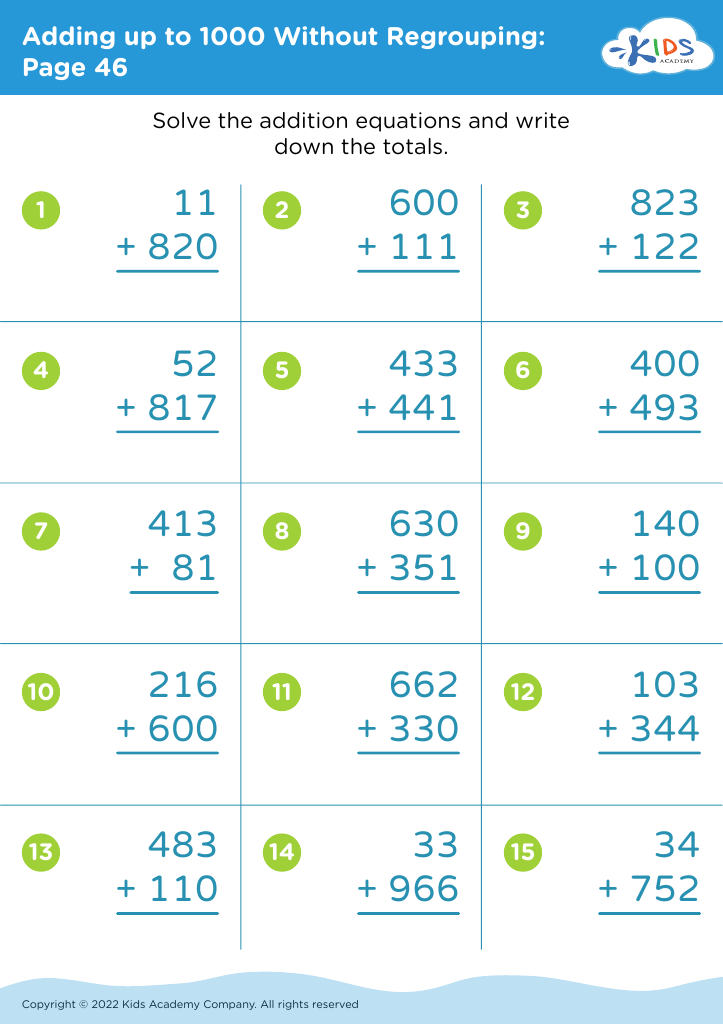
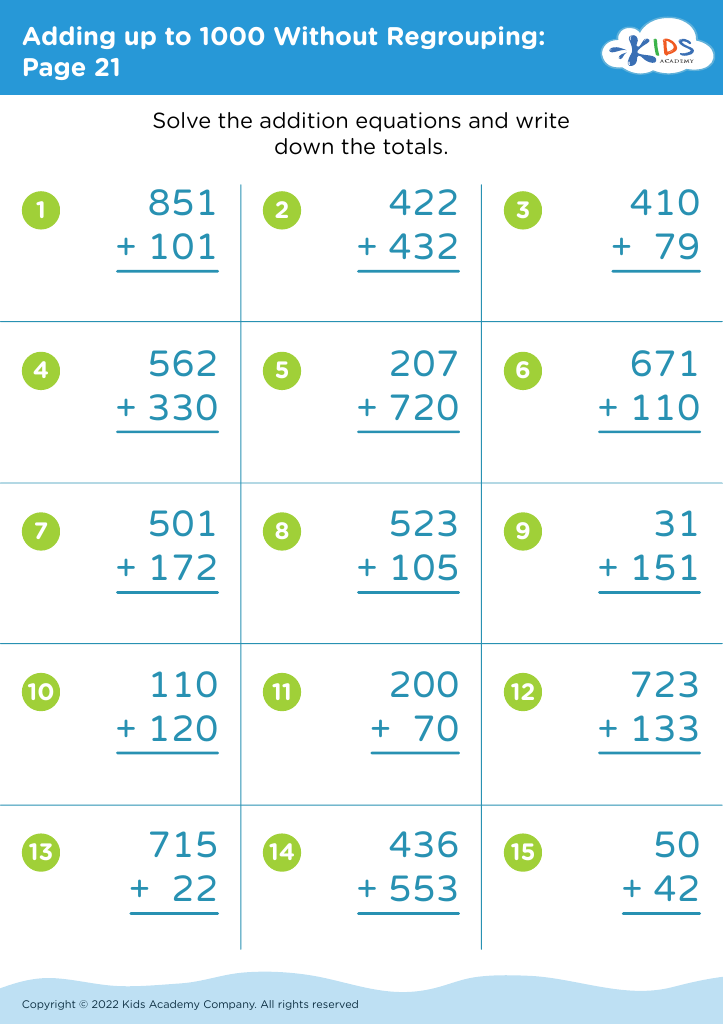


Developing counting skills, particularly for Grade 2 students, is crucial for several reasons. First, mastering addition up to 1000 without regrouping builds a significant foundation for more advanced mathematical concepts that students will encounter later. It promotes a deep understanding of place value, number relationships, and mental math strategies, all of which are essential for their future success in mathematics.
Additionally, strong counting skills foster confidence in students. When parents and teachers encourage practice in adding numbers, children gain a sense of achievement as they comprehend and master challenging concepts. This confidence often translates to a positive attitude towards math, making students more likely to engage with and enjoy future learning experiences.
Moreover, these skills are not just limited to academic success; they have real-life applications as well. From managing allowances to understanding quantities and making decisions, strong counting skills allow students to navigate everyday mathematical scenarios effectively.
Finally, parents and teachers play a vital role in this development. By fostering an engaging and supportive environment, they encourage practice and reinforcement. Investing in counting skills helps establish a robust foundation that will benefit children across various subjects and in everyday life.