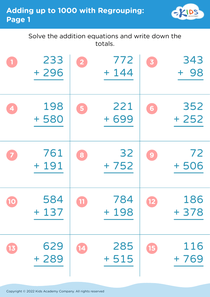
Fraction comparison Grade 2 Adding up to 1000 Without Regrouping Worksheets
4 filtered results
-
From - To
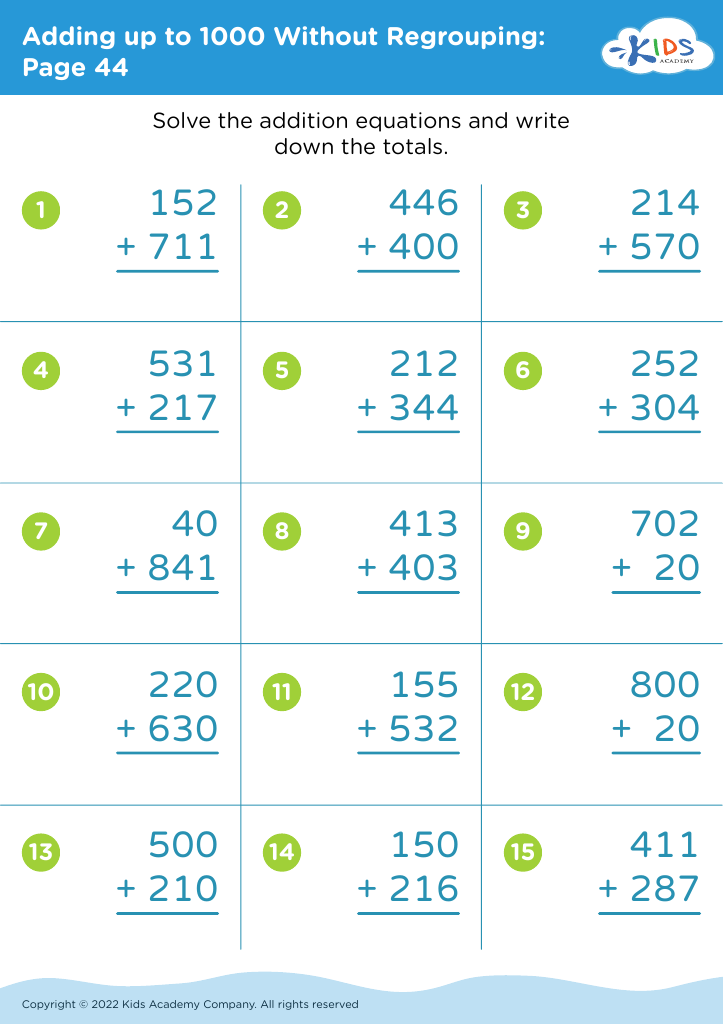
Welcome to our Fraction Comparison Worksheets for Grade 2, designed to enhance young learners' math skills by exploring the concept of fractions and tackling addition problems up to 1000 without regrouping. These educational resources provide engaging exercises that help students visually assess and compare fractions, ensuring a solid foundation in mathematical reasoning. With a focus on hands-on learning, our worksheets feature colorful illustrations and manageable problems, fostering confidence in students as they master fraction comparison. Ideal for classroom or at-home use, these worksheets are perfect for reinforcing key math concepts in an accessible and enjoyable way, paving the path to mathematical success!
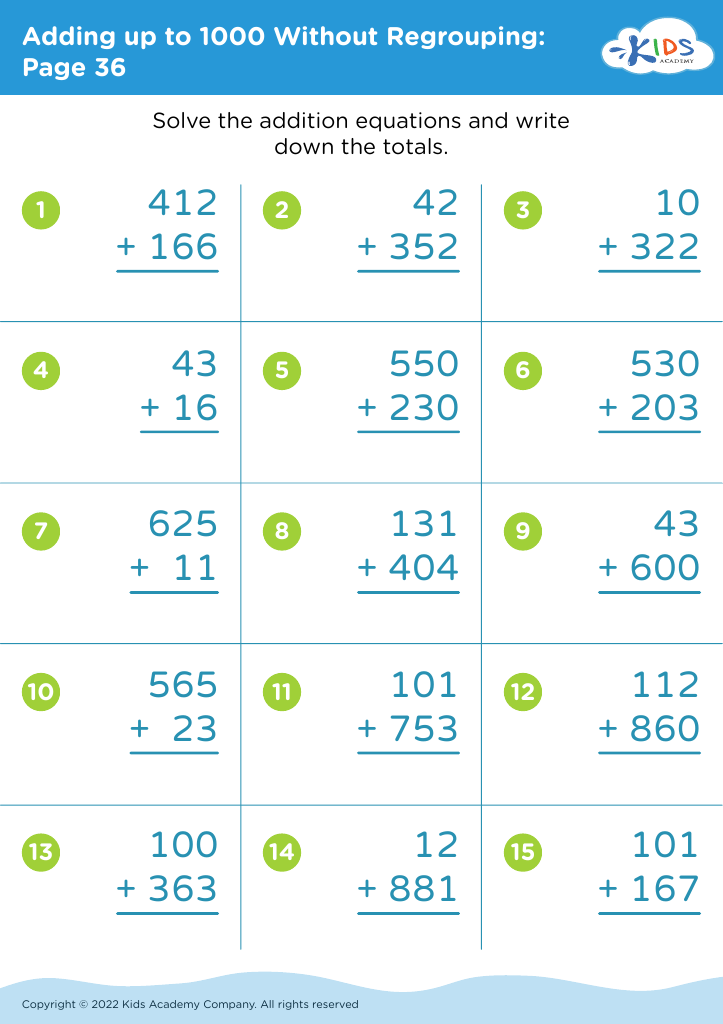
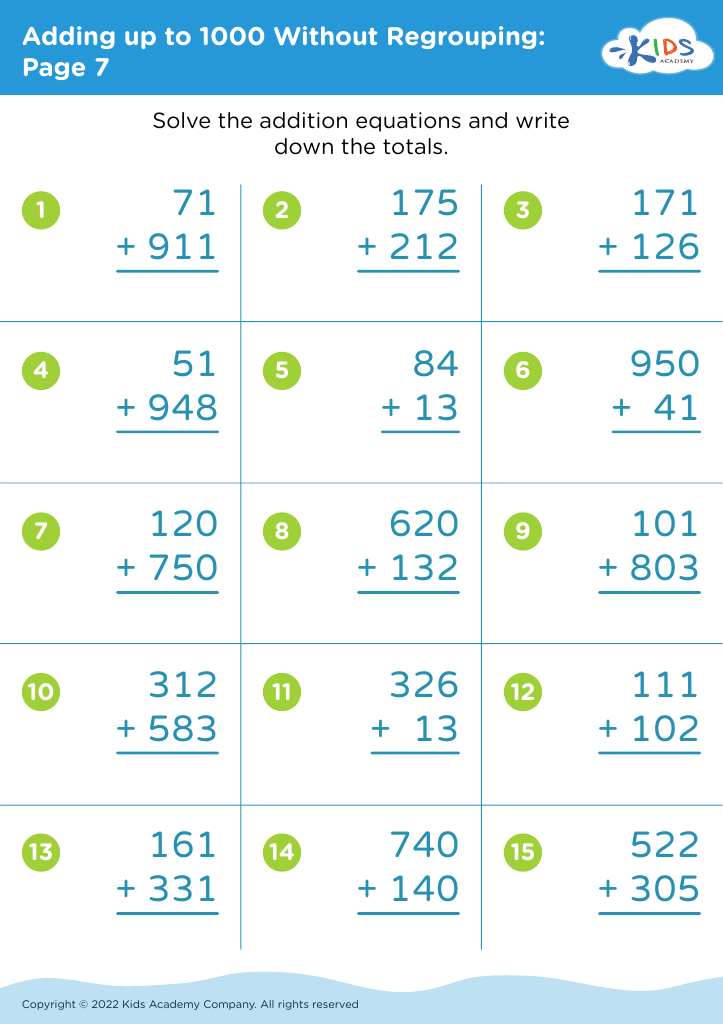
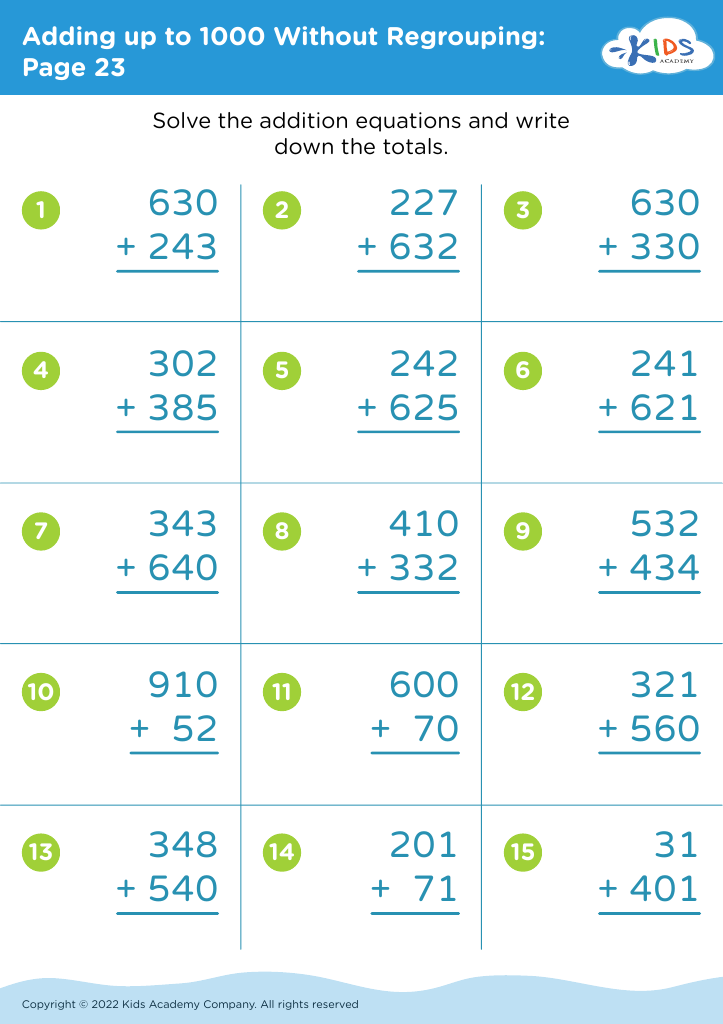


Understanding fraction comparison is crucial for second graders as it lays the foundation for their future math skills. Teaching students how to compare fractions enhances their number sense, critical thinking, and problem-solving abilities. Students begin to see how different fractions relate to one another, which is essential for grasping more complex mathematical concepts later, such as addition and subtraction of fractions.
When adding numbers up to 1000 without regrouping, it's important for students to understand place value and how numbers can be combined, ensuring accuracy in their calculations. This skill not only builds confidence but also reinforces the connection between addition and fractions. For instance, if a student can compare 1/4 and 2/4 effectively, they will be better equipped to understand how those fractions can fit into problem-solving scenarios that involve larger numbers.
Moreover, parents and teachers can foster a positive attitude toward math by showing kids practical applications of fractions in everyday life, such as cooking or sharing. This makes learning more engaging. Supporting students in these areas promotes a solid mathematical foundation, ultimately setting them up for success in higher grades and future academic endeavors.