Improving counting skills Grade 2 Adding up to 1000 Without Regrouping Worksheets
4 filtered results
-
From - To
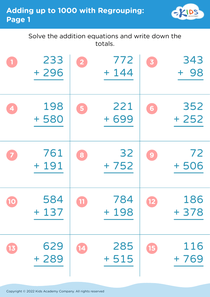
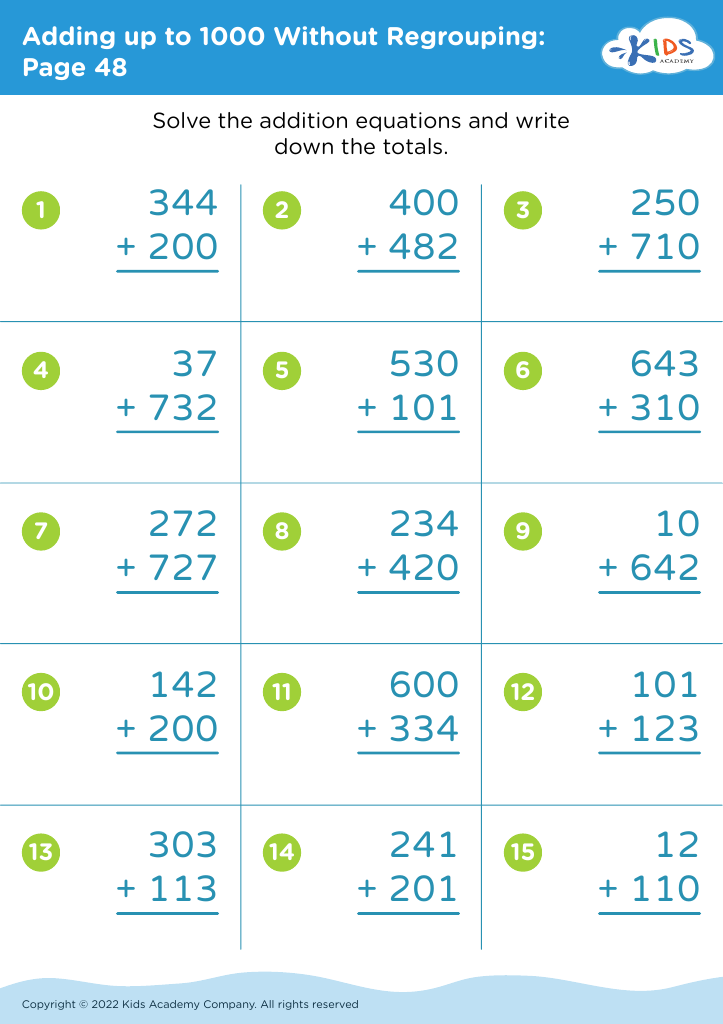
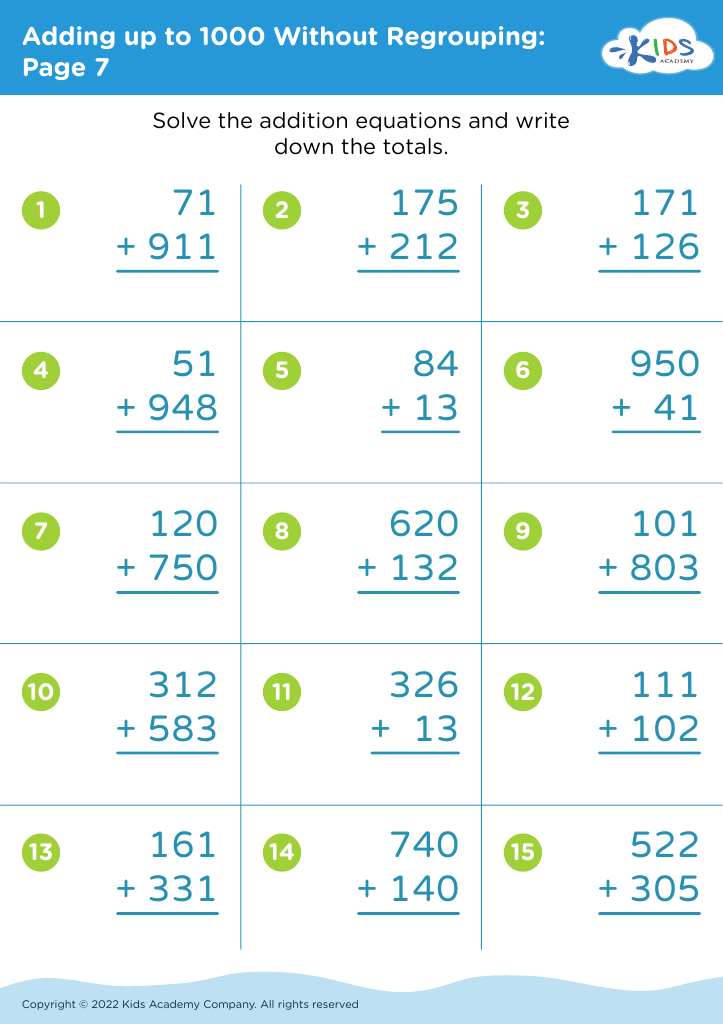
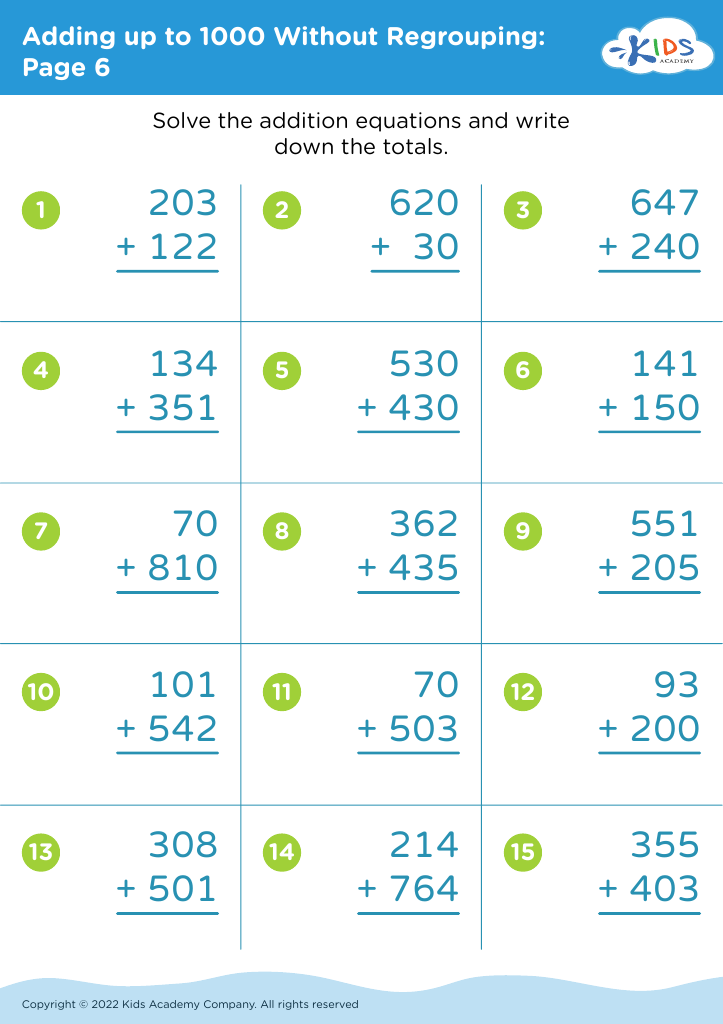
Elevate your second grader's math abilities with our "Improving Counting Skills: Grade 2 Adding up to 1000 Without Regrouping Worksheets". These engaging and expertly-designed resources offer extensive practice in basic addition, enhancing confidence and proficiency. Each worksheet features a myriad of problems focused on adding numbers up to 1000 without the complexity of regrouping, making them perfect for young learners. By tackling these exercises, students will bolster their counting skills, grasp foundational math concepts more firmly, and achieve academic success. Empower your child’s numerical understanding and watch their mathematical fluency flourish with our specialized worksheets.
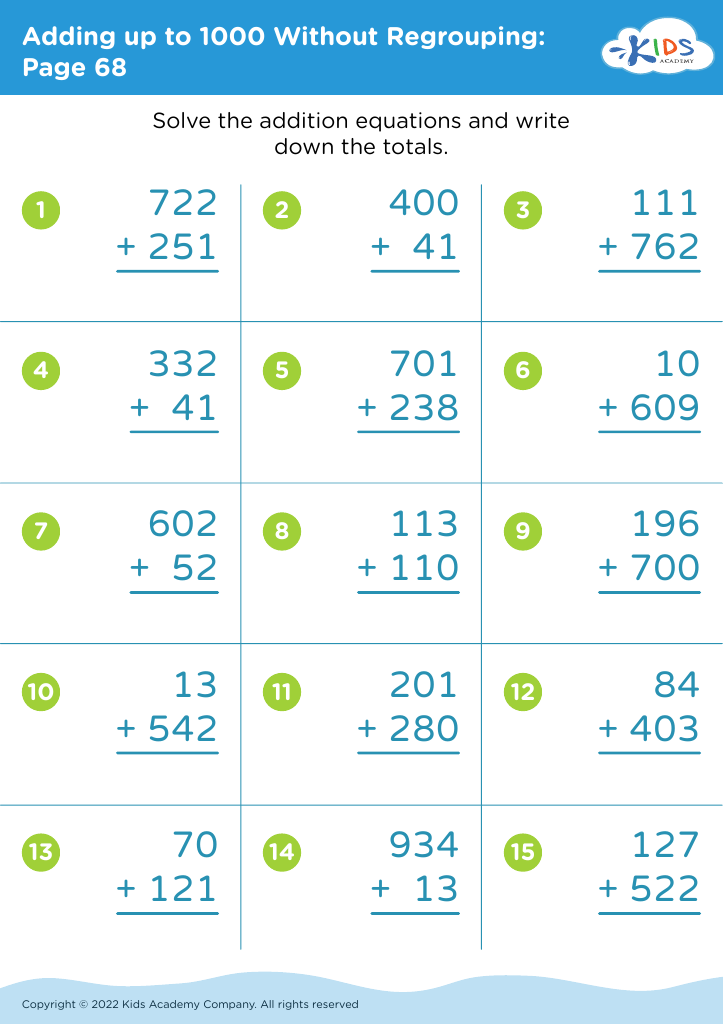


Improving counting skills and the ability to add up to 1000 without regrouping is critical for second graders as it forms the backbone of their mathematical foundation. Counting and understanding place values matter because they promote numerical literacy, allowing children to comprehend the value of numbers and their proper order, which directly impacts future academic achievement in math. Proficiency in these skills develops their cognitive abilities, enhances logical thinking, and fosters problem-solving, which extends beyond mathematics to everyday situations.
Moreover, honing these skills boosts children's confidence, enabling them to tackle more complex mathematical concepts with ease as they progress in their education. Teachers and parents play a vital role in this developmental stage by creating supportive and engaging learning environments, using practical applications and fun activities to make abstract numbers more accessible.
Additionally, mastering addition without regrouping up to 1000 prepares pupils for more advanced arithmetic operations. It instills a sense of precision and patience, as they learn to break down and solve numerical problems methodically. With solid counting and addition skills, children are better positioned to excel in other subjects, cultivating a lifelong love for learning and a solid understanding of math's relevance in everyday life.