Reading comprehension Grade 2 Adding up to 1000 Without Regrouping Worksheets
4 filtered results
-
From - To
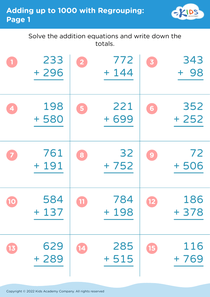
Enhance your second grader's reading comprehension skills with our informative worksheets focused on adding up to 1000 without regrouping. Designed to support learners in Grade 2, these engaging worksheets not only help students practice math but also improve their understanding of key reading concepts. Each activity encourages children to read carefully, follow instructions, and apply their math knowledge in context. By integrating reading and math, these worksheets foster critical thinking and comprehension abilities, preparing students for future challenges. Perfect for classroom use or at-home practice, these resources will empower young learners to excel in both subjects seamlessly.
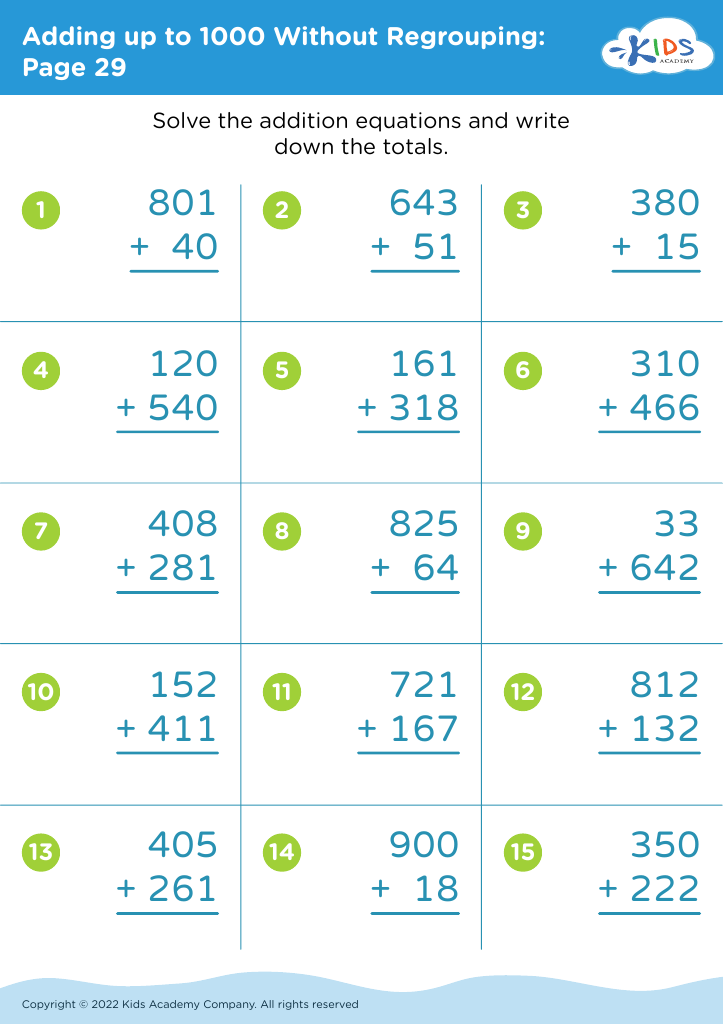
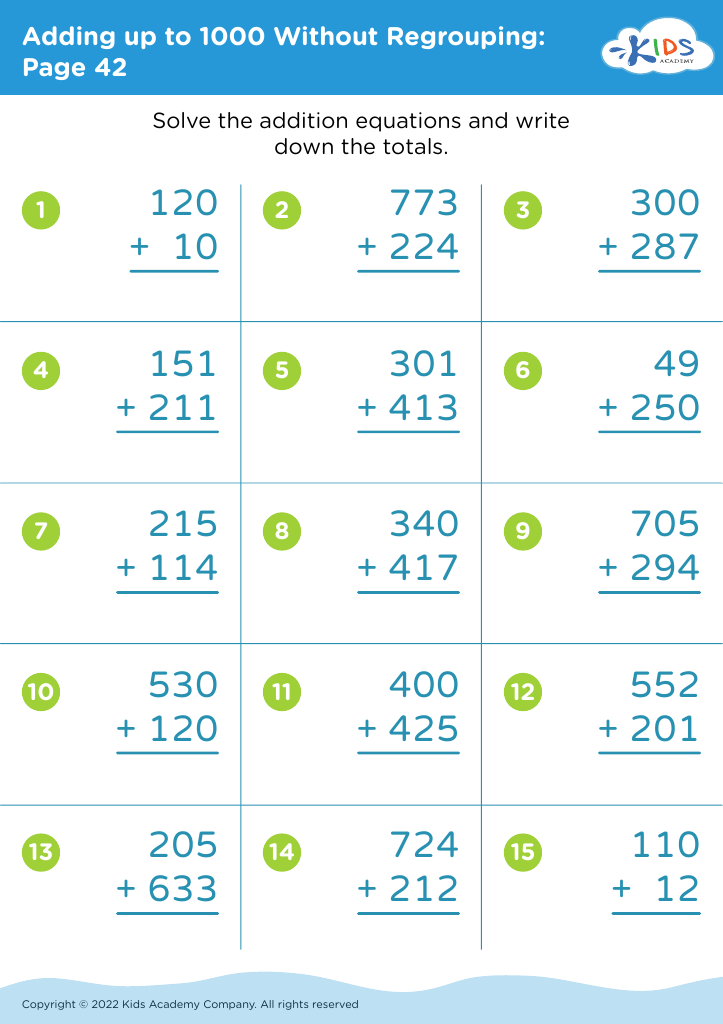
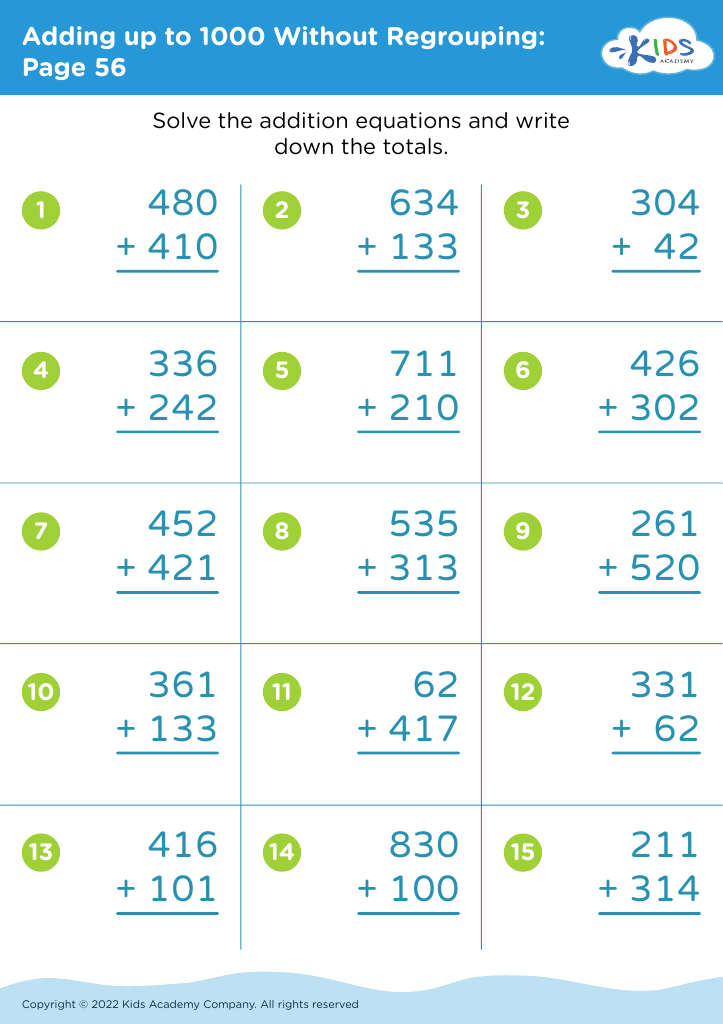
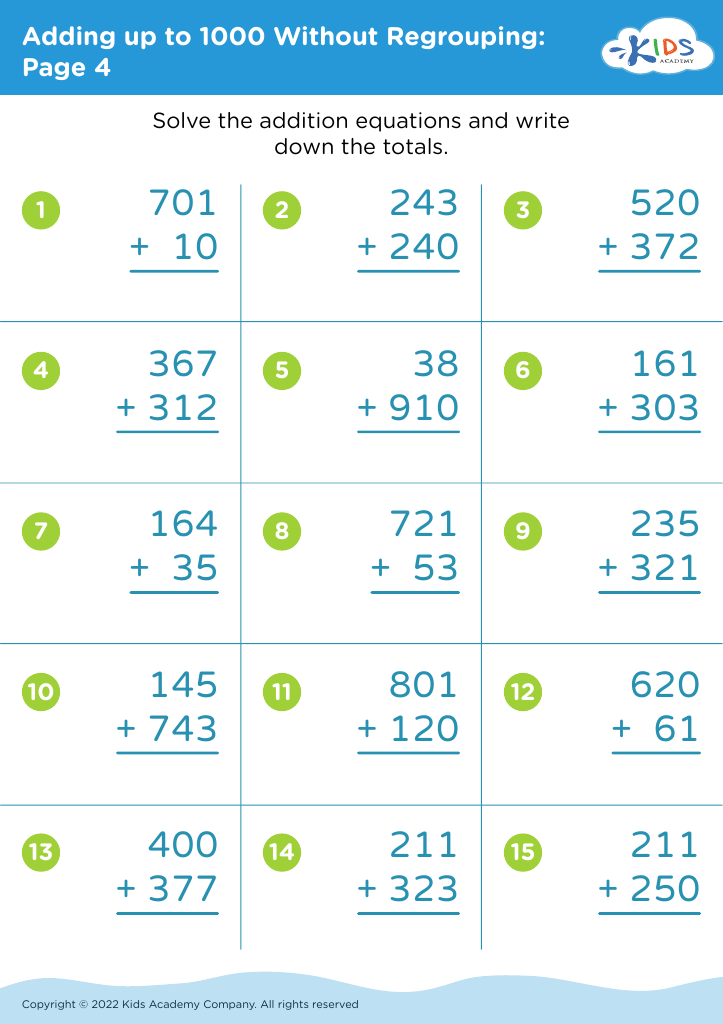


Reading comprehension and numerical skills, such as adding up to 1000 without regrouping, are crucial for second graders as they lay the foundation for future academic success. Understanding what they read enables students to make connections among concepts, enhance critical thinking, and succeed across subjects. Comprehension goes beyond recognizing words; it involves interpreting meaning, drawing inferences, and engaging with the text, which directly impacts their motivation and enjoyment of reading.
Similarly, mastering basic addition without regrouping helps build strong mathematical foundations. At this level, students learn to manipulate numbers, develop problem-solving skills, and understand number relationships, which will be vital for more complex operations later on. With proficiency in these areas, children gain confidence, promoting a positive attitude toward learning.
Teachers and parents must prioritize these skills to help children become proficient and engaged learners. A strong emphasis on reading comprehension also supports students in other curricular areas, as the ability to process and understand information is essential. By fostering both reading and mathematical skills, adults can collaborate effectively to shape lifelong learners who are equipped to meet future academic challenges with confidence and enthusiasm.