Recognizing shapes Grade 2 Adding up to 1000 Without Regrouping Worksheets
3 filtered results
-
From - To
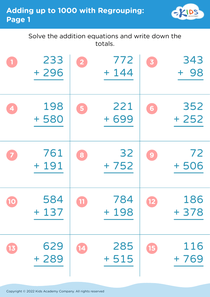
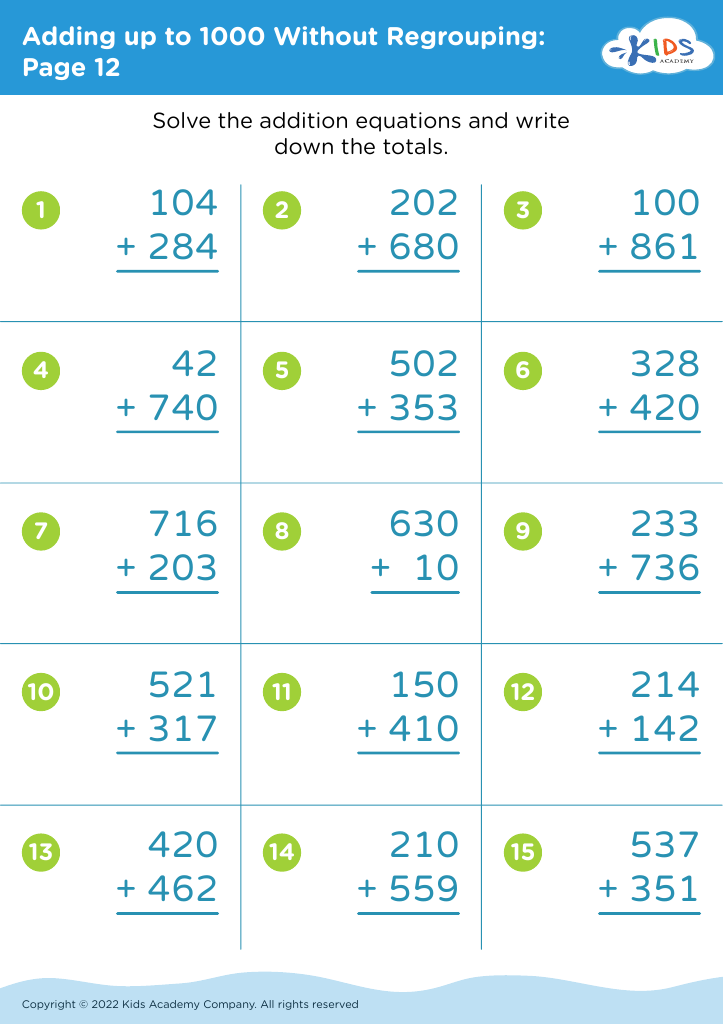
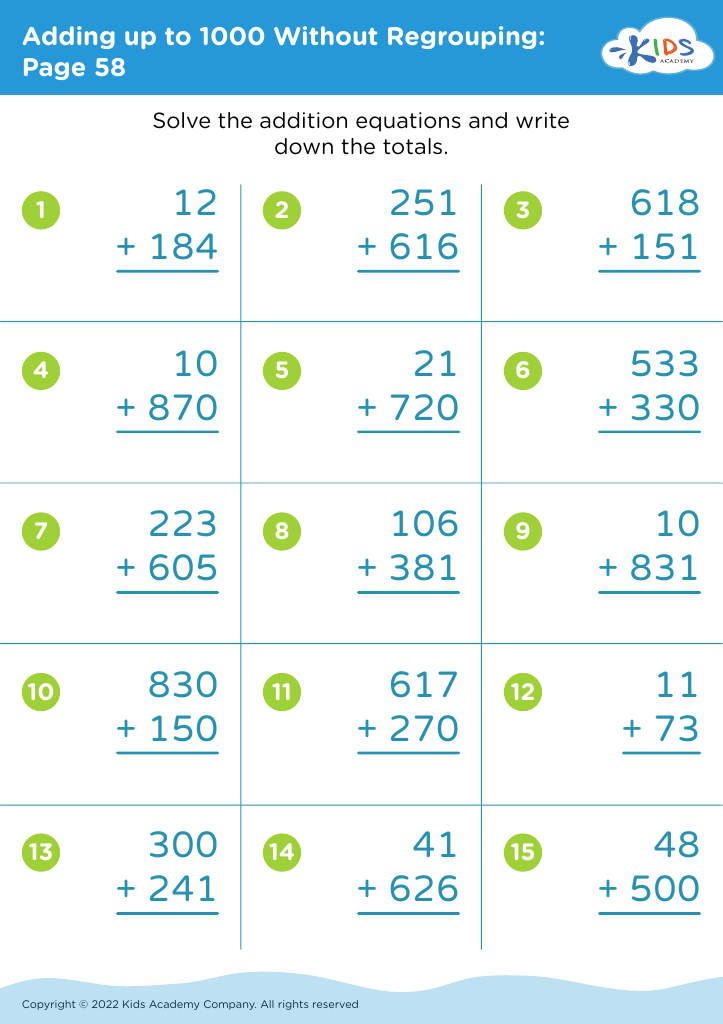
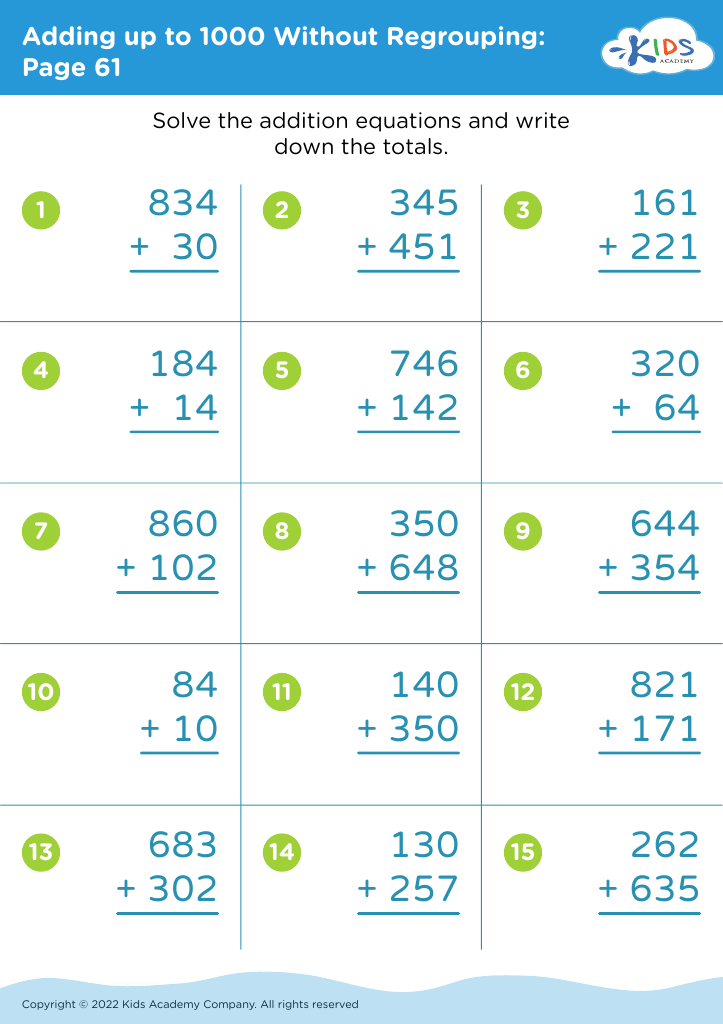
Explore our "Recognizing Shapes" Grade 2 worksheets designed to enhance geometric understanding while reinforcing addition skills with sums up to 1000 without regrouping. These engaging worksheets combine shape recognition with math practice, helping students identify various geometric forms while boosting their confidence in addition. Each activity is tailored for second graders, providing clear instructions and vibrant visuals that keep young learners motivated. Teachers will appreciate the structured format that aligns with learning standards, while parents can support their child's progress at home. Get ready for a fun-filled learning experience that seamlessly combines math and geometry in one comprehensive resource!


Recognizing shapes and mastering addition without regrouping are foundational skills in early education, particularly for Grade 2 students. These skills are vital for cognitive development, critical thinking, and everyday problem-solving.
Understanding shapes helps young learners develop spatial awareness, which is essential for subjects like geometry, art, and even science. When students can identify and relate to geometric figures, they're better equipped to explore their environment and engage in hands-on activities that enhance their learning experience. This recognition also lays the groundwork for future mathematical concepts, fostering a strong foundation in problem-solving.
Meanwhile, adding up to 1000 without regrouping emphasizes practice in basic arithmetic and strengthens a child’s number sense. This proficiency not only builds confidence but also encourages independence when solving mathematical problems. It provides children with skills that are applicable in real-life scenarios, like budgeting or measuring.
Parents and teachers should care about these skills because they promote a student's overall mathematical literacy, which is crucial for academic success. Moreover, fostering these skills cultivates persistence and a positive attitude towards learning, shaping well-rounded individuals prepared for future challenges in more complex subjects. Ultimately, focusing on these essential skills leads to holistic development and a strong educational foundation.