Shape Recognition Grade 2 Adding up to 1000 Without Regrouping Worksheets
3 filtered results
-
From - To
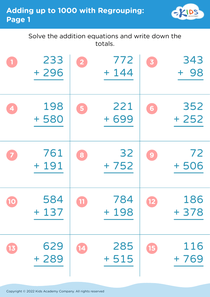
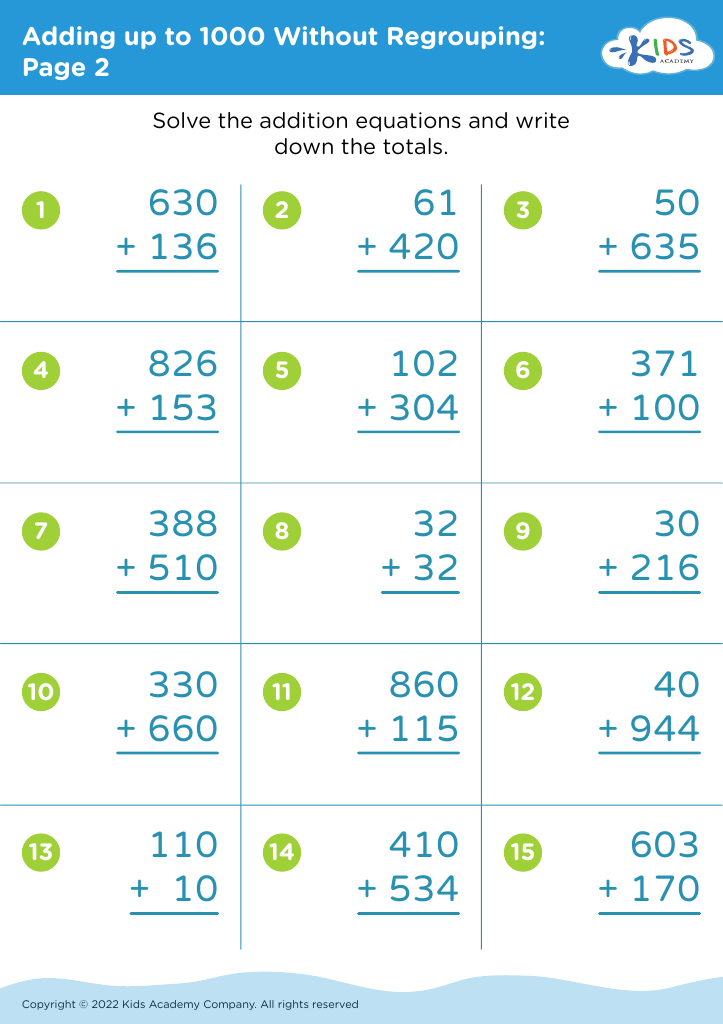
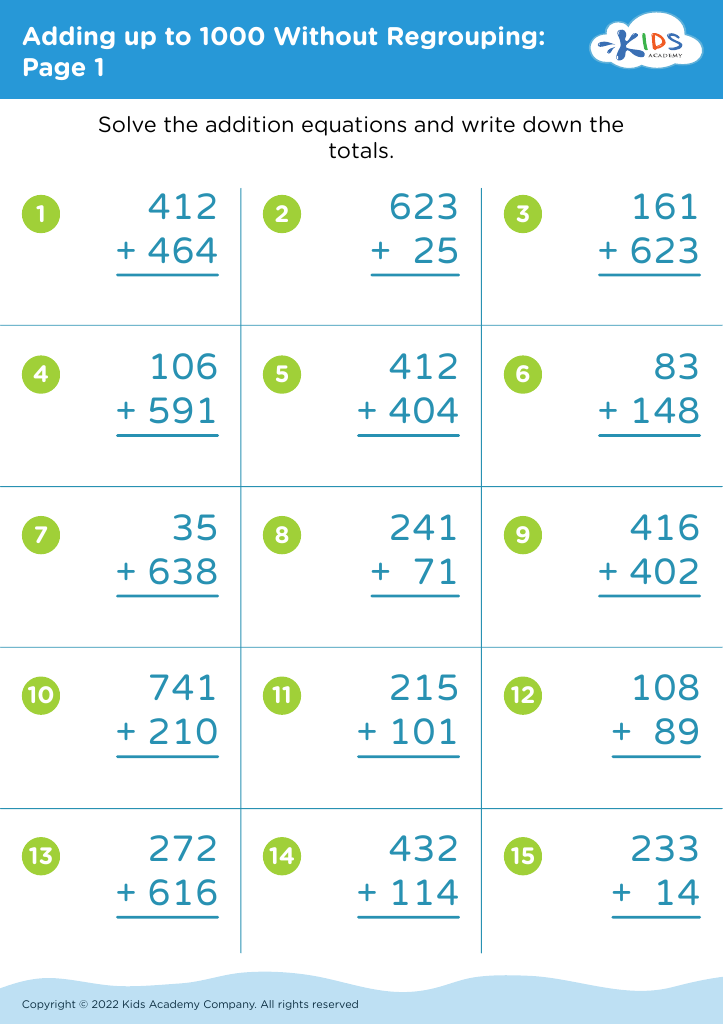
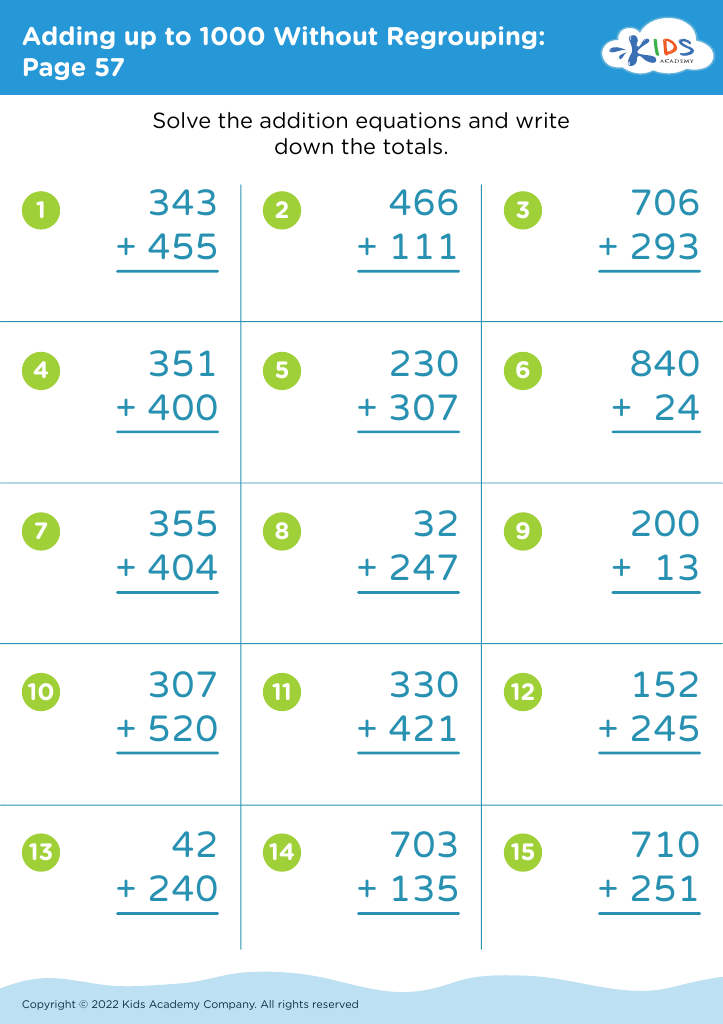
Boost your 2nd grader's math and shape skills with our special worksheets! Our "Shape Recognition and Adding up to 1000 Without Regrouping Worksheets" combine two essential learning areas into one fun and educational resource. Perfectly designed to challenge and engage young learners, these worksheets help reinforce shape identification while practicing addition within 1000, all without the complexity of regrouping. These activities develop a solid foundation in math and enhance critical thinking. Ideal for in-class or at-home study, our worksheets offer an enjoyable way for kids to strengthen these fundamental skills. Download and print today for endless learning fun!


Shape recognition and the ability to add numbers up to 1000 without regrouping are essential skills that benefit the cognitive development of second graders. Here's why parents and teachers should emphasize these areas:
Shape recognition is fundamental to a child's mathematical and spatial reasoning. When children can identify and differentiate between various shapes, they improve their geometry skills and develop a keen perception of spatial relationships. This ability is crucial not just in math, but also in understanding visual information in everyday life. For example, recognizing shapes plays into comprehending maps, interpreting graphs, and solving puzzles.
Adding up to 1000 without regrouping is another important skill. At this level, children form the foundation for more advanced arithmetic operations. Mastering addition within this range bolsters their number sense, fluency, and confidence. It encourages step-by-step problem solving and strengthens their mental math capabilities. This basic arithmetic skill also prepares them for more complex operations like regrouping, subtraction with borrowing, multiplication, and division in higher grades.
Together, shape recognition and arithmetic proficiency enable students to build a solid foundation in math. Early mastery promotes academic achievement and problem-solving skills, equipping children with the tools they need for lifelong learning. Thus, parents and educators are encouraged to support and nurture these essential early-grade math skills.