Filters

16 filtered results

Clear all filters
Favorites
With answer key
Interactive

16 filtered results

Difficulty Level

Grade


Unlock the world of fractions for your 2nd grader with our "Comparing Fractions Grade 2 Adding up to 1000 Worksheets." These engaging resources focus on crucial skills in comparing fractions and understanding place value in numbers up to 1000. Through a variety of fun and educational activities, children can confidently tackle fraction comparison while enhancing their addition and subtraction prowess. Perfect for classroom and home learning, these worksheets provide a solid foundation in math, encouraging analytical thinking and problem-solving. Set your child up for mathematical success with this comprehensive, easy-to-follow resource!
Check out this FREE Grade 2 Trial Lesson on Adding up to 1000!

Suffixes

Favorites
With answer key
Interactive
  • Grade 2
  • Comparing Fractions
  • Adding up to 1000
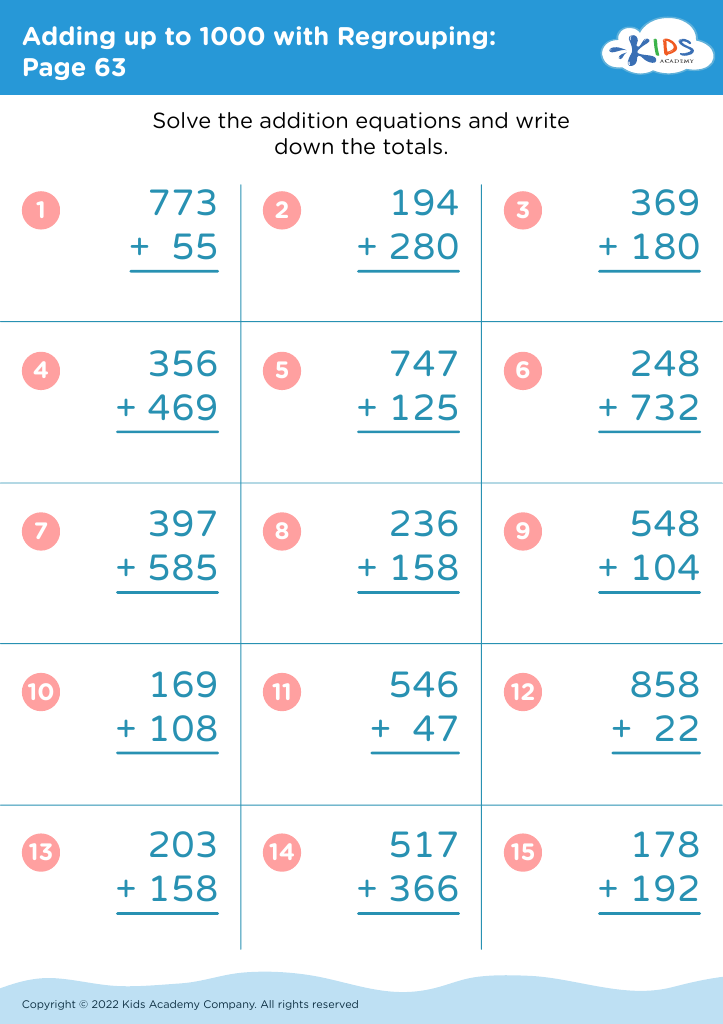
Adding up to 1000 with Regrouping: Page 63
Worksheet
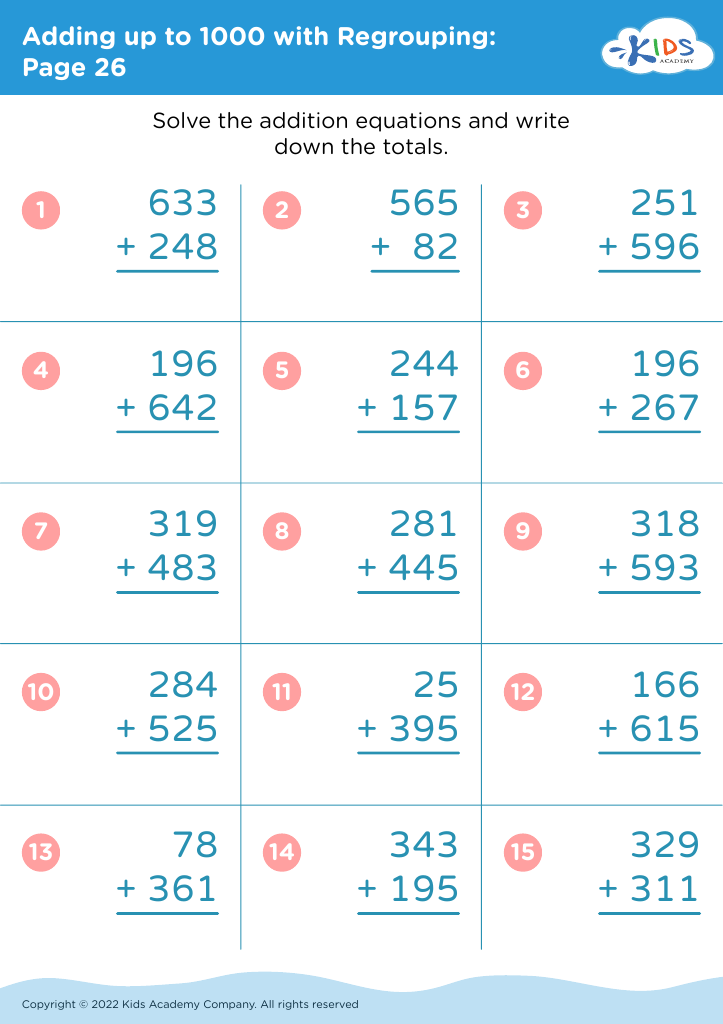
Adding up to 1000 with Regrouping: Page 26
Worksheet
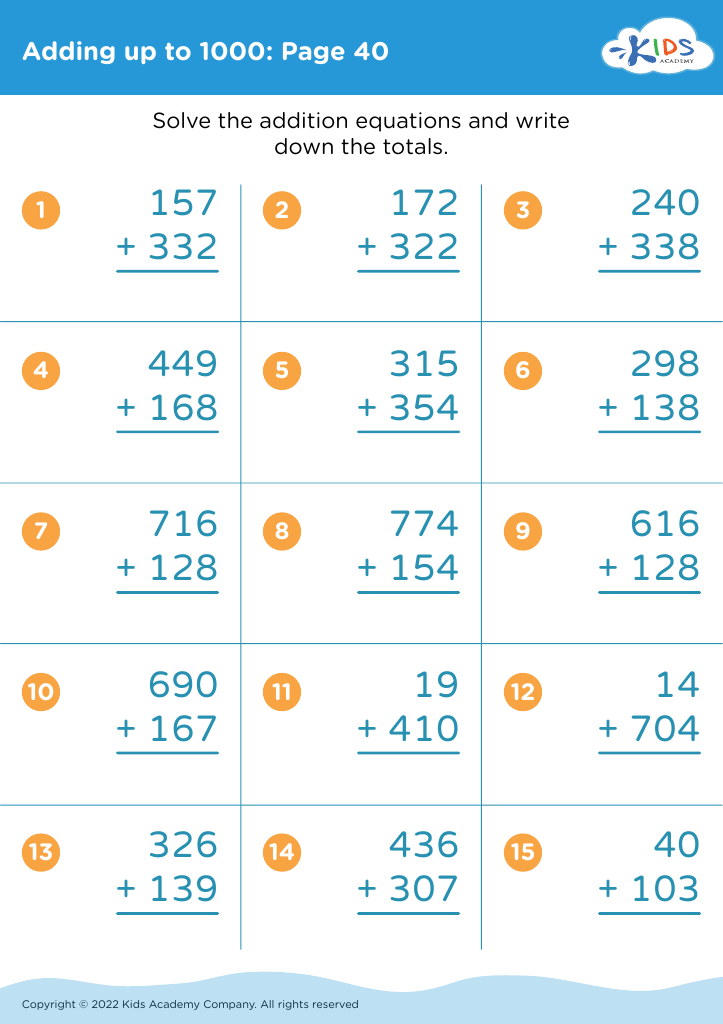
Adding up to 1000: Page 40

Adding up to 1000: Page 40

Adding up to 1000: Page 40
Worksheet
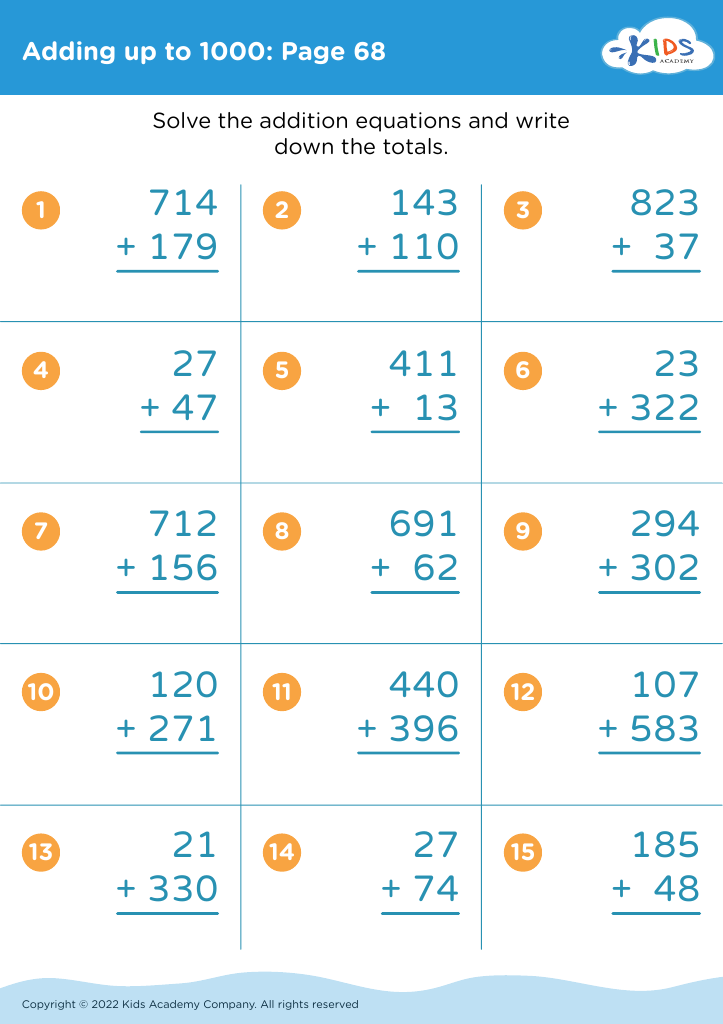
Adding up to 1000: Page 68

Adding up to 1000: Page 68

Adding up to 1000: Page 68
Worksheet
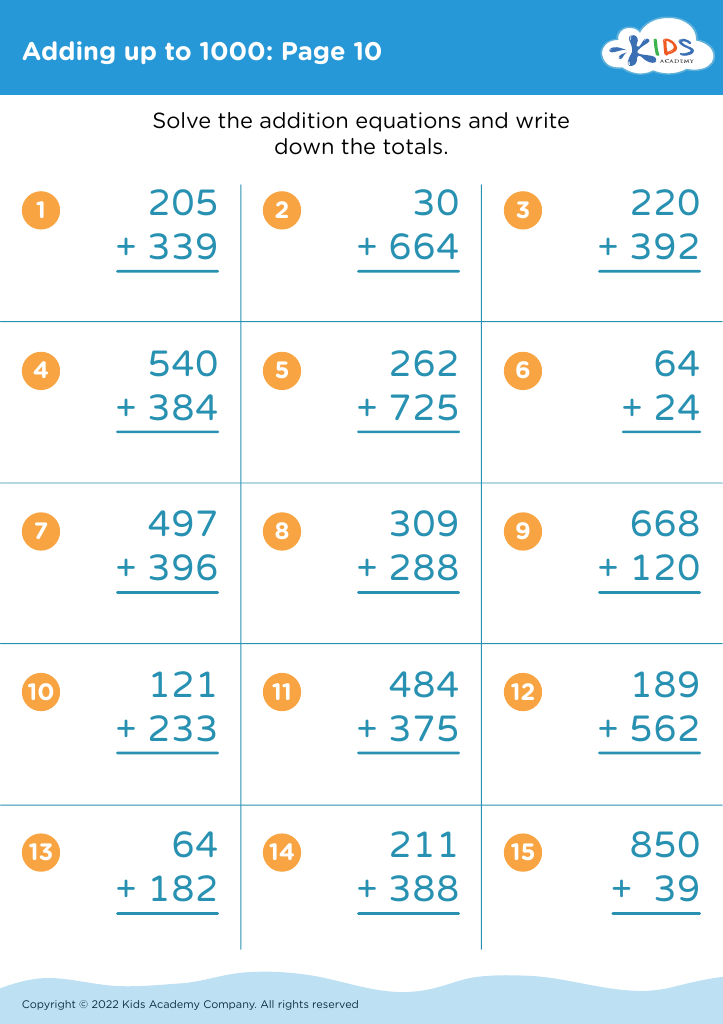
Adding up to 1000: Page 10

Adding up to 1000: Page 10

Adding up to 1000: Page 10
Worksheet
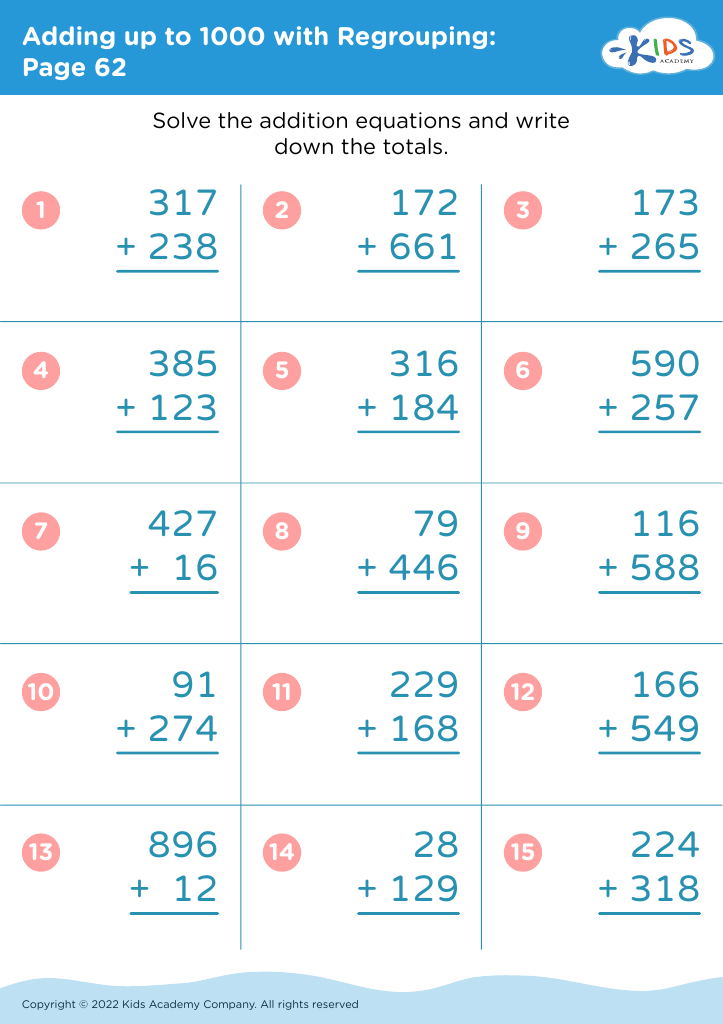
Adding up to 1000 with Regrouping: Page 62
Worksheet
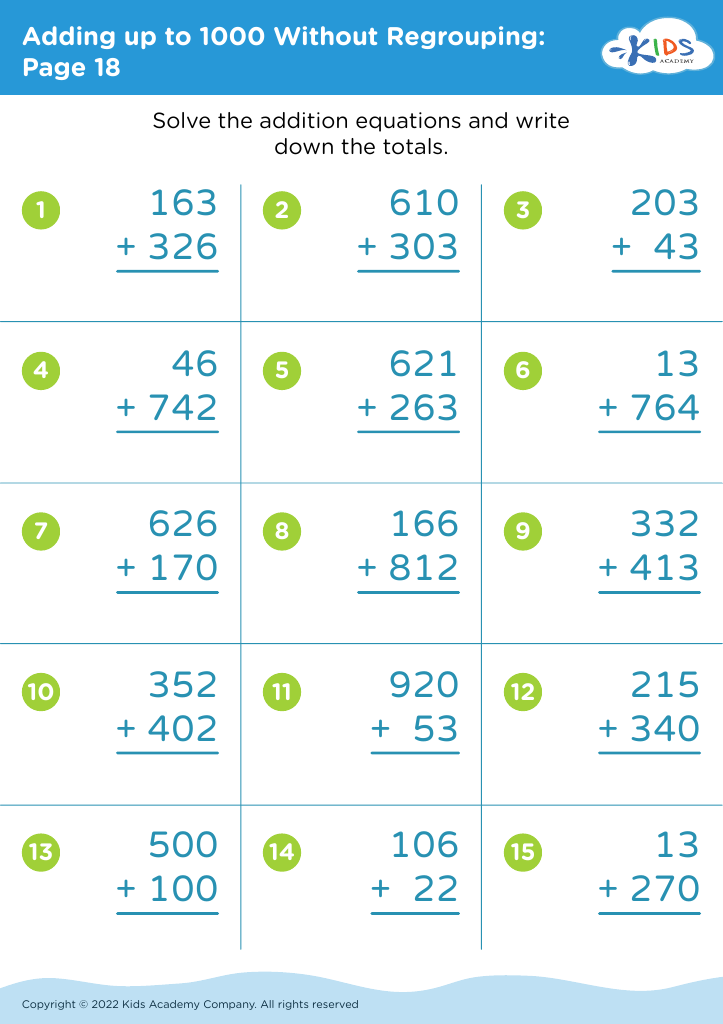
Adding up to 1000 Without Regrouping: Page 18
Worksheet
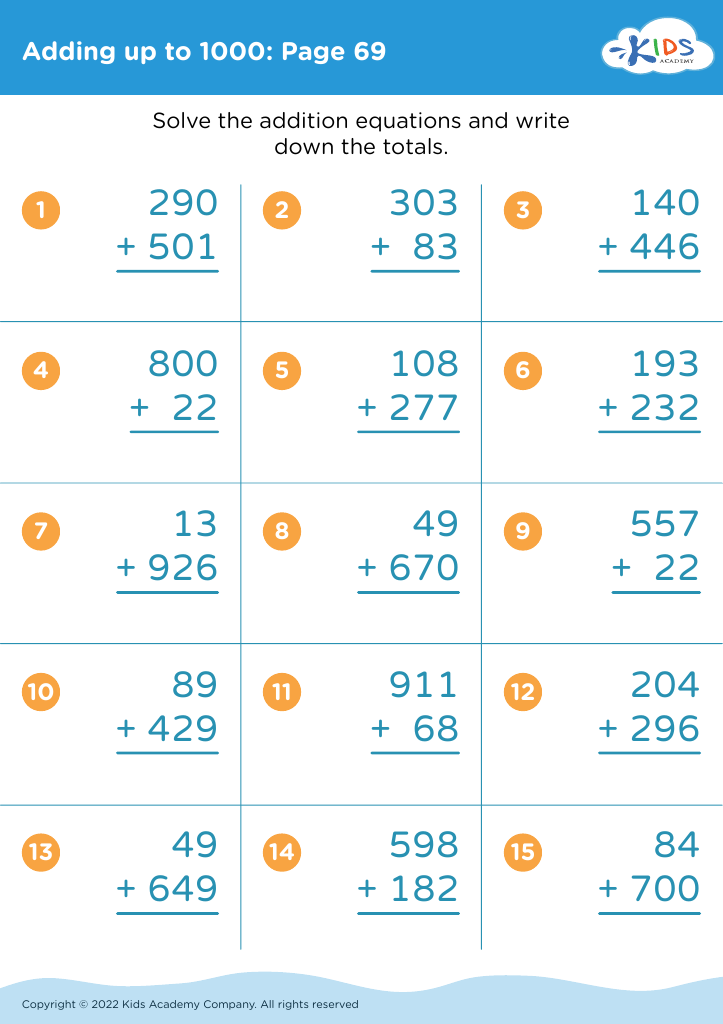
Adding up to 1000: Page 69

Adding up to 1000: Page 69

Adding up to 1000: Page 69
Worksheet
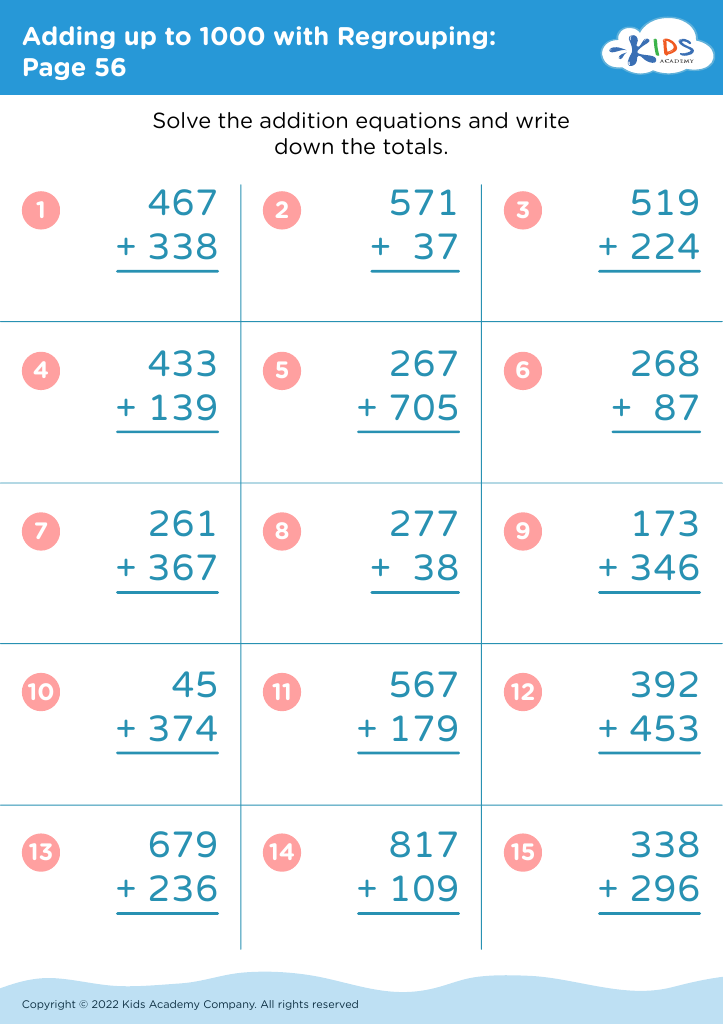
Adding up to 1000 with Regrouping: Page 56
Worksheet
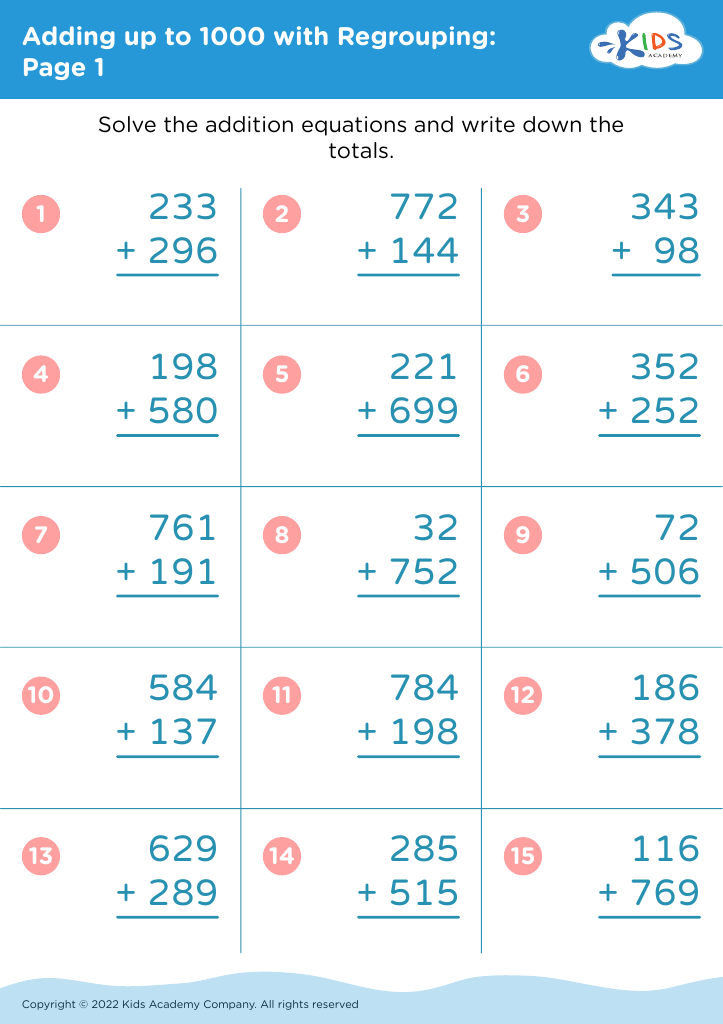
Adding up to 1000 with Regrouping: Page 1
Worksheet
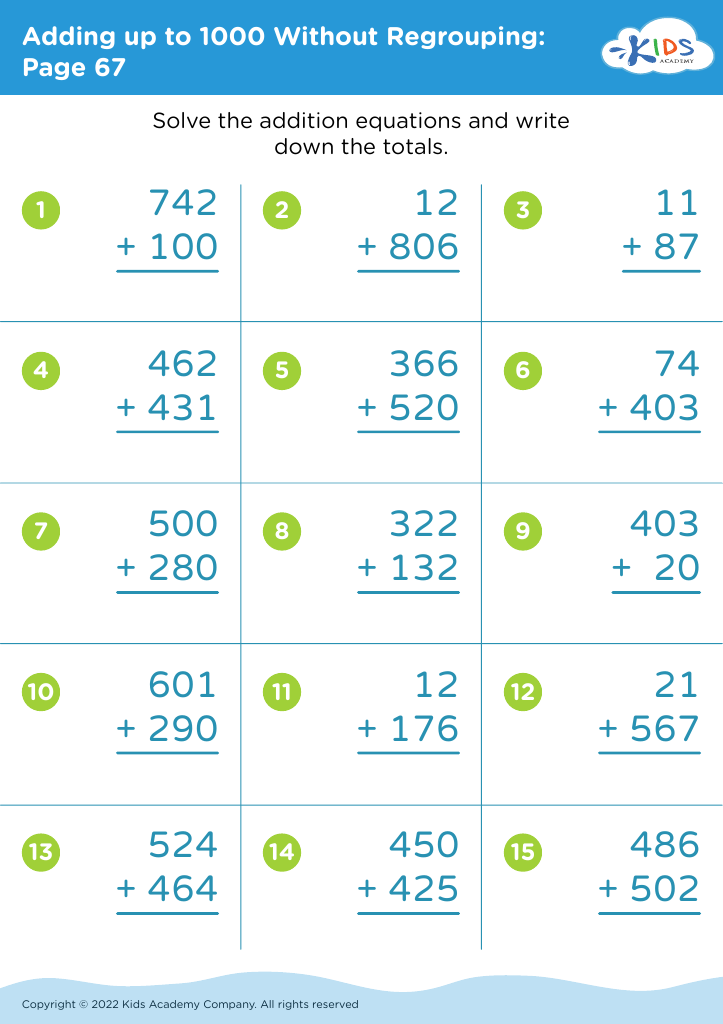
Adding up to 1000 Without Regrouping: Page 67
Worksheet
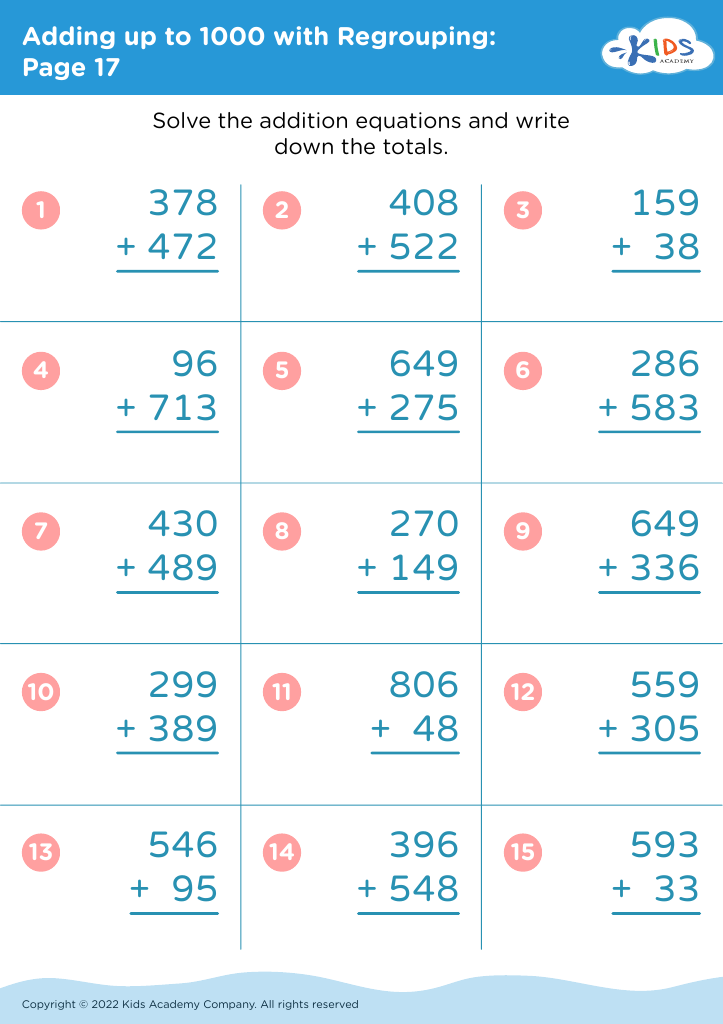
Adding up to 1000 with Regrouping: Page 17
Worksheet
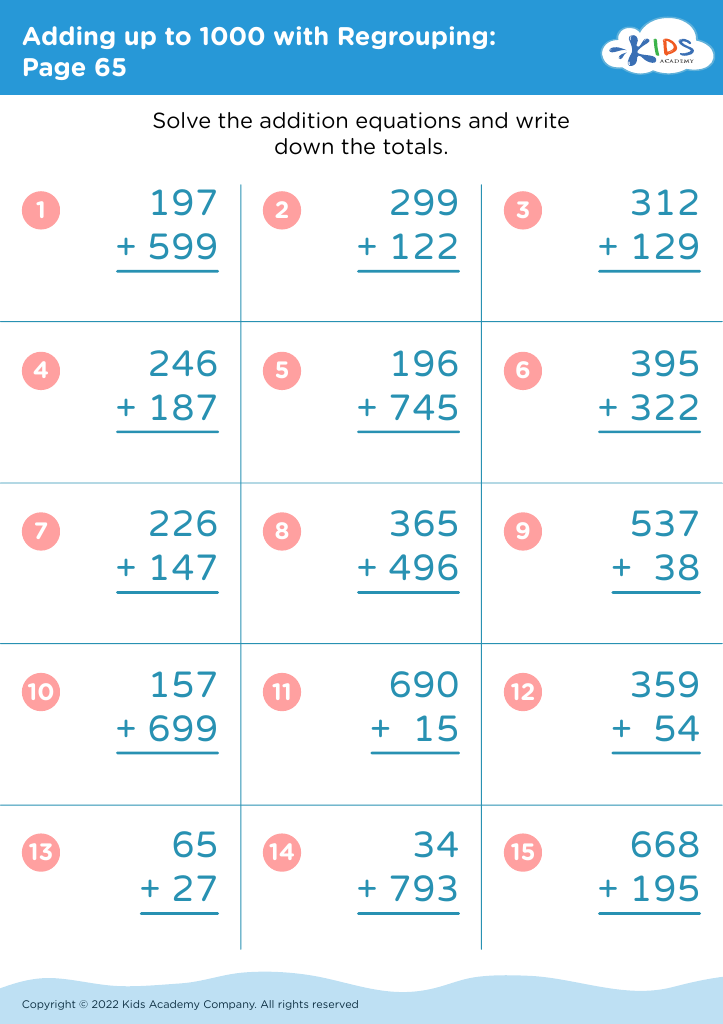
Adding up to 1000 with Regrouping: Page 65
Worksheet
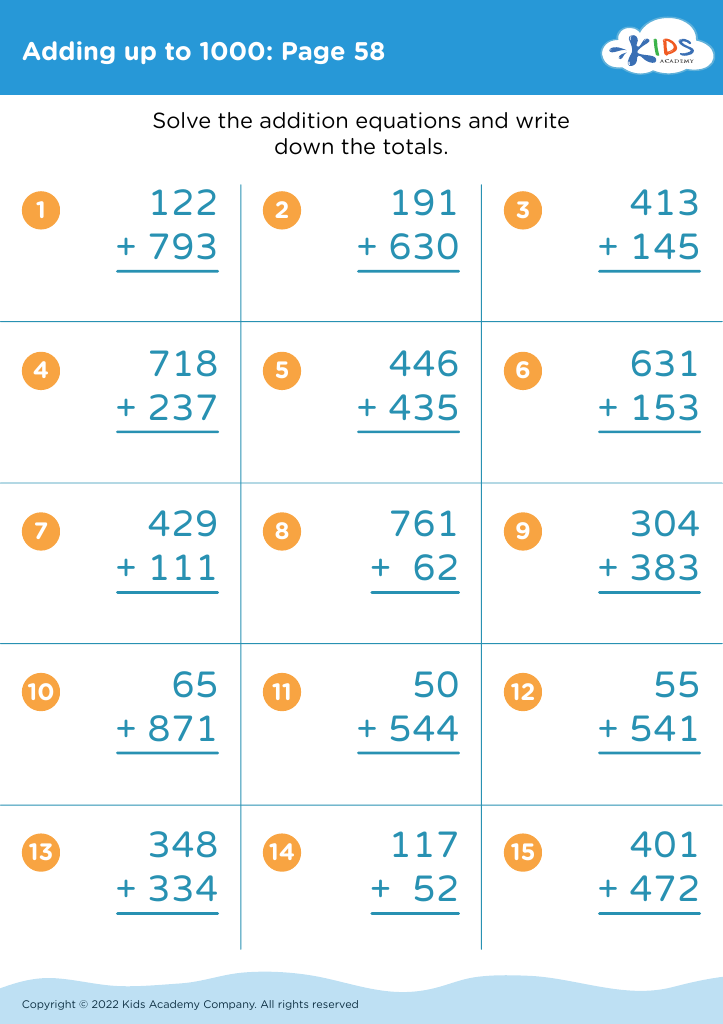
Adding up to 1000: Page 58

Adding up to 1000: Page 58

Adding up to 1000: Page 58
Worksheet
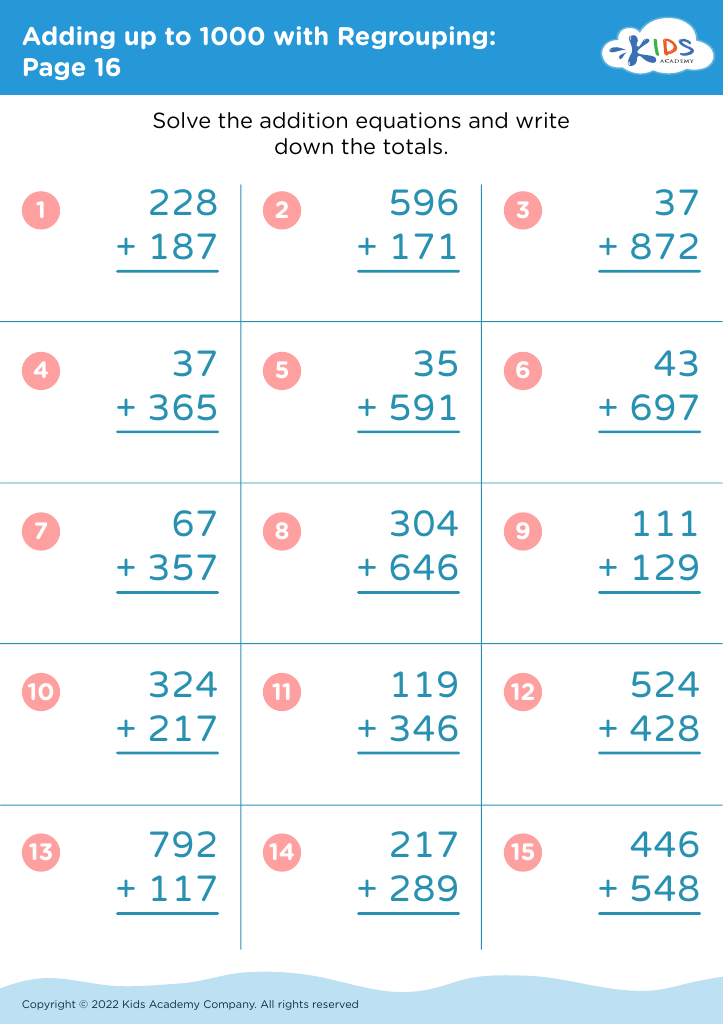
Adding up to 1000 with Regrouping: Page 16
Worksheet
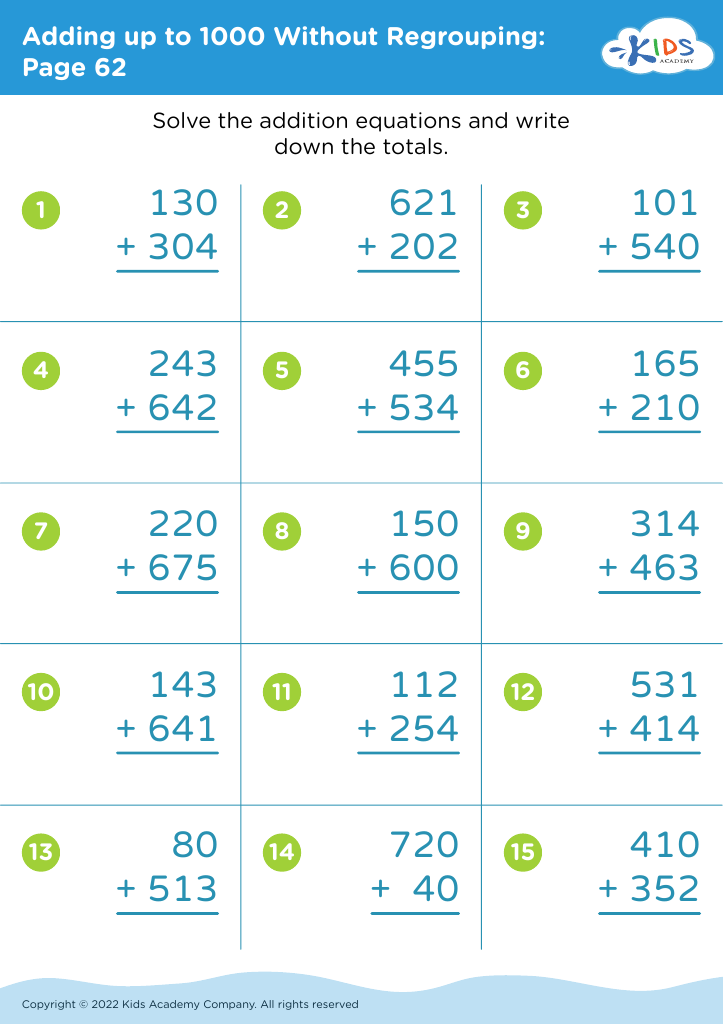
Adding up to 1000 Without Regrouping: Page 62
Worksheet


Understanding how to compare fractions and add up to 1000 in Grade 2 is crucial for building a strong mathematical foundation for children. For parents and teachers, focusing on these skills at an early age provides several key benefits:

Firstly, comparing fractions helps children develop their number sense and an intuitive understanding of numerical relationships. This skill is fundamental not just for math, but for everyday decision-making tasks like measuring ingredients in a recipe or determining the best buy in a store.

Secondly, practicing addition up to 1000 reinforces the principles of place value, a cornerstone concept in arithmetic. It helps children build fluency in addition, laying groundwork for more advanced math topics such as multi-digit addition, subtraction, multiplication, and division.

Furthermore, confidence in math fosters a positive attitude towards learning. By giving children the tools to understand and solve basic problems, they’re more likely to feel capable and motivated as they progress to more challenging concepts.

Lastly, these skills are critical for standardized testing and future academic success. Ensuring children are proficient in comparing fractions and adding large numbers helps them meet essential benchmarks and reduces math-related anxiety in later grades.

By prioritizing these areas in Grade 2, parents and teachers enable children to become competent, confident, and enthusiastic learners.