Critical Thinking Grade 2 Adding up to 1000 Worksheets
5 filtered results
Difficulty Level
Grade
Age
-
From - To
Subject
Activity
Standards
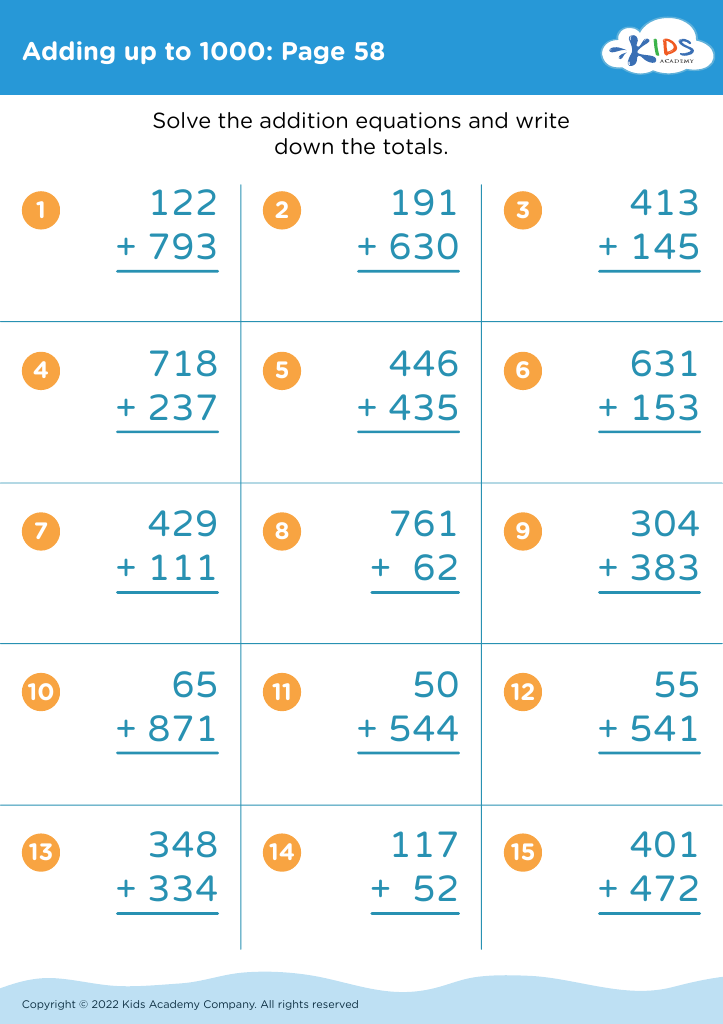
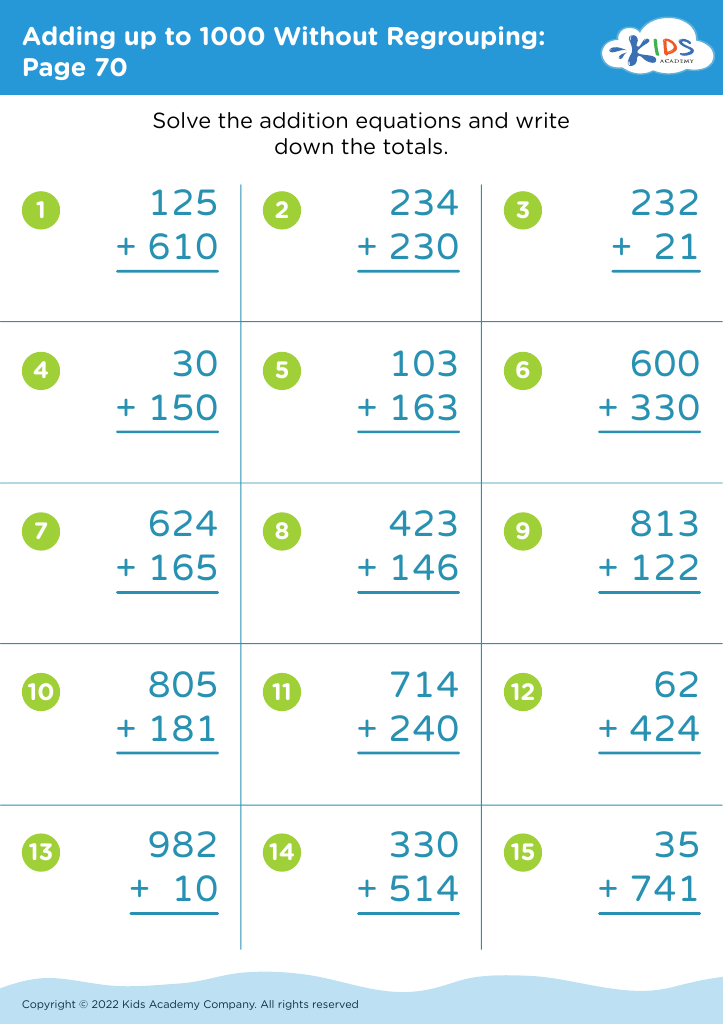
Enhance your second graders' math skills with our engaging "Critical Thinking Grade 2 Adding up to 1000 Worksheets"! These specially designed worksheets encourage young learners to think critically and develop problem-solving strategies while mastering addition. Students will explore various challenging scenarios that require them to apply their math knowledge creatively and effectively. Featuring vibrant illustrations and interactive exercises, these worksheets not only make learning fun but also inspire independent thinking. Perfect for classroom use or at-home practice, our collection supports foundational skills aligned with educational standards, ensuring students are well-prepared for future math challenges. Start building their critical thinking abilities today!
Favorites
With answer key
Interactive
Join Kids Academy for Free
Who is primarily going to use this learning content?



Critical thinking is an essential skill that benefits second graders as they engage in mathematics, particularly in concepts like addition that leads to sums of 1,000. For parents and teachers, fostering critical thinking in young learners can significantly enhance their problem-solving abilities, promoting a deeper understanding of mathematical concepts.
Teaching critical thinking encourages students to approach mathematics with curiosity and creativity. When second graders learn to add numbers up to 1,000, they develop skills that go beyond merely memorizing facts. They learn to analyze problems, break them down into manageable parts, and devise strategies for finding solutions. This analytical approach is pivotal when estimating sums, recognizing patterns, and applying mathematical operations in various contexts.
Furthermore, critical thinking cultivated in mathematics aids children in decision-making and everyday challenges, fostering resilience and independence. As they navigate problems, they adjust their strategies and learn from mistakes, building a growth mindset.
Ultimately, when parents and teachers emphasize critical thinking in mathematics, they prepare children not just for academic success, but for lifelong learning and adaptable thinking in all areas of life. Cultivating these skills at an early age supports overall cognitive development and sets a solid foundation for future educational experiences.