Fine motor skills (writing) Grade 2 Adding up to 1000 Worksheets
5 filtered results
Difficulty Level
Grade
Age
-
From - To
Subject
Activity
Standards
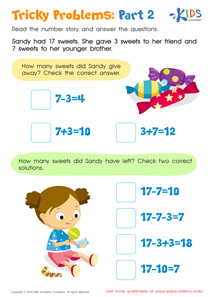
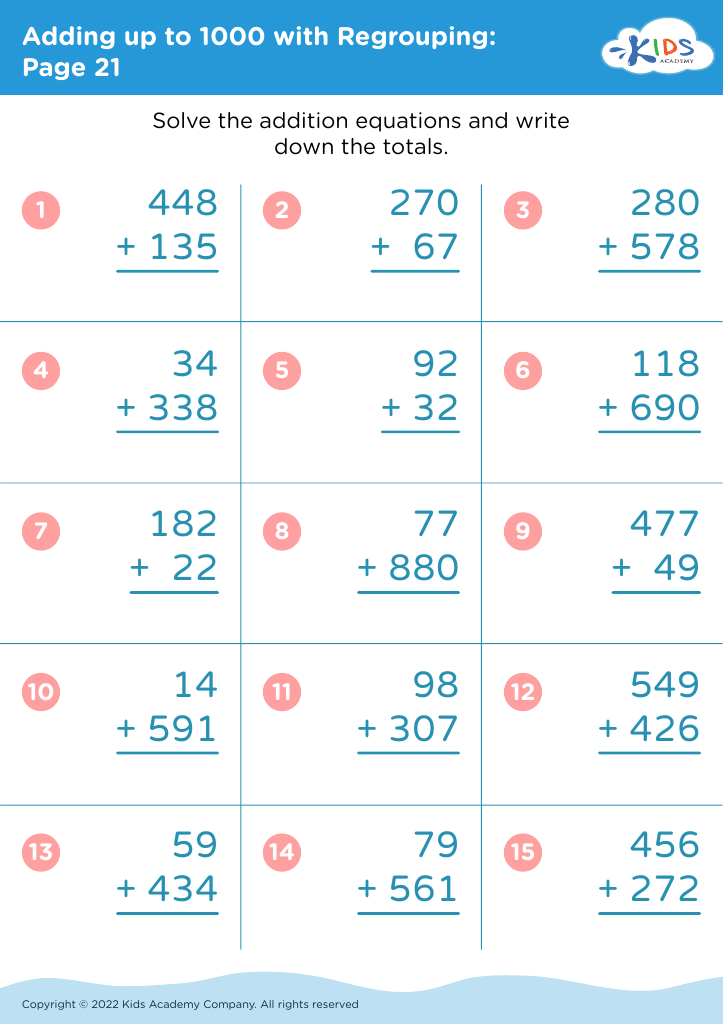
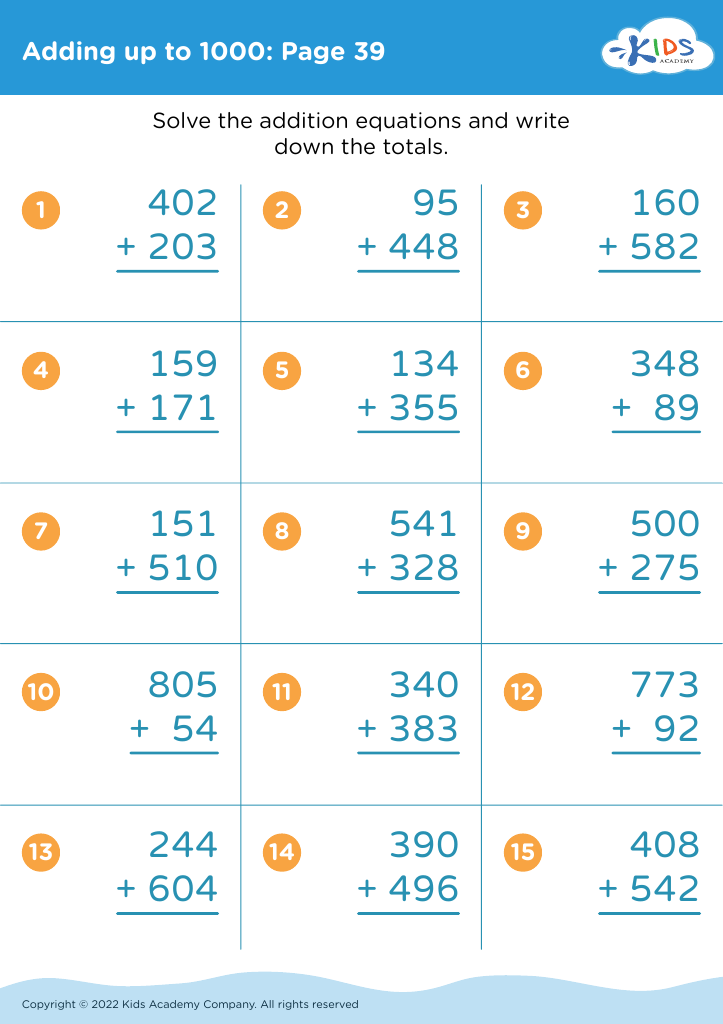
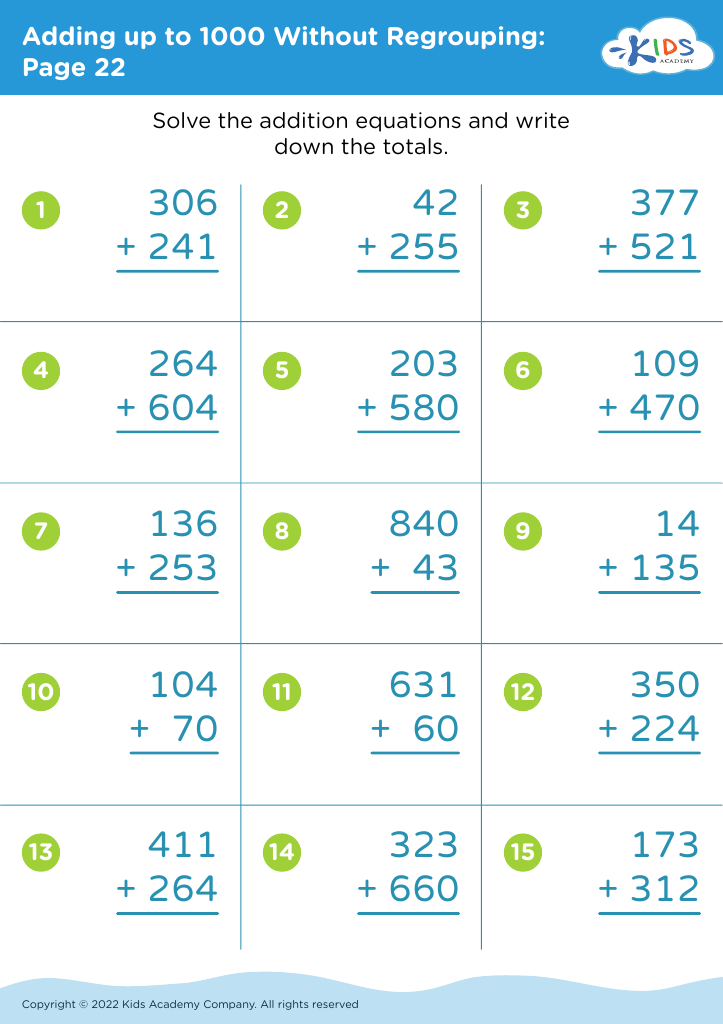
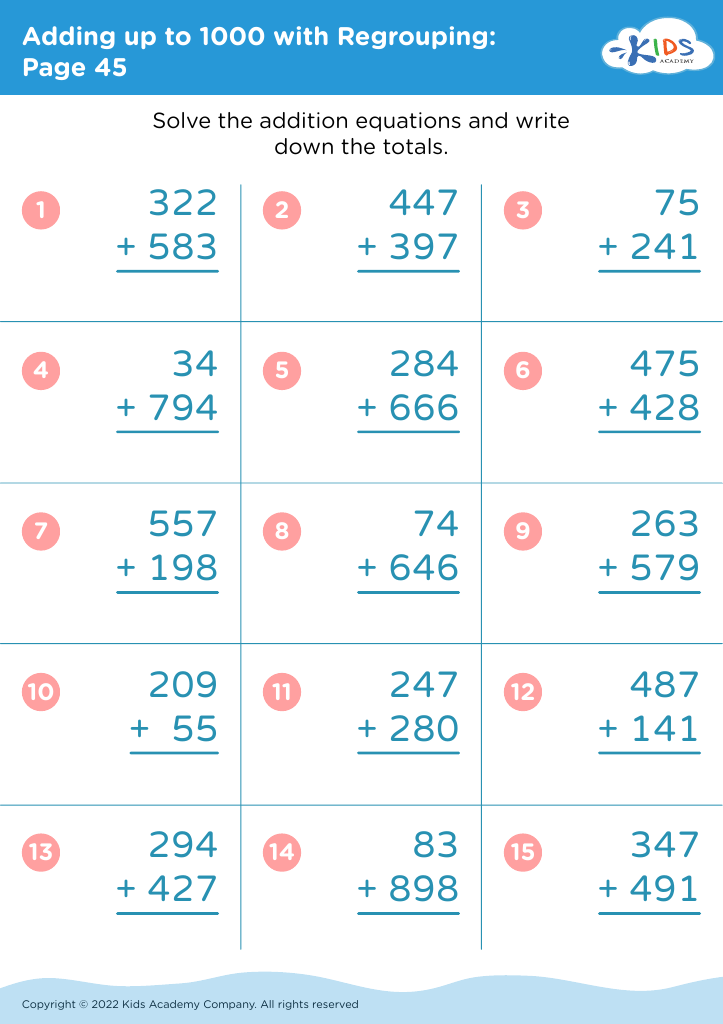
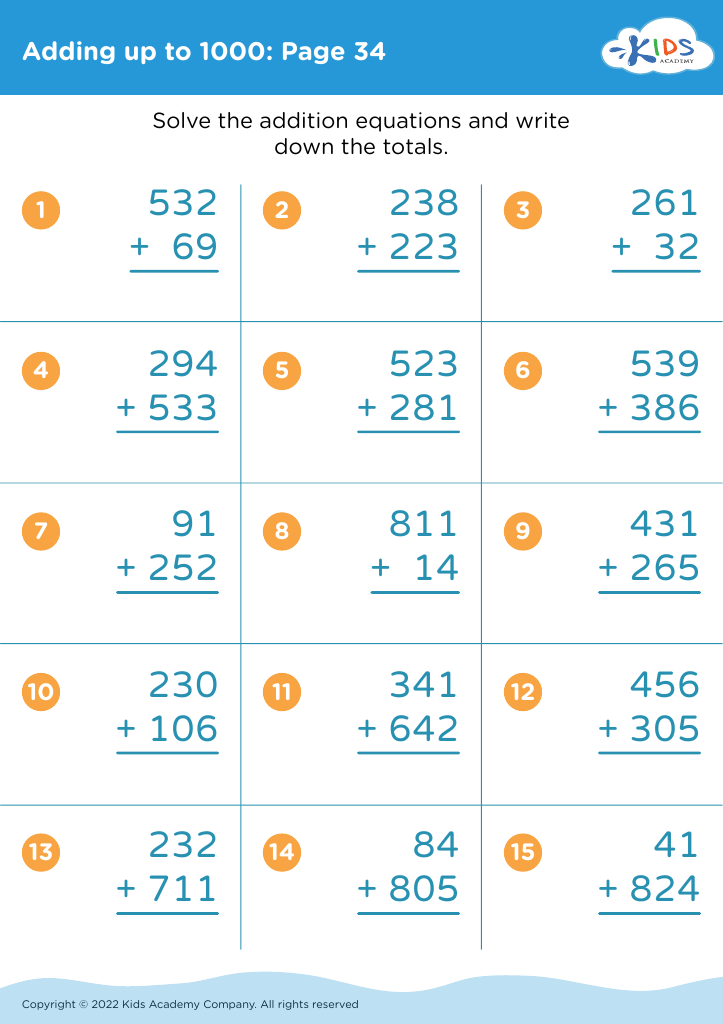
Our "Fine Motor Skills (Writing) Grade 2 Adding Up to 1000 Worksheets" are meticulously designed to enhance your child's mathematical and motor abilities. These worksheets focus on mastering addition up to 1000 while simultaneously refining fine motor skills essential for writing. Engaging and child-friendly, each worksheet offers varied problems that help build confidence and proficiency in math. With colorful illustrations and straightforward instructions, these activities make learning both fun and effective. Perfect for classroom use or home practice, they are a valuable resource for developing critical skills needed for higher-level math and improved handwriting precision.
Favorites
With answer key
Interactive
Join Kids Academy for Free
Who is primarily going to use this learning content?



Fine motor skills are crucial for second-grade students learning to write and perform math activities like adding numbers up to 1,000. These skills involve the small muscles in the hands and fingers, essential for pencil control, legibility, and speed in writing. For math, fine motor abilities are integral in handling manipulatives, lining up numbers correctly, and pointing to specific values.
When children develop strong fine motor skills, they can better focus on the cognitive aspects of math and writing rather than struggling with the physical act of these tasks. This minimizes frustration and boosts confidence and academic performance. For instance, clear and concise writing allows children to complete assignments effectively, and orderly number placement makes complex math problems easier to solve.
Additionally, the development of fine motor skills in the early grades lays the foundation for more advanced tasks later in schooling and everyday life, such as typing, detailed artwork, or even playing musical instruments. Parents and teachers should monitor and encourage activities that enhance these skills, such as puzzles, drawing, and crafting, to support children holistically in both academic and personal achievements.
Investing in fine motor skill development ultimately fosters a well-rounded and competent learner, capable of navigating more intricate academic challenges and life skills as they grow.