Number Recognition Grade 2 Adding up to 1000 Worksheets - Page 2
31 filtered results
-
From - To
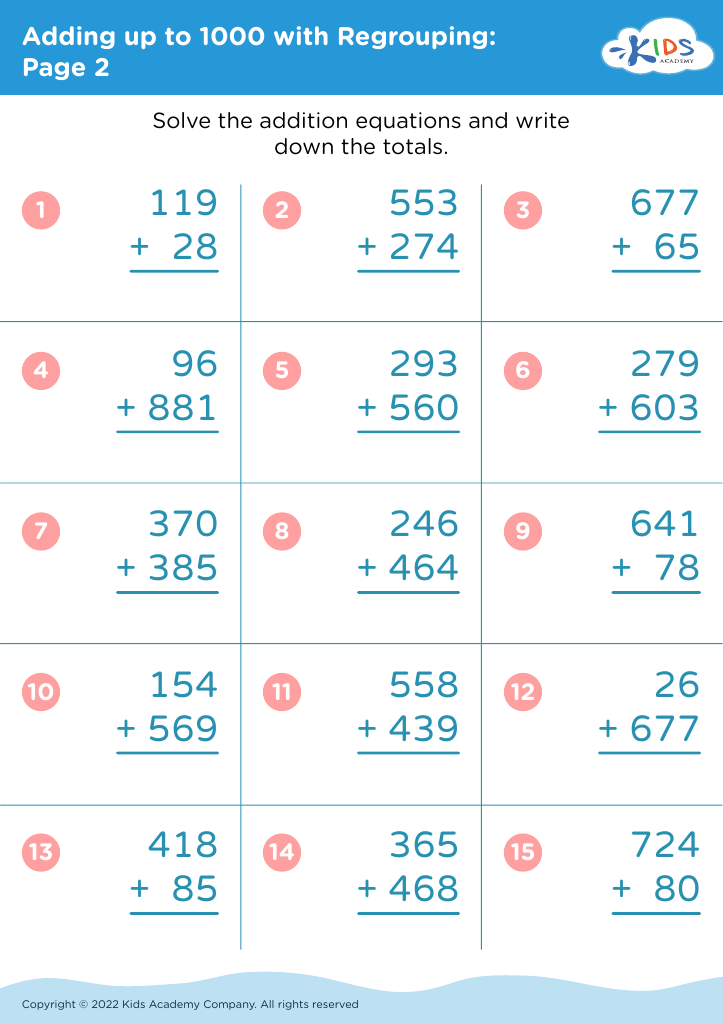
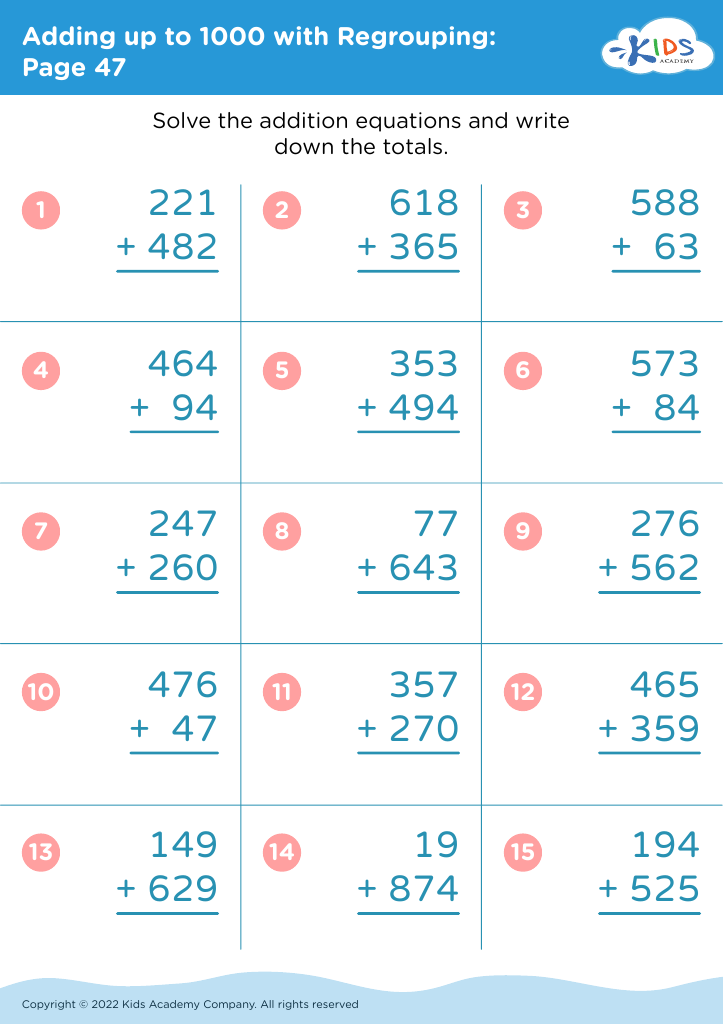
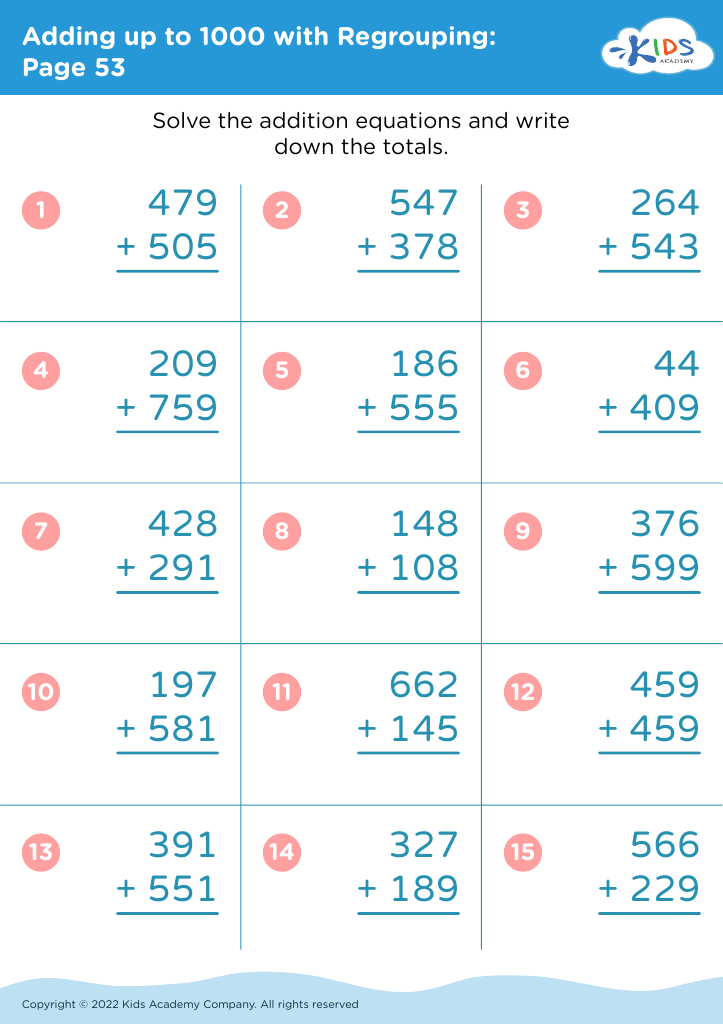
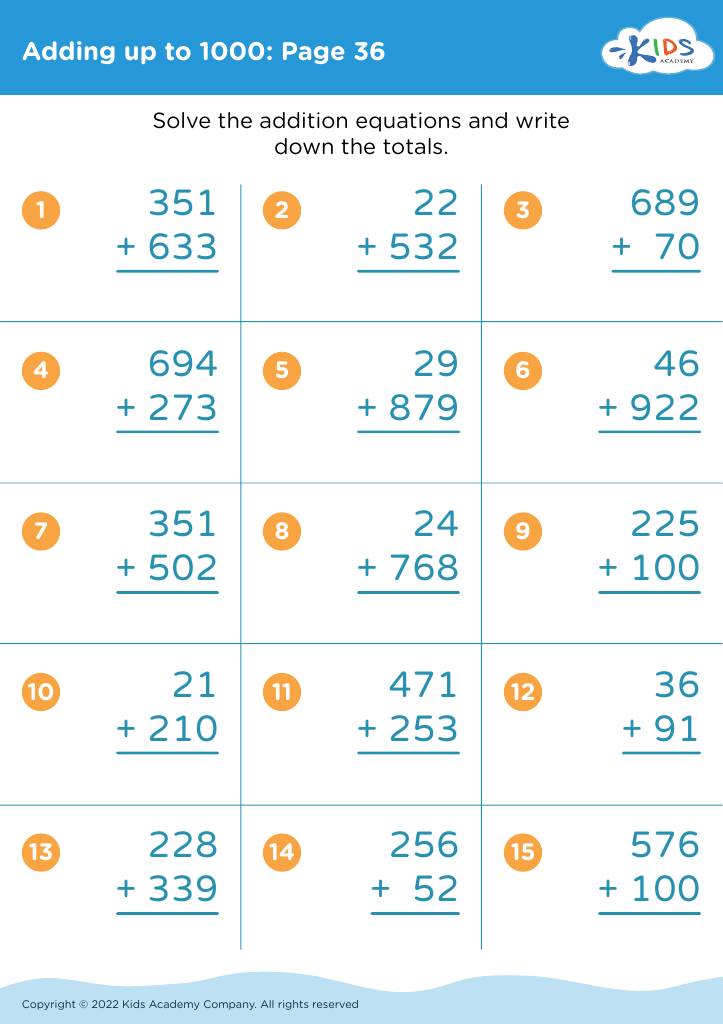
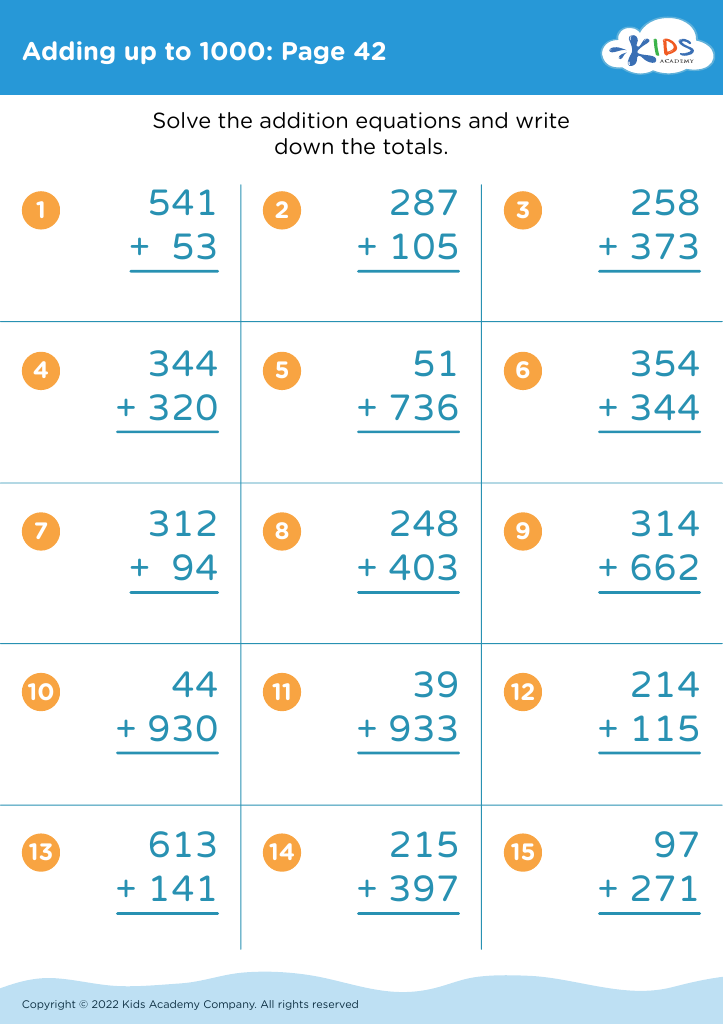
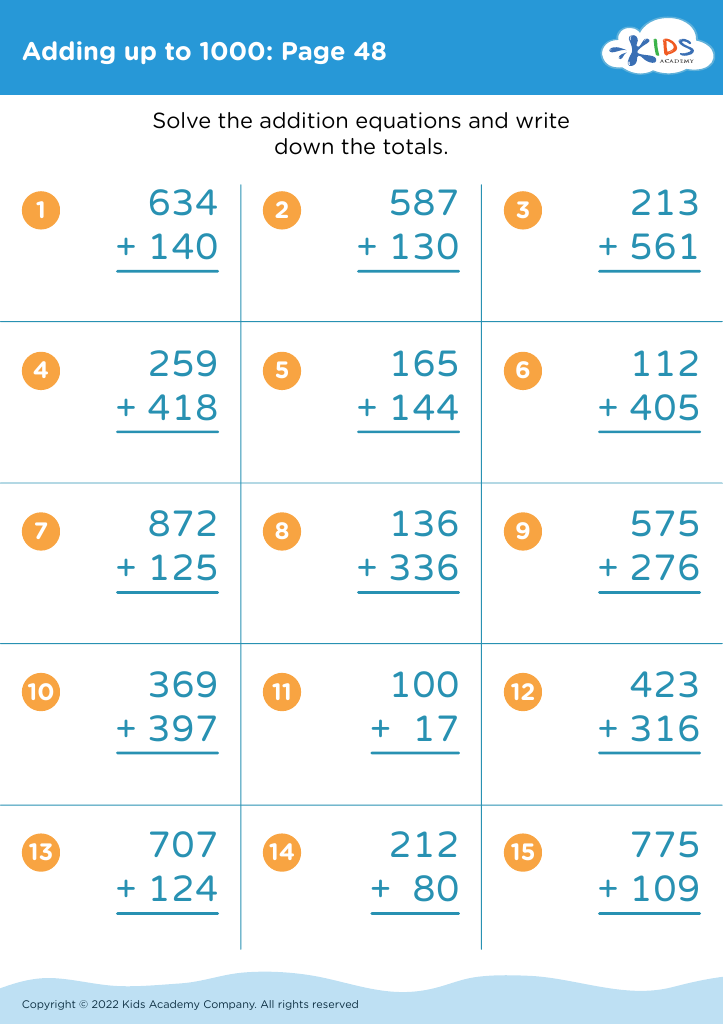
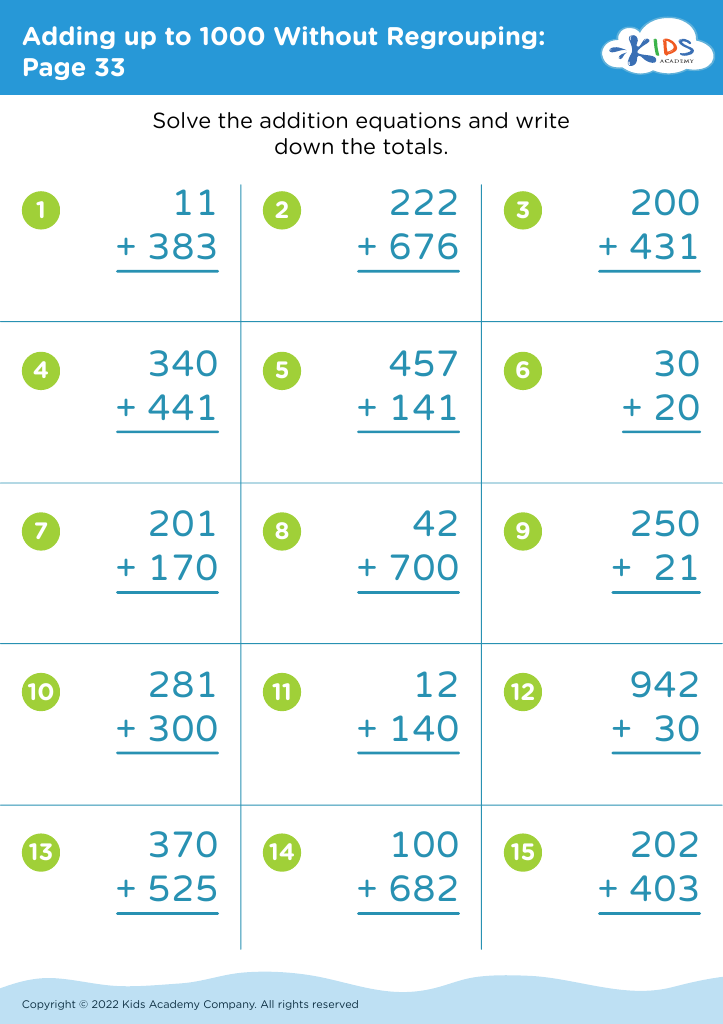




Number recognition and addition up to 1000 are foundational skills in a child's mathematical journey and have lasting impacts on their cognitive development and academic success. For parents and teachers, emphasizing these skills in Grade 2 aids children in several pivotal ways.
Firstly, number recognition up to 1000 enhances a child's ability to understand larger numerical concepts. This recognition helps in everyday tasks, such as reading prices, telling time, and managing allowances, instilling practical life skills early on.
Secondly, mastering addition within this range develops critical thinking and problem-solving abilities. Students learn to break down complex problems into smaller, more manageable parts, enhancing their analytical capabilities. This competency is crucial as they progress to more advanced math concepts, where a solid foundation in basic arithmetic ensures smoother transitions.
Furthermore, success in number recognition and addition can bolster a child's confidence. Achievements in math at an early age promote a positive relationship with the subject, which can lead to sustained interest and success in later grades.
Lastly, these skills naturally integrate with other academic subjects. Understanding math supports concepts in science, technology, engineering, and even literacy, where sequential and logical thinking is often required.
By prioritizing number recognition and addition skills, parents and teachers set children up for a lifetime of learning and problem-solving, equipping them with the tools they need to navigate and succeed in a mathematically driven world.