Number Sequencing Grade 2 Adding up to 1000 Worksheets
5 filtered results
-
From - To
Explore our "Number Sequencing Grade 2 Adding up to 1000 Worksheets," tailored to enhance your child's math skills. These engaging and educational worksheets are designed specifically for second graders to practice number sequencing, focusing on adding up to 1000. Through a variety of fun and challenging activities, your child will develop a stronger understanding of numerical order, improve their addition skills, and build confidence in math. Perfect for classroom use or additional practice at home, these worksheets make learning enjoyable and effective. Help your child excel in math with our expertly crafted resources.
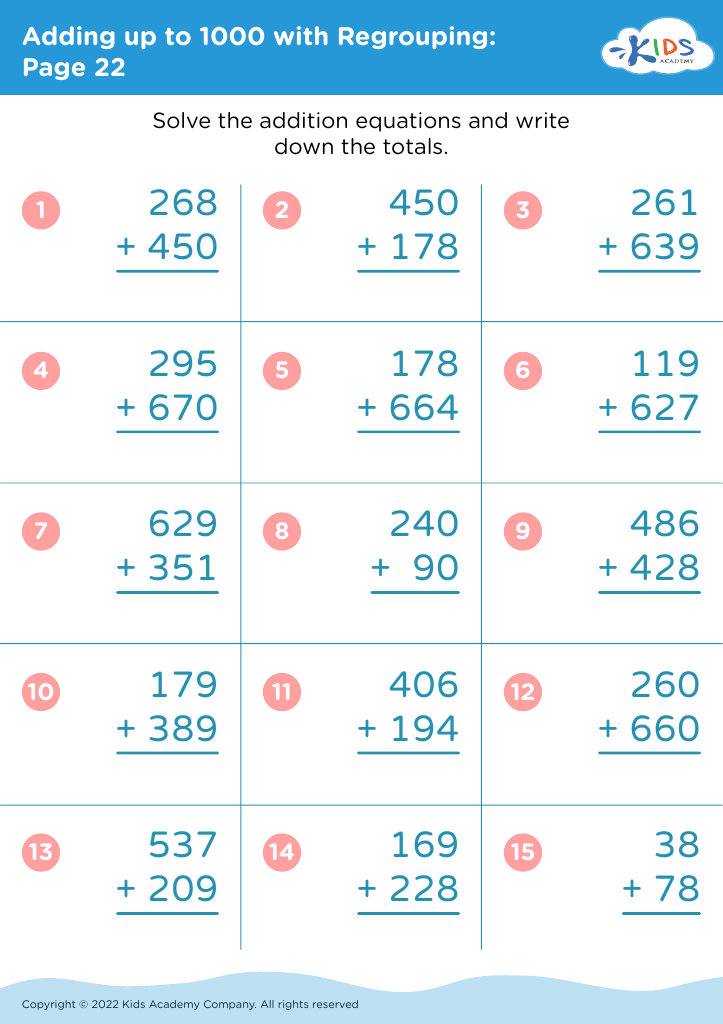
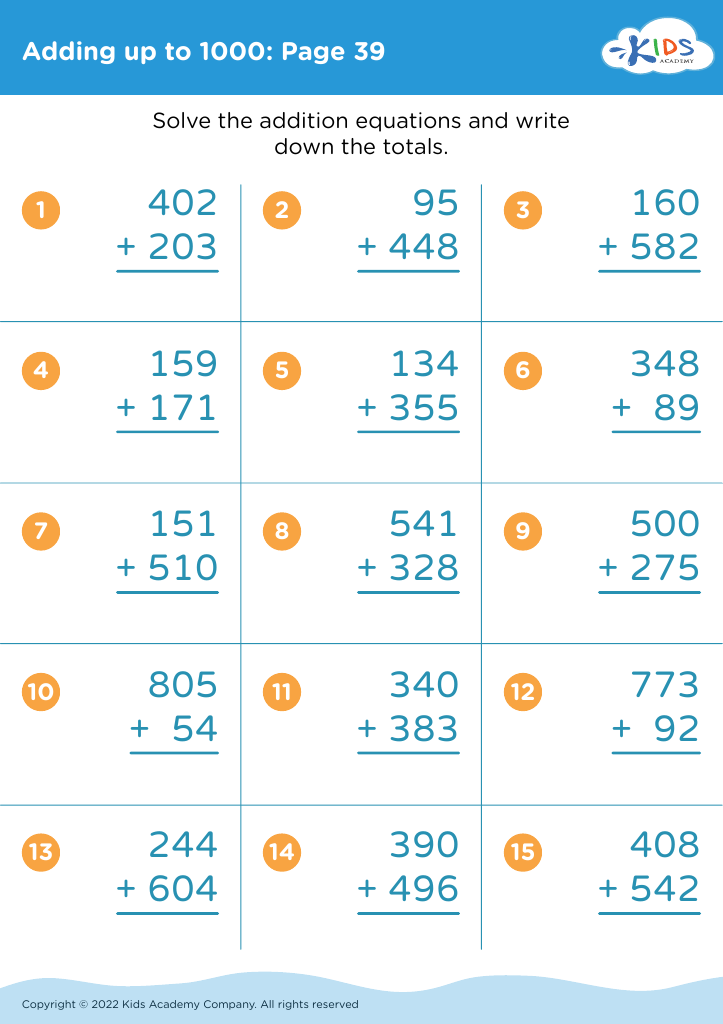
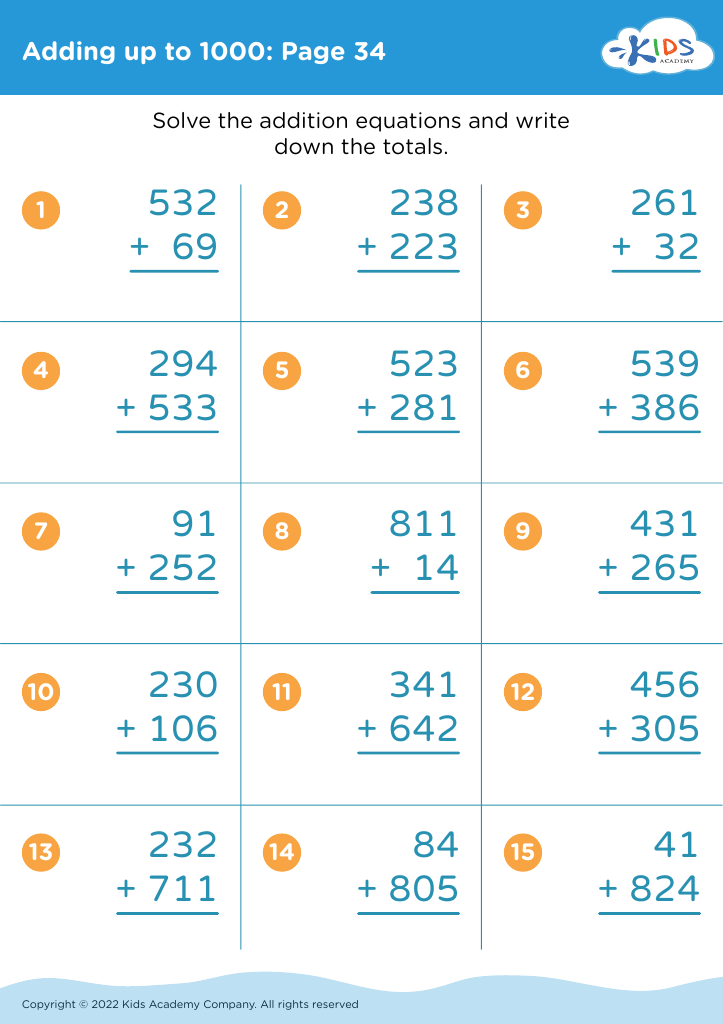
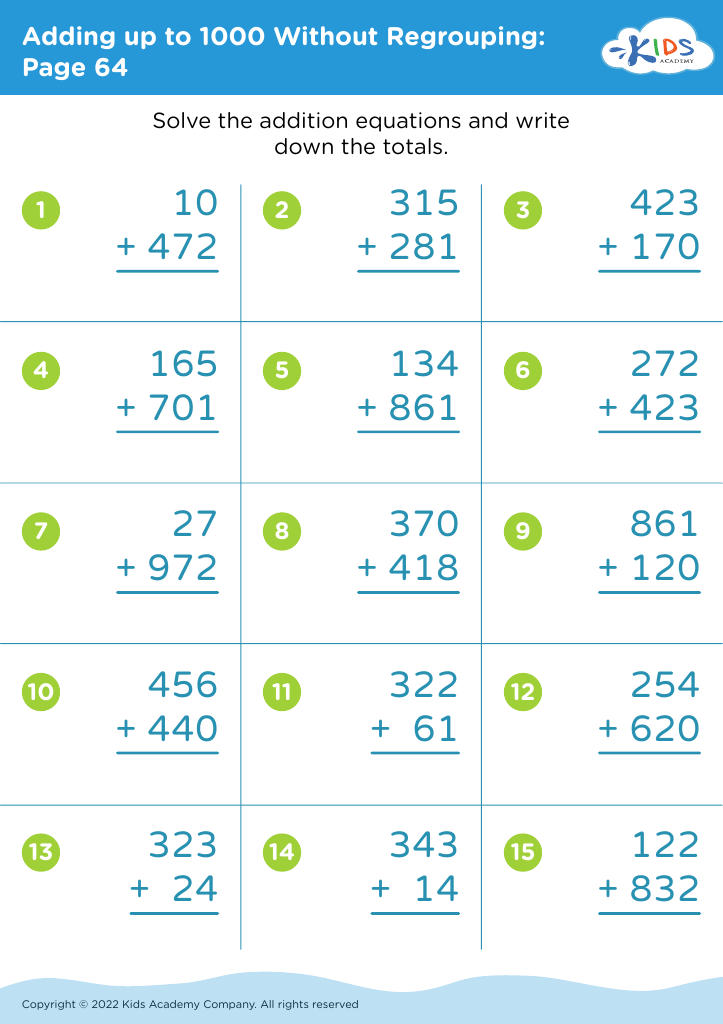
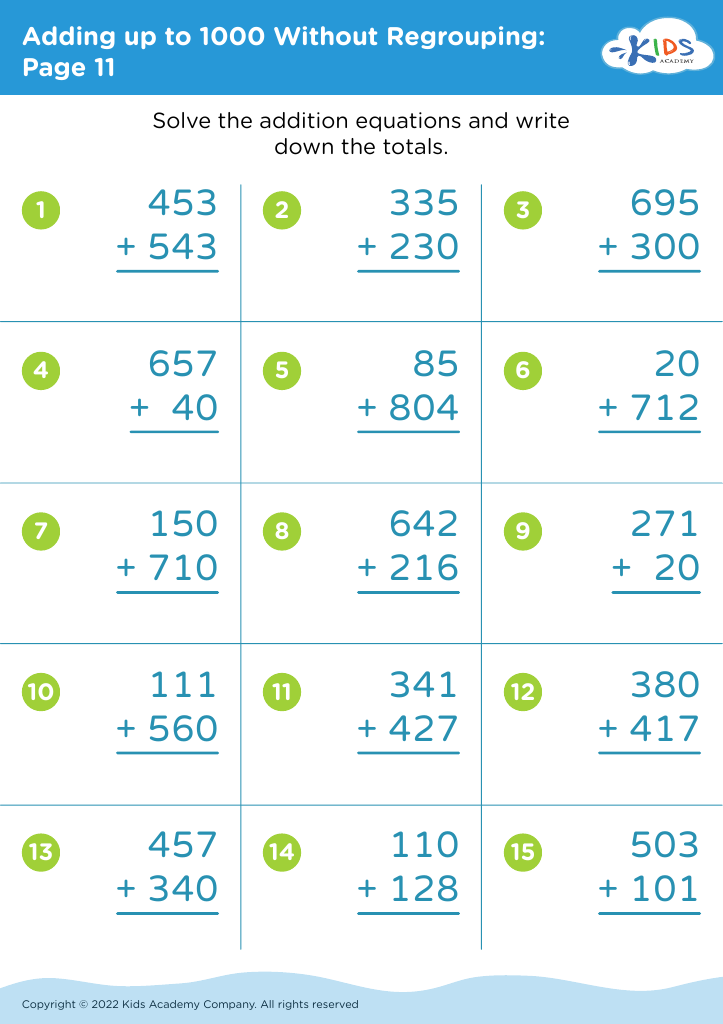



Parents and teachers should care about Number Sequencing in Grade 2, especially adding up to 1000, because it forms a crucial foundation for a child's mathematical development. This skill helps students understand order, positioning, and the incremental value of numbers, which are essential concepts in mathematics. Number sequencing exercises improve a child's ability to recognize patterns, boost memory, and hone logical thinking.
When students practice adding up to 1000, they build a familiarity with larger numbers and grow more comfortable performing arithmetic operations. These experiences lay the groundwork for more complex tasks in later grades, like multiplication, division, and algebra. Additionally, mastering these skills boosts a child's confidence in their mathematical abilities, fostering a positive attitude toward the subject as they continue their education.
Moreover, understanding number sequencing aids in practical daily tasks, such as time management, organization, and problem-solving outside the classroom. For example, when trying to figure out spending, making change, or scheduling, these fundamental math skills come into play. Emphasizing number sequencing in early education prepares children to navigate a world where math is a critical component, equipping them with the tools needed for future academic and real-life success.