Pattern recognition Grade 2 Adding up to 1000 Worksheets
3 filtered results
-
From - To
Enhance your second graders' math skills with our engaging "Pattern Recognition Grade 2 Adding Up to 1000 Worksheets." Designed to help young learners master the art of identifying patterns while adding numbers up to 1000, these worksheets combine visual stimulation with fundamental math practice. Fun and interactive, they foster critical thinking and promote confidence in number work. Each worksheet features diverse patterns that challenge students to recognize sequences, encouraging a deeper understanding of mathematical concepts. Perfect for classroom activities or at-home learning, these resources are ideal for supporting your child's educational journey while making math enjoyable! Explore today for a brighter learning experience!
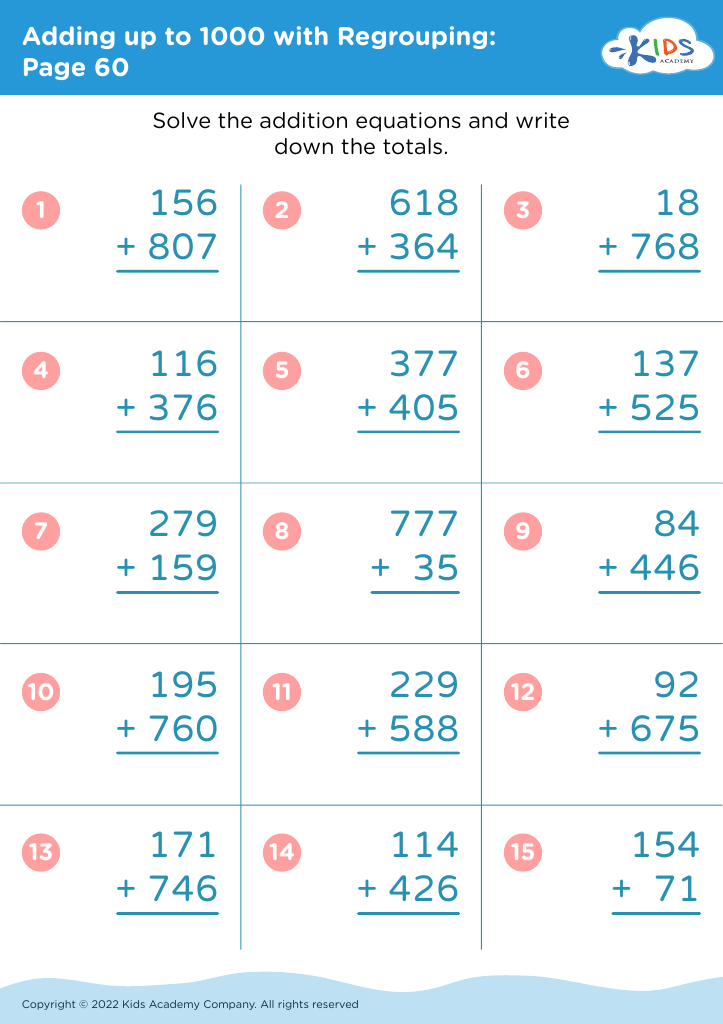
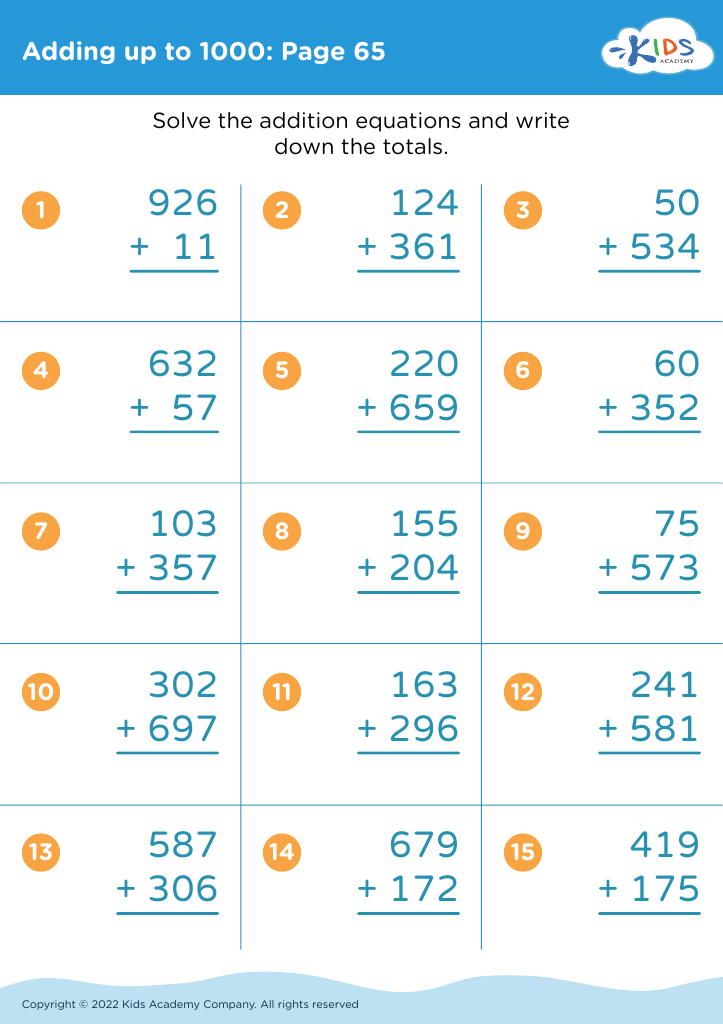
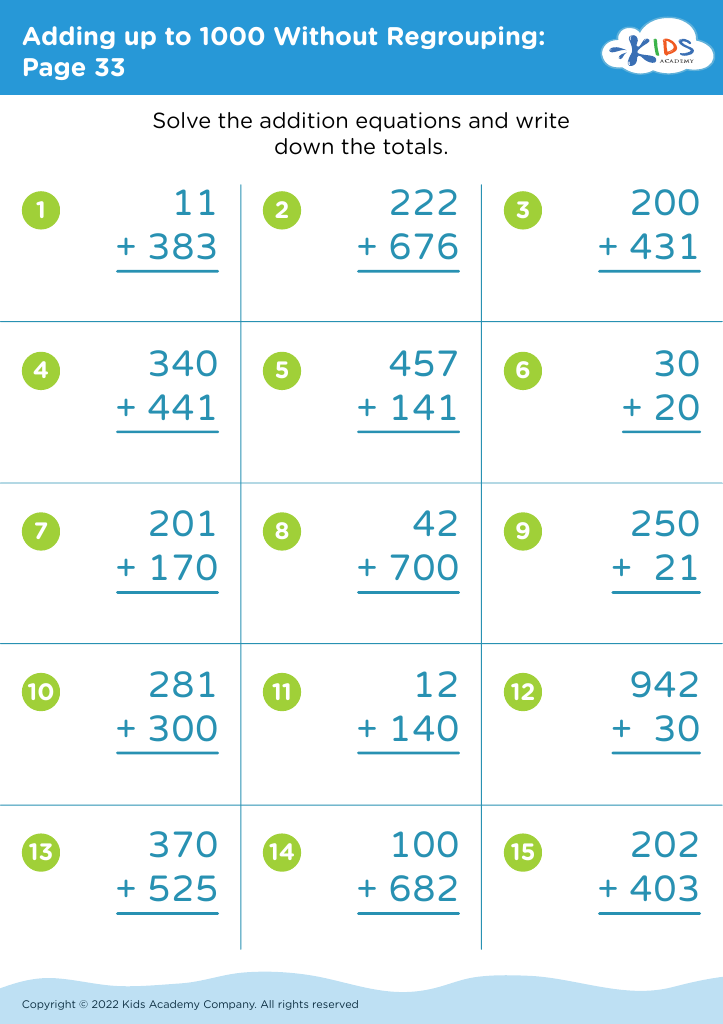



Pattern recognition is a crucial skill for second graders learning to add numbers up to 1,000. Understanding patterns in numbers helps students make sense of mathematical concepts and fosters greater numerical fluency. When children recognize patterns, they can identify relationships between numbers, making it easier to perform calculations and solve problems efficiently.
For parents and teachers, emphasizing pattern recognition can enhance a child’s mathematical acumen. It can lead to improved problem-solving skills and the ability to tackle more complex concepts in the future. By recognizing consistent patterns, such as "5, 10, 15…" or "100, 200, 300…," students can quickly arrive at solutions without resorting to rote memorization.
Moreover, mastering patterns encourages confidence in the classroom setting. Children who grasp these concepts are likely to engage more actively in learning, ask questions, and participate in discussions. This active engagement is key to long-term retention and application of mathematical skills.
Recognizing patterns not only builds a foundation for advanced math in later grades, such as algebra and geometry, but also relates to real-world situations like budgeting, planning, and analytical thinking. For these reasons, ensuring that children develop strong pattern recognition in Grade 2 is critical for their overall academic success.