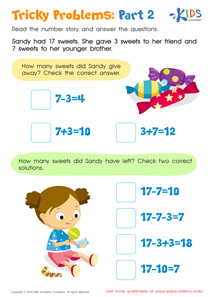
Problem Solving Grade 2 Adding up to 1000 Worksheets
3 filtered results
-
From - To
Enhance your second graders' math skills with our "Problem Solving Grade 2 Adding Up to 1000 Worksheets." Designed to align with educational standards, these engaging worksheets help young learners tackle addition problems involving numbers up to 1000. Students will develop critical thinking and problem-solving strategies through various puzzles and word problems that encourage practical application of math concepts. Perfect for classroom use or at-home practice, these resources promote confidence and reinforce foundational skills. Foster a love of learning as your child embarks on their math journey, transforming challenges into fun and effective problem-solving opportunities. Get started today!
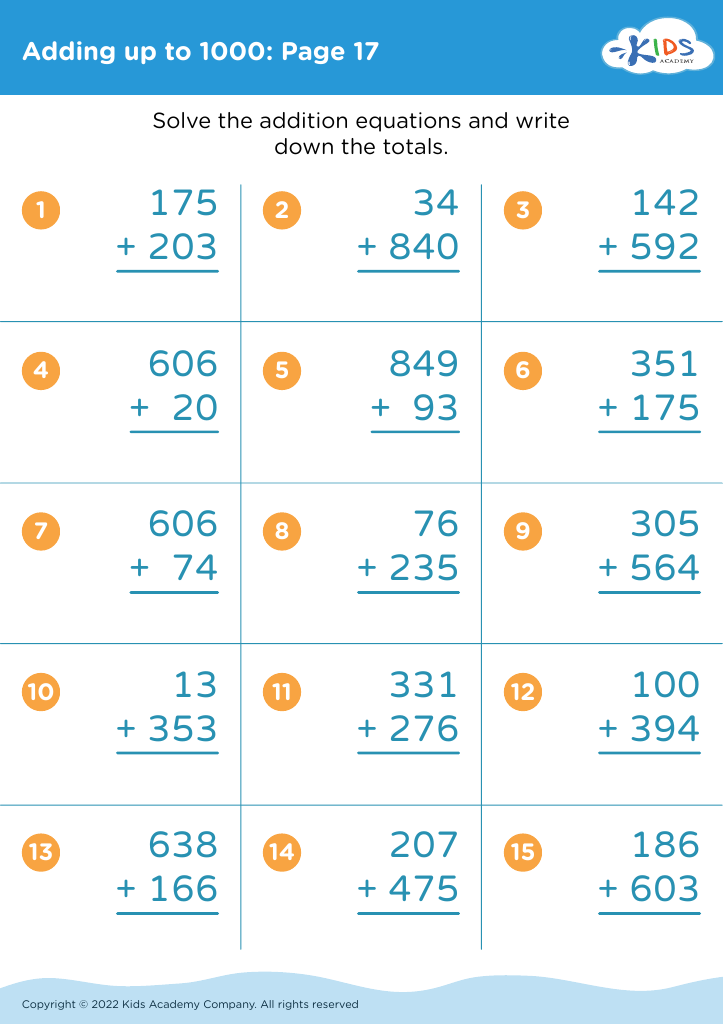
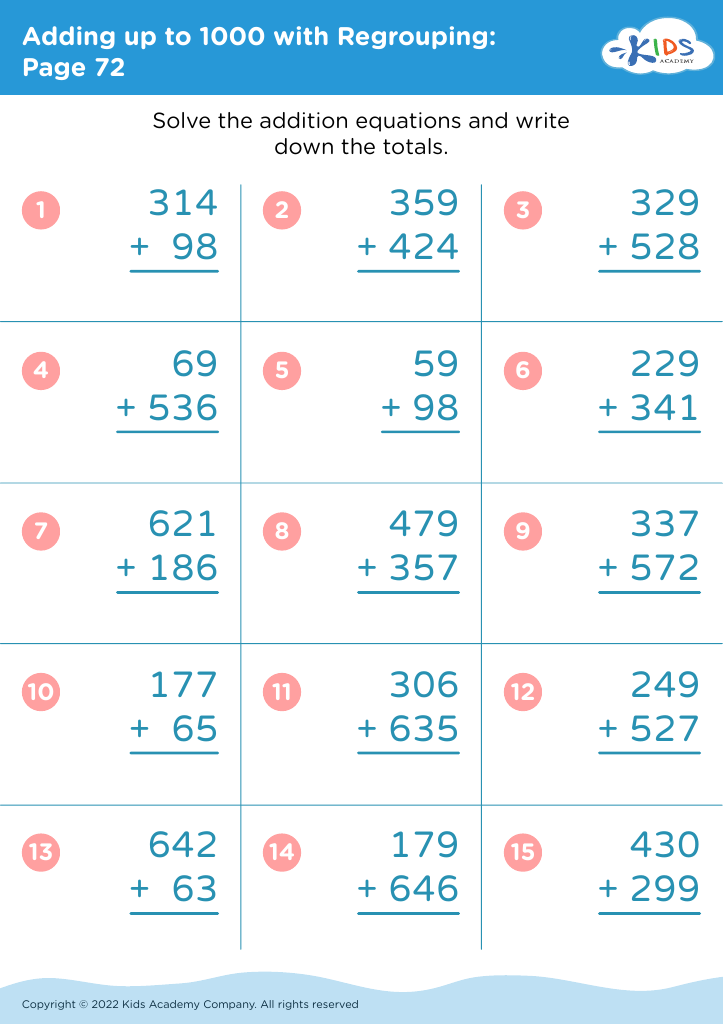
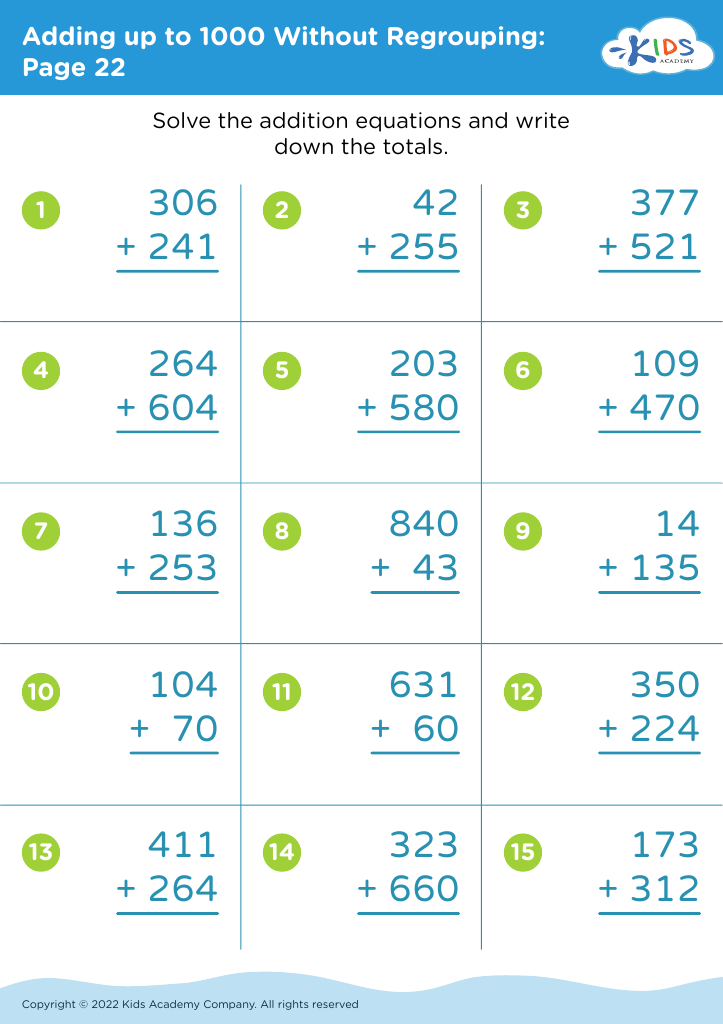



Problem-solving skills in Grade 2, particularly using addition up to 1000, are fundamental for young learners as they build a strong mathematical foundation. First and foremost, understanding how to solve problems involving two- and three-digit addition enhances children’s numerical fluency and instills confidence in their abilities. As children navigate addition with larger numbers, they develop critical thinking skills, learning to analyze problems, identify strategies, and arrive at solutions.
Moreover, mastery of these concepts paves the way for more advanced topics in math. A solid grasp of addition fosters the understanding of subtraction, multiplication, and even introductory concepts of place value—all essential for future academic success. Encouraging parents and teachers to focus on problem-solving enhances children’s practical applications of math in daily life, reinforcing the relevance of mathematics outside the classroom.
Additionally, engaging in problem-solving activities promotes collaboration and communication skills, as children often work in pairs or groups, discussing various solutions and approaches. This social aspect of learning encourages a positive attitude toward math, reducing anxiety often associated with the subject. Ultimately, by prioritizing problem-solving skills, parents and teachers equip children with tools not just for mathematics but for lifelong learning and critical reasoning.