Understanding division Grade 2 Adding up to 1000 Worksheets
3 filtered results
-
From - To
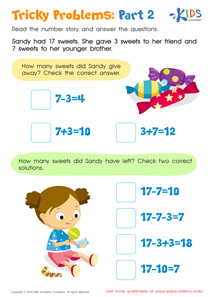
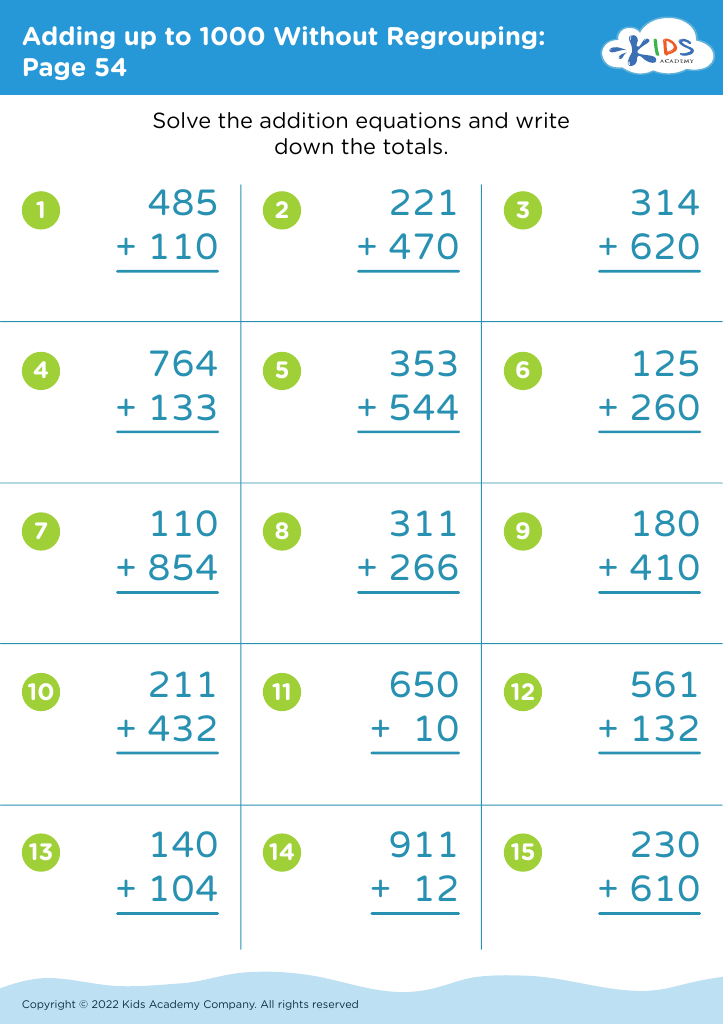
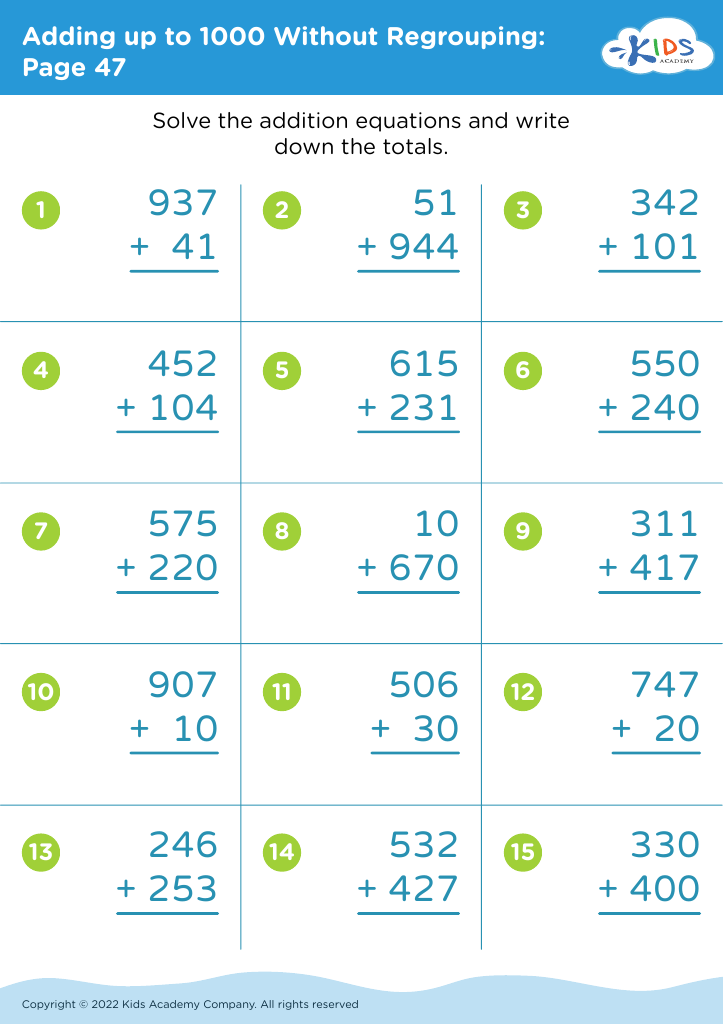
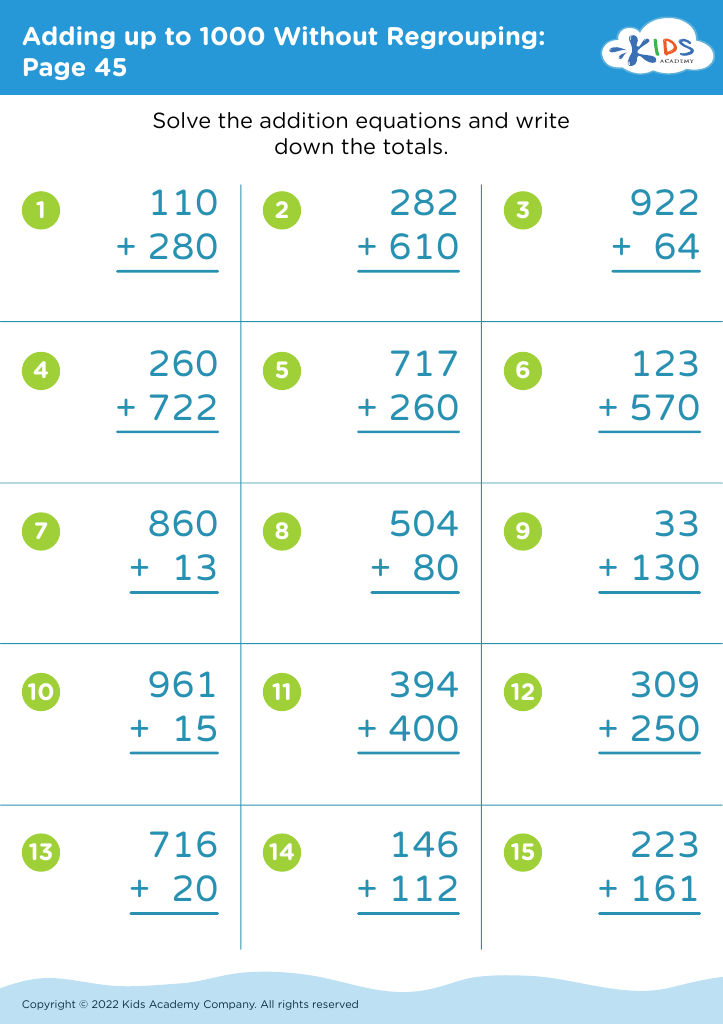
Discover the fundamentals of division for second graders with our "Understanding Division Grade 2 Adding Up to 1000 Worksheets." Designed to reinforce mathematical skills, these engaging worksheets provide a fun and interactive way for students to grasp the concept of division through relatable examples and exercises. Children will explore division as a process of sharing and grouping, making connections to addition and subtraction as well. Each worksheet supports critical thinking and problem-solving, effectively building a strong foundation in math. Best suited for the classroom or homeschooling, these resources are perfect for enhancing your child's learning experience and boosting their confidence in mathematics.



Understanding division and its relationship to larger numbers, particularly in Grade 2, is crucial for several reasons. First, division is a foundational mathematical concept that helps students grasp more complex operations in higher grades. It allows students to comprehend how numbers can be split into equal parts, which forms the bedrock for understanding fractions and ratios later on.
Furthermore, as Grade 2 students learn to add and subtract up to 1,000, they encounter situations where division plays a role, such as sharing items or distributing resources evenly. This reinforces their understanding of equality and fairness, skills vital in both math and real-life situations.
Teachers and parents must recognize that helping children understand division opens doors to critical thinking and problem-solving abilities. When students understand that division is essentially reversing multiplication, they can apply these concepts in daily life, such as when sharing snacks or organizing items. Additionally, engaging with division at this early stage fosters confidence and enthusiasm toward mathematics, which can have lasting effects on their overall attitude toward the subject. Overall, grasping division early prepares students for future academic success and practical life skills.