Understanding fractions Grade 2 Adding up to 1000 Worksheets
44 filtered results
-
From - To
Immerse your Grade 2 students in the world of fractions with our engaging "Understanding Fractions Grade 2 Adding up to 1000 Worksheets". Designed to strengthen foundational math skills, these worksheets provide a thoughtful approach to exploring fractions in relation to the whole. Through a series of fun exercises, students will learn to identify, compare, and add fractions while honing their ability to work with numbers up to 1000. Perfect for classroom use or at-home practice, these resources foster critical thinking and problem-solving in young learners. Elevate your math curriculum and help your students grasp the essentials of fractions today!
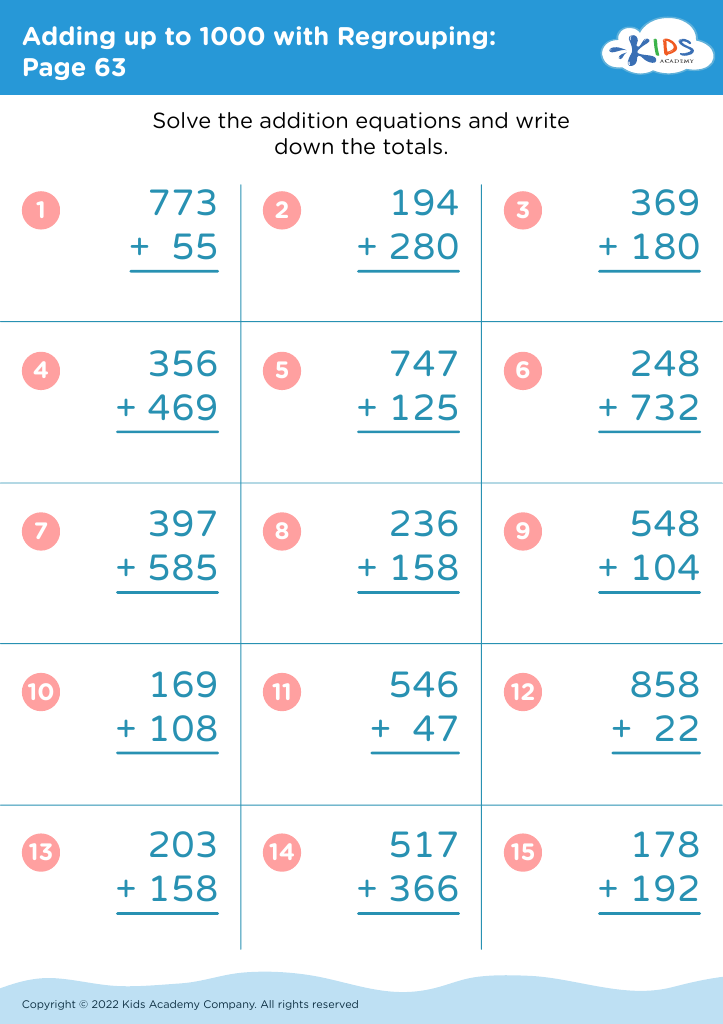
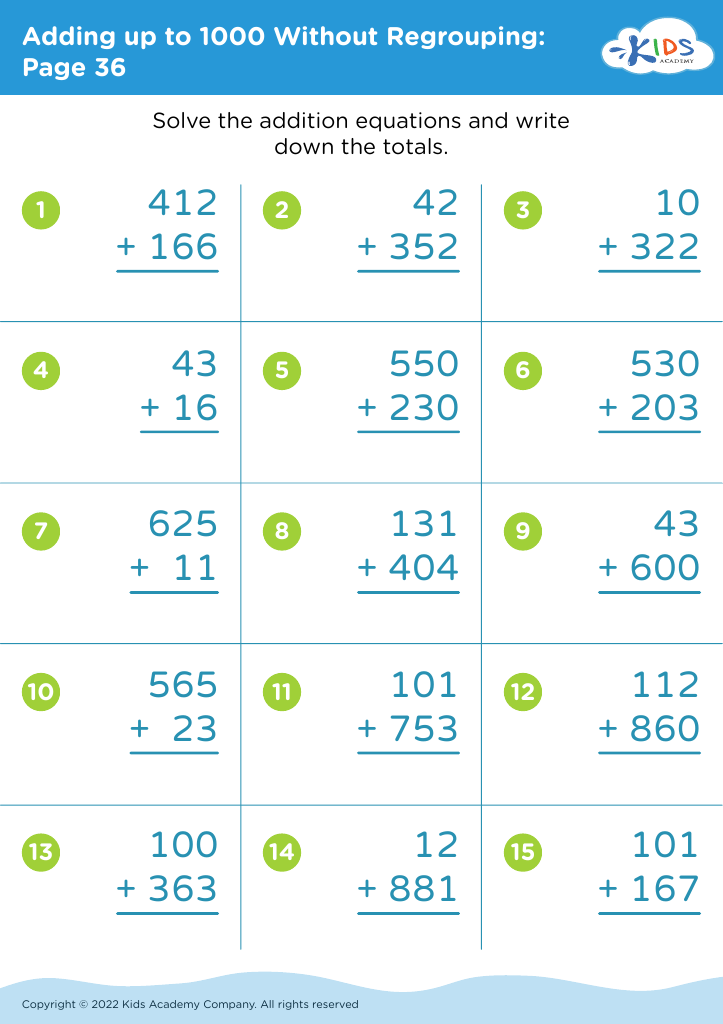
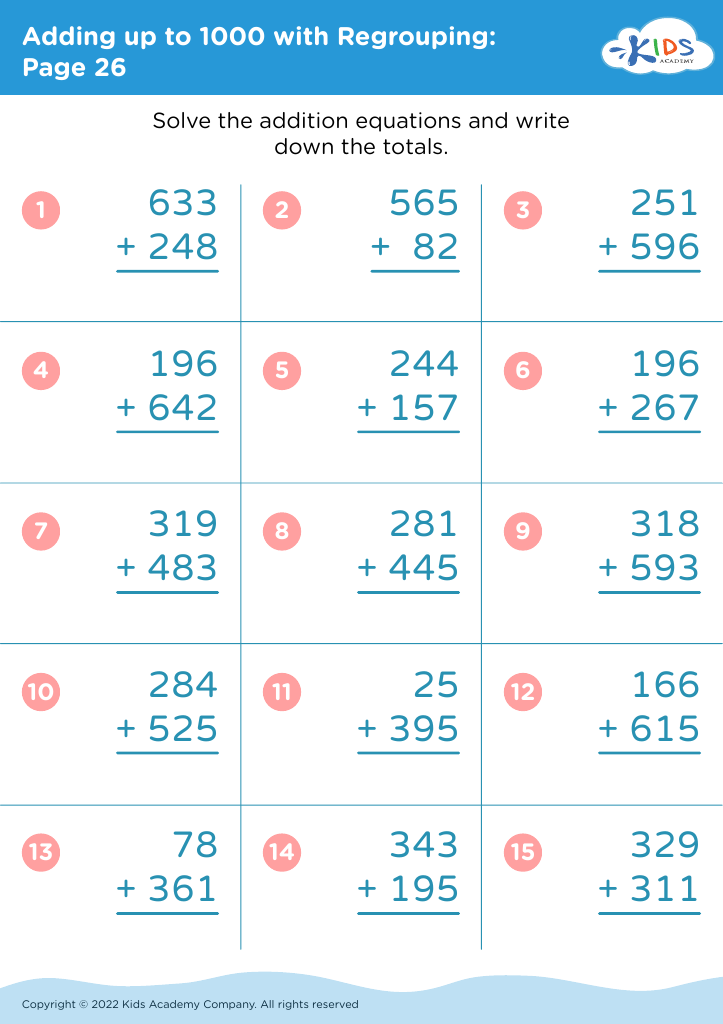
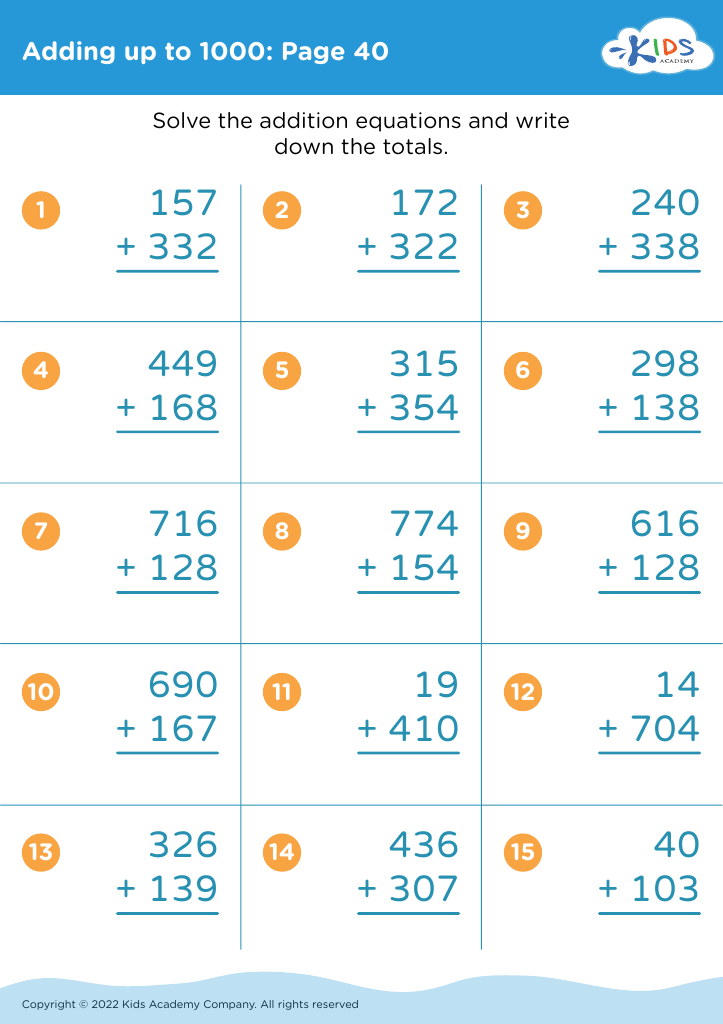
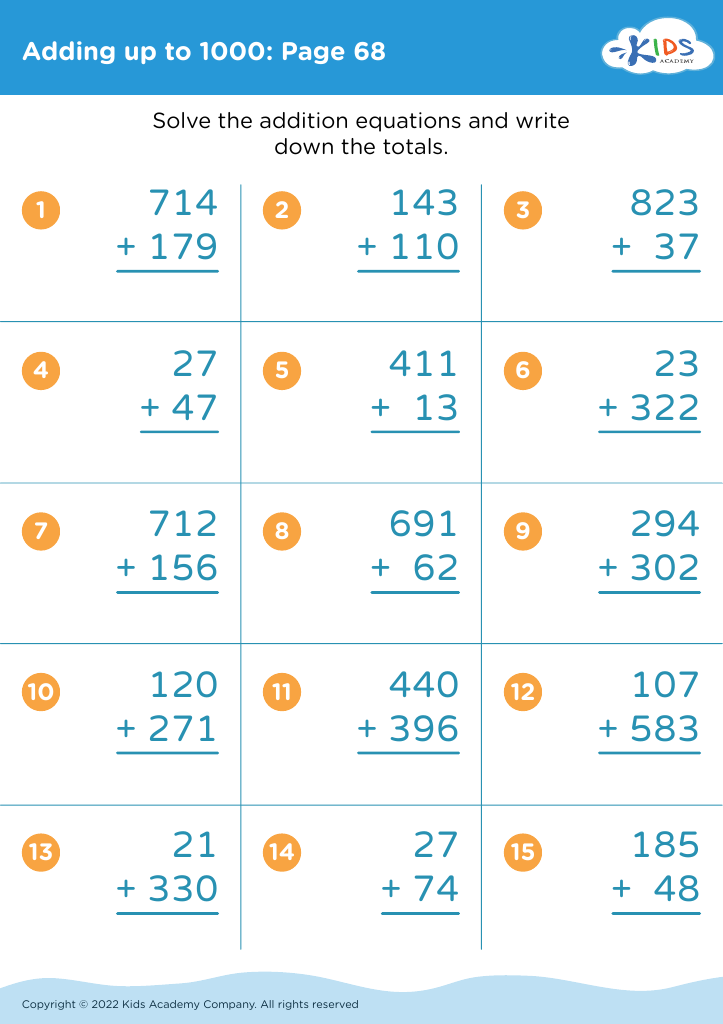
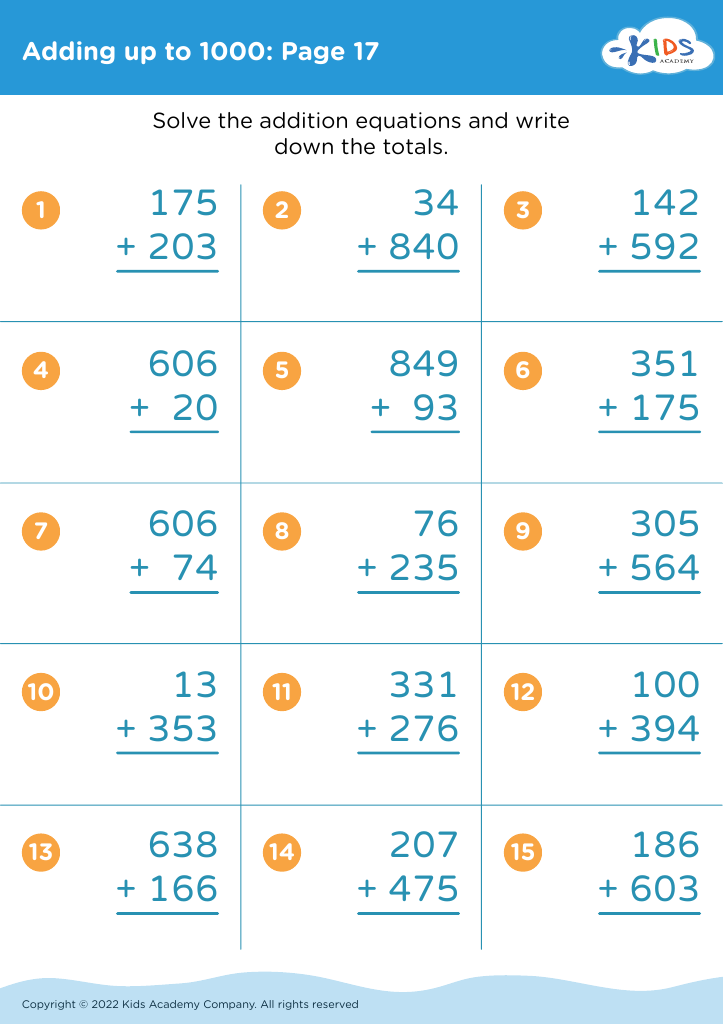
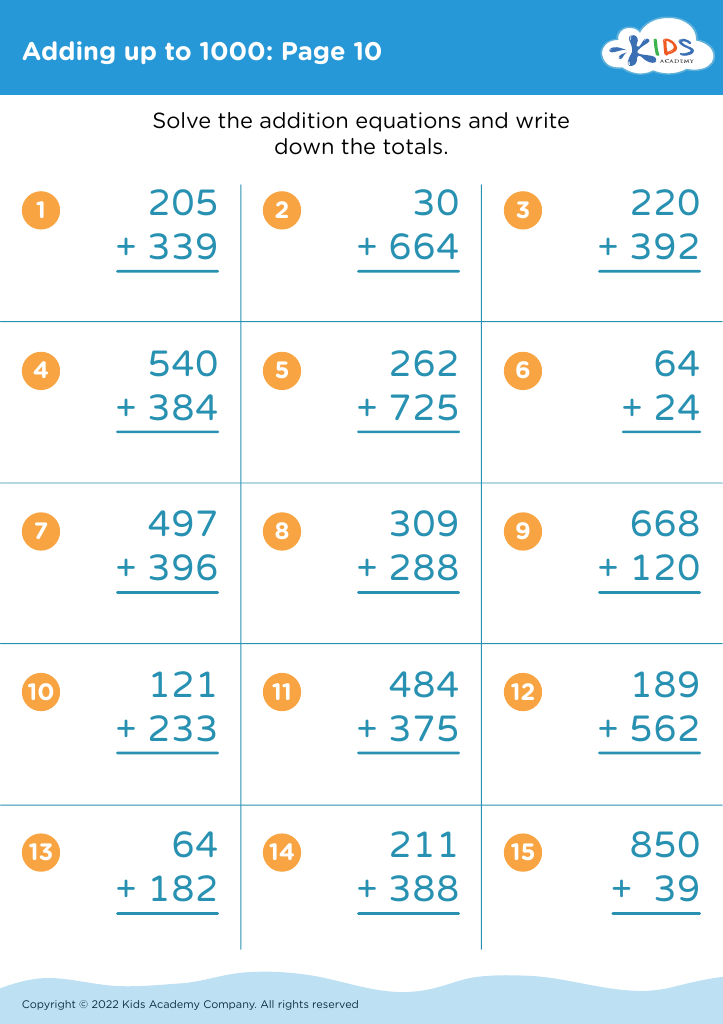
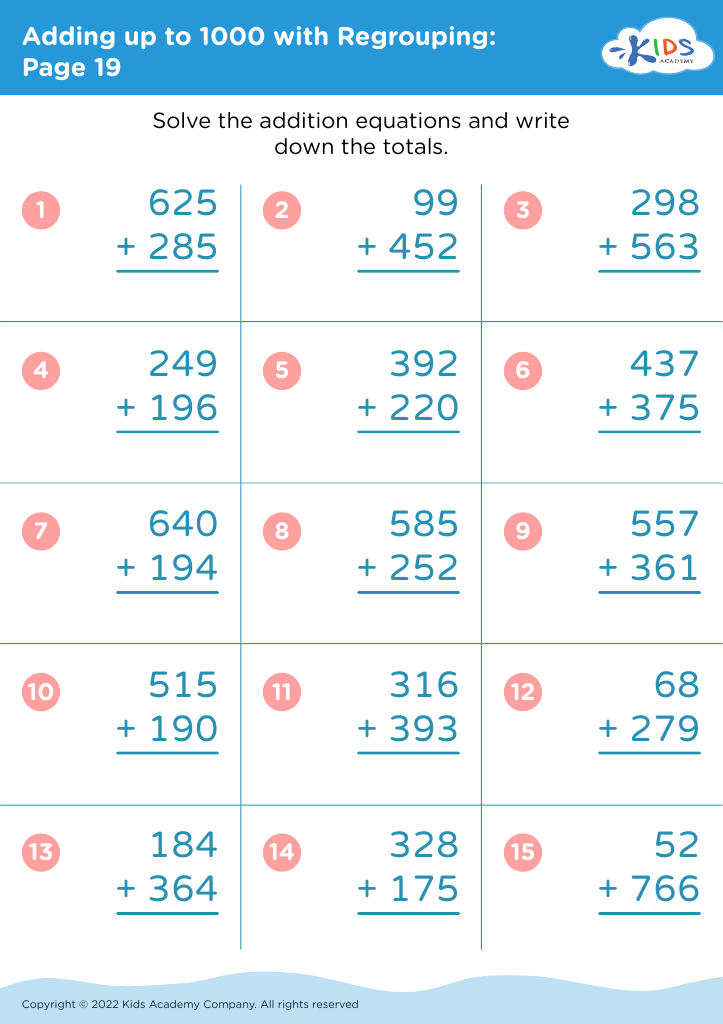
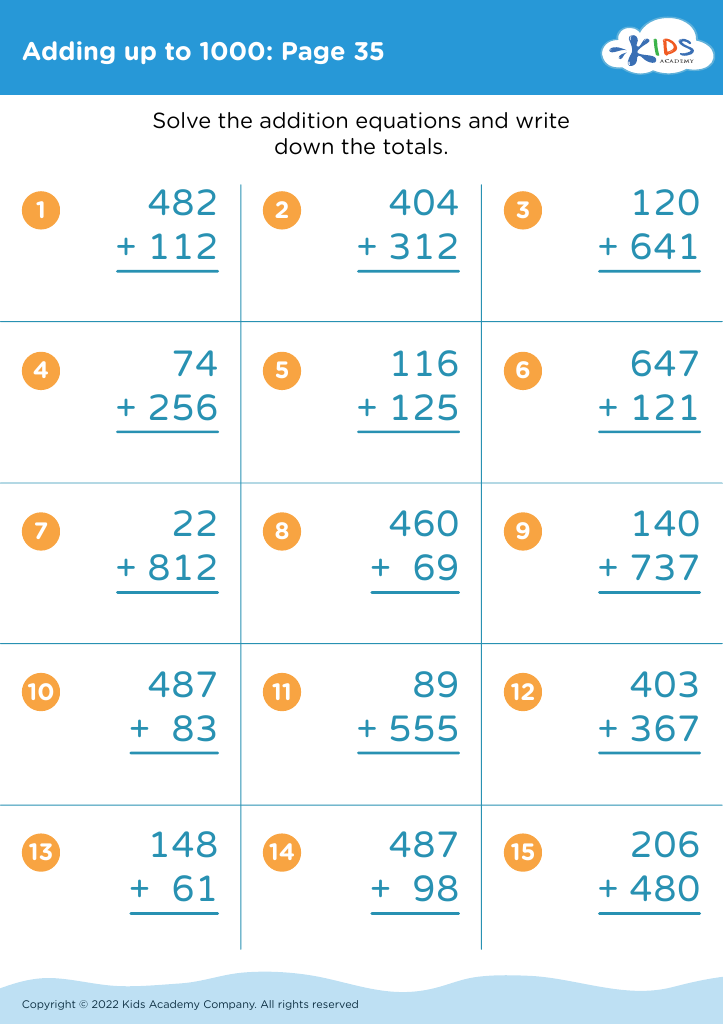
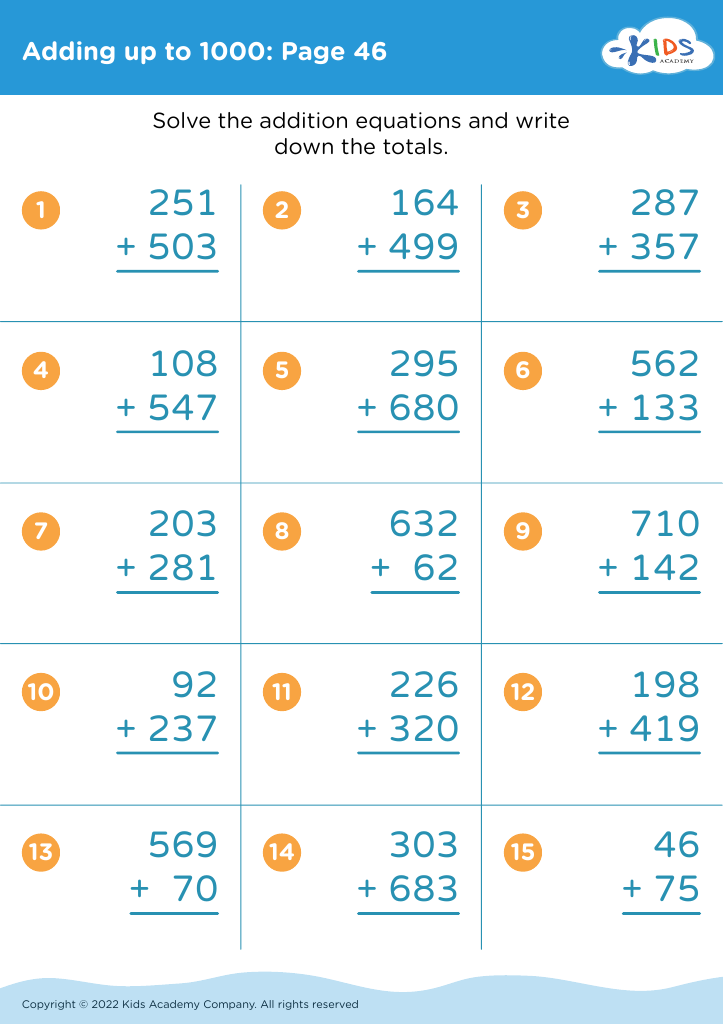
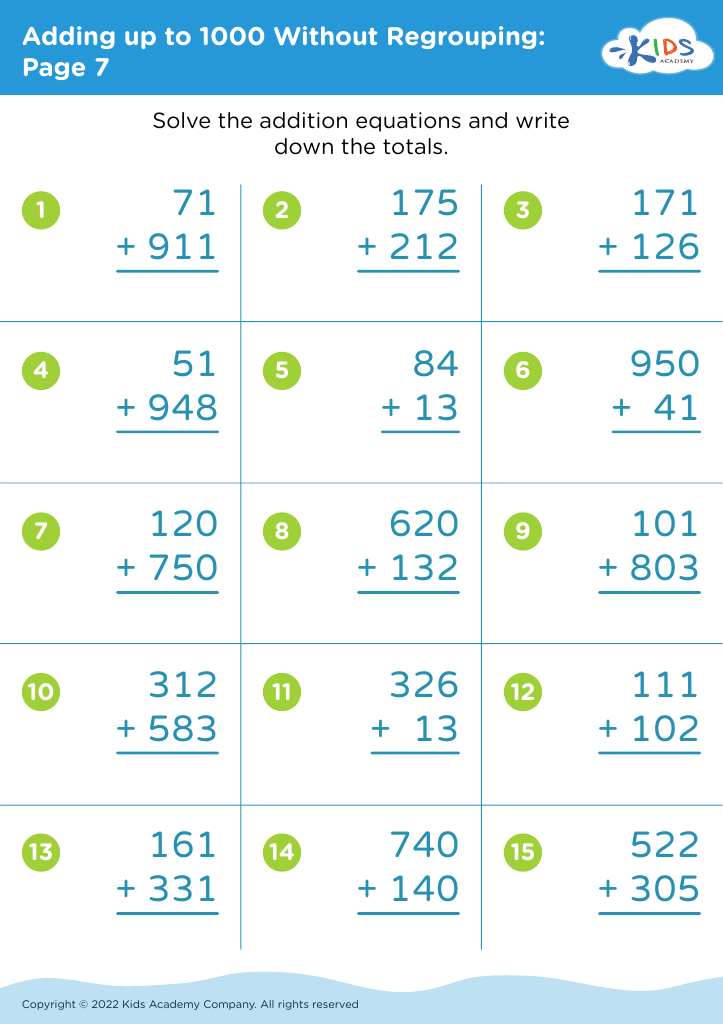
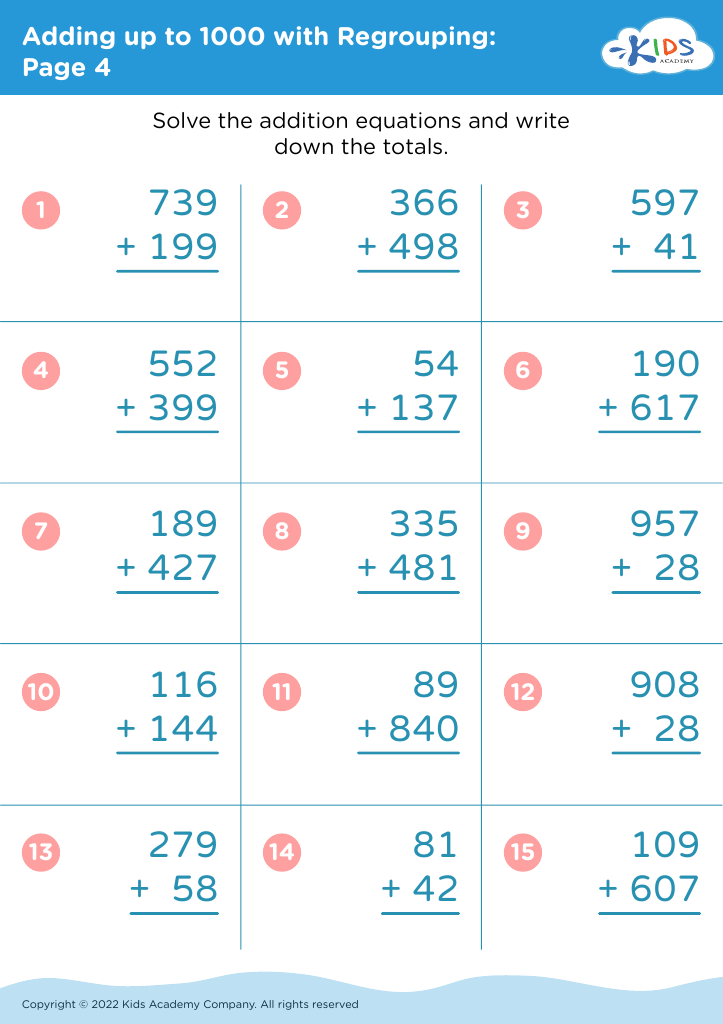
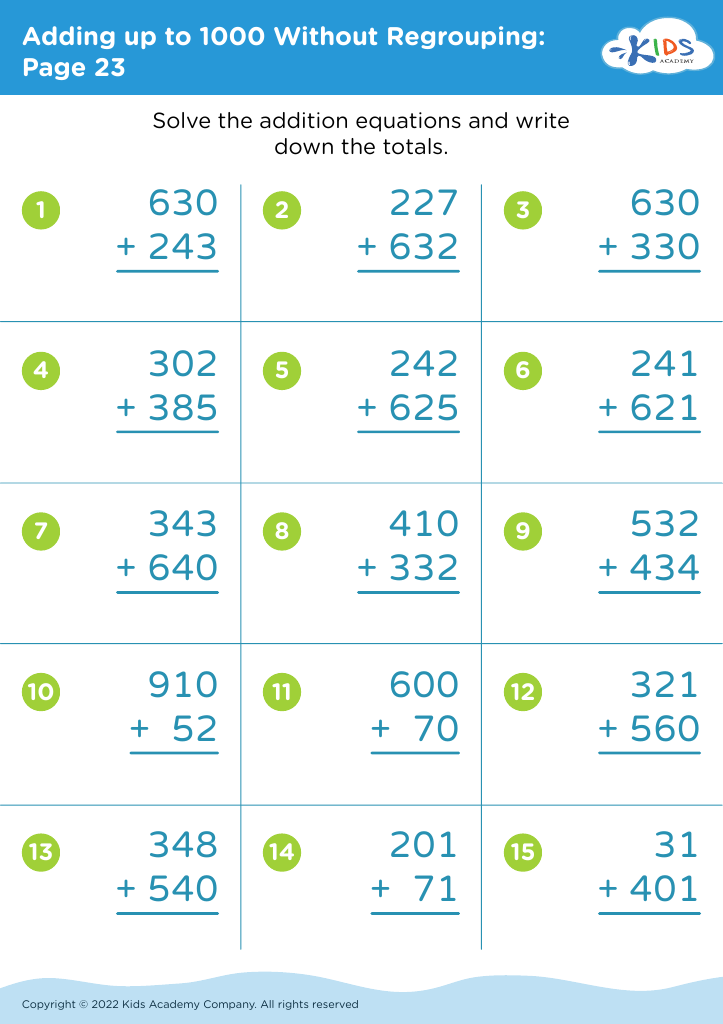
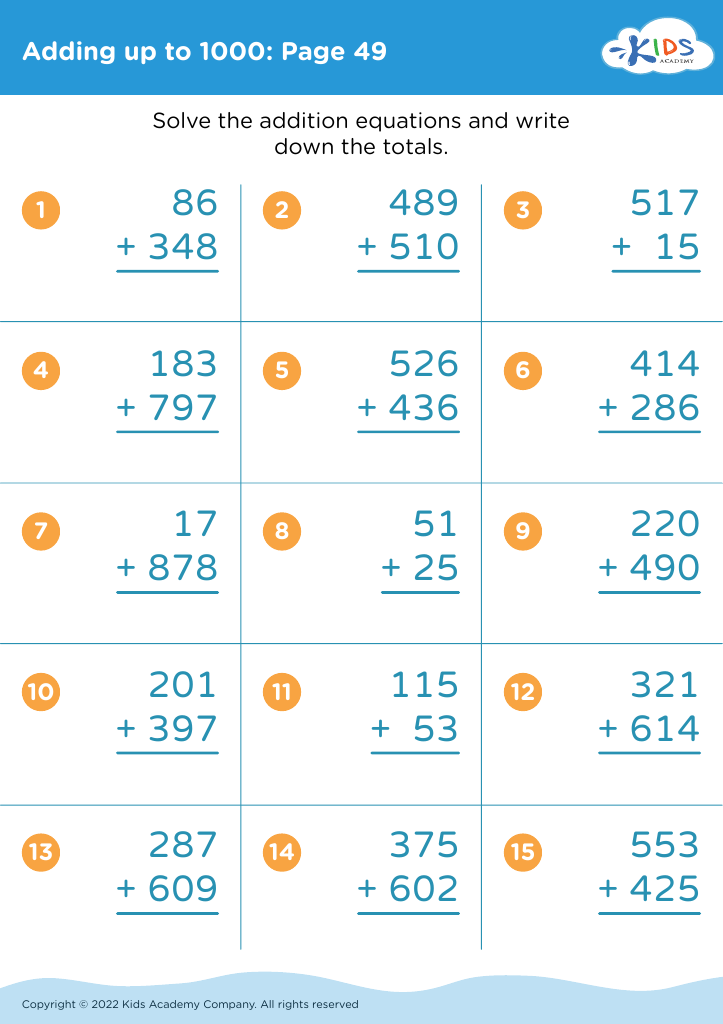
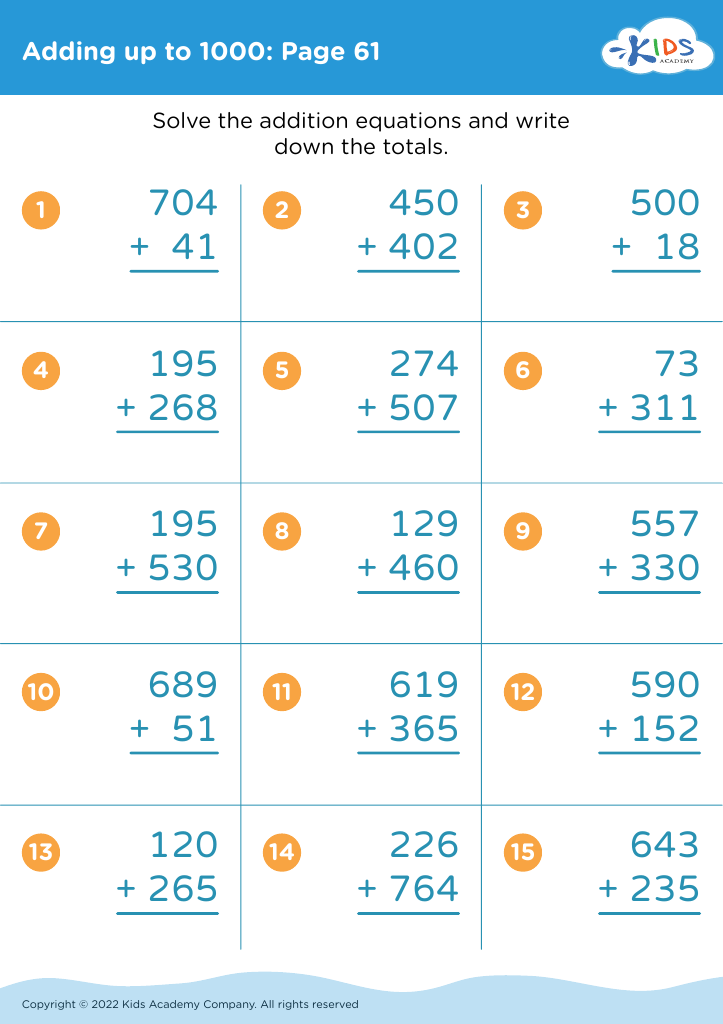
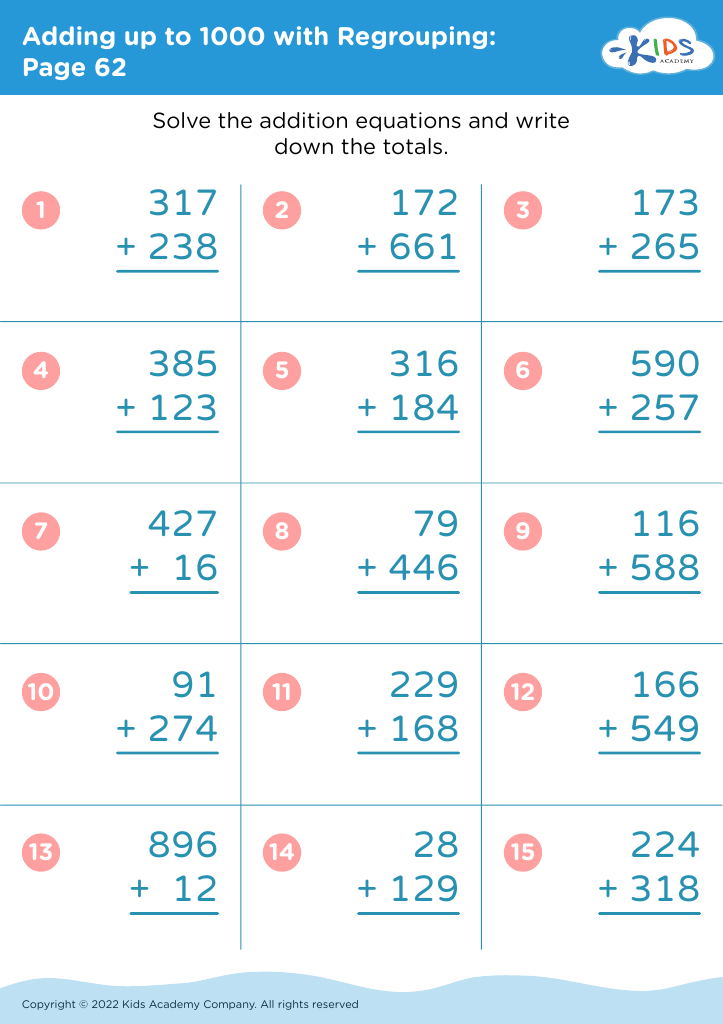
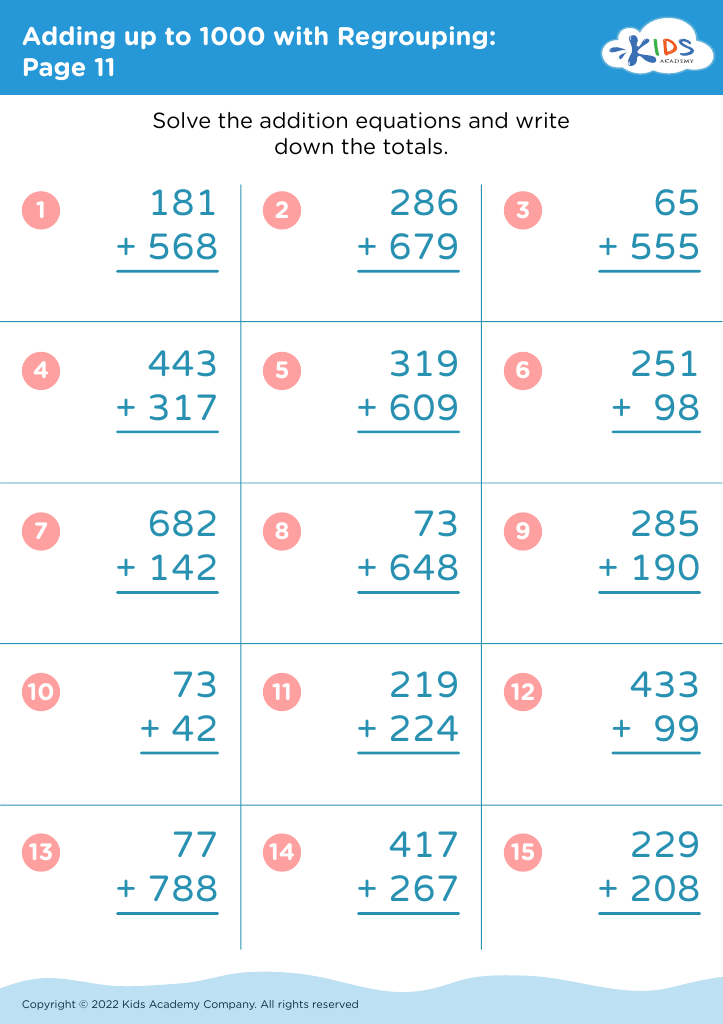
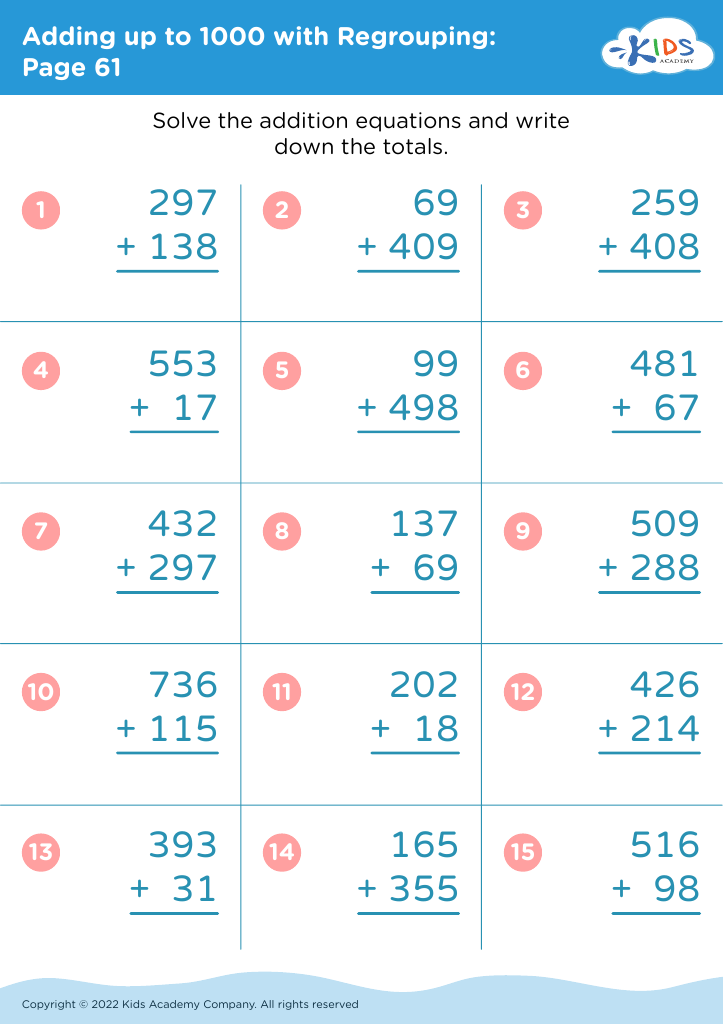
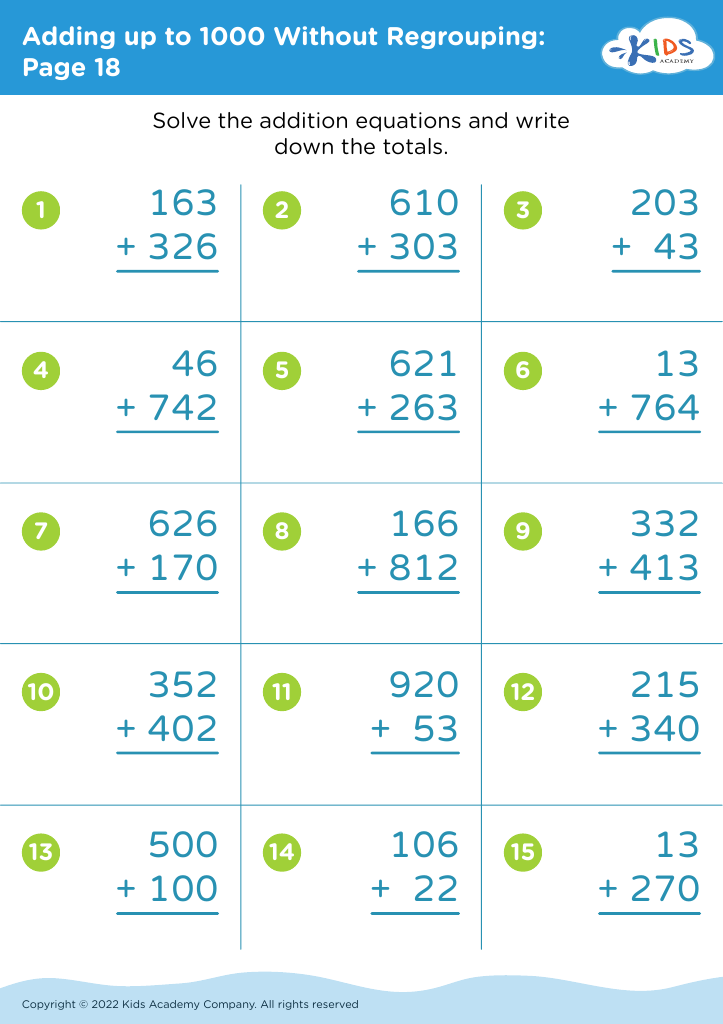
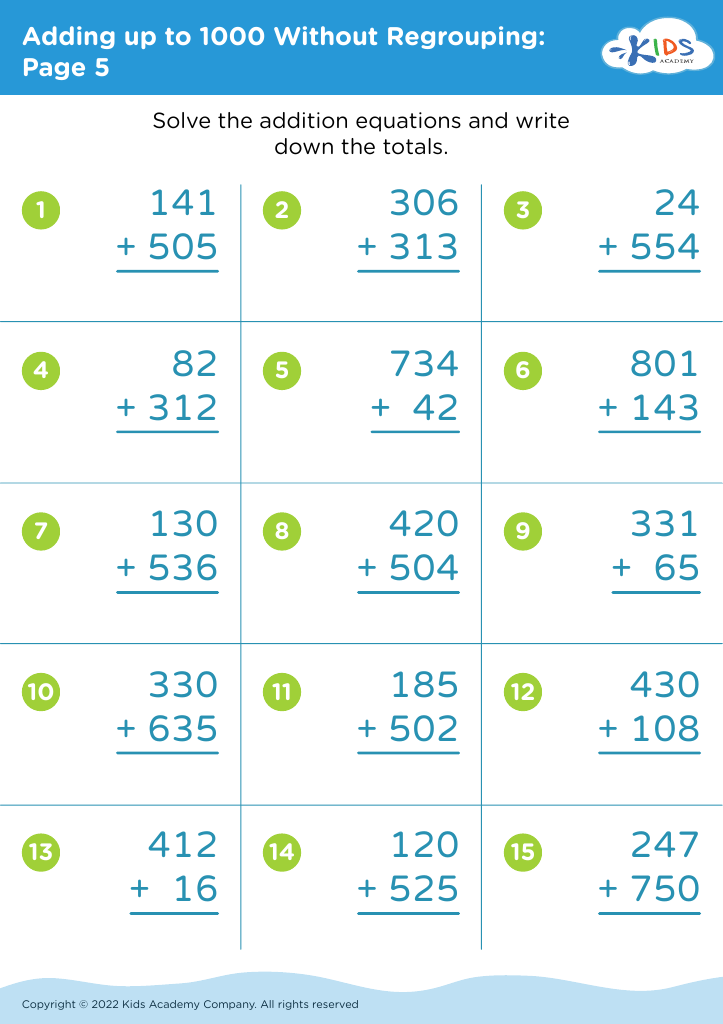
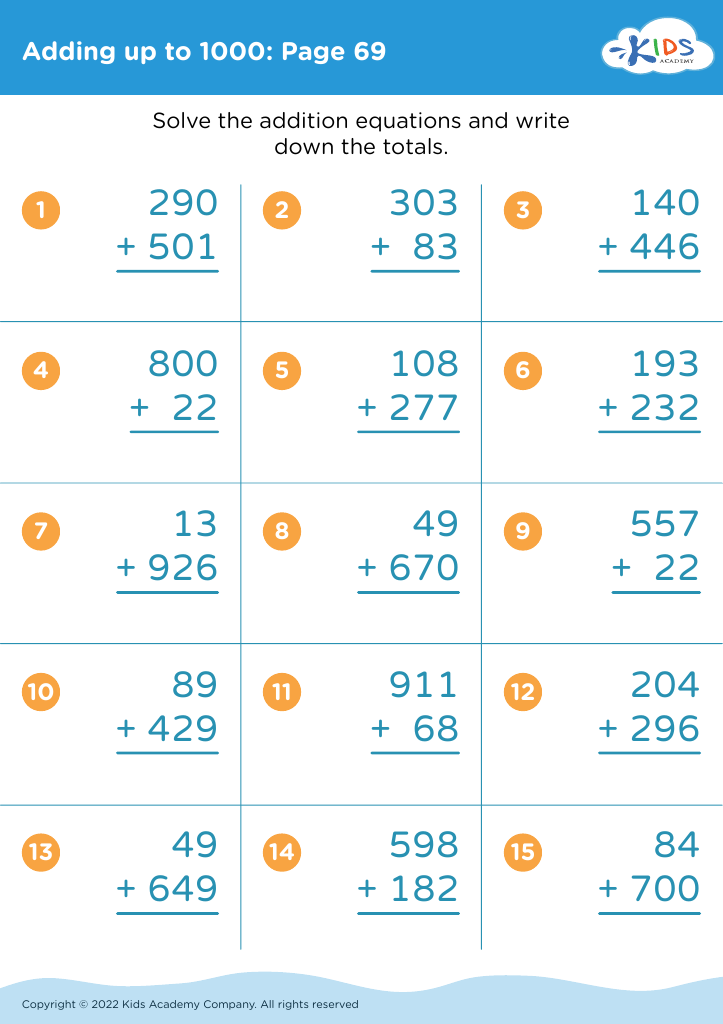
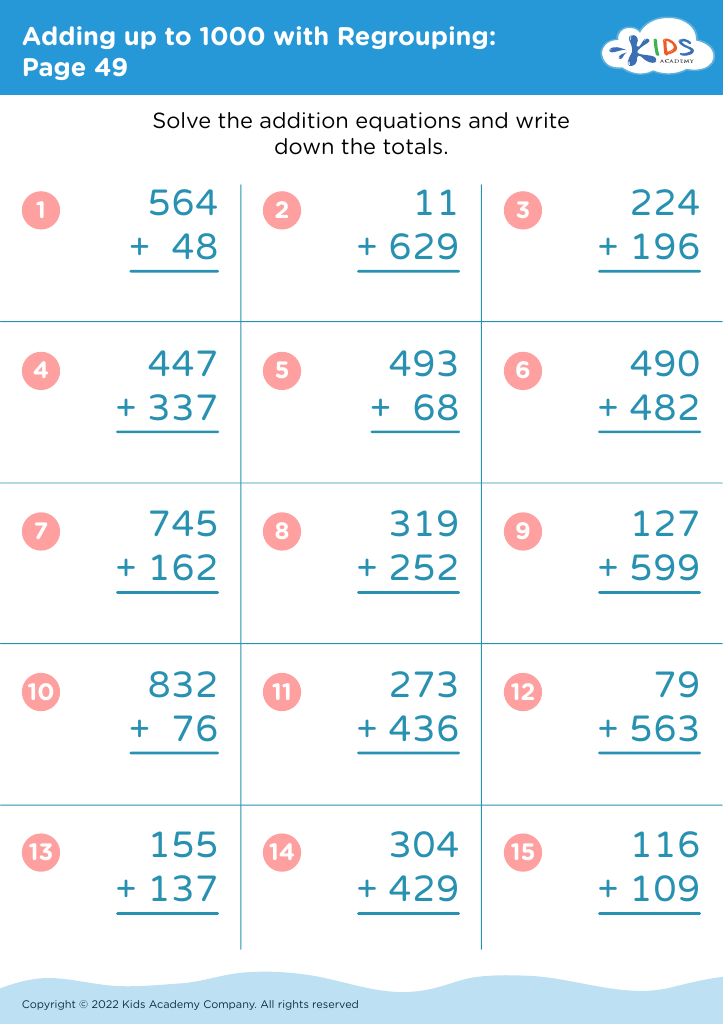
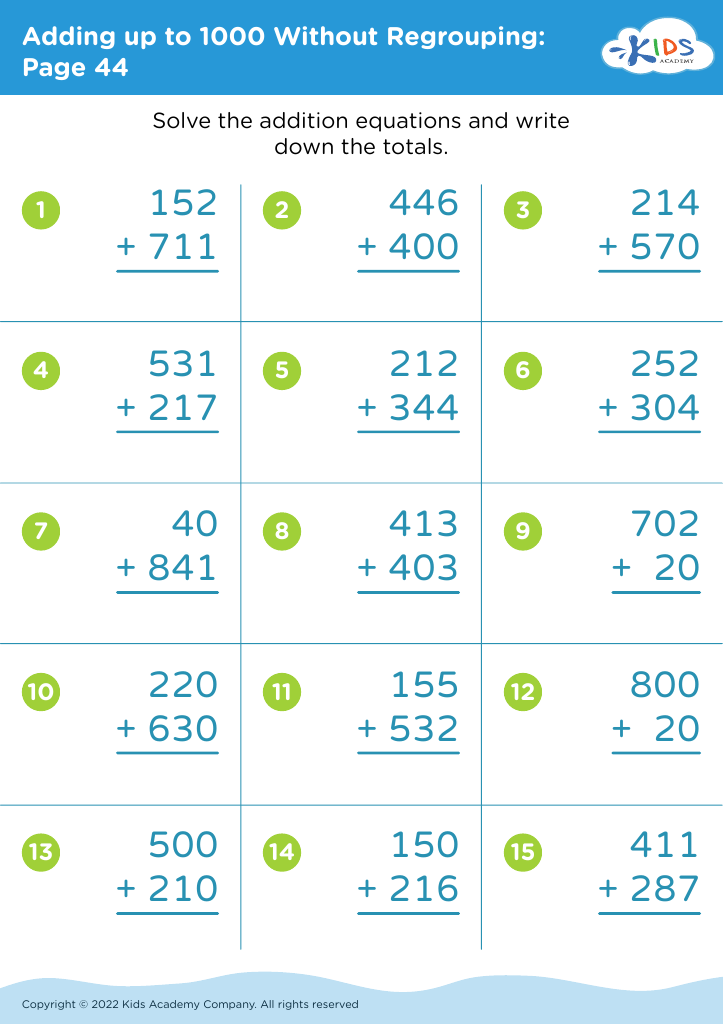
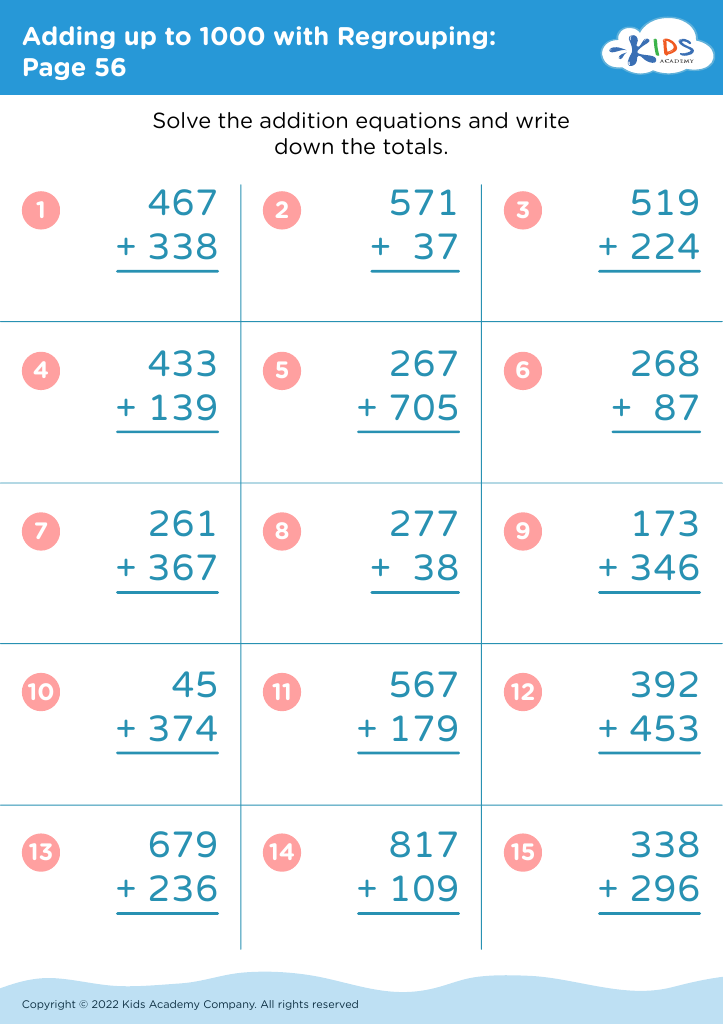



Understanding fractions and the ability to manipulate numbers confidently, including addition to 1000, are crucial competencies for second graders in today’s educational landscape. First and foremost, these skills form the foundation for future math concepts. In grade 2, children start to grasp the essential idea of dividing wholes into parts, which can be applied in various real-life situations such as cooking, sharing, and measuring.
When children develop fraction skills early on, they build a better understanding of proportional relationships, which are vital in more advanced mathematics. Additionally, adding numbers up to 1000 promotes a sense of number sense and enhances mental calculation strategies. This foundational knowledge not only prepares students for more complex math concepts in higher grades, like decimals and percentages but also enhances problem-solving abilities.
Moreover, being comfortable with fractions fosters resilience and helps build a positive mathematical mindset. Parents and teachers can guide children through engaging activities that reinforce these skills, thus encouraging enthusiasm for learning. Supporting children in mastering fractions promotes critical thinking, increases confidence, and ensures their success in both academic and everyday contexts. Ultimately, investing in these mathematical skills sets the stage for lifelong learning and competency in mathematics.