Understanding patterns Grade 2 Adding up to 1000 Worksheets
5 filtered results
-
From - To
Discover our "Understanding Patterns Grade 2 Adding Up to 1000 Worksheets" designed to enhance your child's math skills through engaging activities. These worksheets focus on recognizing and utilizing patterns in numbers, a vital skill for adding up to 1000. With colorful illustrations and interactive exercises, students will develop a strong foundation in mathematics while boosting their problem-solving abilities. Our carefully crafted resources promote critical thinking and self-confidence in young learners. Perfect for classroom or home practice, these worksheets ensure that kids not only grasp important concepts but also find joy in learning. Start building their mathematical journey today!
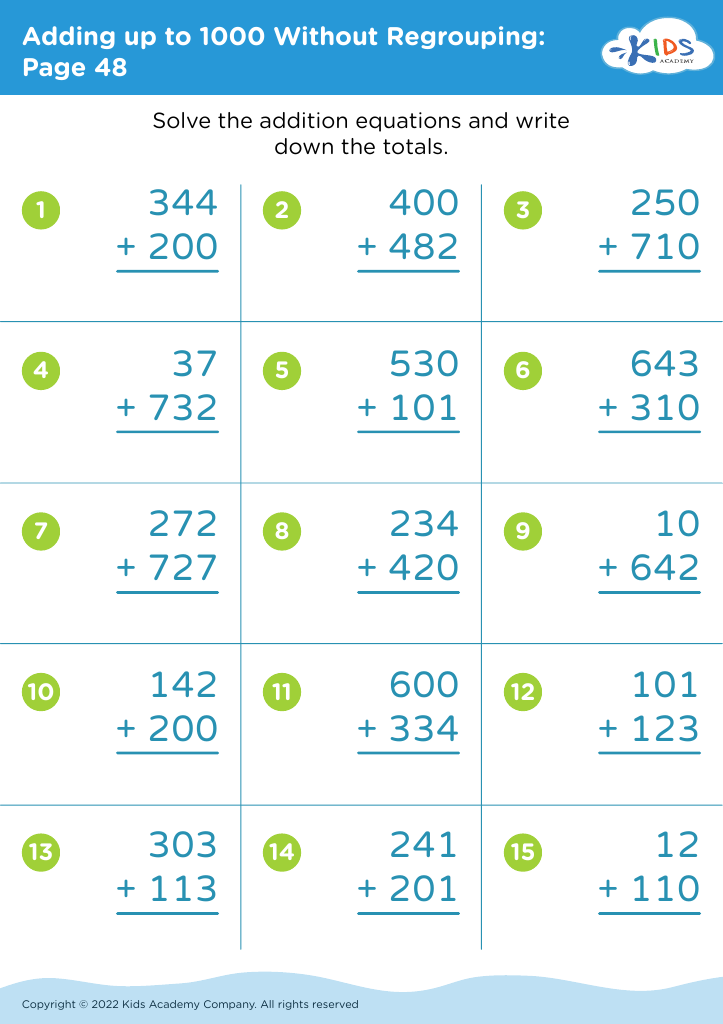
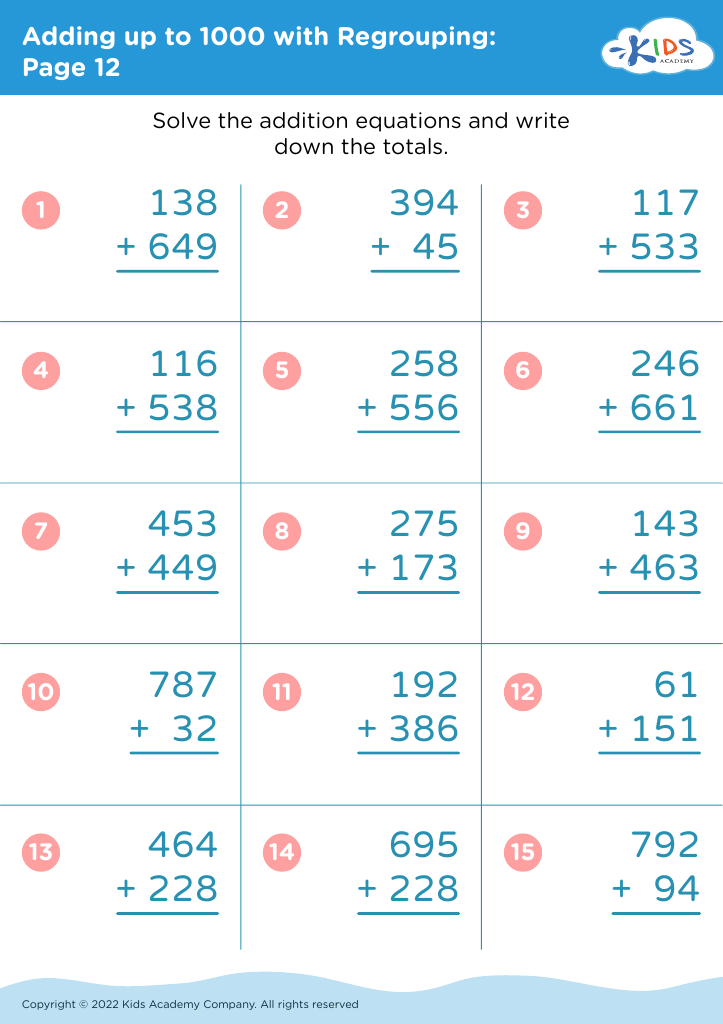
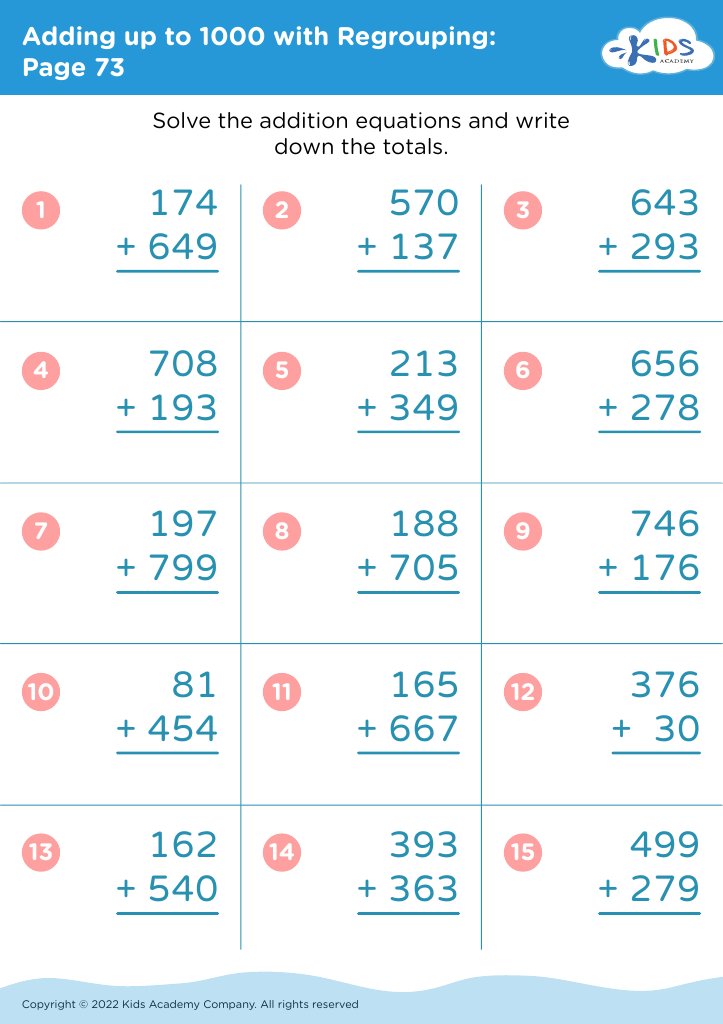
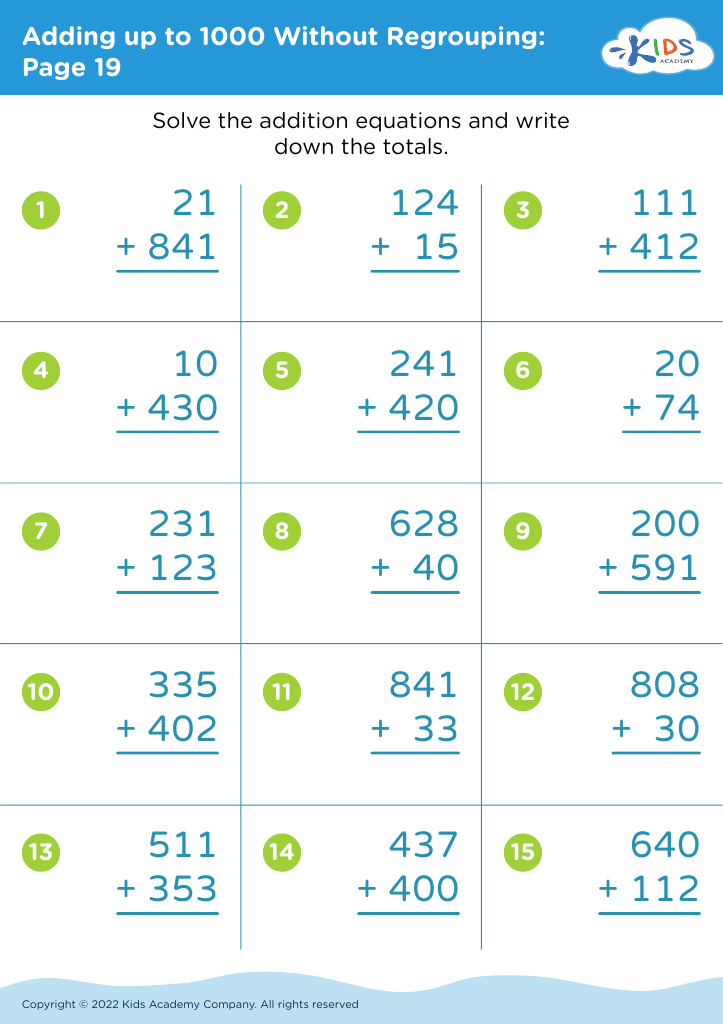
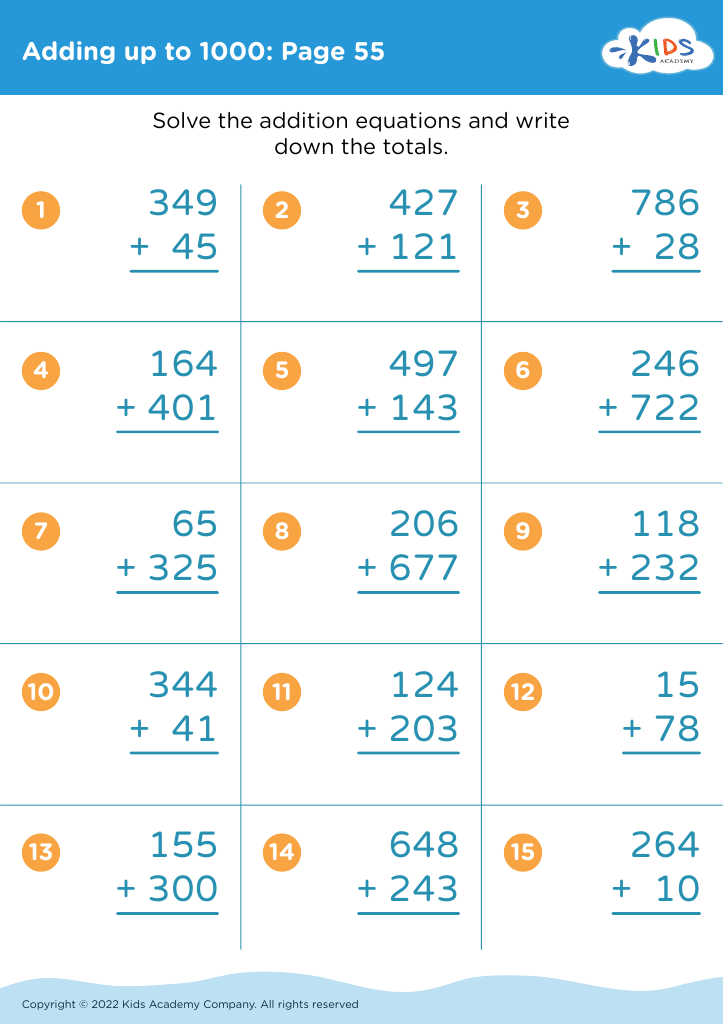



Understanding patterns in mathematics, particularly when adding up to 1000, is crucial for Grade 2 students for several reasons. First, it fosters early numeracy skills, ensuring that young learners grasp the foundational concepts of addition and number relationships. When students recognize numerical patterns, such as tens or hundreds, they become more confident in tackling larger problems and can perform calculations more efficiently.
Moreover, identifying patterns helps students see connections between numbers, which enhances their problem-solving skills. This holistic understanding supports them in grasping more complex mathematical concepts in later grades, ensuring a smoother transition into advanced topics.
By encouraging students to explore patterns, parents and teachers also promote critical thinking and analytical skills. These skills are essential not just in mathematics but across all subjects. Additionally, engaging children in pattern recognition can make learning more interactive and enjoyable, enhancing their overall educational experience.
Ultimately, developing a robust understanding of patterns prepares students for future mathematical success and builds a positive attitude toward learning. In today's data-driven world, these early skills can provide a strong foundation for lifelong learning and inquiry, emphasizing the importance of support from both parents and educators in this key developmental stage.