Understanding Sequences Grade 2 Adding up to 1000 Worksheets
6 filtered results
-
From - To
Discover engaging, educational worksheets designed to help 2nd graders master understanding sequences while adding up to 1000. These thoughtfully crafted exercises reinforce essential math skills, guiding students through pattern recognition, order, and incremental addition. Ideal for independent learning or classroom activities, the worksheets offer a fun and approachable way to build confidence and proficiency in math. Enhance your child's mathematical journey with activities that focus on sequencing, ensuring a solid foundation for future learning. Unlock their potential with these dynamic resources, tailored to make learning sequences enjoyable while reaching essential academic milestones.
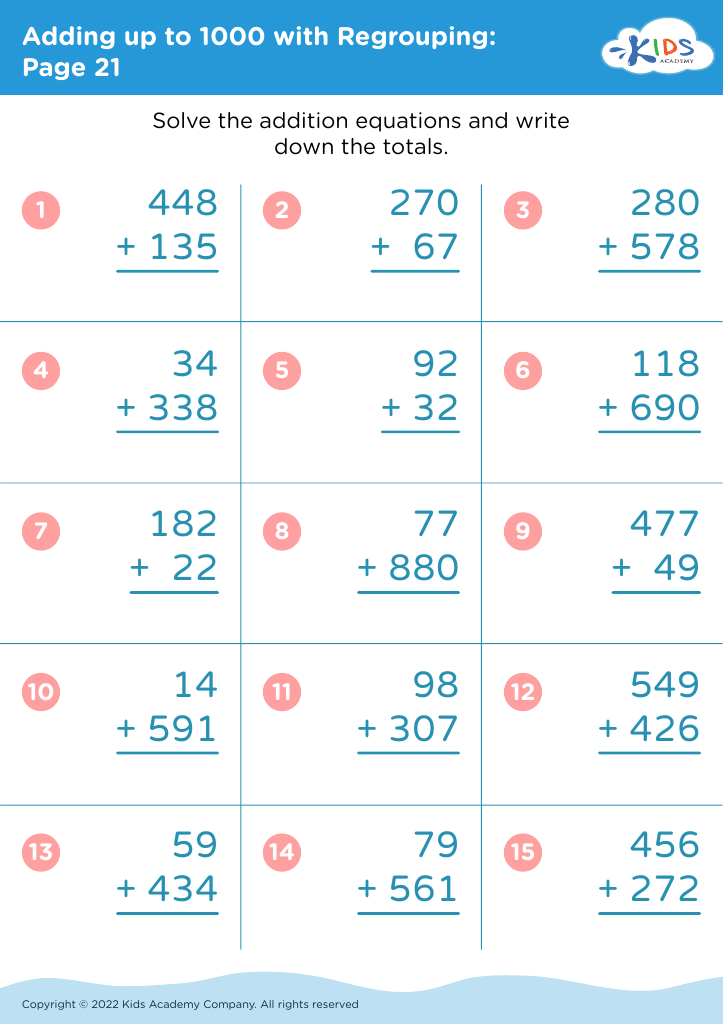
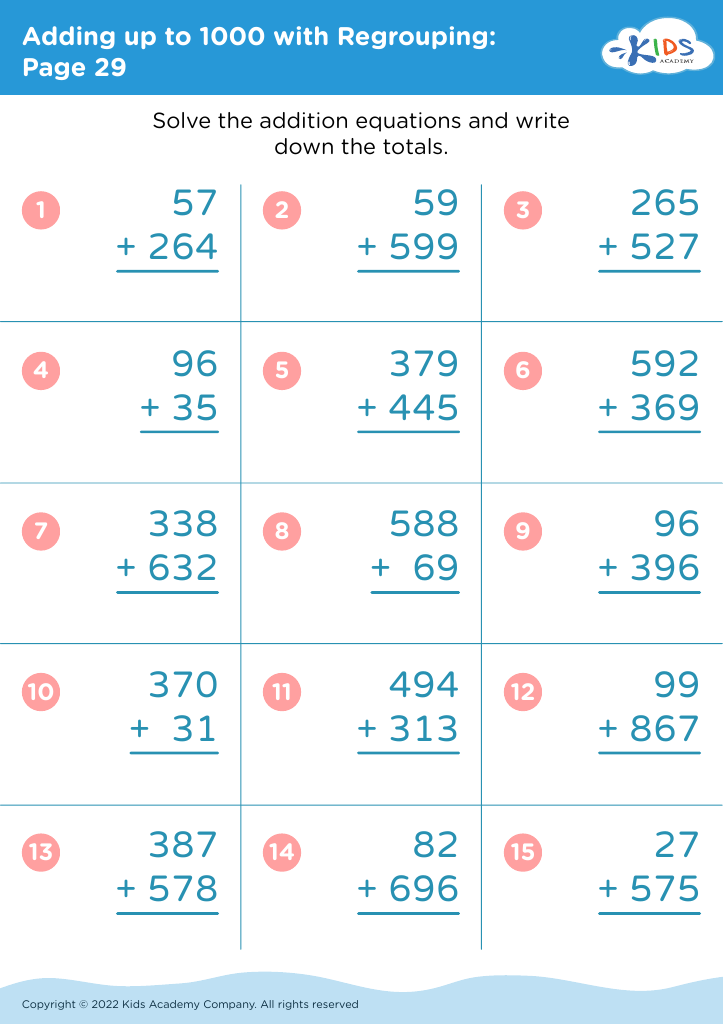
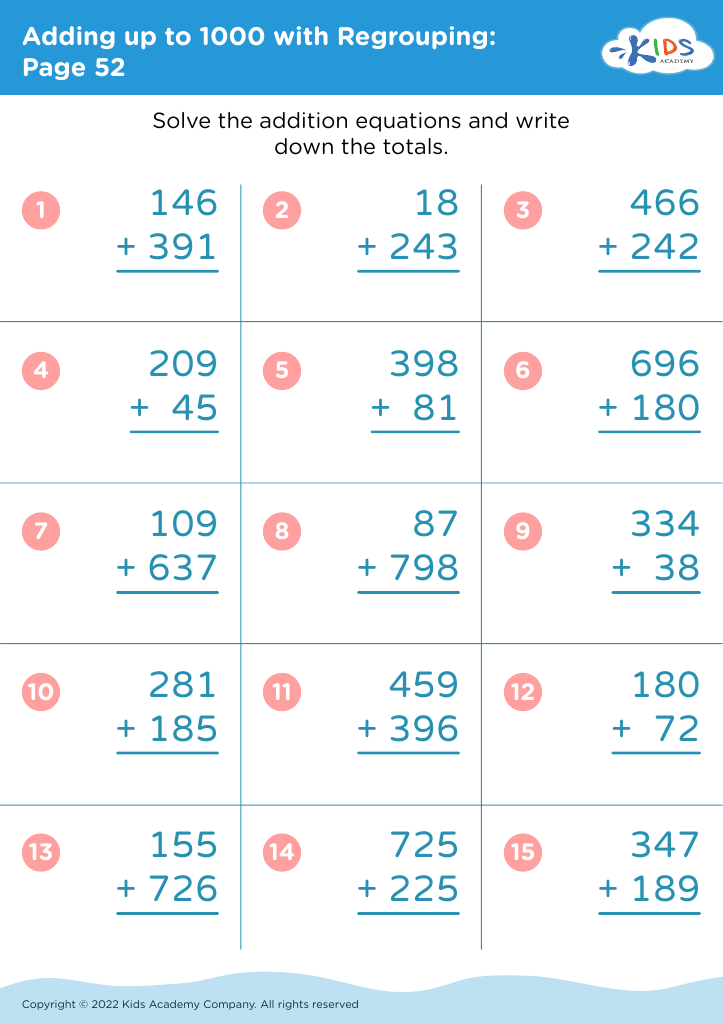
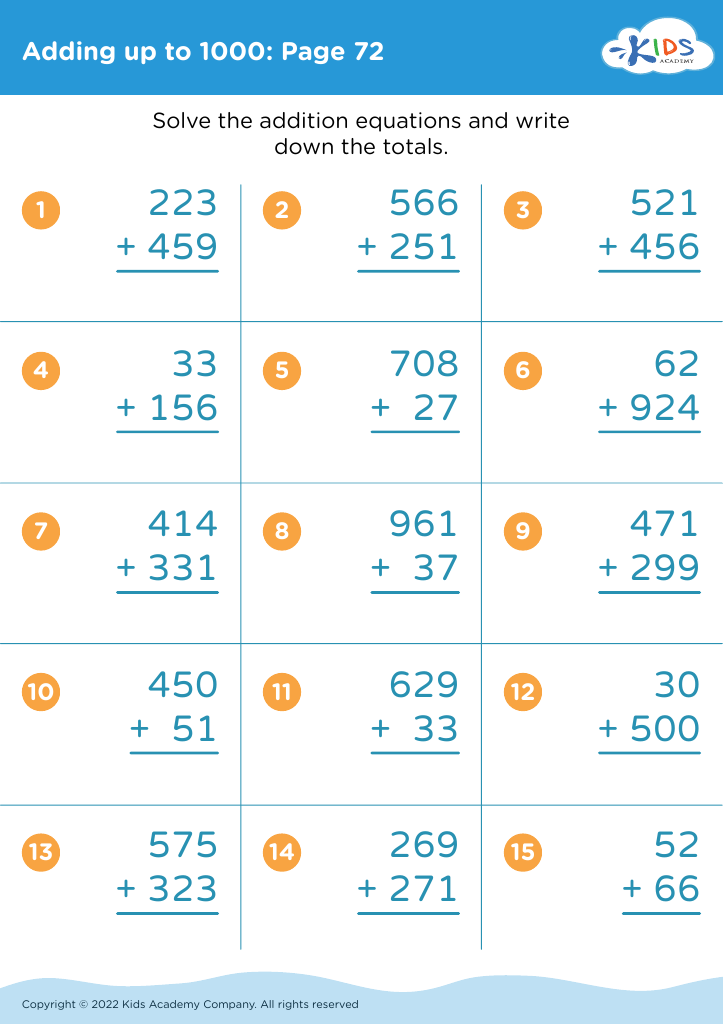
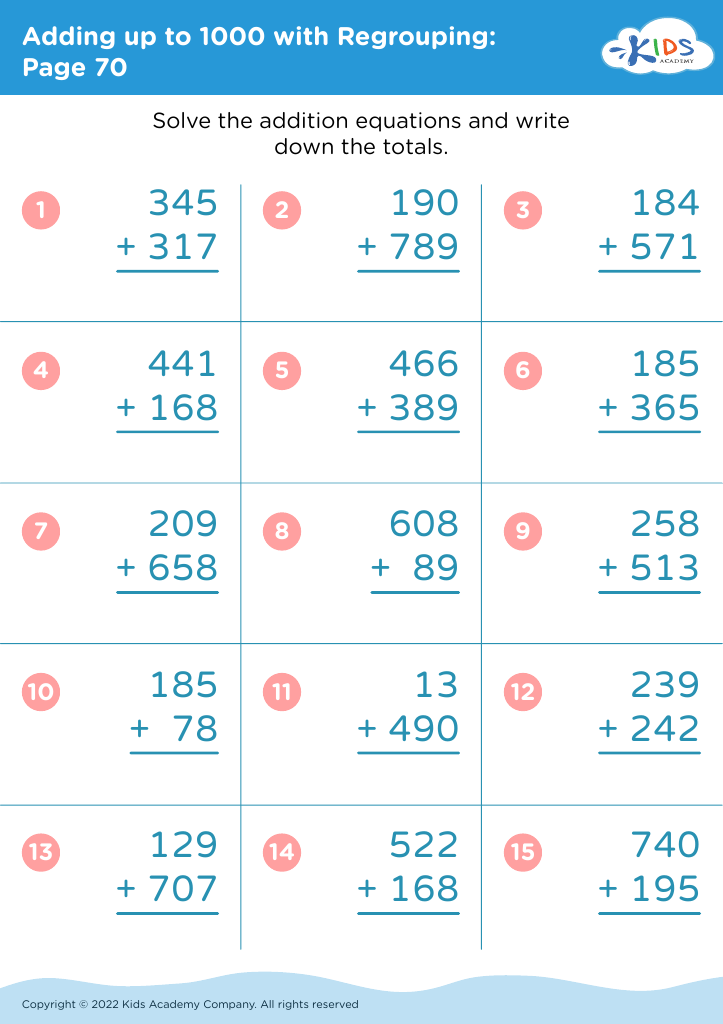
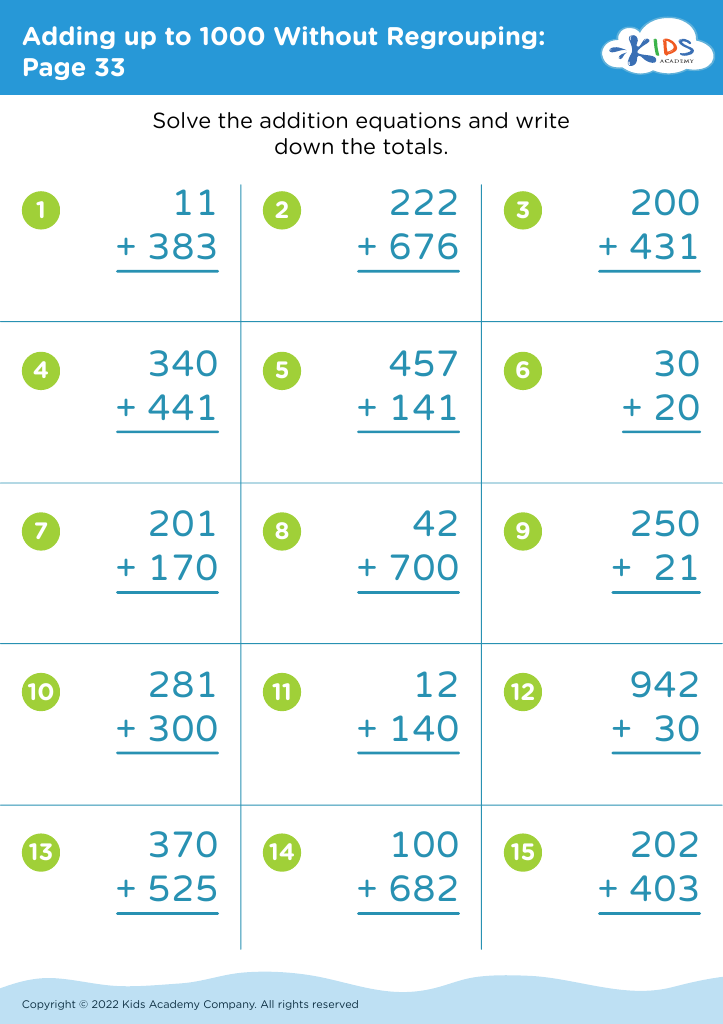



Understanding sequences and being able to add numbers up to 1000 are fundamental skills for second graders, and parents and teachers have strong reasons to prioritize these competencies. Sequences establish the basics of number patterns and logical thinking, which are essential not just in math, but across many other subjects and real-life situations. Recognizing and forming patterns improves a child's ability to predict and analyze situations, fostering critical thinking and problem-solving skills from an early age.
Adding numbers up to 1000, on the other hand, consolidates foundational math operations. Mastery of addition within this higher range builds confidence and sets the stage for learning more complex mathematics, including subtraction, multiplication, and division. Additionally, practical daily activities, such as handling money, measuring ingredients for a recipe, or even keeping track of time, often require a solid grasp of these math skills.
Moreover, early understanding and proficiency in these areas can prevent future math anxiety and support a positive attitude towards the subject. It gives students a head start, making further education in STEM fields more accessible and more manageable. Ultimately, being adept in understanding sequences and adding up to 1000 are critical for academic success and everyday functionality.