Understanding symmetry Grade 2 Adding up to 1000 Worksheets
4 filtered results
-
From - To
Explore the exciting world of symmetry with our grade 2 "Understanding Symmetry" worksheets! Perfect for enhancing your child's math skills, these worksheets will guide students in recognizing and creating symmetrical shapes while also practicing addition up to 1000. Each activity is designed to engage young learners and reinforce concepts in a fun, interactive way. From identifying lines of symmetry to completing symmetrical patterns, these exercises promote critical thinking and creativity. Suitable for classroom or at-home learning, our worksheets provide a comprehensive approach to understanding symmetry while integrating essential math skills. Download your worksheets today and make learning math a symmetrical adventure!
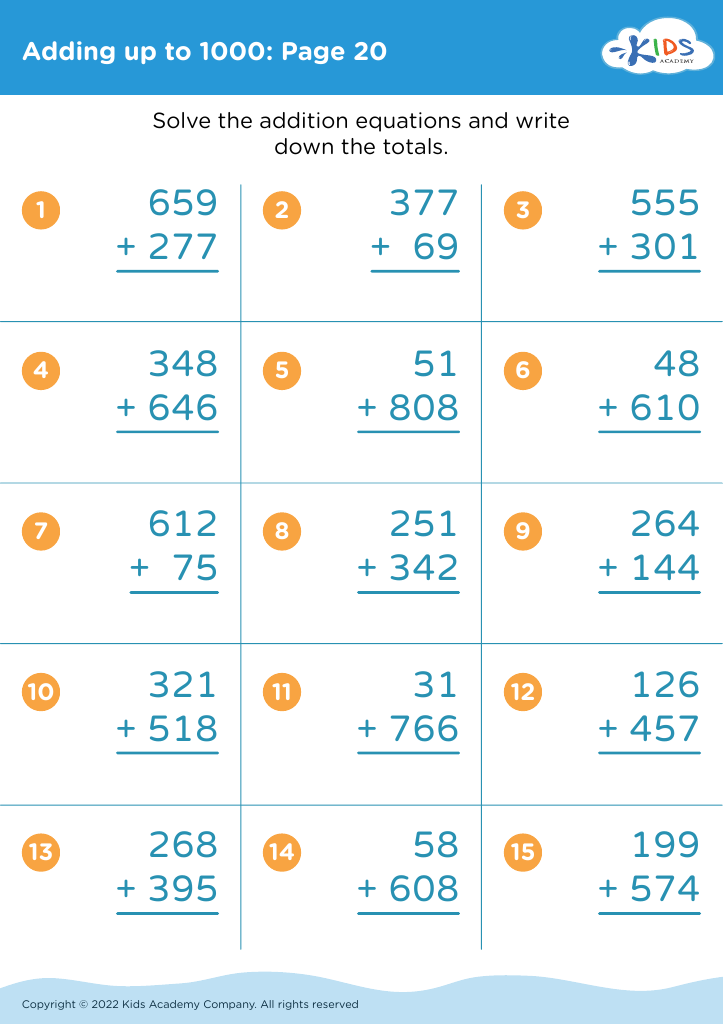
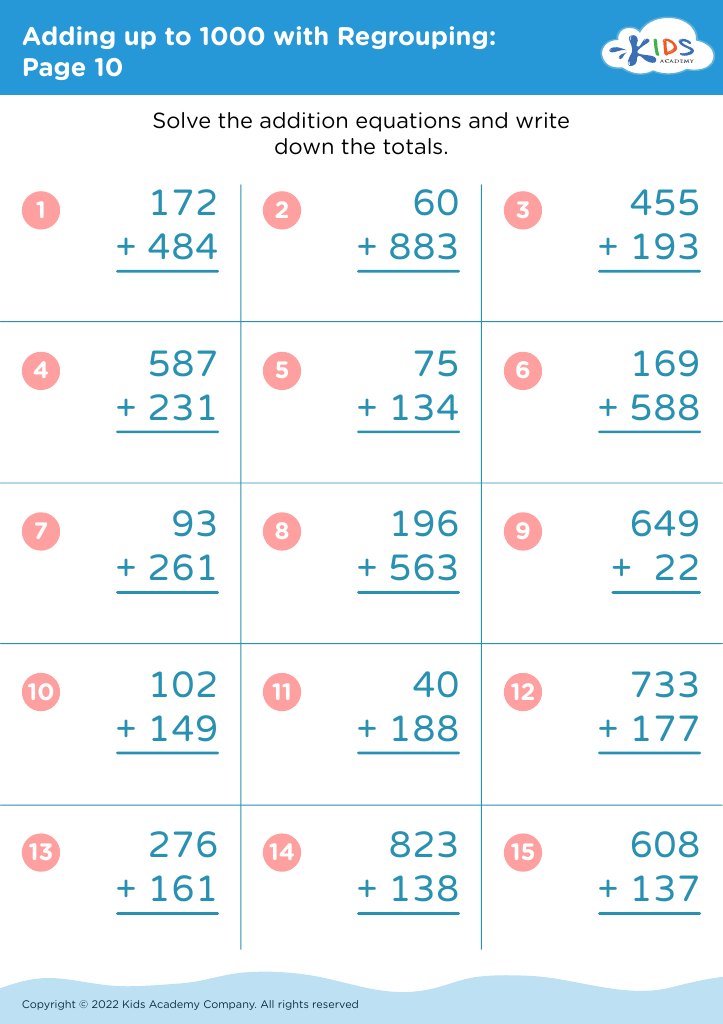
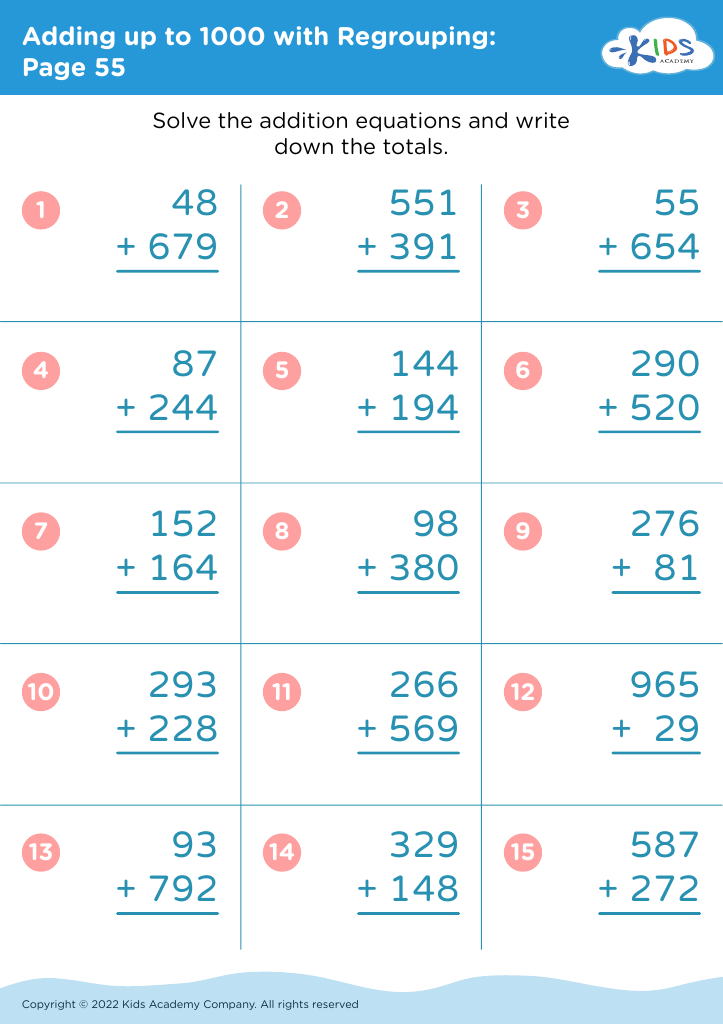
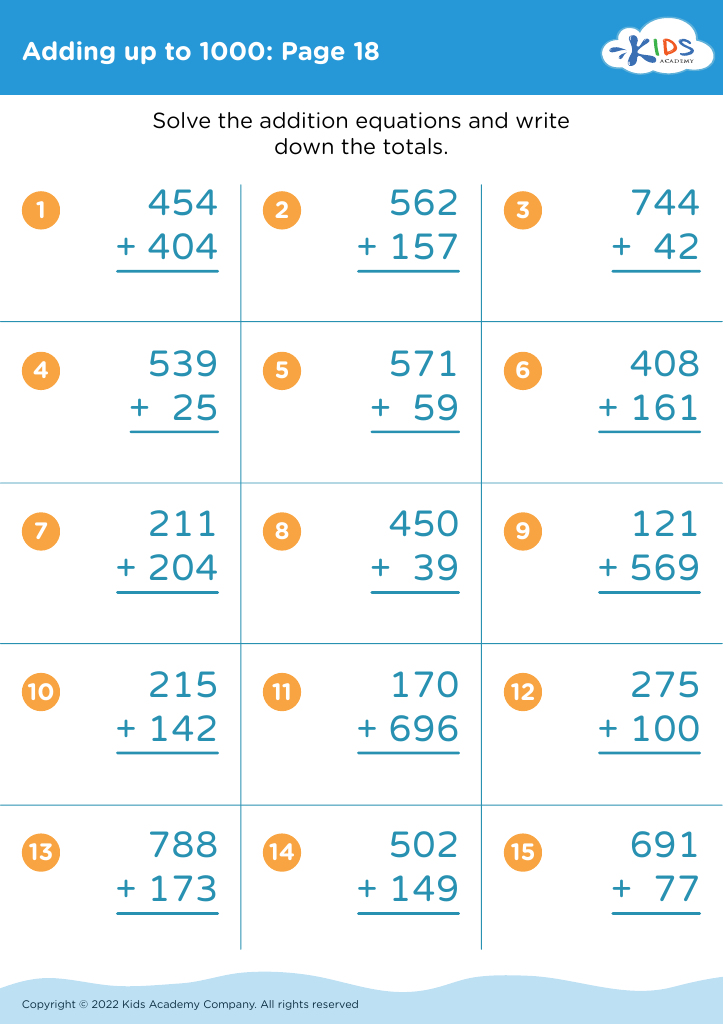



Understanding symmetry and mastering addition up to 1000 are critical skills for second-grade students that significantly enhance their mathematical foundation. Parents and teachers should care about these topics as they not only develop essential problem-solving skills but also foster geometric reasoning, which is crucial in everyday life.
Symmetry introduces children to the concept of balance and organization, helping them make connections to nature, art, and design. Recognizing symmetrical patterns boosts their spatial awareness and can improve their artistic creativity. When children grasp symmetry, they learn to appreciate harmony in shapes and learn about reflection and transformation, laying the groundwork for more advanced mathematical concepts in the future.
On the other hand, adding up to 1000 is a fundamental math skill that supports their overall numeracy. When students can confidently add within this range, they develop mental math strategies, understand place value, and enhance their number sense. These skills are essential not only for succeeding in math but also for real-world applications, such as budgeting and measuring.
By investing in these areas early on, parents and teachers foster a love for math, drive academic success, and prepare children for more complex concepts as they advance in their education.