Addition skills Grade 2 Adding up to 50 Misc Worksheets
3 filtered results
-
From - To
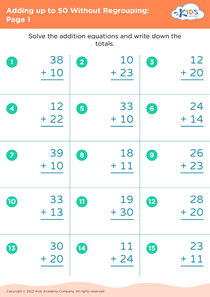
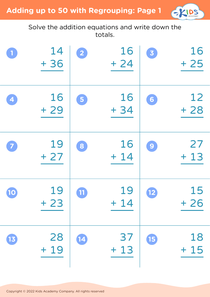
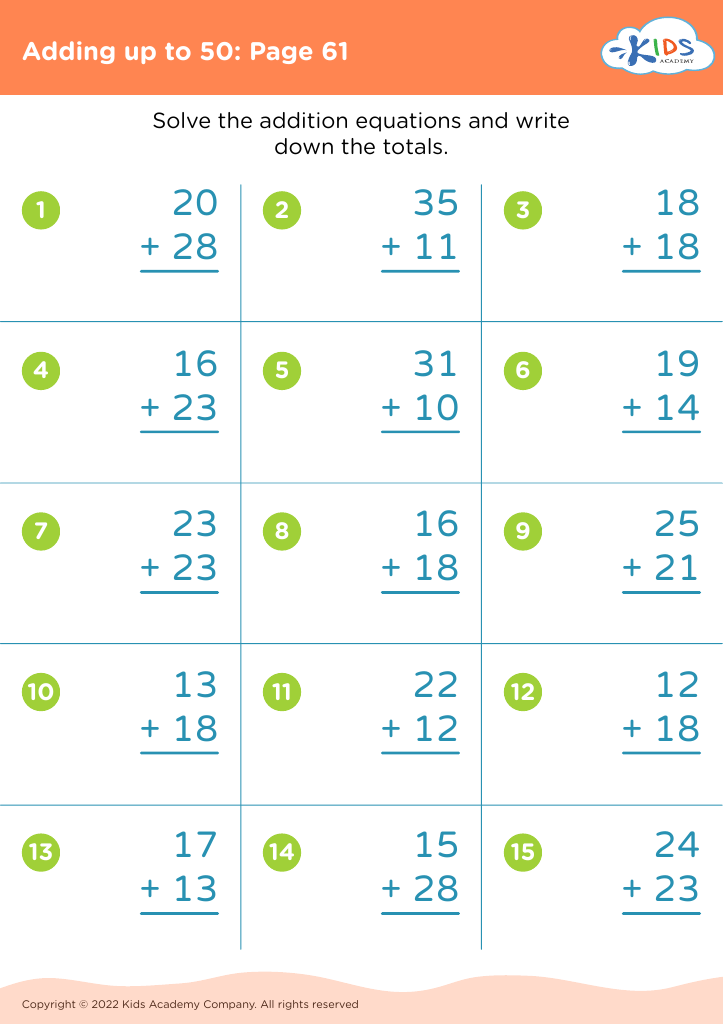
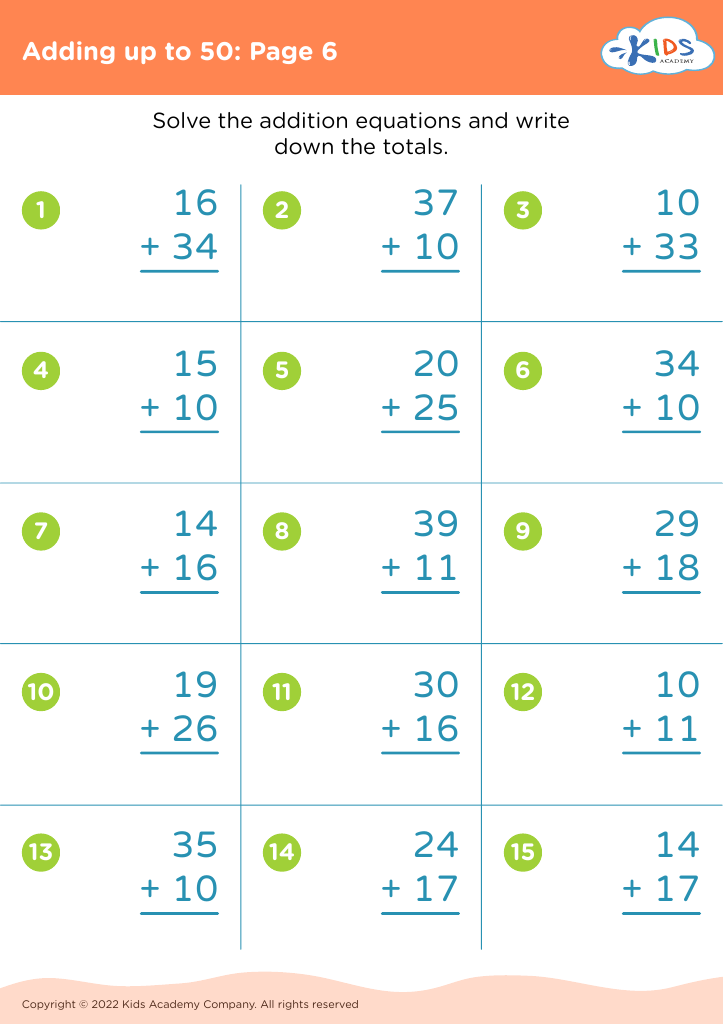
Teach your second grader essential addition skills with our diverse collection of worksheets designed for adding up to 50. Perfectly curated for Grade 2, these resources cover various techniques, including visual aids and step-by-step calculations. Your child will build confidence and improve their math fluency through engaging exercises. Our worksheets incorporate fun themes and practical problems to grab young learners' attention. Visit the Kids Academy page to explore our free printable worksheets that meet educational standards and support teachers, parents, and students in mastering addition up to 50. Worksheet activities promise a solid foundation in math and endless learning fun!
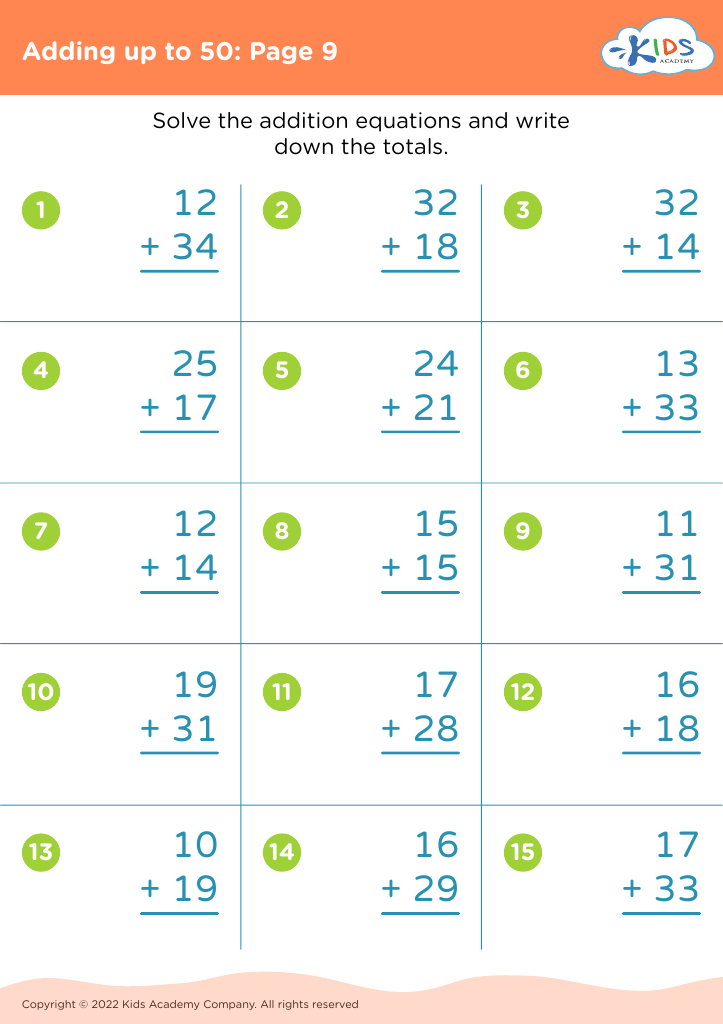


Understanding addition skills up to 50 in Grade 2 is foundational for young learners, making it an essential focus for both parents and teachers. At this developmental stage, children are building their base for more complex math concepts they will encounter later. Mastery of addition promotes numerical fluency, enabling students to perform mental math swiftly and accurately. This skill is crucial not just for math classes, but also for real-life scenarios such as counting money, measuring ingredients in recipes, or figuring out time.
Grade 2 represents a pivotal point where students move from simple counting to structured addition strategies. If addition skills are weak, children may struggle with more advanced topics such as subtraction, multiplication, and division. Moreover, doing well in math can significantly boost a child's confidence across all subjects. Conversely, struggles in math can lead to math anxiety, affecting overall academic performance.
For teachers, it is beneficial to incorporate engaging activities that strengthen these skills, while parents can support homework routines and provide practical, hands-on learning experiences at home. Encouraging and cultivating these skills collectively help foster a lifelong appreciation for mathematics and logical thinking. Investing in these early mathematical abilities lays a strong groundwork for academic and everyday success.