Fraction comparison Grade 2 Adding up to 50 Misc Worksheets
4 filtered results
-
From - To
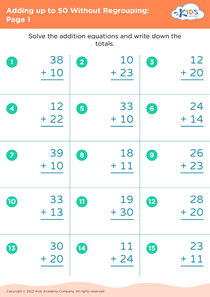
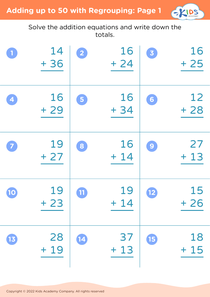
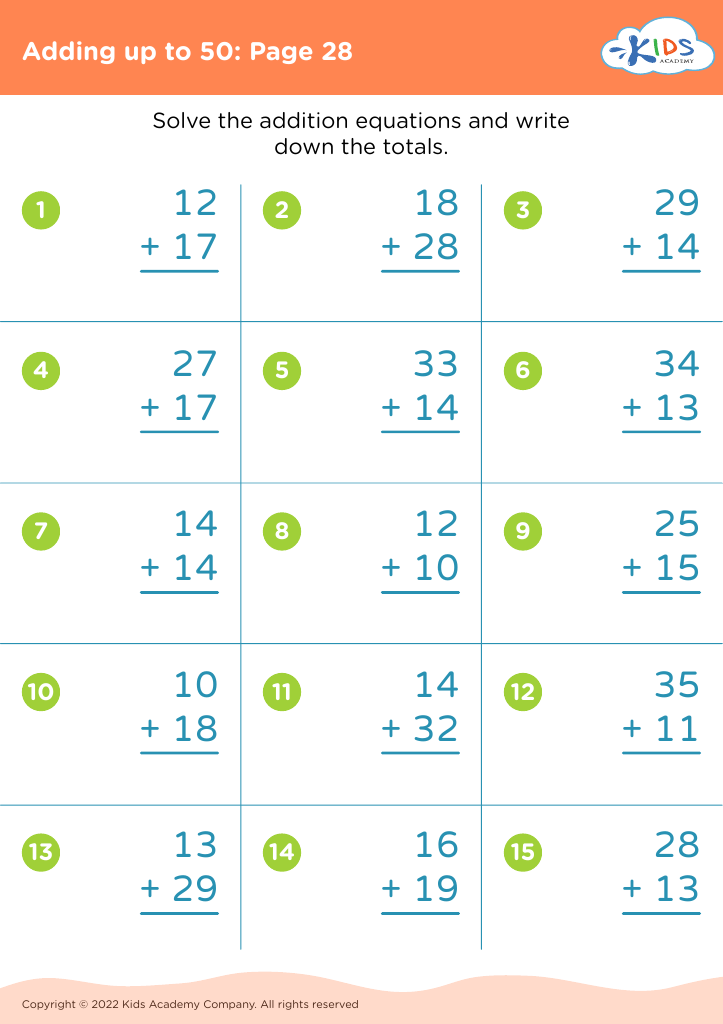
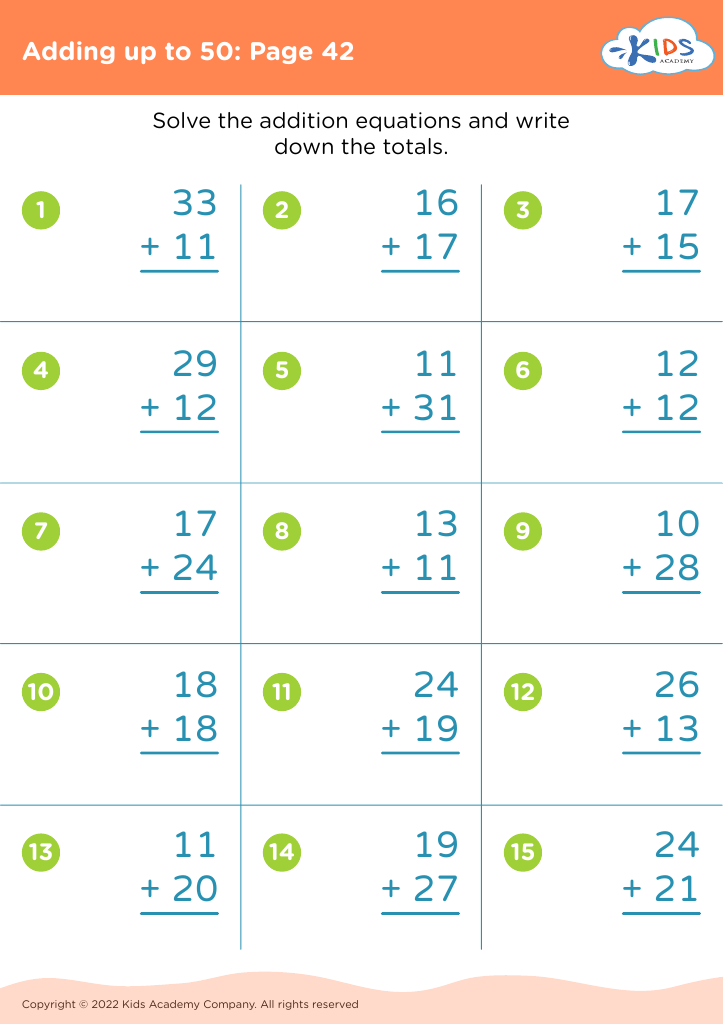
Dive into our engaging collection of "Fraction Comparison Grade 2 Adding up to 50 Misc Worksheets," designed specifically for second graders. These worksheets reinforce essential math concepts, helping young learners compare fractions with ease while mastering addition up to 50. Each worksheet is crafted to boost children's confidence and enhance their problem-solving skills through interactive and fun exercises. Perfect for both classroom and home use, our diverse activities offer valuable practice in fraction comparison to support comprehensive mathematical growth. Make learning fractions an enjoyable experience every day with Kids Academy!
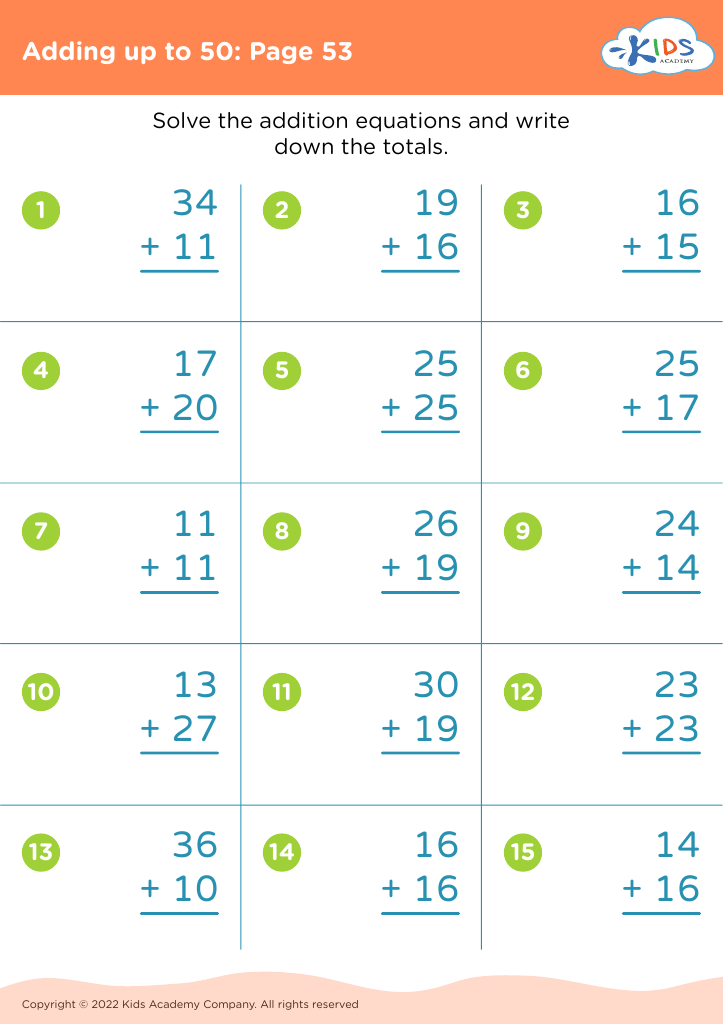
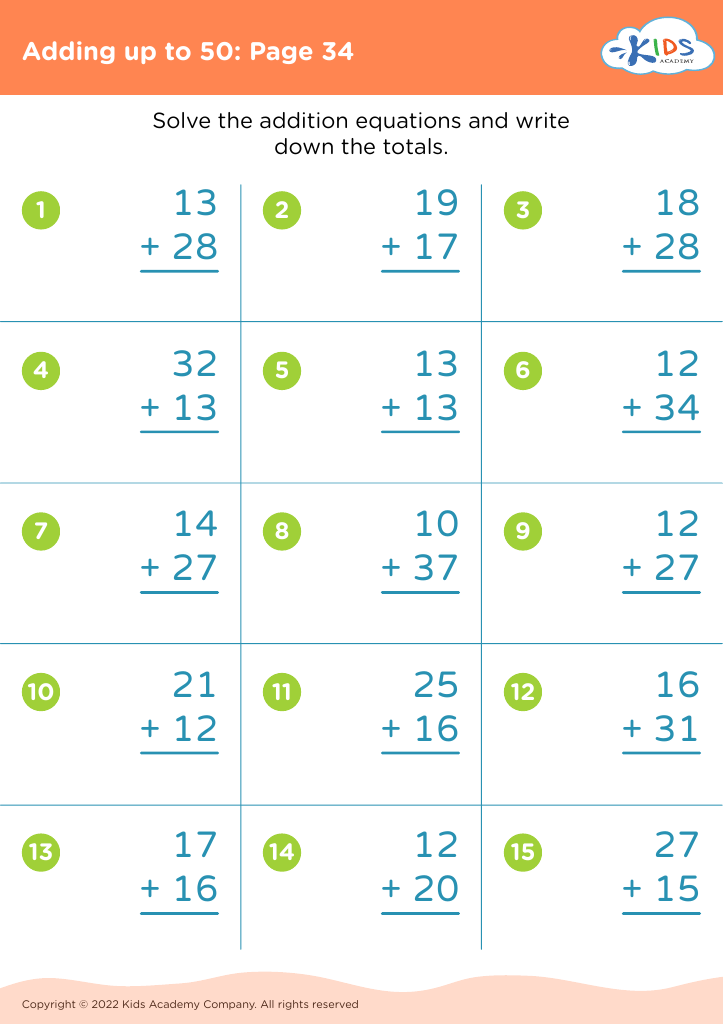


Fraction comparison and adding up to 50 are essential math skills for second graders that both parents and teachers should prioritize. Understanding fractions helps build a strong foundation in number sense. It introduces children to the concept of parts of a whole, which is critical for future math topics like ratios, percentages, and algebra. Teaching students to compare fractions cultivates their ability to make mathematical judgments, enhancing their logical reasoning and problem-solving skills.
Similarly, mastering addition up to 50 consolidates basic arithmetic knowledge and fluency. This skill is vital as it supports more complex computations and operations they'll encounter in higher grades. It also fosters mental math abilities, which is not only helpful for math itself but also for practical, everyday tasks, such as counting money or measuring ingredients in a recipe.
By focusing on these areas, teachers and parents create a strong mathematical base for children, contributing to their confidence and interest in the subject. Additionally, maintaining consistency between home and school in practicing these skills ensures steady progression, mitigating any learning gaps and promoting a love for learning that extends beyond the classroom. Investing time in these fundamental skills now sets children up for academic success in the future.