Simplifying Fractions Grade 2 Adding up to 50 Misc Worksheets
4 filtered results
-
From - To
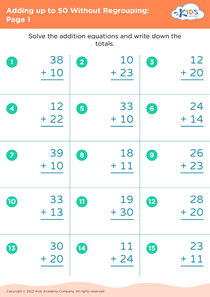
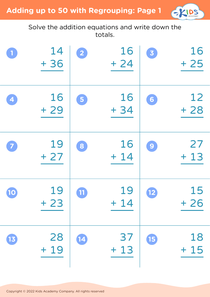
Welcome to our "Simplifying Fractions Grade 2 Adding Up to 50 Misc Worksheets" page! Here, you'll find engaging and interactive worksheets designed to help young learners grasp the concept of simplifying fractions while reinforcing their addition skills. Each activity encourages students to practice identifying and reducing fractions to their simplest forms, all while enjoying fun illustrations and relatable examples. Our worksheets complement standard math curricula and support your child's mastery of essential skills in a motivating way. Perfect for in-class activities or home practice, these resources ensure a solid foundation in fractions that will benefit students as they continue their mathematical journey!
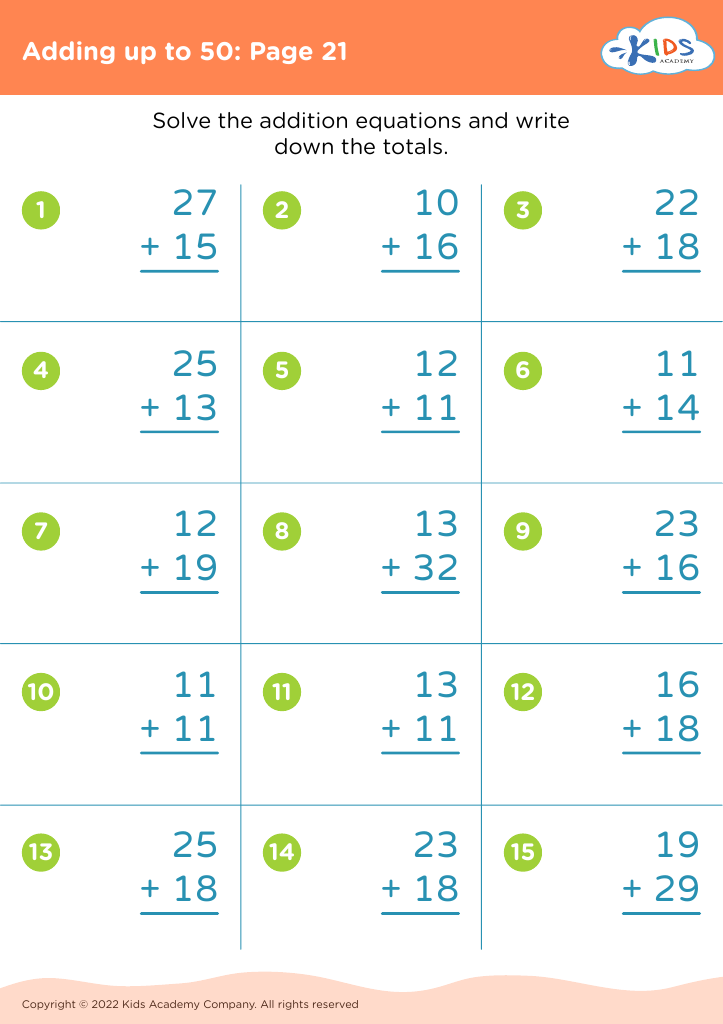
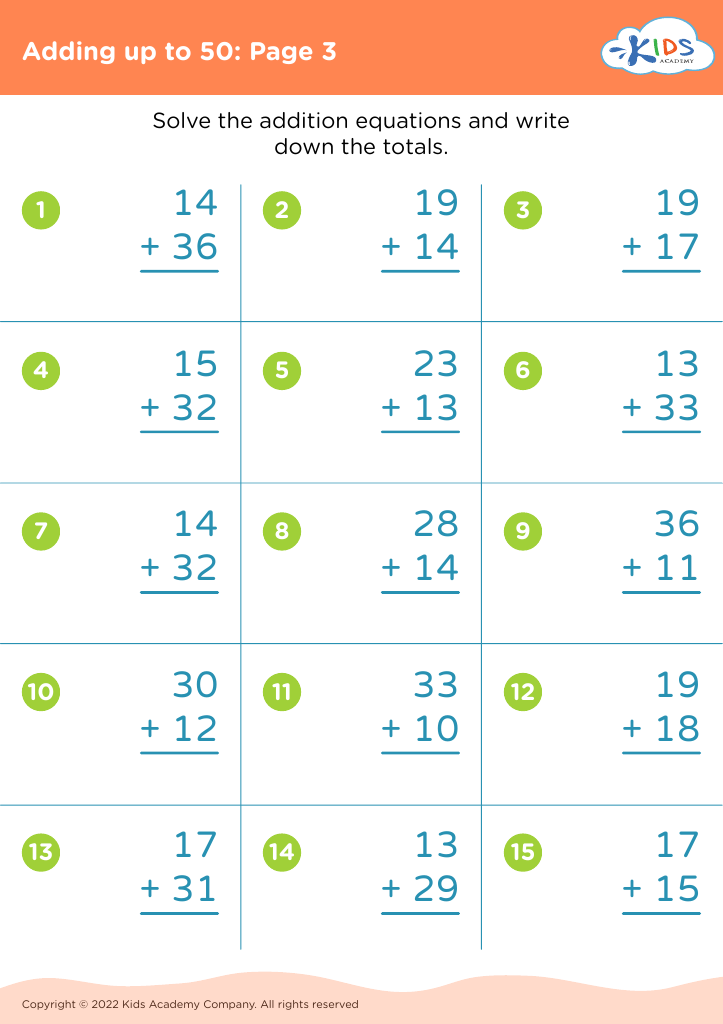
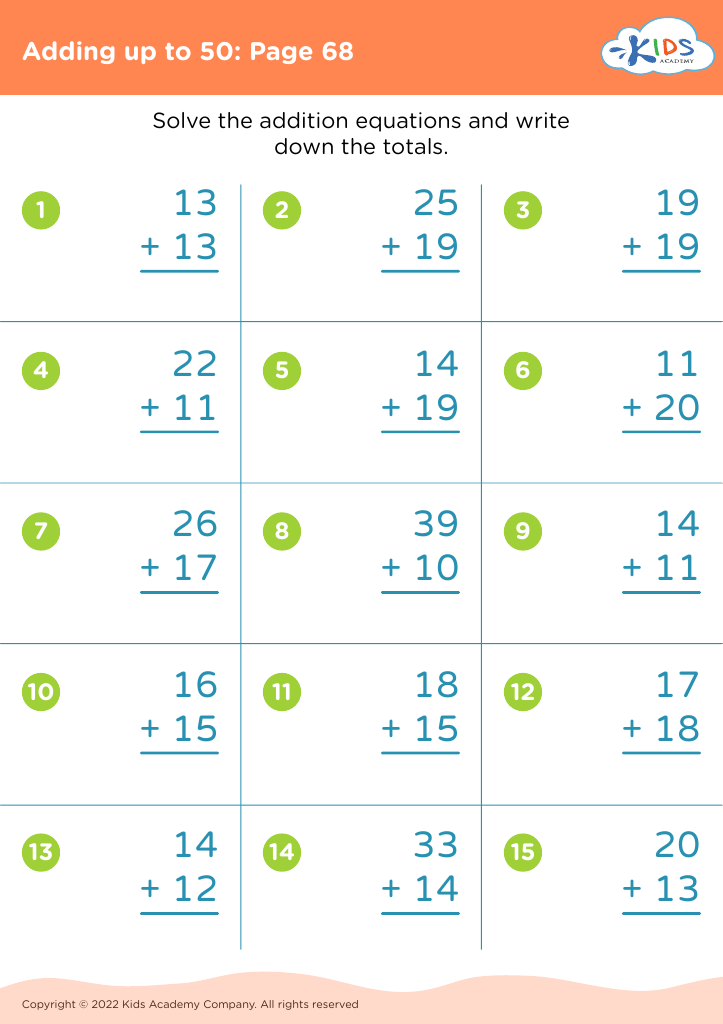
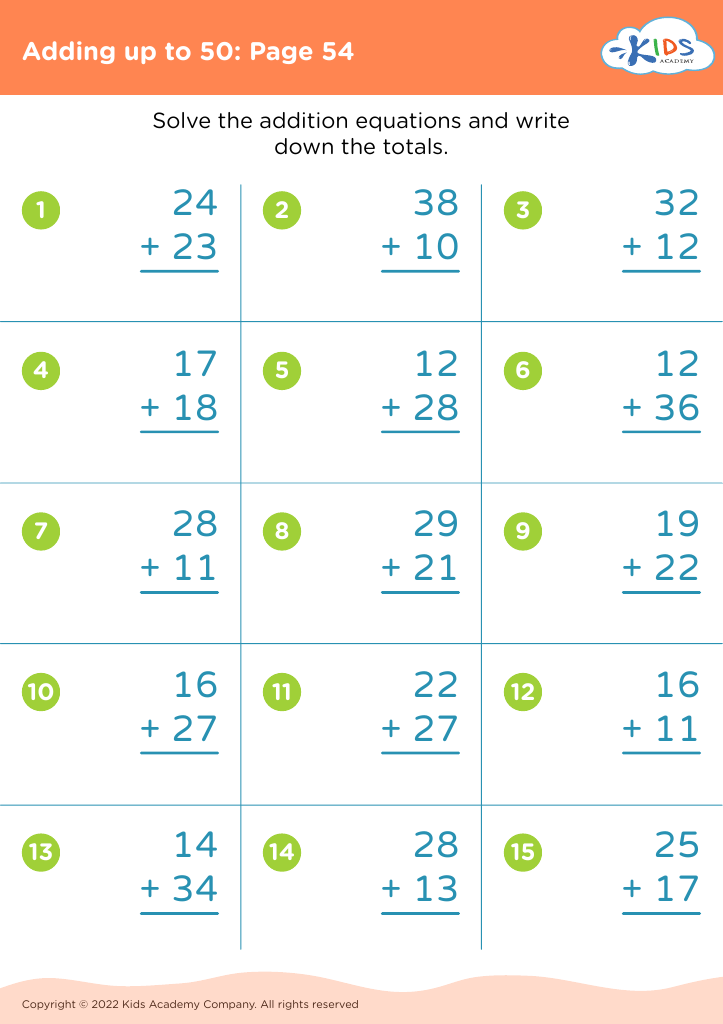


Simplifying fractions and mastering addition within 50 are essential foundational skills in a child's early mathematics education, particularly in Grade 2. For parents and teachers, understanding these concepts is critical because they foster not only numerical fluency but also critical problem-solving skills.
Simplifying fractions helps children grasp the relationship between parts and wholes, laying the groundwork for more complex mathematical concepts in later grades. It encourages logical reasoning, as children learn to identify and manipulate numbers, enhancing their ability to work with ratios and proportions in the future.
Similarly, ensuring proficiency in adding numbers up to 50 aids in developing mental math skills, boosting accuracy and confidence. When children can quickly and easily solve simple addition problems, they are more prepared for multi-digit operations and real-world applications, such as budgeting and measurement.
Moreover, these skills promote a positive attitude toward math, discouraging anxiety and fostering a growth mindset. When parents and teachers prioritize these early math skills, they not only set students up for future successes but also help them appreciate the relevance of mathematics in everyday life. Ultimately, nurturing these skills in Grade 2 establishes a solid foundation for a lifetime of mathematical understanding.