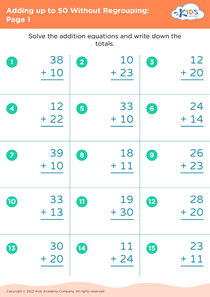
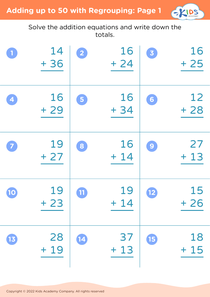
Understand fractions Grade 2 Adding up to 50 Misc Worksheets
3 filtered results
-
From - To
Explore our engaging "Understand Fractions" worksheets designed specifically for Grade 2 students. These interactive resources focus on enhancing fraction comprehension while integrating fun activities that keep young learners motivated. Students will practice adding up to 50 through various problems that include visual aids, number lines, and real-world applications. Our worksheets encourage critical thinking and make fraction learning enjoyable. Perfect for classroom use or at-home practice, these materials support educators and parents alike in fostering essential math skills. Equip your child to master fractions and boost their confidence in math with these comprehensive worksheets today!
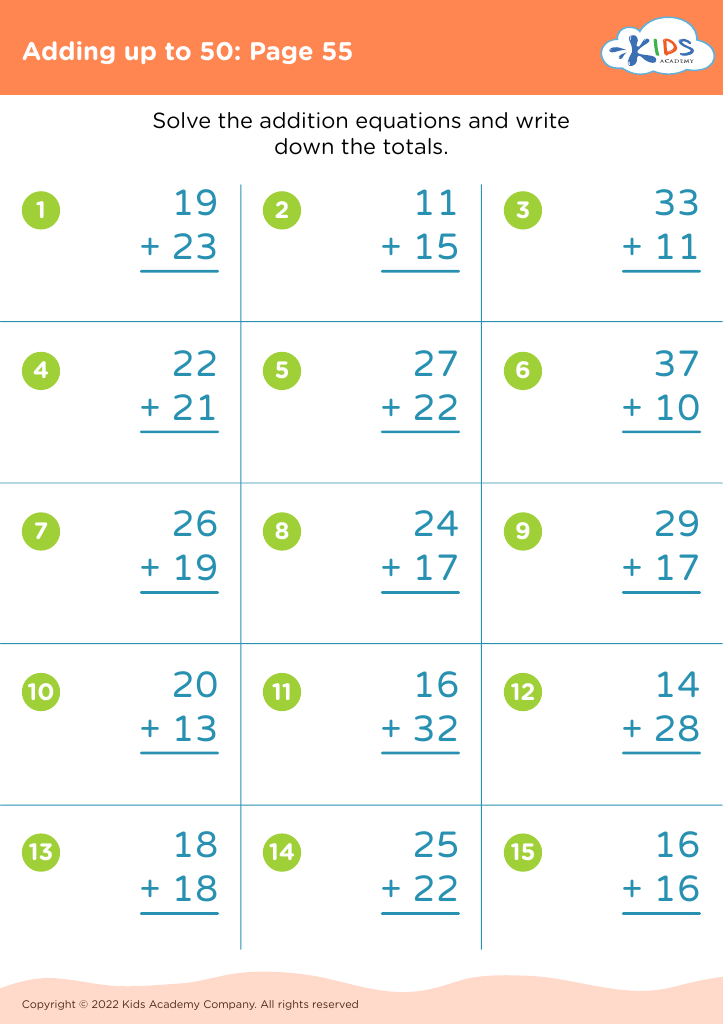
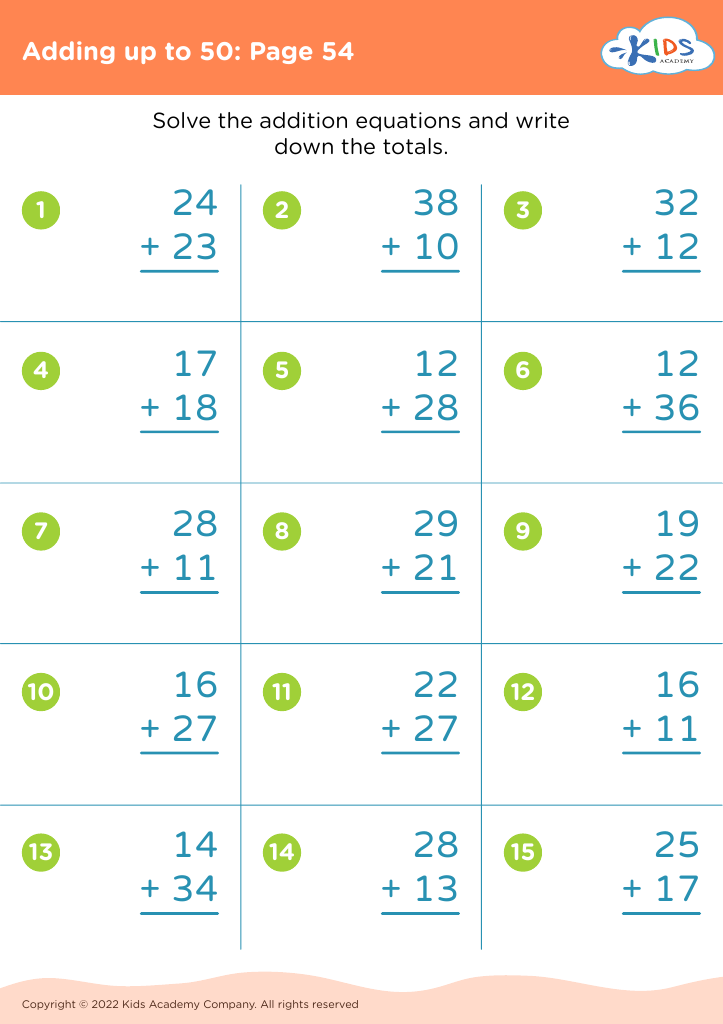
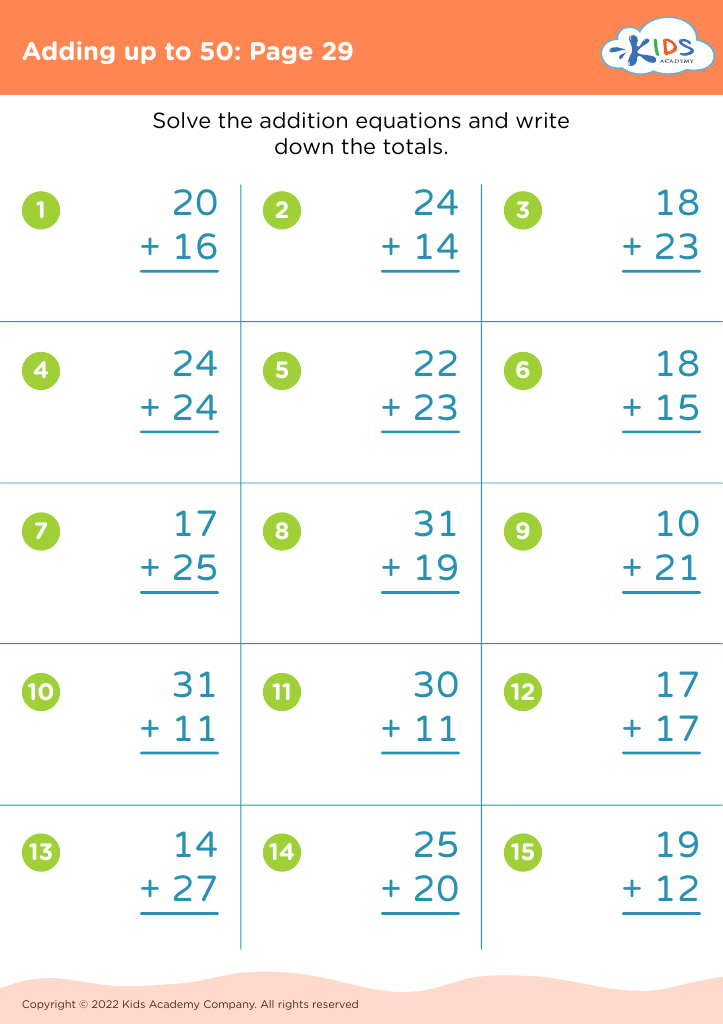


Understanding fractions and addition concepts related to numbers up to 50 are foundational skills that lay the groundwork for future mathematical learning in grade 2 and beyond. For parents and teachers, emphasizing these concepts is crucial for several reasons.
First, fractions introduce children to the idea of part-to-whole relationships, critical for everyday problem-solving and understanding measurement. When children grasp how to represent and manipulate fractions, they enhance their number sense and develop a deeper understanding of how quantities relate to each other.
Second, mastering addition with numbers up to 50 helps build children's confidence and proficiency in mathematics. This foundational skill is vital for more advanced operations, such as subtraction and later, multiplication and division. By ensuring students can confidently add numbers up to 50, parents and teachers create resilient learners who tackle increasingly complex mathematical challenges without fear.
Finally, these skills promote logical thinking and reasoning—a key component not just in math, but in various aspects of learning. When parents and teachers actively engage with students in these areas, they foster a love for math, paving the path for lifelong learning and functional skills that extend beyond the classroom.