Understanding adjectives Grade 2 Adding up to 50 Misc Worksheets
4 filtered results
-
From - To
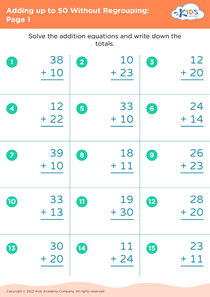
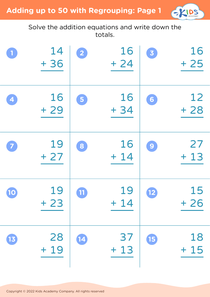
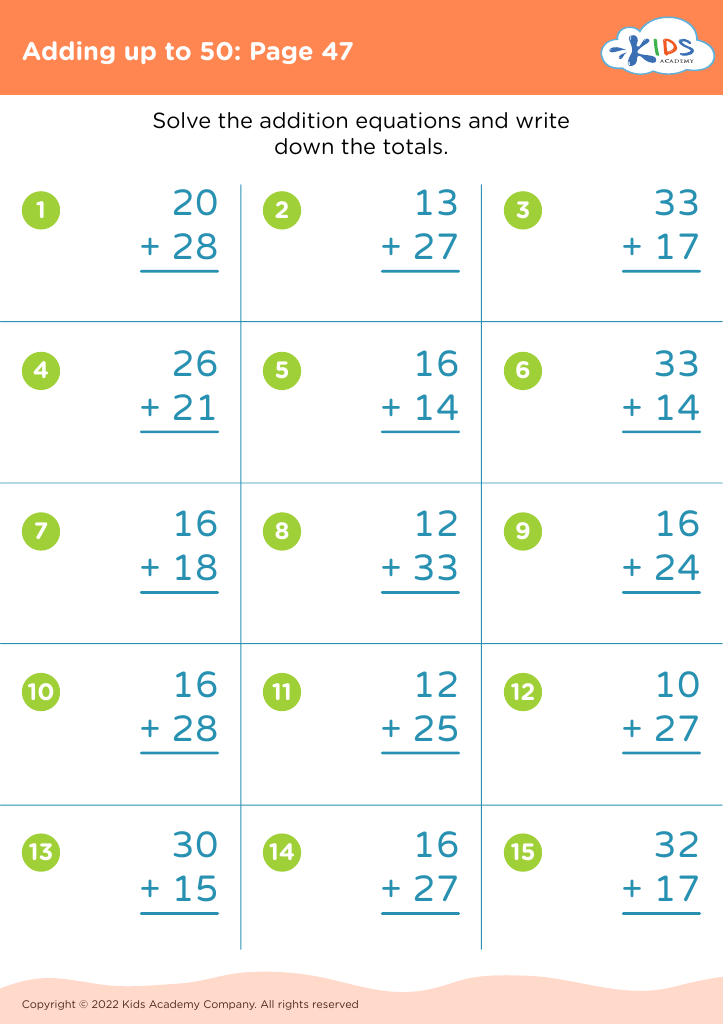
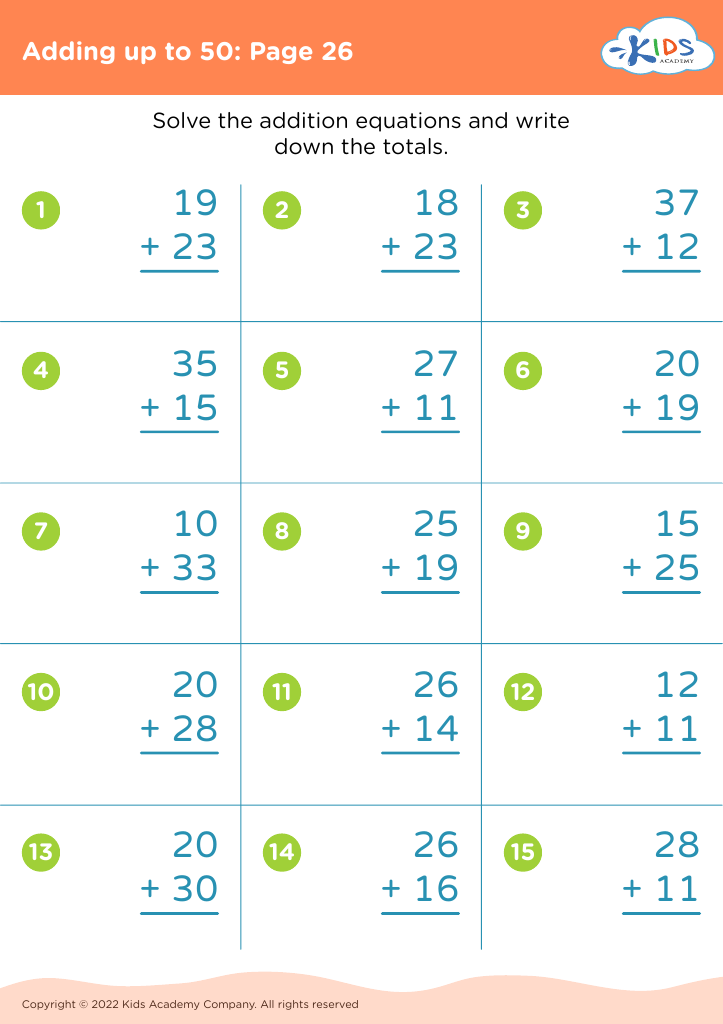
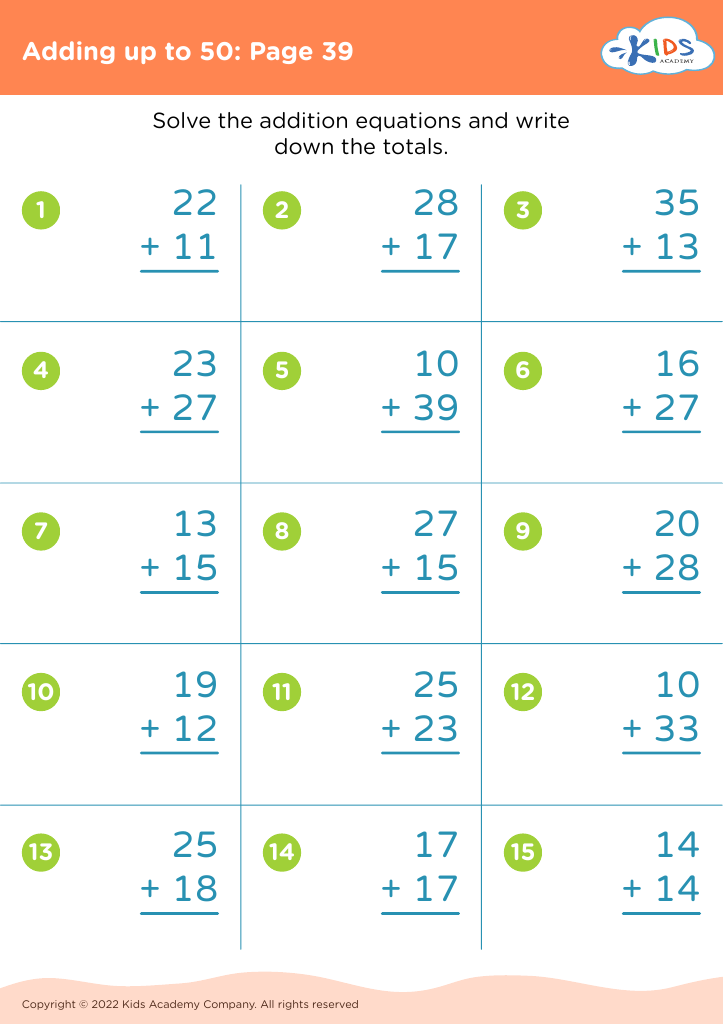
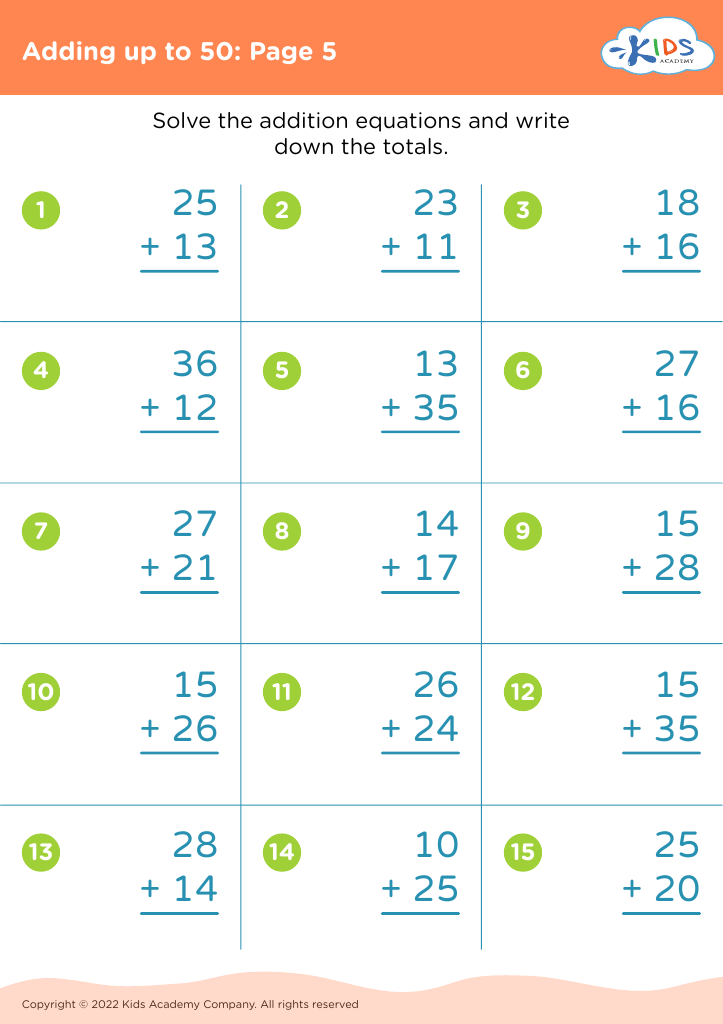
Boost your child's literacy and math skills with our "Understanding Adjectives Grade 2 Adding up to 50 Misc Worksheets." Designed specifically for second graders, these worksheets provide engaging activities that help young learners master the concept of adjectives while practicing essential addition skills. Each worksheet focuses on understanding adjectives by identifying and using them in sentences, alongside fun exercises that reinforce adding numbers up to 50. Perfect for classroom or home use, our worksheets offer an integrated approach to learning, promoting language development and mathematical confidence. Help your child succeed in second grade with these educational resources!


Understanding adjectives and adding numbers up to 50 are fundamental skills for second graders, and it's crucial for both parents and teachers to invest in these learning areas. Adjectives enrich a child's descriptive abilities, allowing them to communicate more precisely and vividly. When kids can effectively use adjectives, they enhance their writing and speaking skills, which boosts their overall literacy and fosters a love for reading and storytelling. This foundational vocabulary expansion also helps in comprehending more complex texts as they progress through their education.
On the other hand, the skill of adding up to 50 underpins early arithmetic progression. Mastery of this allows students to tackle more complex problems with confidence. It's crucial for parents and teachers to support this learning in order to build a child’s confidence and proficiency in mathematics. Understanding basic addition supports mental math skills, logical thinking, and problem-solving abilities, which are essential not only in academics but in everyday life situations. When children are secure in their mathematical foundations, they are less likely to develop anxiety around the subject and more likely to carry positive attitudes towards learning as a whole. Thus, nurturing these skills in the early stages is a cornerstone for future academic success.