Understanding fractions Grade 2 Adding up to 50 Misc Worksheets
17 filtered results
-
From - To
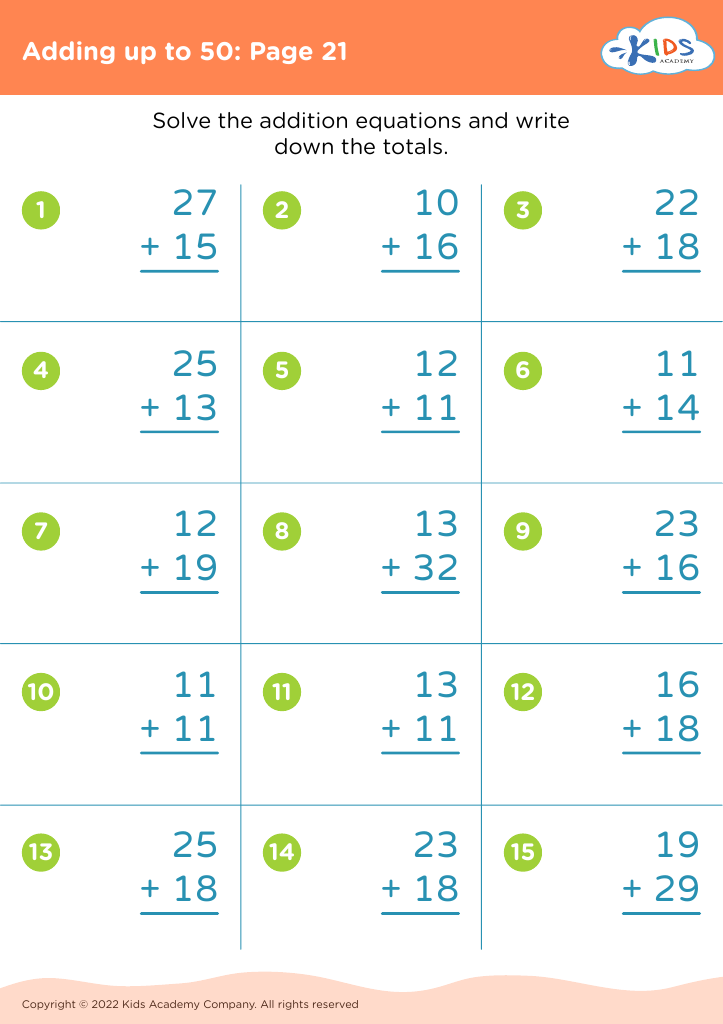
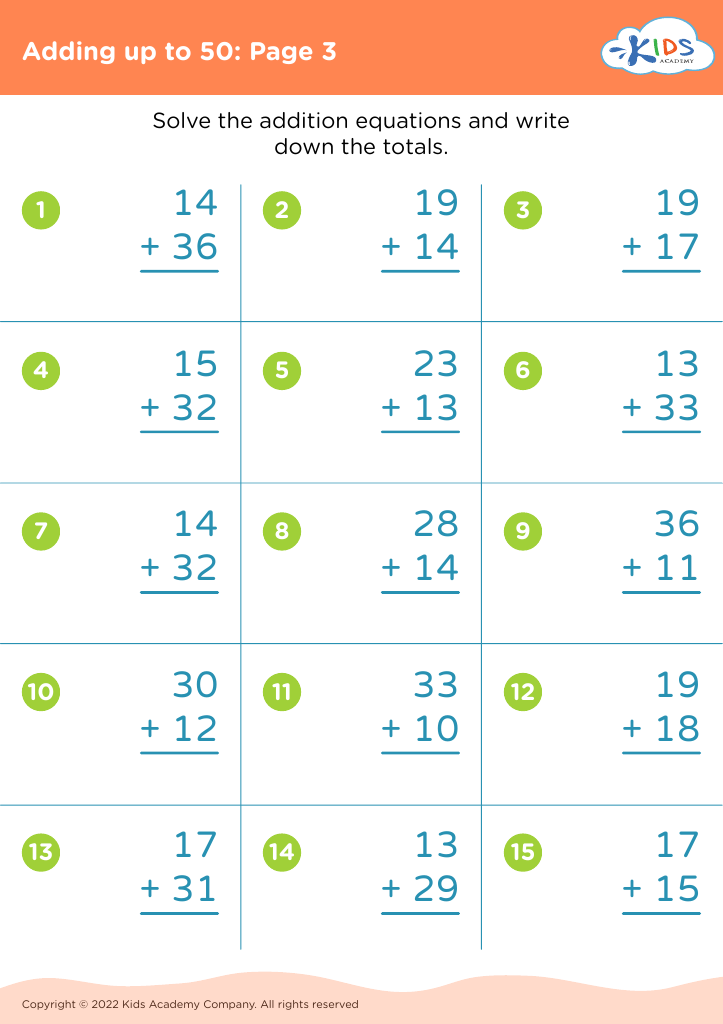
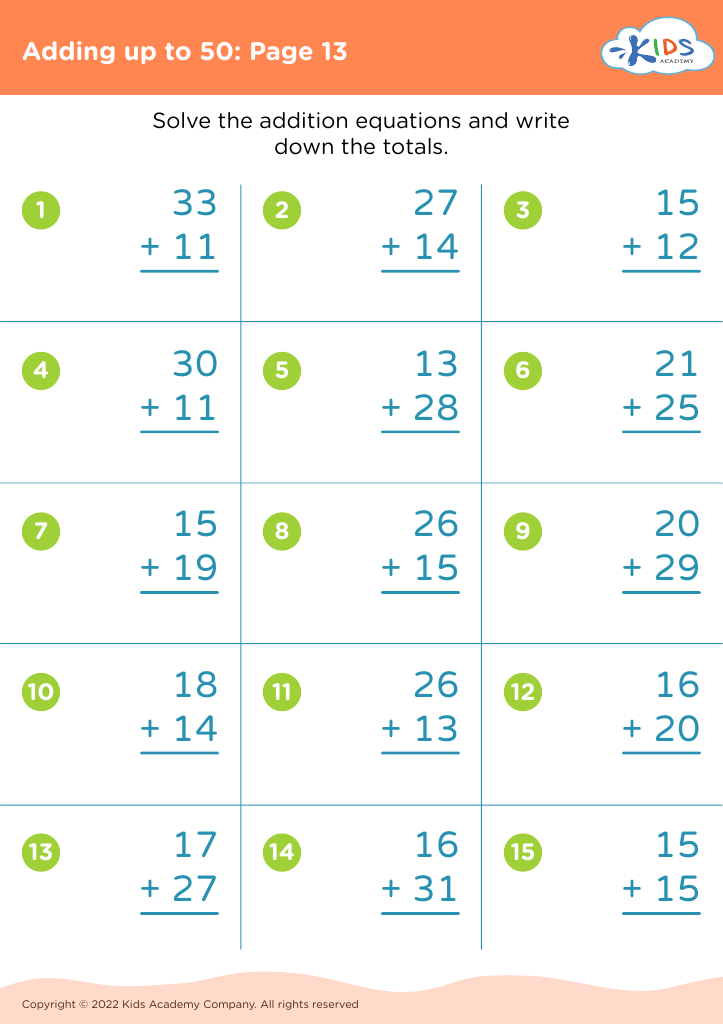
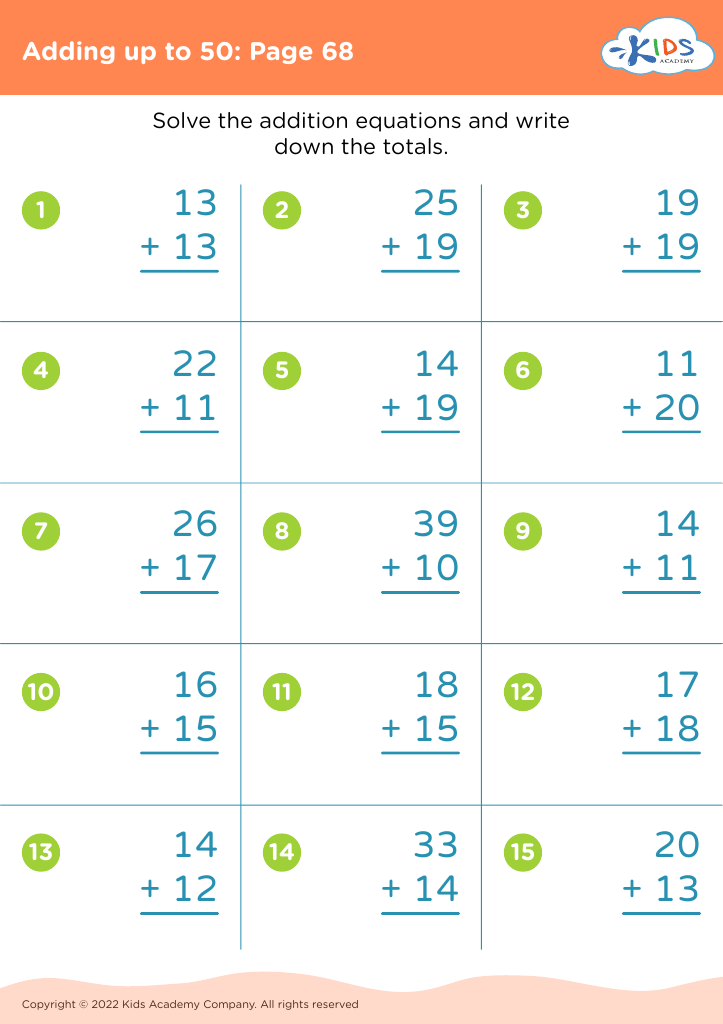
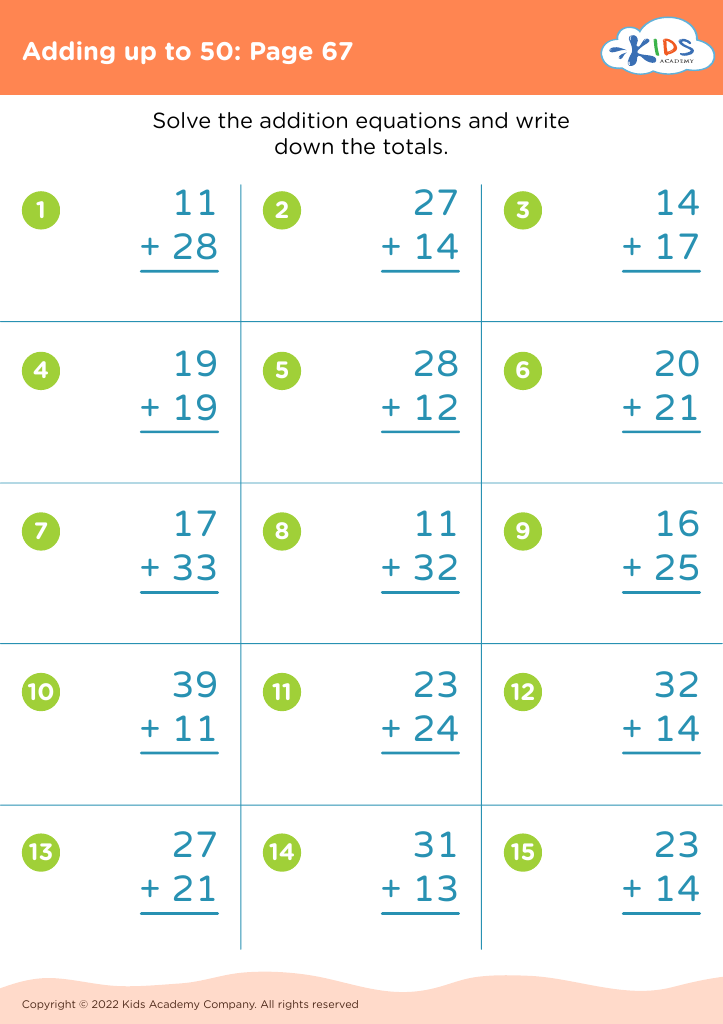
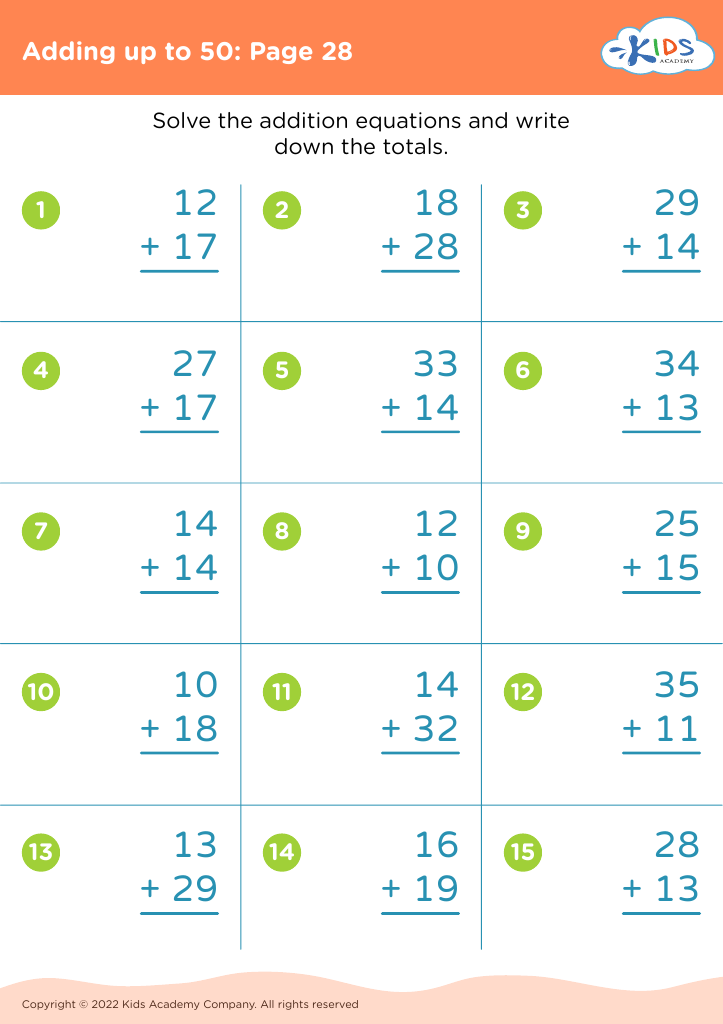
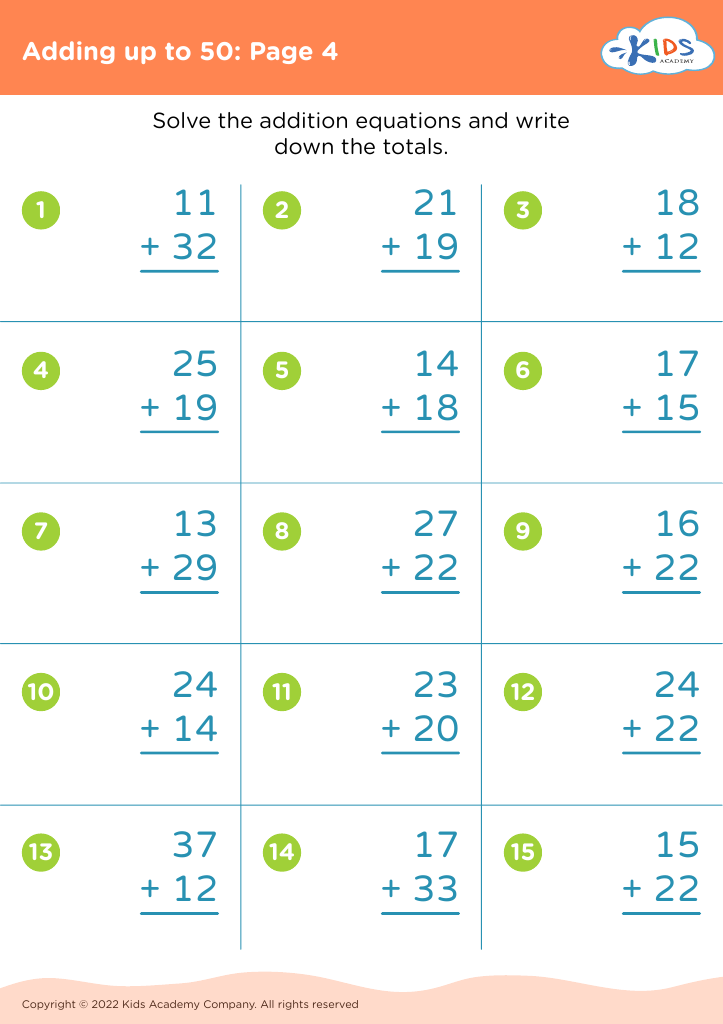
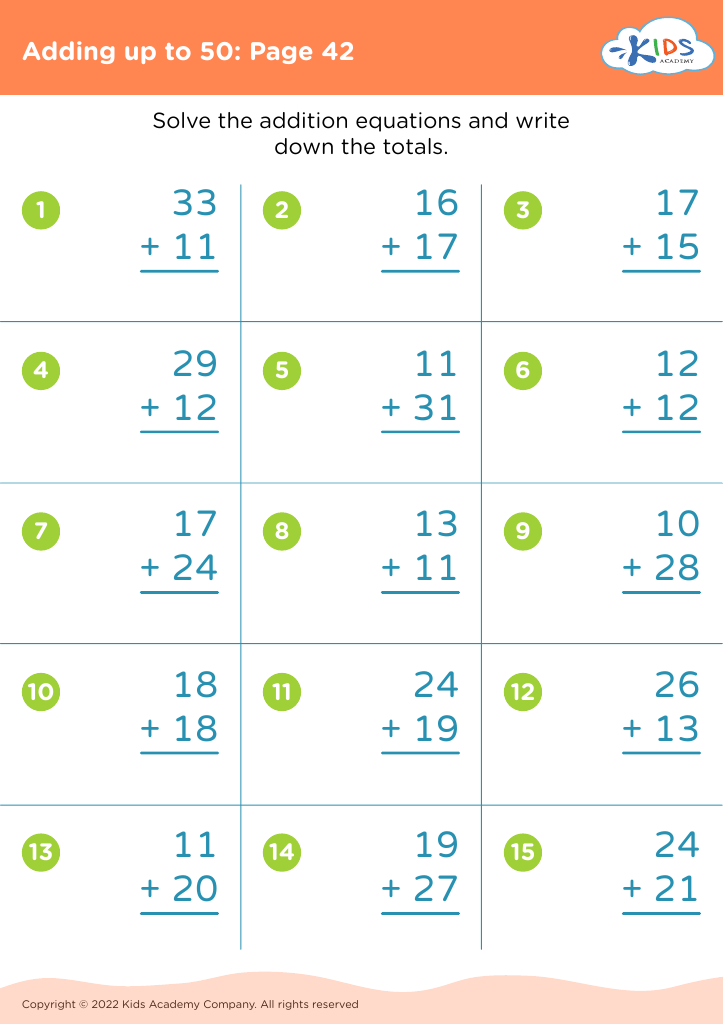
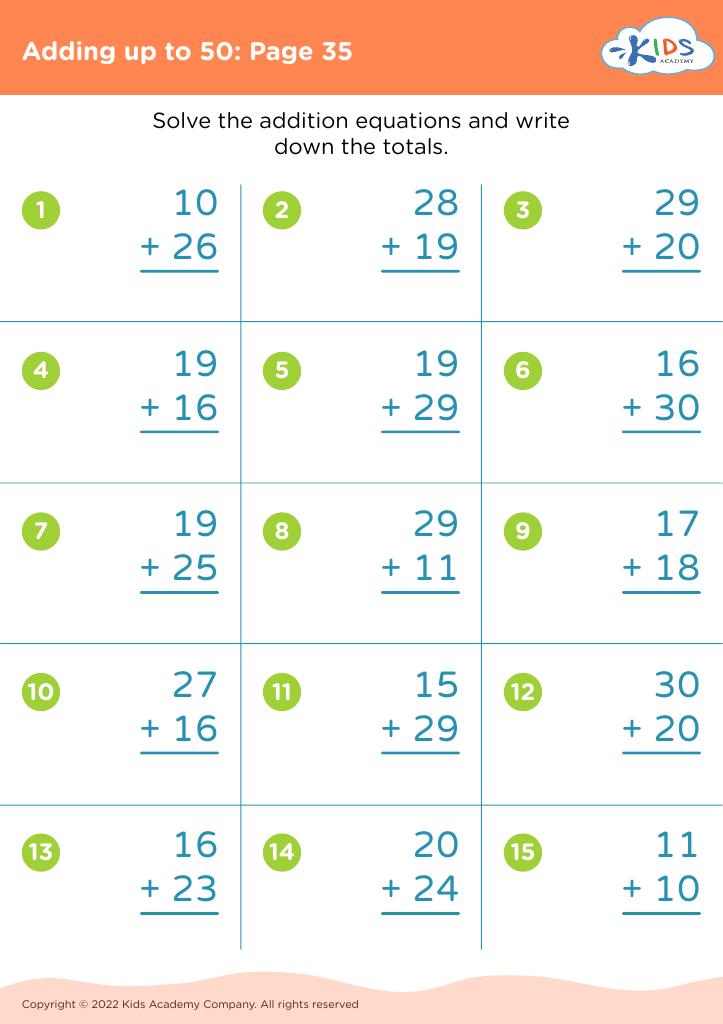
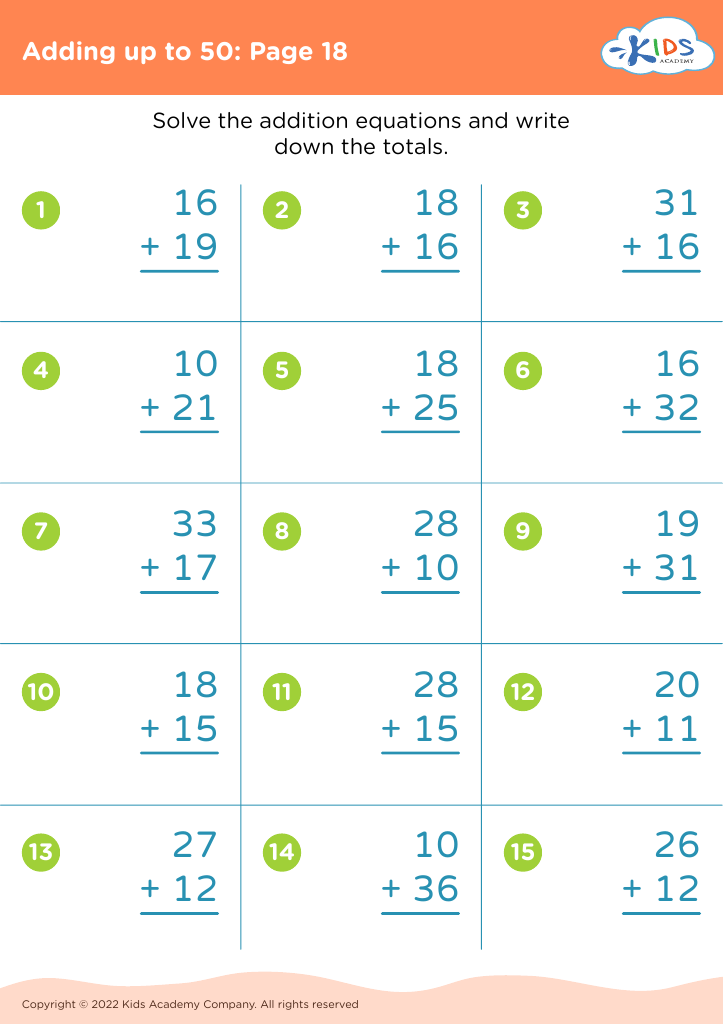
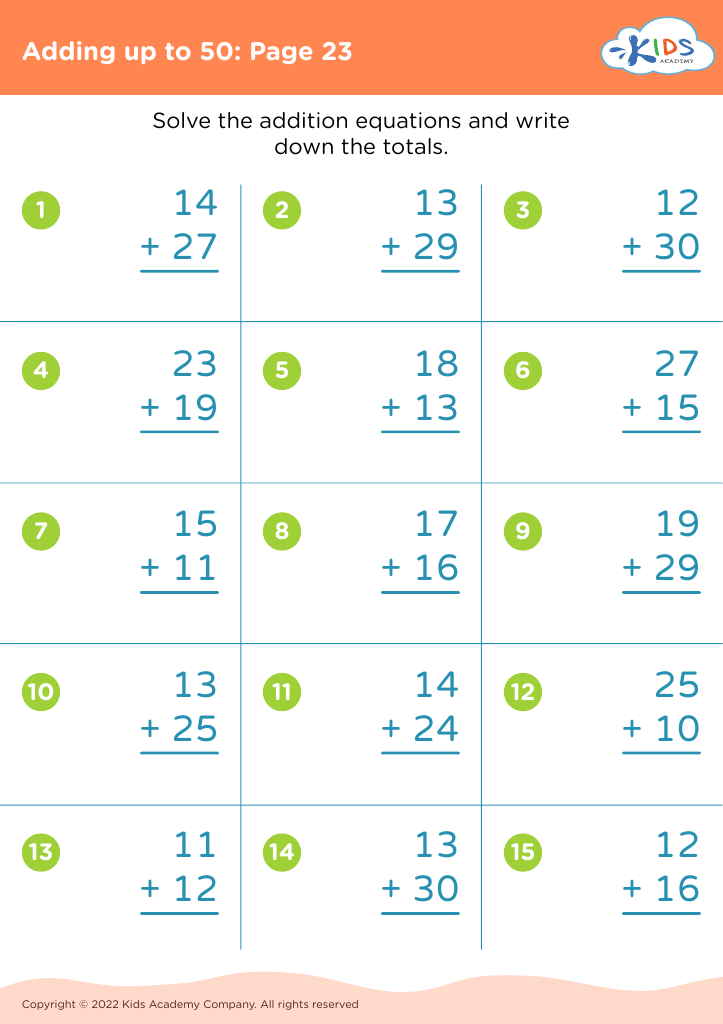
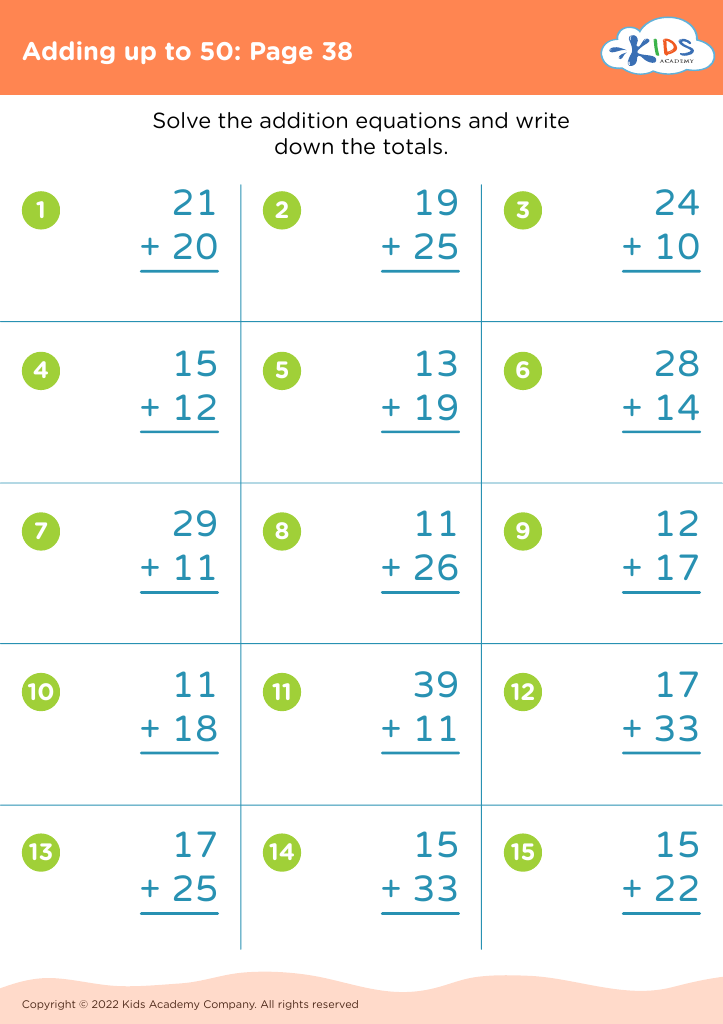
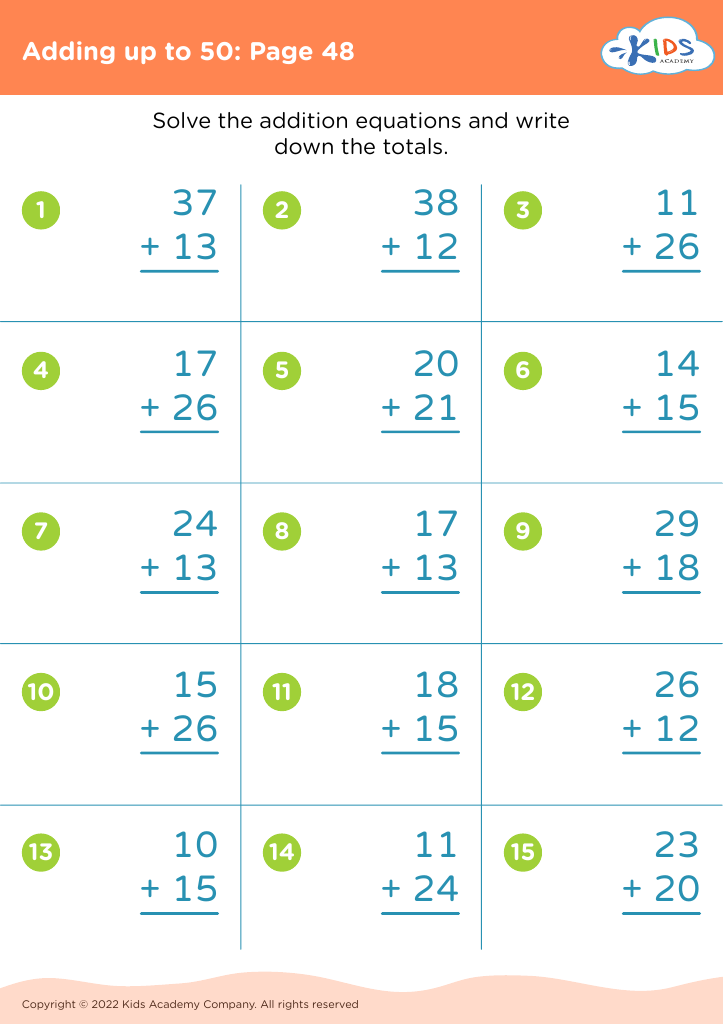
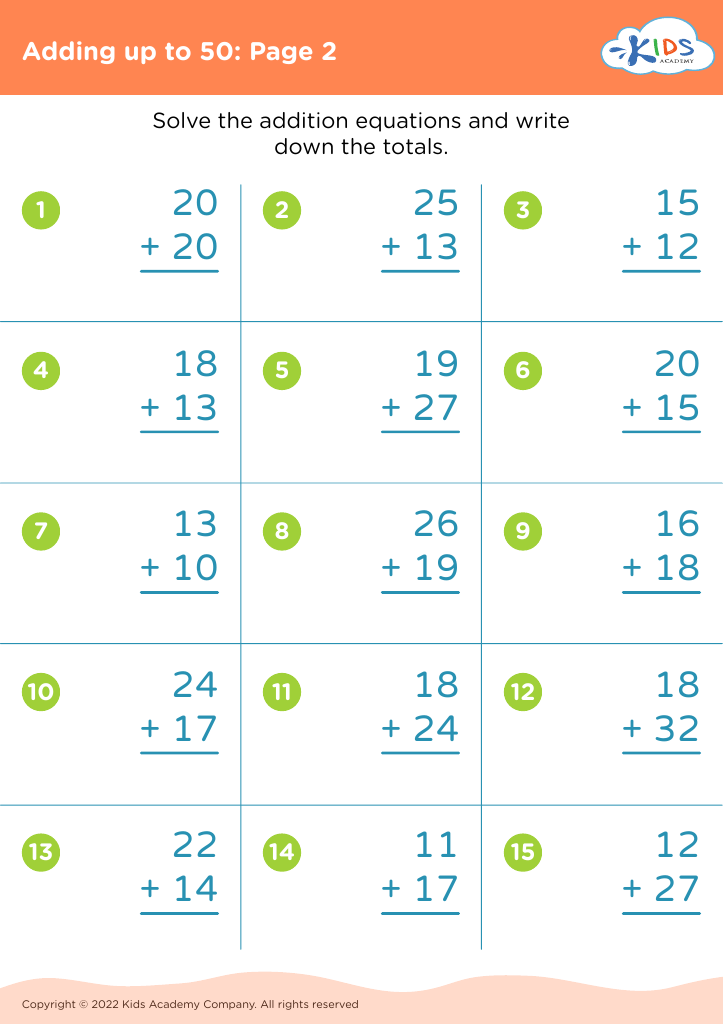
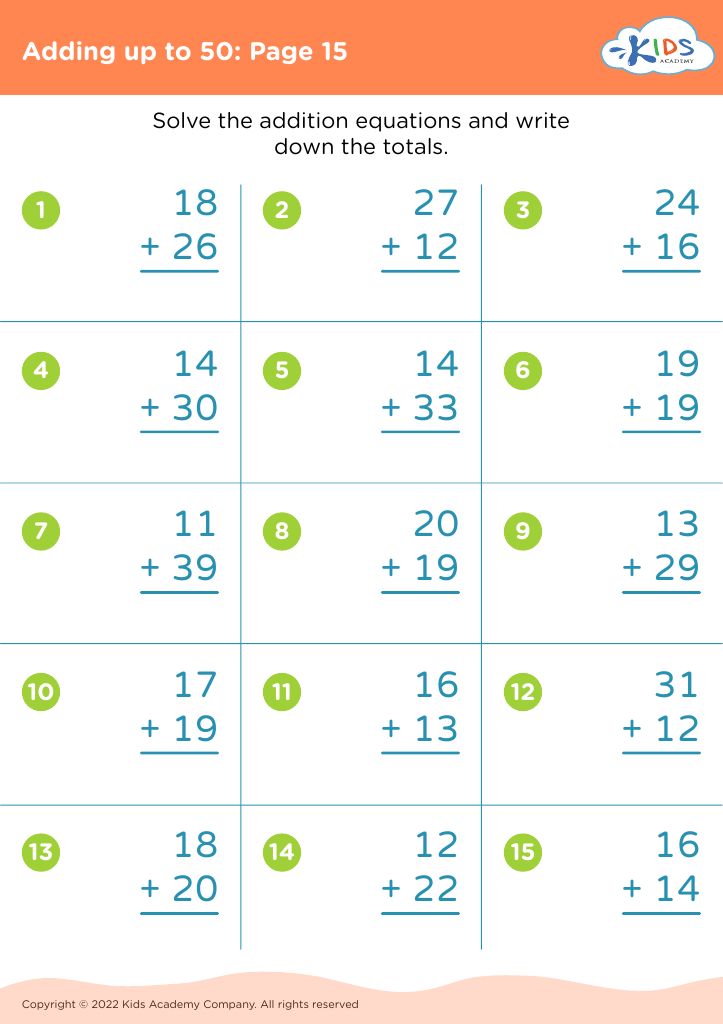
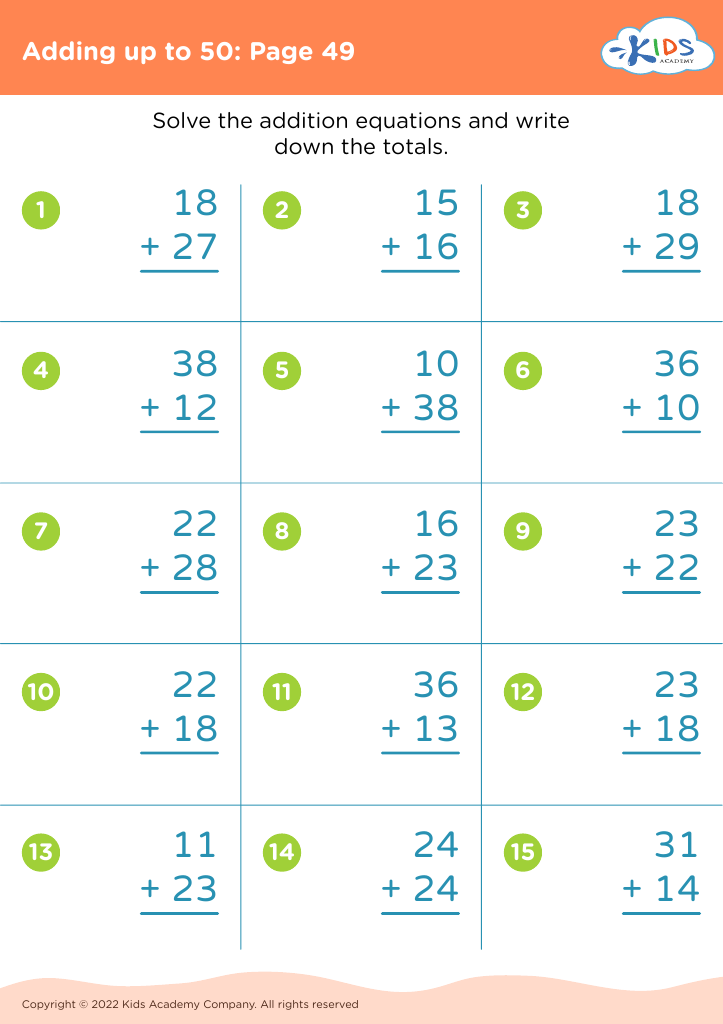
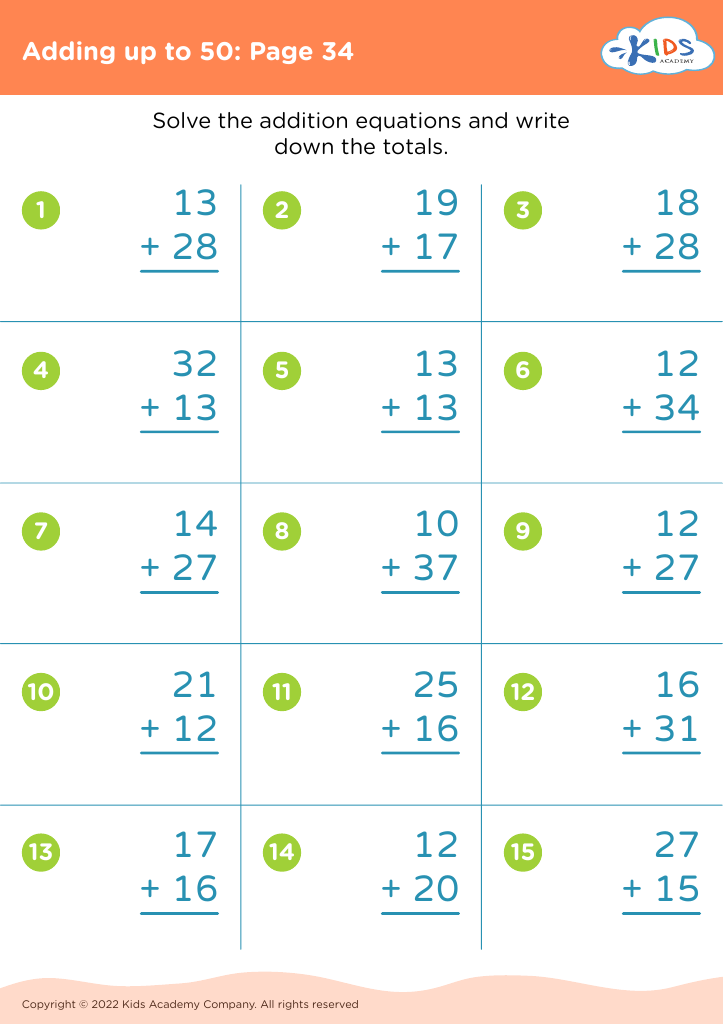
Explore our engaging "Understanding Fractions" worksheets designed specifically for Grade 2 students! These printable resources help young learners grasp the concept of fractions through fun and interactive exercises. Aligned with adding numbers up to 50, these worksheets challenge students to identify, compare, and compute fractions, fostering essential math skills. Each activity is crafted to encourage critical thinking while reinforcing understanding in a playful manner. Perfect for homework, classroom activities, or extra practice, our worksheets make learning about fractions both enjoyable and educational. Download your free worksheets today and help your second grader build a strong foundation in math!


Understanding fractions is vital for students, especially in Grade 2, as it lays a foundational skill that is essential throughout their educational journey. Fractions help children develop a sense of numbers and their relationships, which is crucial in understanding more complex mathematical concepts later on.
When teachers and parents emphasize the importance of fractions, they facilitate better comprehension of addition and subtraction of whole numbers, particularly when working with numbers that add up to 50. For instance, recognizing that 1/2 is equivalent to 25/50 helps children visualize and understand the part-to-whole relationships, enhancing their problem-solving skills.
Additionally, learning about fractions encourages critical thinking and real-world application. For example, when splitting a pizza or sharing toys, children can practically apply their knowledge of fractions, which makes learning more engaging and meaningful.
By understanding fractions, children also develop skills in measurement, data interpretation, and comparison, which are foundational for advanced concepts in STEM fields. Therefore, teachers and parents should care about this crucial skill to enrich students' educational experiences, promote mathematical fluency, and foster a positive attitude toward learning.