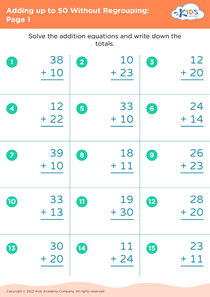
Addition skills Grade 2 Adding up to 50 with Regrouping Worksheets
3 filtered results
-
From - To
Enhance your child's addition skills with our engaging Grade 2 "Adding Up to 50 with Regrouping" worksheets! Designed for young learners, these worksheets focus on developing essential math skills by breaking down the process of regrouping in addition. As children tackle problems that involve sums up to 50, they will gain confidence and proficiency in mental math and written calculations. Ideal for classroom or home use, our worksheets encourage an interactive learning experience that fosters problem-solving skills. Explore our collection today and empower your second grader to master addition while having fun! Perfect for reinforcing learning through practice.
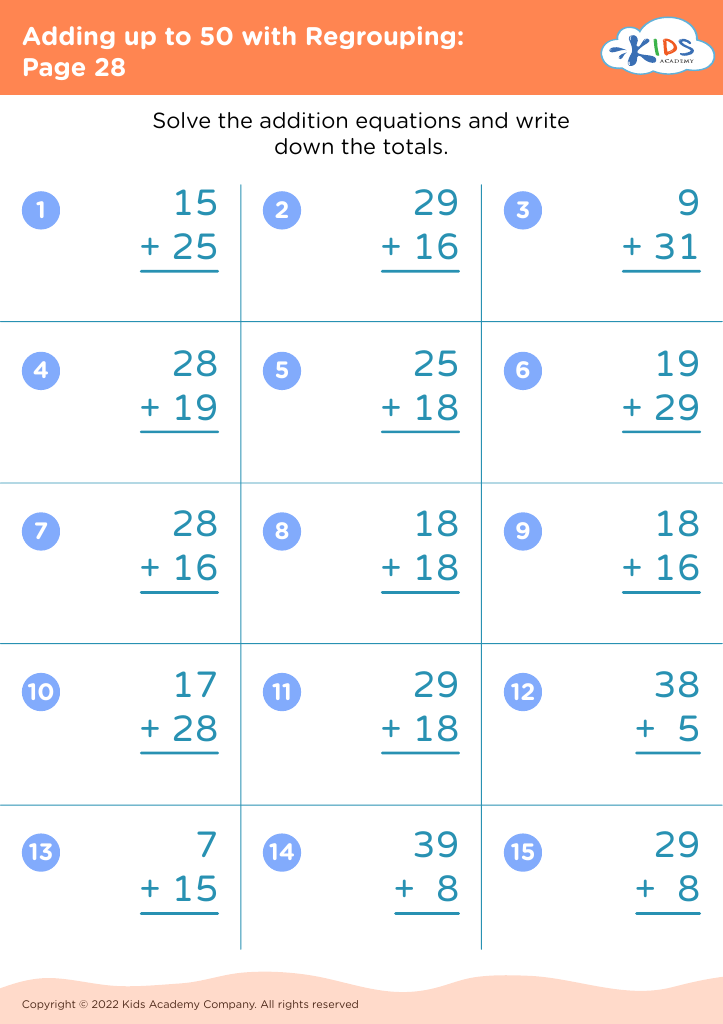
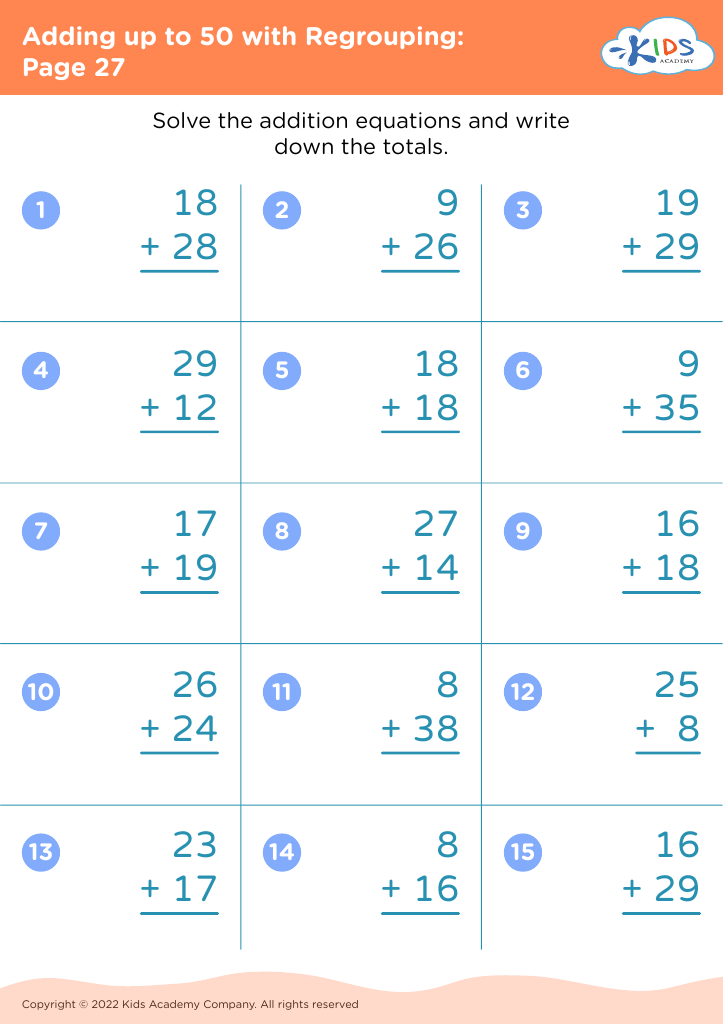
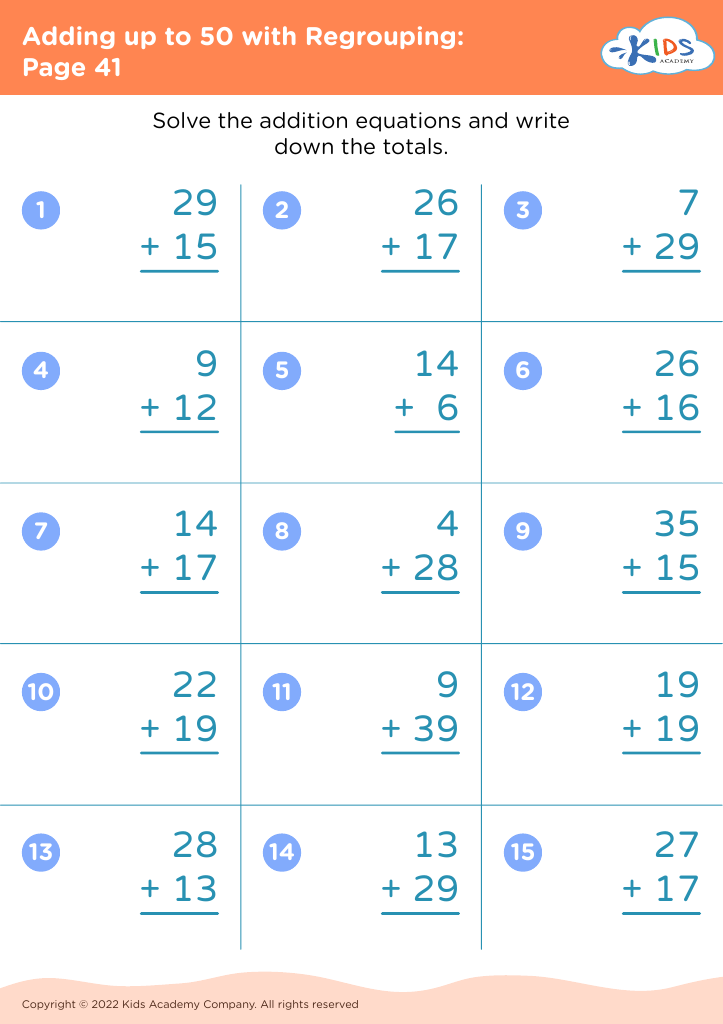


Addition skills, particularly for Grade 2 students involving sums up to 50 with regrouping, are crucial for several reasons. First, these skills lay the foundational framework for more complex mathematical concepts. Mastering addition with regrouping enhances students’ understanding of place value and the interconnectedness of numbers, which is essential as they encounter larger numbers in subsequent grades.
Second, strong addition abilities foster confidence in students. When children can tackle multi-digit addition problems successfully, they become more willing to engage with challenging math. This positive self-esteem is vital, as a child's attitude toward math can shape their academic trajectory and overall interest in the subject.
Moreover, addition skills are extensively used in everyday situations, such as managing money, scheduling, and basic budgeting, thus helping students develop practical life skills. Lastly, by supporting these skills jointly at home and in the classroom, parents and teachers reinforce the importance of mathematics, promoting a collaborative learning environment that validates students' efforts. In a rapidly advancing world driven by technology, strong foundational math skills are essential for students' future academic achievements and career prospects, making the nurturing of addition skills a vital priority.