Color Identification Grade 2 Adding up to 50 with Regrouping Worksheets
5 filtered results
-
From - To
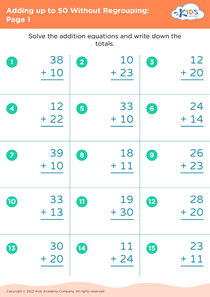
Enhance your second grader's math skills with our engaging "Color Identification Grade 2 Adding Up to 50 with Regrouping Worksheets!" These printable worksheets incorporate vibrant colors to make learning fun and visually stimulating. Designed to help children master addition with regrouping while recognizing colors, each worksheet features unique problems that challenge students to add numbers up to 50. Our resources promote critical thinking and strengthen both math and color identification skills simultaneously. Perfect for classroom use or at-home practice, these worksheets ensure that your child builds confidence in their math abilities while enjoying the process. Spark joy in learning today!
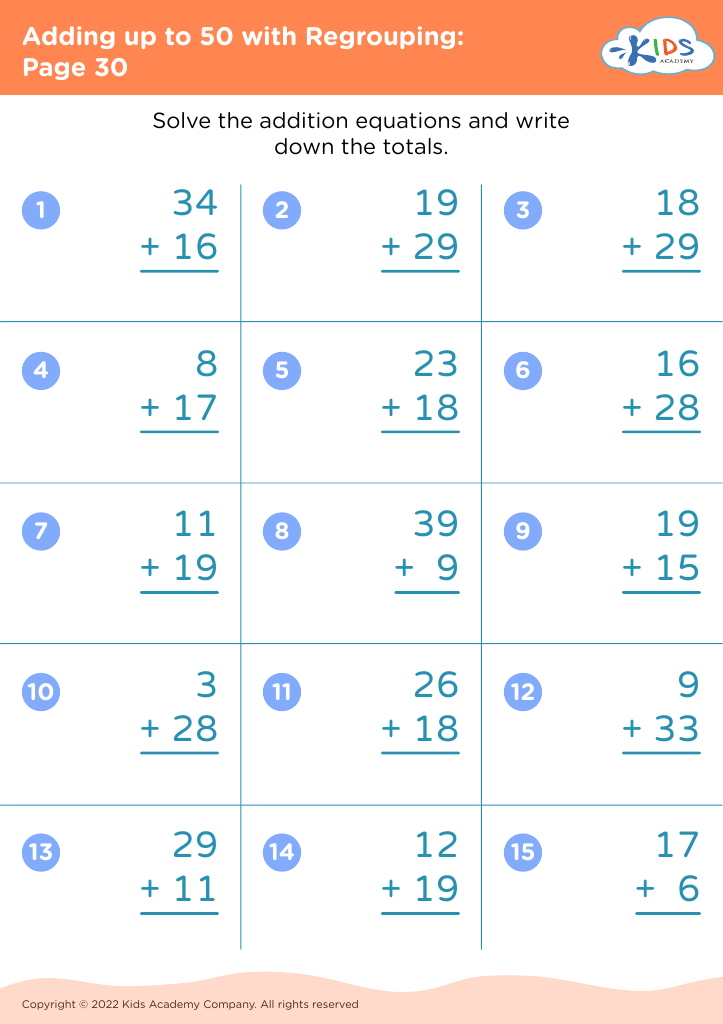
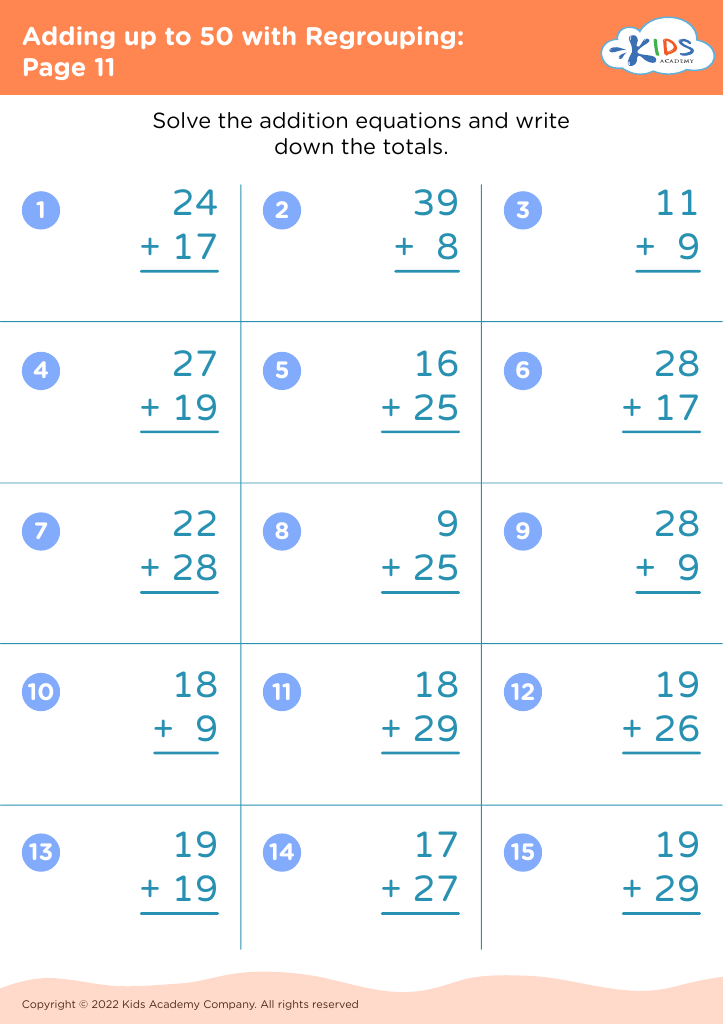
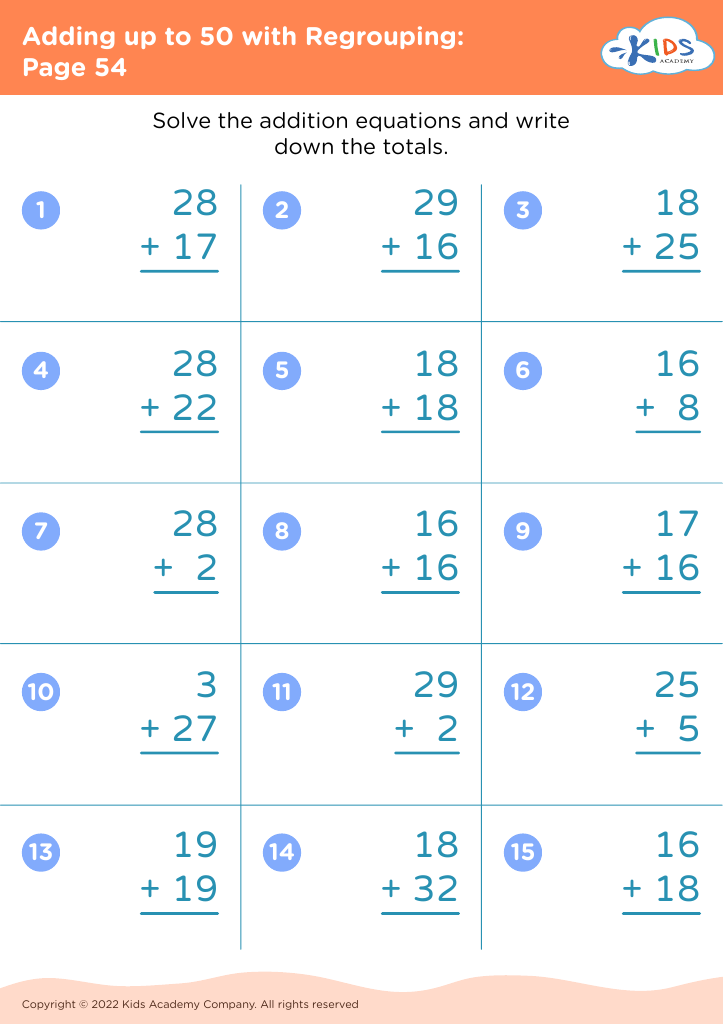
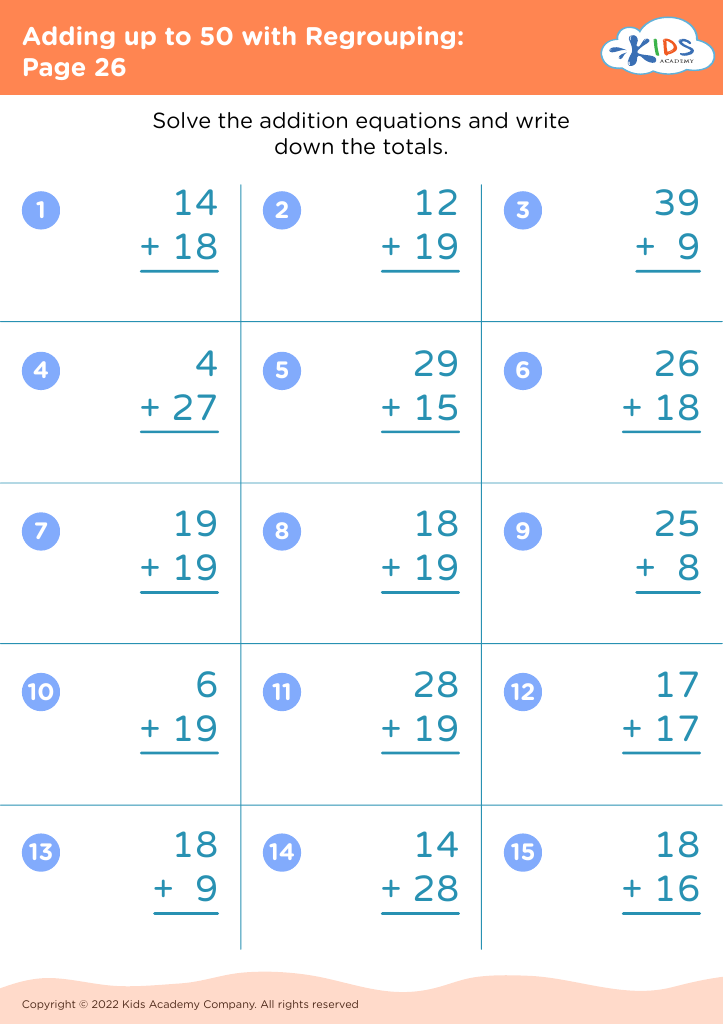
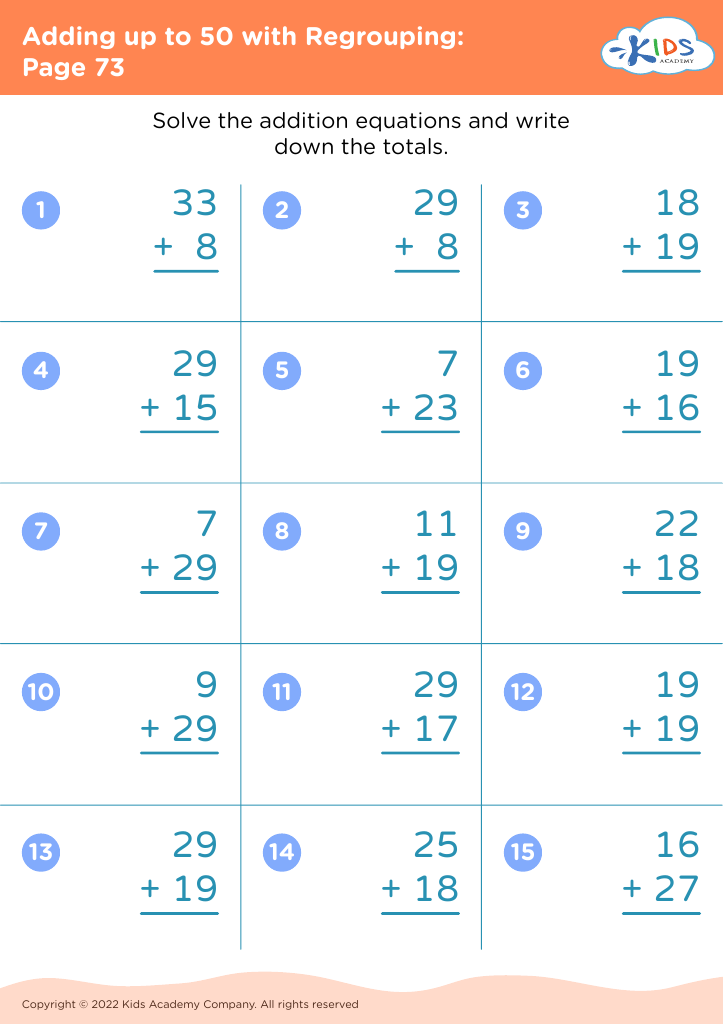


Color identification in the context of teaching color-coded math concepts, such as Grade 2 Addition involving numbers that add up to 50 with regrouping, plays a crucial educational role. Effective teaching strategies utilize color-coding to enhance a child's understanding of mathematical operations, providing visual aids that streamline complex concepts. When parents and teachers prioritize this approach, they harness a tool that can make abstract numerical concepts more tangible, especially for young learners.
Using colors can help students quickly identify and categorize numbers. Regrouping, a key requirement in addition, often confuses many Grade 2 students. Through color identifiers, students can seamlessly distinguish between units and tens, making the process less overwhelming. This visual differentiation aids memory retention and boosts confidence.
Moreover, engaging children with strategies that incorporate artistic forms appeals to their developmental tendencies, fostering greater interest and participation. Ultimately, when parents and teachers care about color identification, they promote a more effective and enjoyable learning environment. This not only improves students' performance in math but also nurtures their overall academic growth, instilling a love for learning that extends beyond subjects and grade levels.