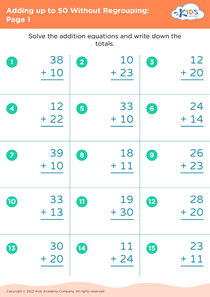
Shape Recognition Grade 2 Adding up to 50 with Regrouping Worksheets
6 filtered results
-
From - To
Enhance your second grader's math and geometry skills with our "Shape Recognition Grade 2 Adding up to 50 with Regrouping Worksheets". These engaging worksheets blend arithmetic practice with geometry by challenging students to add numbers up to 50, incorporating regrouping techniques. As they solve problems, they’ll also identify and recognize various shapes, reinforcing their understanding of both concepts in tandem. Perfect for classroom or at-home learning, these printable resources become an enjoyable practice tool for young learners on their math journey. Equip your child with these interactive worksheets to help them excel in addition and shape recognition seamlessly.
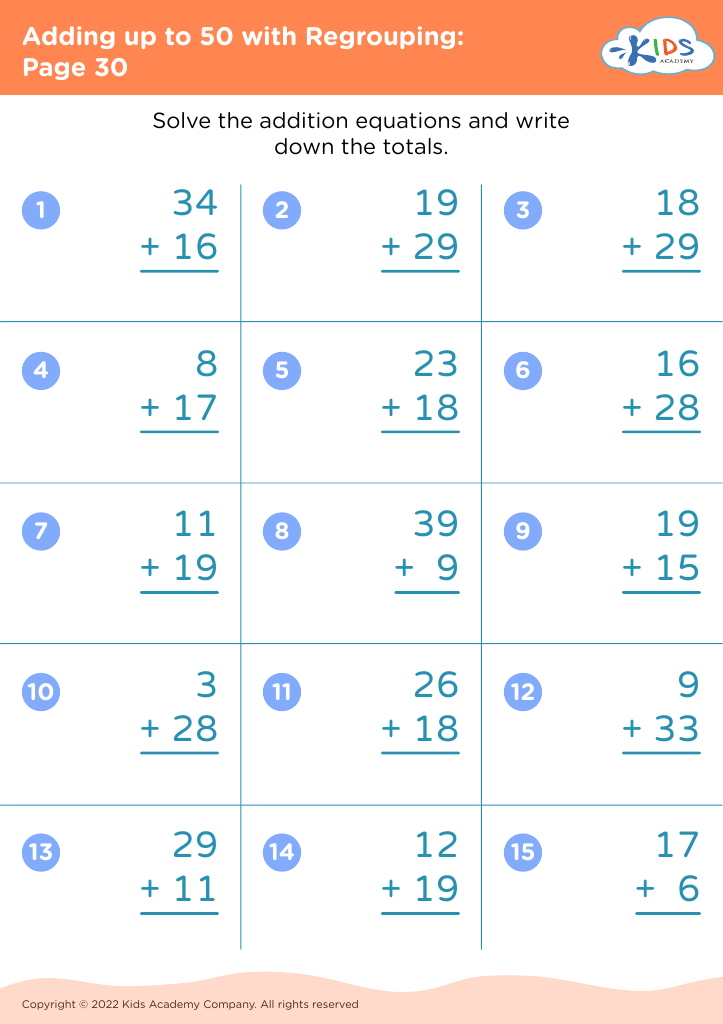
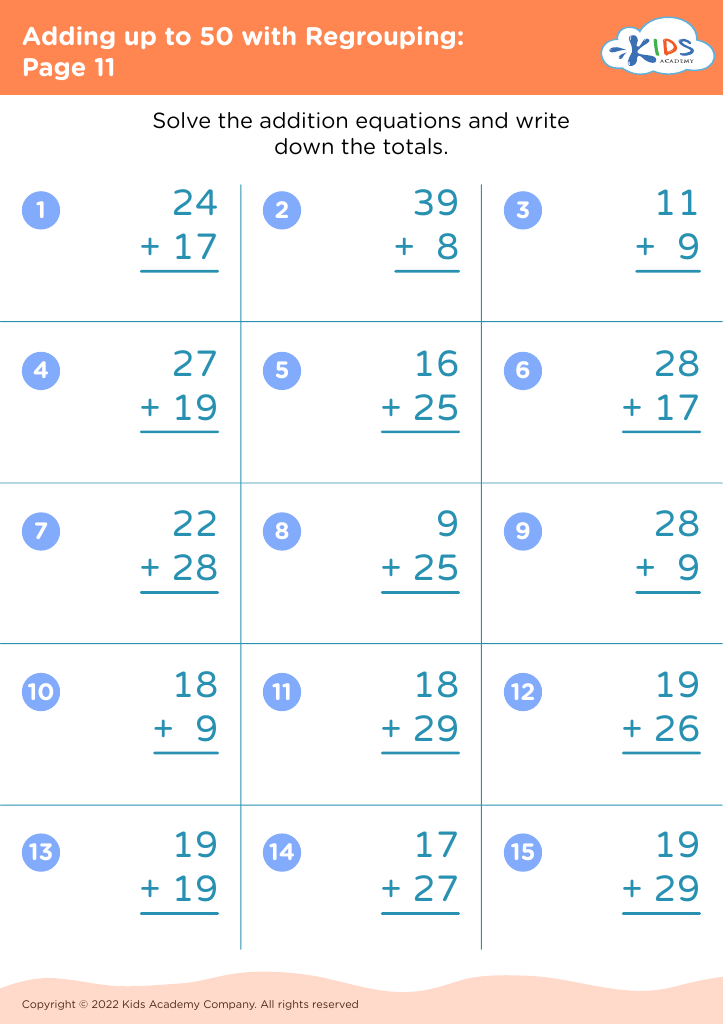
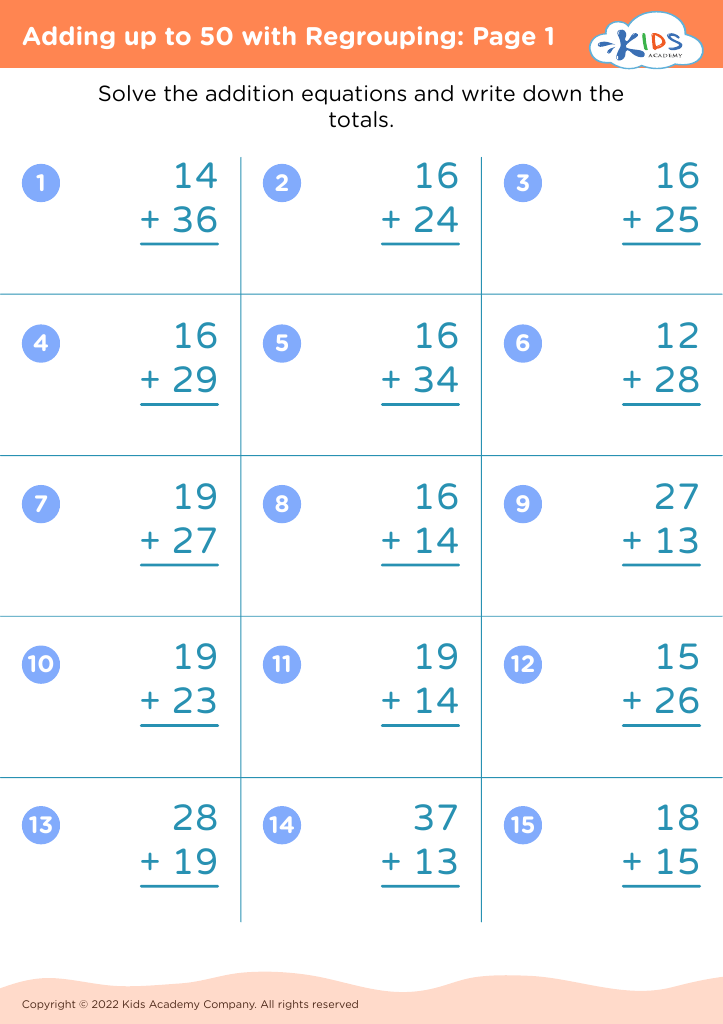
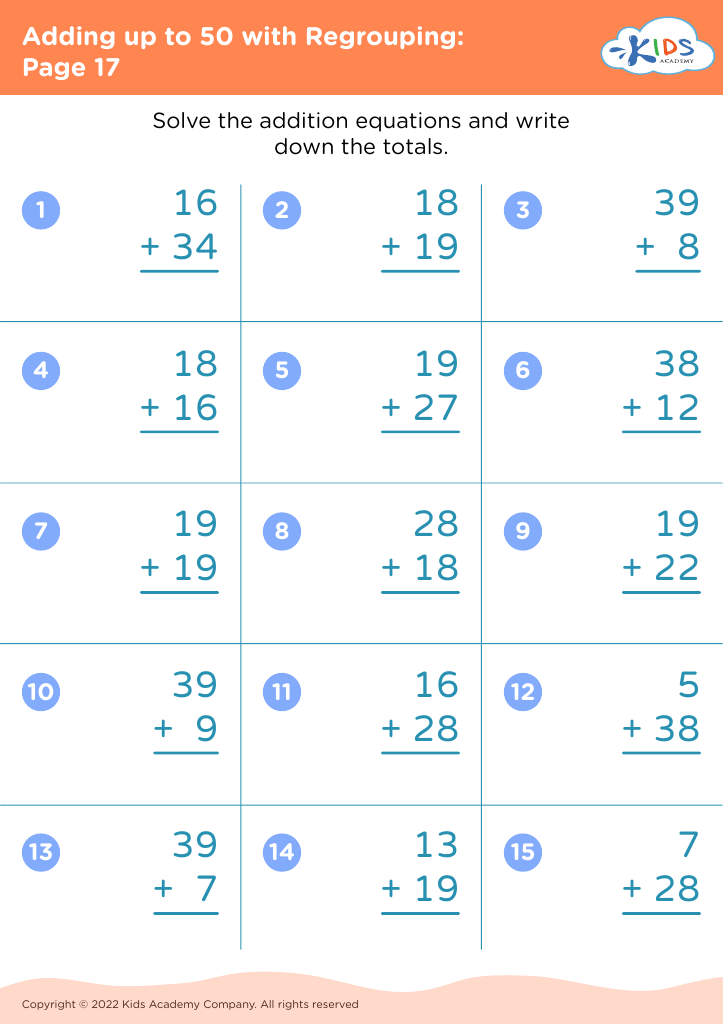
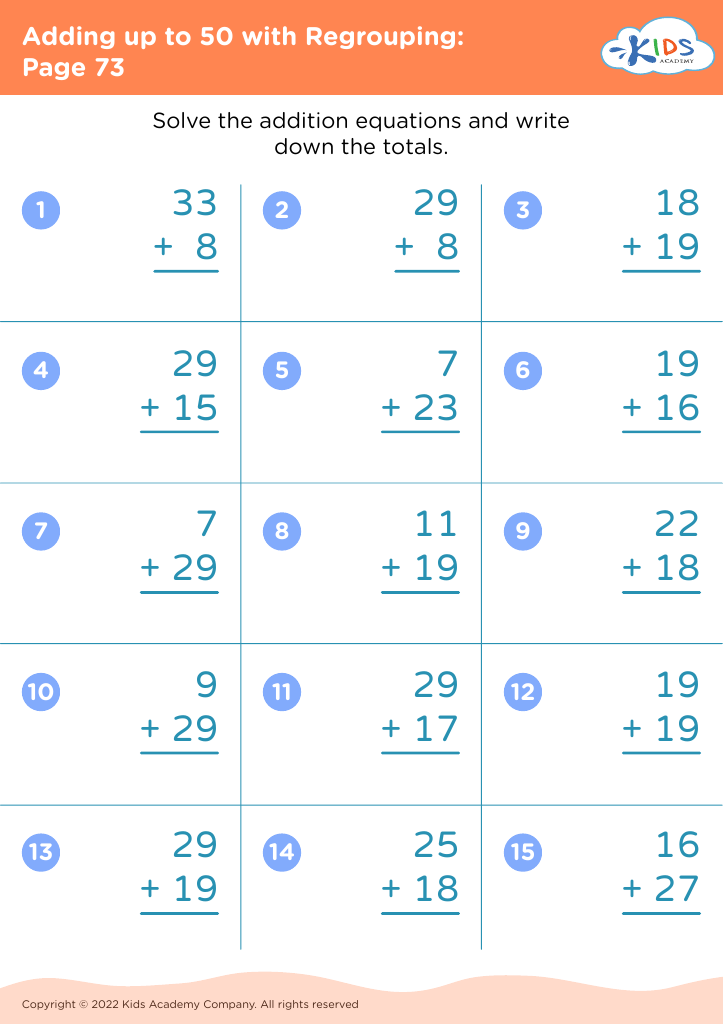
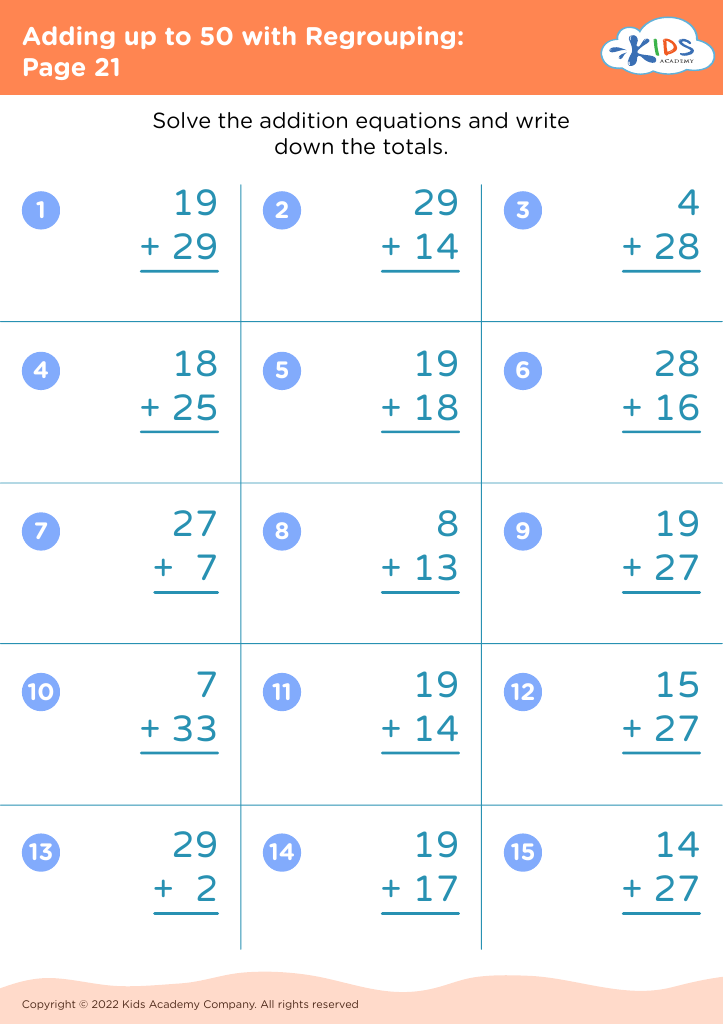


Shape recognition and adding up to 50 with regrouping are foundational skills in a second grader's math education. Fostering proficiency in these areas equips children with essential arithmetic skills and spatial awareness crucial for their academic progression.
First, recognizing shapes enhances a child's spatial and visual processing abilities. It aids in understanding geometry's basic principles — identifying and categorizing shapes, understanding their properties, and developing problem-solving skills. This cognitive development lays the groundwork for more complex mathematical concepts introduced in higher grades.
Adding up to 50 with regrouping introduces children to increasingly complex arithmetic. This concept is pivotal because it teaches them how to handle sums that exceed single digits, refining their addition skills, and ensuring they grasp the numerical relationships and structure of our number system. Regrouping in addition is not just about practicing sums but also about understanding place value, which is vital for all future mathematics, and developing logical thinking and patience.
By supporting Shape Recognition and Adding up to 50 with Regrouping, parents and teachers are effectively nurturing a child's critical thinking, attention to detail, and problem-solving capabilities, fostering their overall academic growth and confidence in mathematics. This investment in their early math skills is crucial for their success in more complex mathematics in later years.