Simplifying Fractions Grade 2 Adding up to 50 with Regrouping Worksheets
4 filtered results
-
From - To
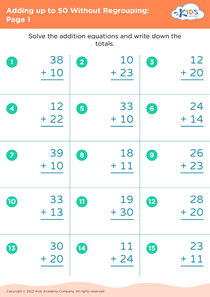
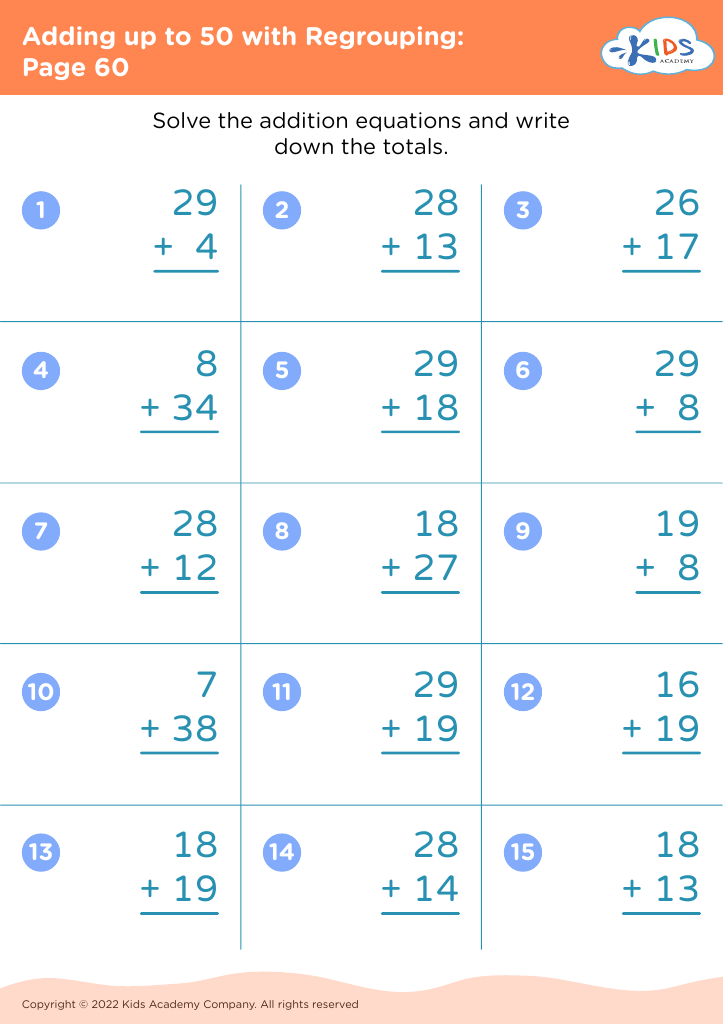
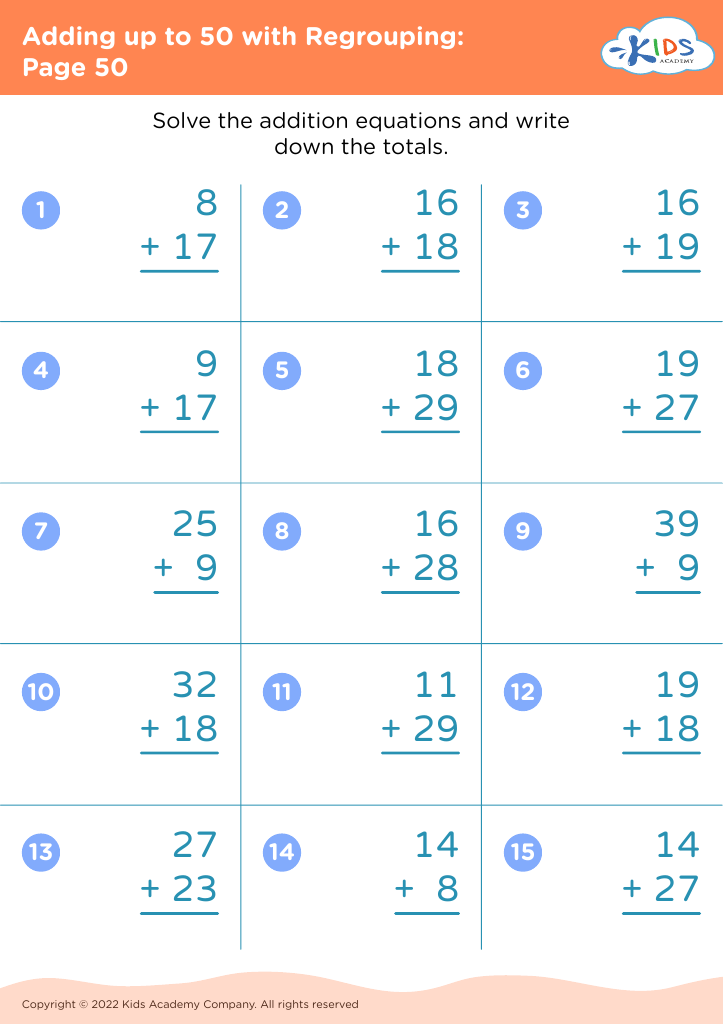
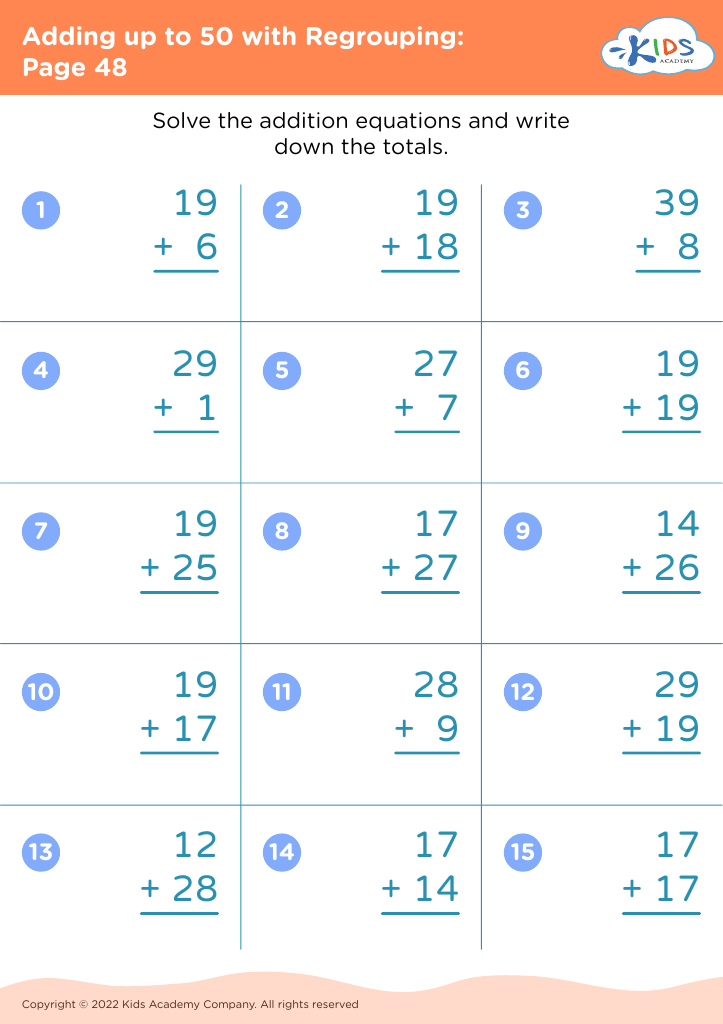
Welcome to our "Simplifying Fractions Grade 2" worksheets, designed to help young learners master the concept of fractions while adding up to 50 with regrouping! These engaging and interactive resources focus on simplifying fractions, offering a step-by-step approach that makes math fun and accessible for second graders. Each worksheet combines colorful visuals and clear instructions to enhance understanding and retention. Students will practice simplifying fractions within engaging scenarios, promoting critical thinking and problem-solving skills. Perfect for classroom use or at-home practice, our worksheets encourage a solid foundation in mathematics. Explore our collection today and elevate your child's learning experience!
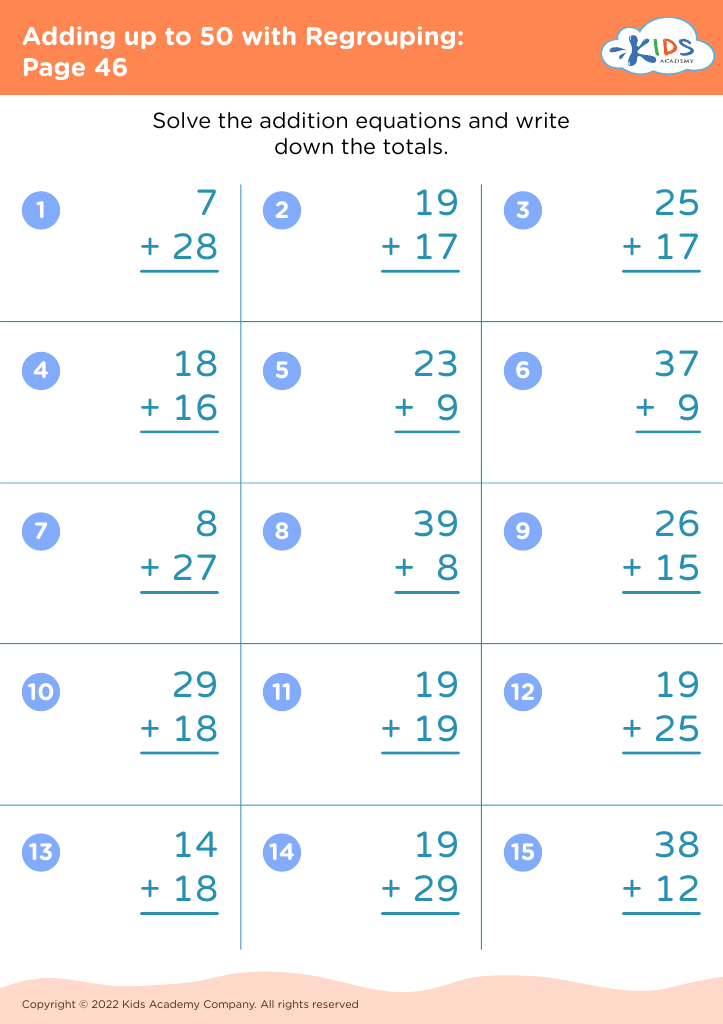


Parents and teachers should recognize the importance of teaching students how to simplify fractions and perform addition with regrouping because these concepts form essential building blocks for future math skills. Simplifying fractions helps children understand the relationship between numbers, promoting a deeper comprehension of equivalence and proportional reasoning. This foundational knowledge is vital not only for academic success in math but also for developing critical thinking abilities that are applicable in everyday life.
Moreover, working with addition up to 50 with regrouping introduces students to more complex arithmetic, improving their problem-solving skills and mental math ability. Regrouping, or “carrying over,” engages children in the understanding that numbers can be broken down and reorganized in different ways to find their sums. Evoking these strategies encourages flexibility in thinking, crucial for tackling more advanced mathematical concepts later on.
Both simplification and regrouping nurture confidence and resilience in young learners. As they encounter and overcome challenges in math, students gain a positive attitude towards the subject, ultimately setting the stage for lifelong learning and success. Engaging with these skills at a young age ensures they are well-prepared for future academic challenges, enabling every child to reach their potential in mathematics and beyond.