Addition Practice Grade 2 Adding up to 50 Without Regrouping Worksheets
6 filtered results
-
From - To
Enhance your second grader’s math skills with our "Addition Practice Grade 2: Adding up to 50 Without Regrouping Worksheets." Specifically designed for second graders, these engaging worksheets make practicing addition fast, fun, and effective. Students practice adding numbers up to 50 without the complexity of regrouping. The clear layout and colorful designs hold kids' attention, making learning enjoyable. Perfect for at-home practice or classroom use, these worksheets build fundamental math skills, boosting confidence and accuracy. Instantly improve your child's addition capabilities by downloading our easy-to-use printables today from Kids Academy—because successful learning starts with exciting practice!
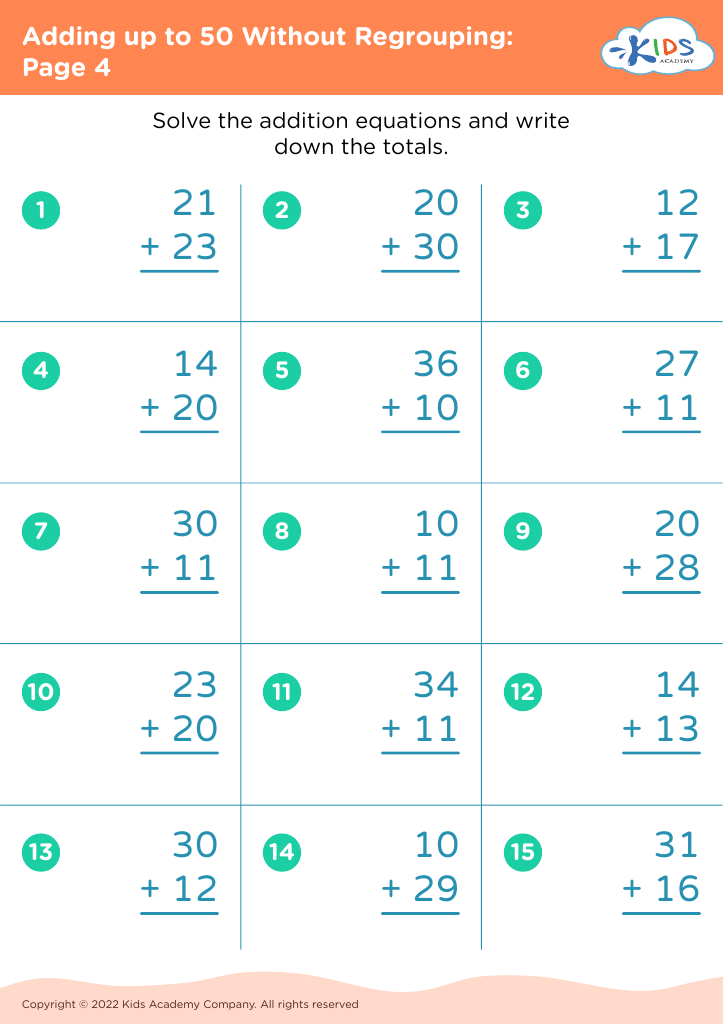
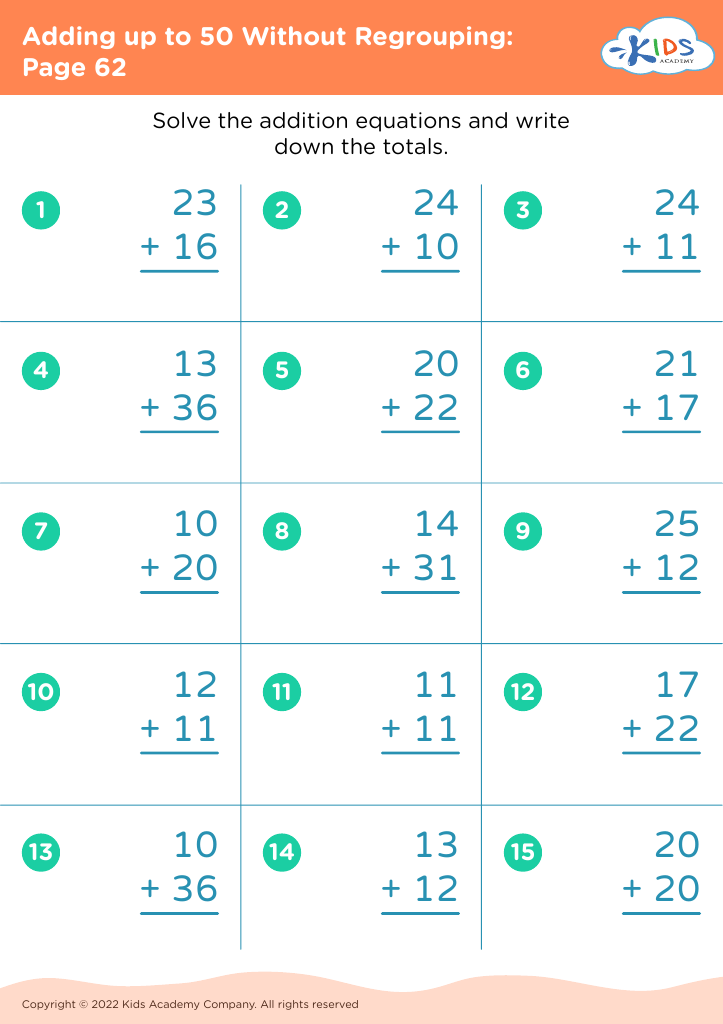
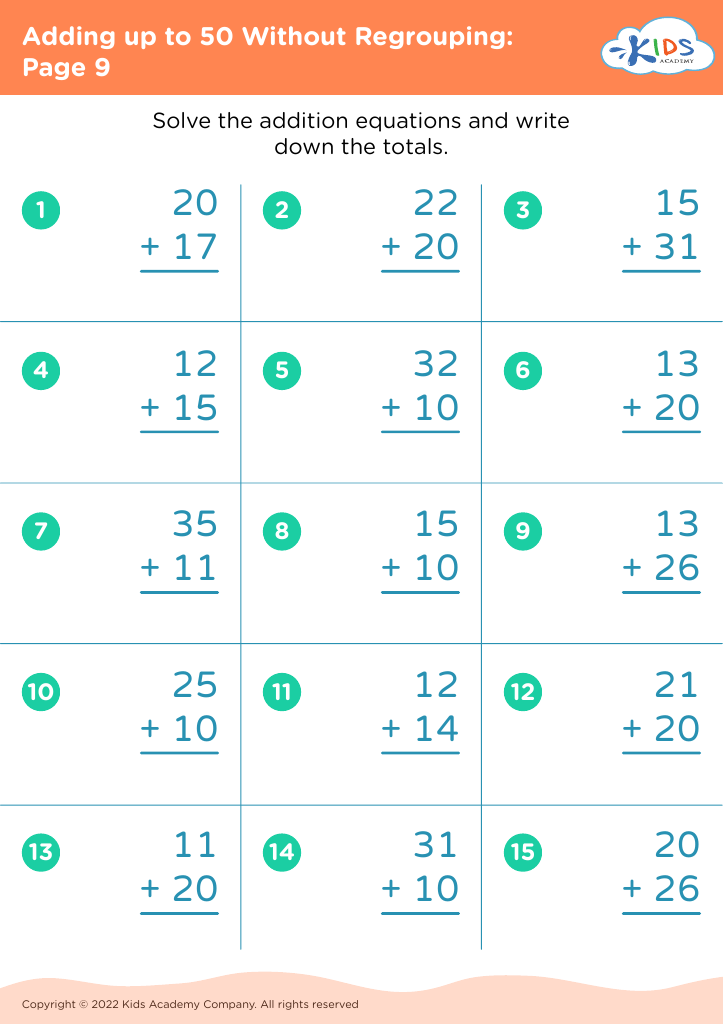
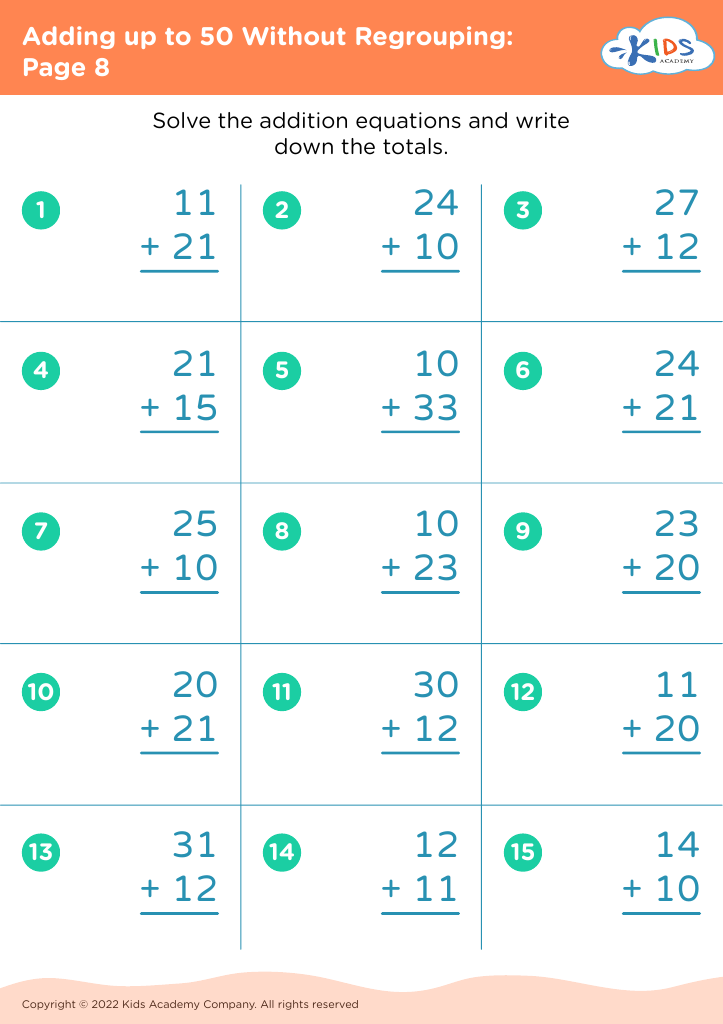
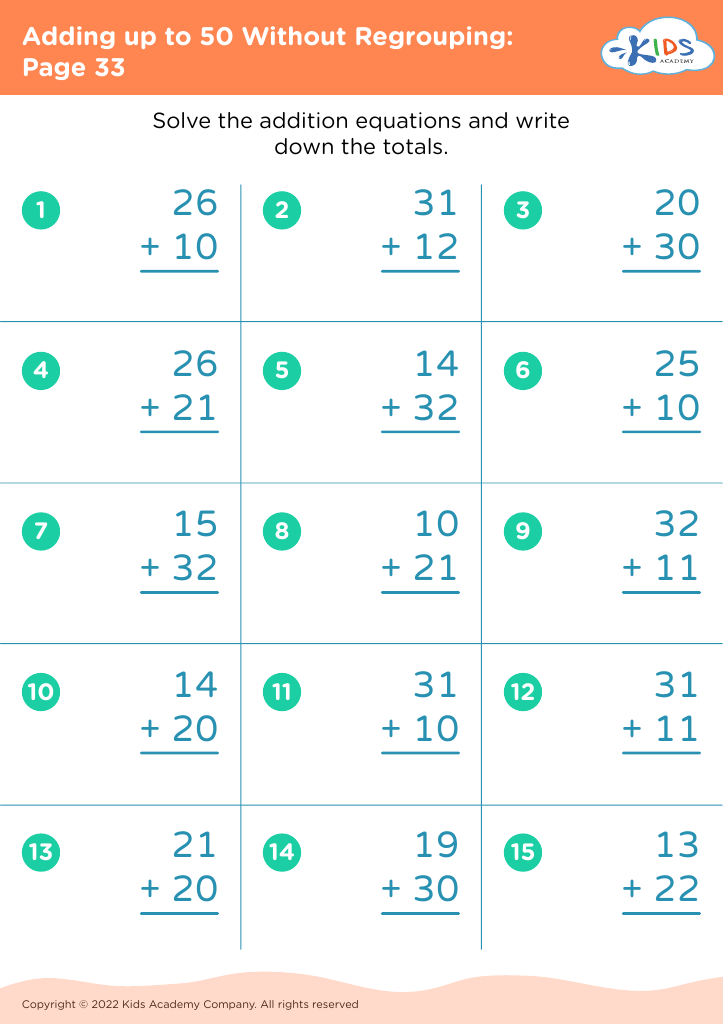
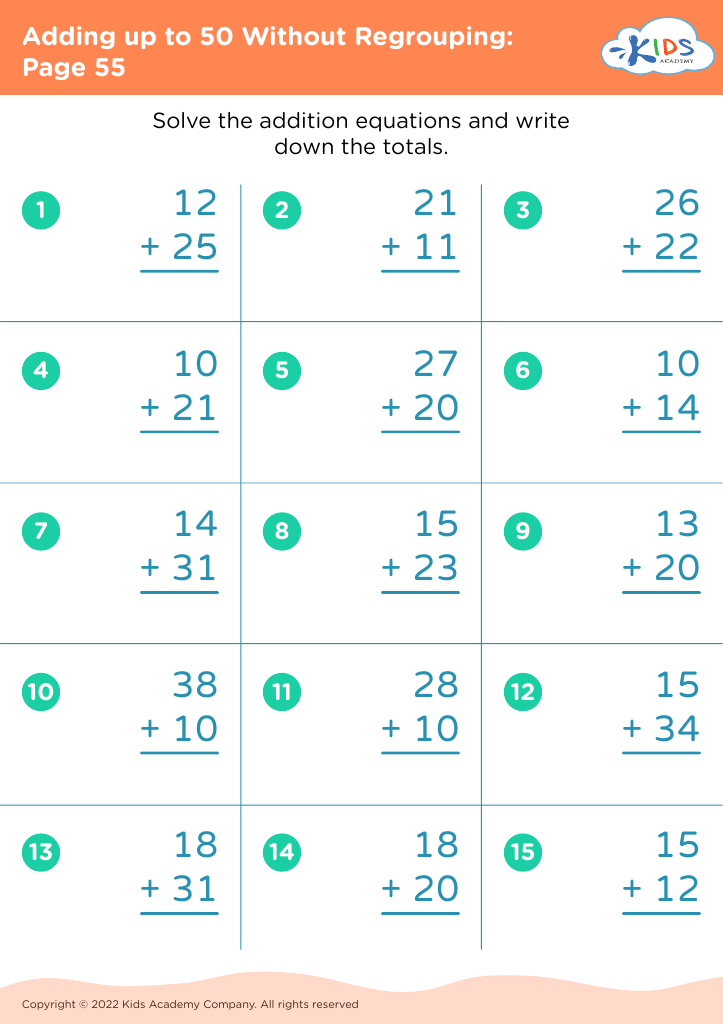


Addition practice for Grade 2 students, particularly adding up to 50 without regrouping, is crucial for several significant reasons. Firstly, mastering addition provides foundational numeracy that enhances mathematical competence. It enables young learners to understand numbers better and perform more complex operations in later grades. By focusing on addition without regrouping, students can solidify basic arithmetic skills and gain confidence in manipulating numbers.
Secondly, consistent practice promotes mental math skills which are vital for cognitive development. It encourages students to recognize number patterns and develop faster calculation abilities. This is beneficial not only for math-related subjects but for overall problem-solving skills.
Furthermore, Grade 2 is a formative stage where arithmetic accuracy and speed are established. Providing students with ample addition practice up to 50 ensures they build automaticity, smoothening the transition to more advanced math topics involving regrouping, subtraction, multiplication, and division.
Lastly, early success in math fosters a positive attitude towards the subject. When students find math manageable and engaging through familiar, structured practice, they are more likely to develop a love for the subject, reducing future math anxiety. Teachers and parents should therefore prioritize this practice to help children excel academically and beyond.