Enhance number recognition Grade 2 Adding up to 50 Without Regrouping Worksheets
3 filtered results
-
From - To
Boost your child's number recognition skills with our engaging "Enhance Number Recognition Grade 2 Adding Up to 50 Without Regrouping Worksheets." Tailored for second graders, these worksheets provide a fun and interactive way to practice addition concepts without regrouping, enhancing both their math abilities and confidence. Each worksheet features colorful visuals and stimulating exercises that help students familiarize themselves with numbers up to 50, reinforcing essential skills. Ideal for classroom or home learning, these resources support a comprehensive understanding of addition while making math enjoyable. Equip your child with the tools they need to succeed in mathematics and foster a lifelong love for learning!
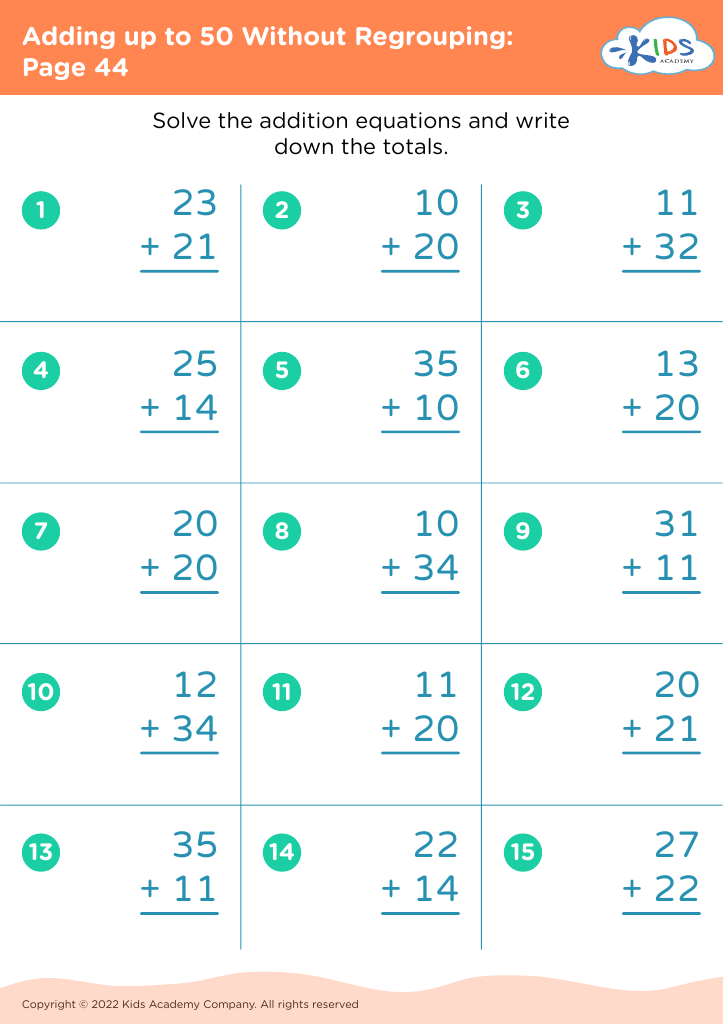
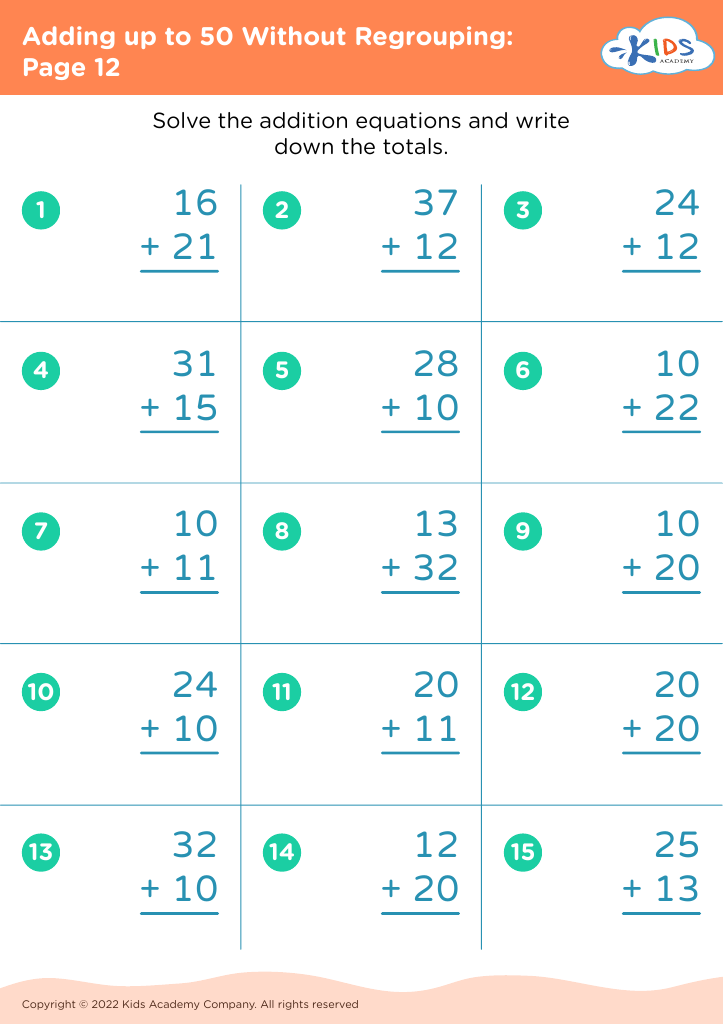
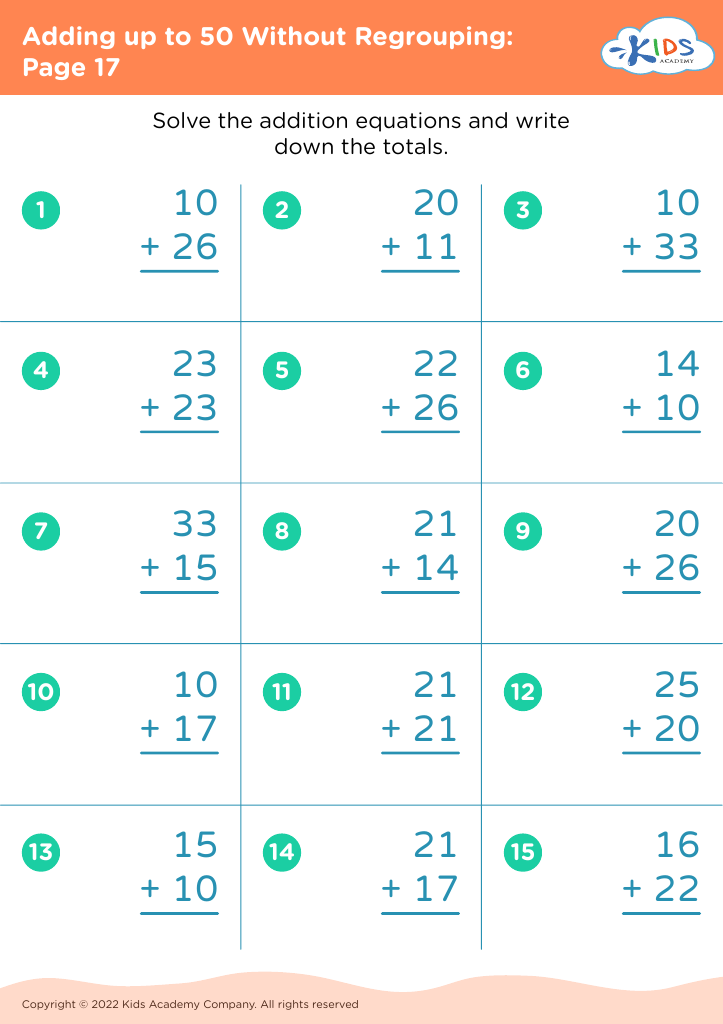


Enhancing number recognition in Grade 2, particularly in the context of adding numbers up to 50 without regrouping, is critical for several reasons. Firstly, this foundational skill fosters numerical fluency, enabling children to easily recall and manipulate numbers, which are essential for more complex mathematical concepts later on. As students master single-digit and two-digit addition without regrouping, they build confidence in their math abilities, paving the way for a more positive attitude toward mathematics overall.
Secondly, number recognition and basic addition skills are not just academic; they are life skills. Children use these abilities in daily situations like budgeting, shopping, and time management.
Additionally, early mastery of these skills can make transition smoothly into higher grades, where math becomes increasingly complex. It also promotes critical thinking and problem-solving, as students learn to compare numbers and understand relationships between them.
Investing time in enhancing number recognition at this stage equips children with the necessary tools for future success, both in academics and in real-life applications, making it an essential focus for parents and educators alike. Engaging children in fun and interactive number-based activities can further cultivate an enduring interest and proficiency in math.