Improve counting skills Grade 2 Adding up to 50 Without Regrouping Worksheets
6 filtered results
-
From - To
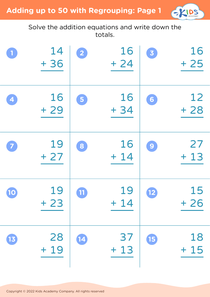
Enhance your Grade 2 student's counting skills with our engaging "Adding Up to 50 Without Regrouping Worksheets." Designed specifically for young learners, these worksheets focus on developing confidence and accuracy in basic addition. Students will practice adding numbers up to 50 without the need for regrouping, strengthening their foundational math skills. Each worksheet includes fun exercises that help make learning enjoyable and effective. By integrating visual aids and interactive elements, children will improve their counting proficiency while gaining a solid understanding of addition concepts. Perfect for classroom use or homeschooling, these worksheets are a fantastic resource for nurturing math success in second graders!
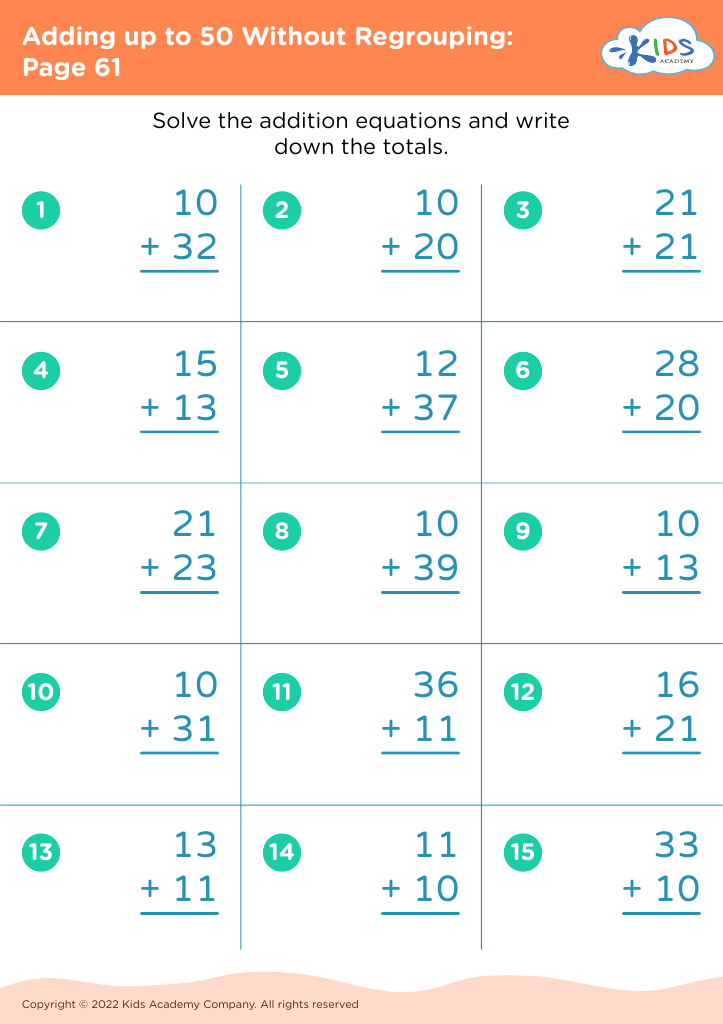
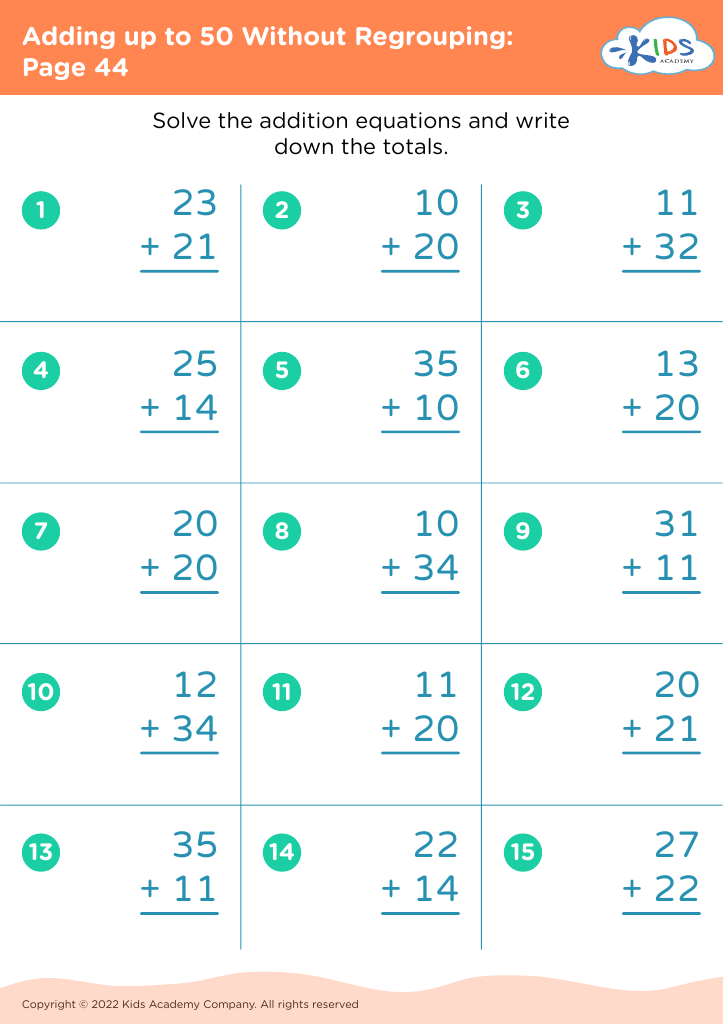
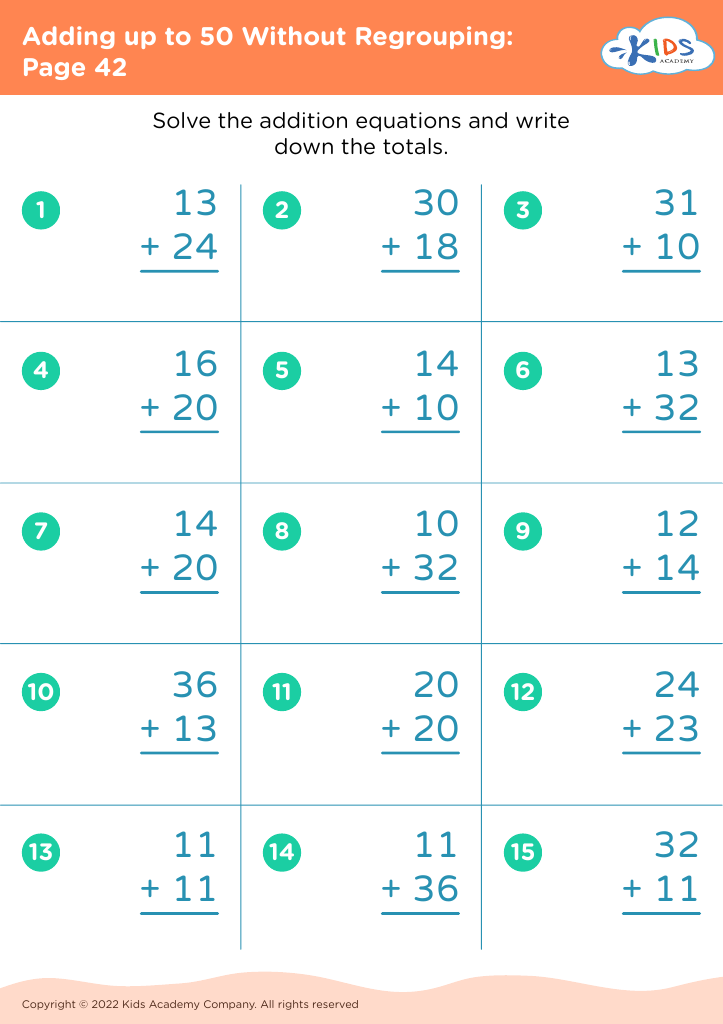
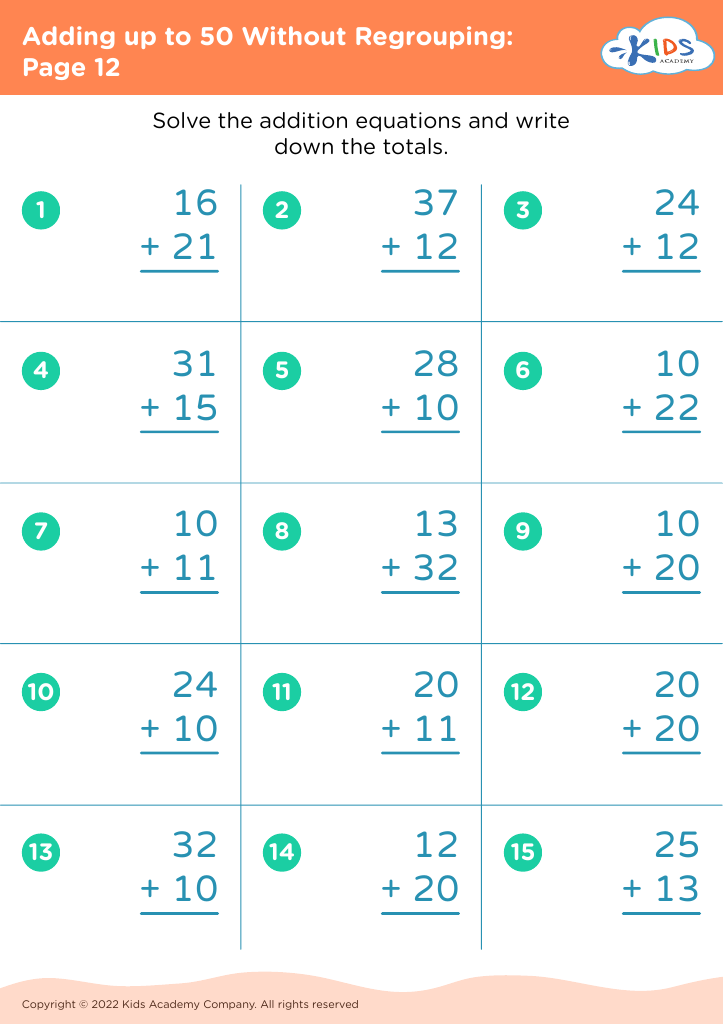
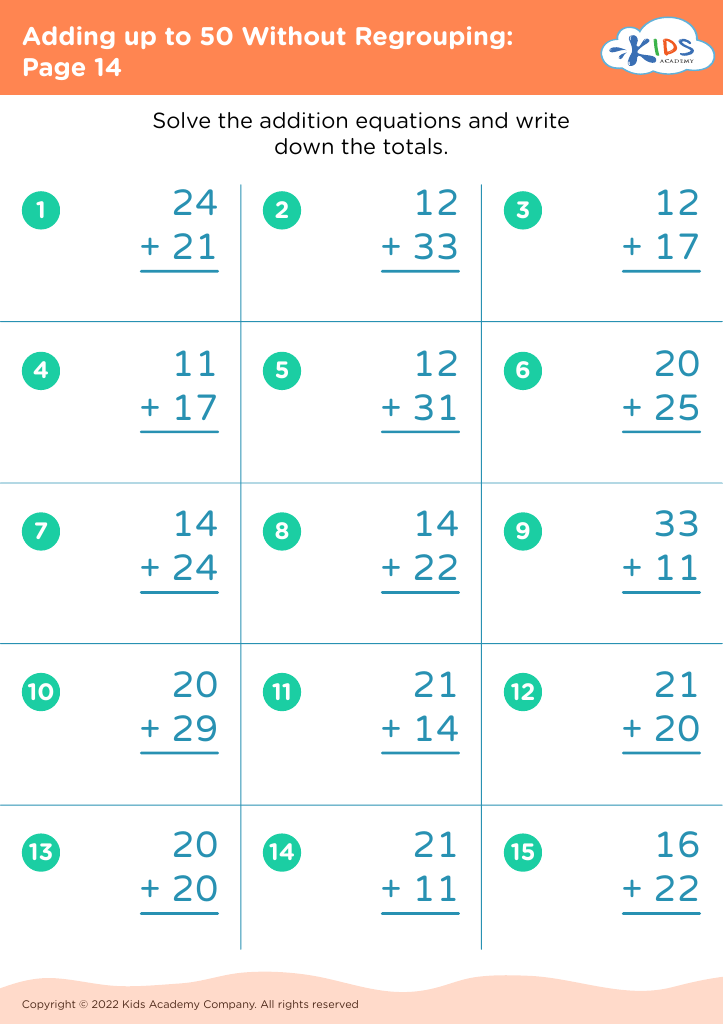
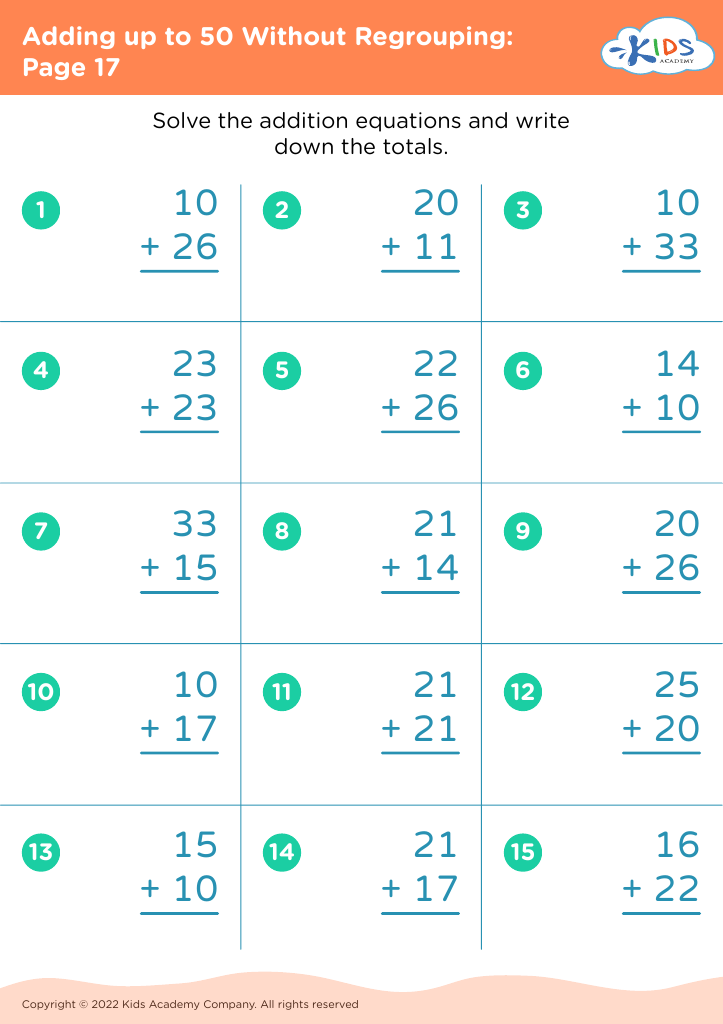


Improving counting skills, especially in concepts like adding up to 50 without regrouping, is crucial for second graders as it lays the foundation for future mathematical understanding. At this age, students begin to transition from basic counting to more complex arithmetic, which is vital for their academic growth.
First, strong counting skills foster number sense, enabling children to grasp larger mathematical concepts later in their education. It equips them with the ability to work with numbers mentally, promoting confidence and reducing math anxiety.
Additionally, mastering addition within 50 without regrouping enhances problem-solving abilities. When children learn to add numbers without regrouping, they develop strategies for simplifying math tasks, which translates into improved accuracy and speed in calculations. This skill is essential not just for mathematics, but for everyday situations, such as estimating costs while shopping.
Parents and teachers should also care because assessment standards increasingly focus on demonstrating fluency in these skills. Children who master basic counting and addition early on are better prepared for more advanced topics in the future. Overall, nurturing these skills supports overall cognitive development, instills positive attitudes toward math, and prepares students for success in school and beyond.