Reading comprehension Grade 2 Adding up to 50 Without Regrouping Worksheets
3 filtered results
-
From - To
Enhance your second graders' reading comprehension skills with our engaging "Adding Up to 50 Without Regrouping Worksheets." Designed specifically for young learners, these worksheets seamlessly integrate math and reading. Students will encounter math word problems that challenge their understanding of addition while improving their ability to extract and interpret information from text. Each worksheet includes clear, age-appropriate instructions and colorful illustrations that captivate students' interests. Perfect for classroom activities or homework, these resources focus on building confidence in mathematical concepts and literacy together, ensuring a holistic learning experience. Prepare your students for academic success while they enjoy essential skill practice!
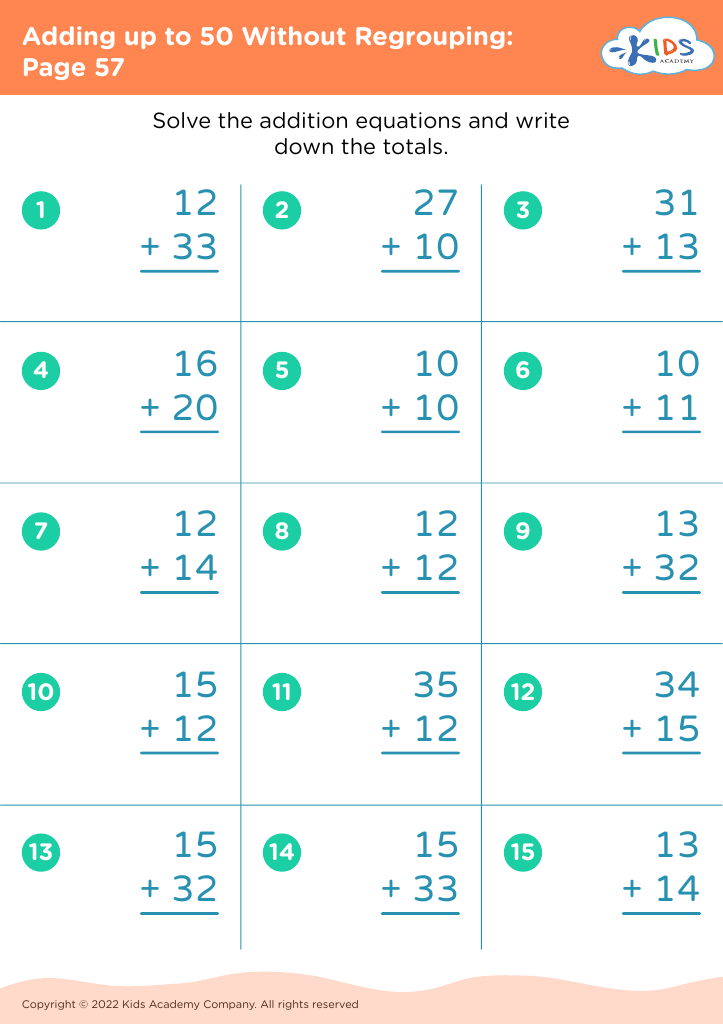
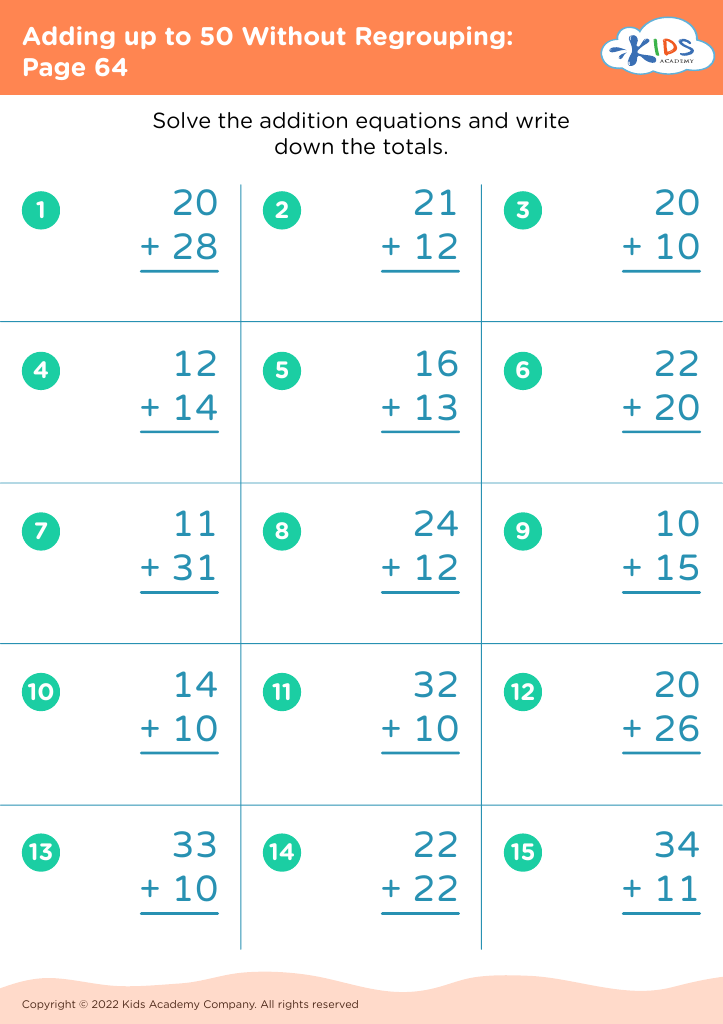
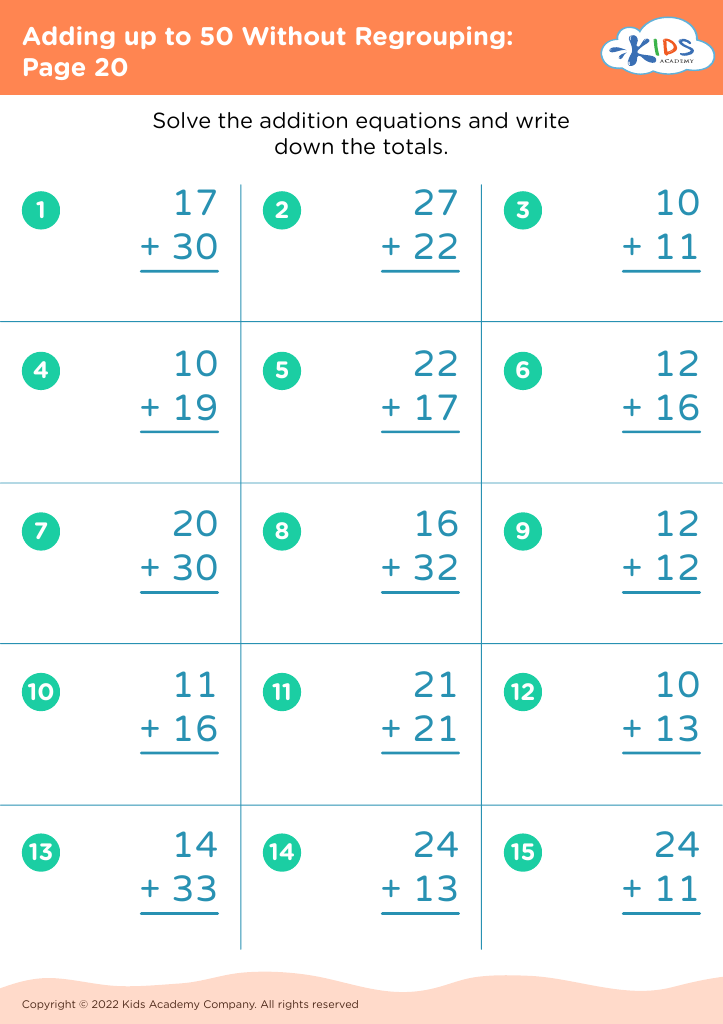


Reading comprehension is foundational in a child's education, impacting their overall learning and success. For Grade 2 students, mastering concepts such as "Adding up to 50 Without Regrouping" in math is integral not just for numeracy but also for developing reading skills. This math skill requires students to comprehend mathematical language and instructions, translate them into actions, and apply them to solve problems.
When students read and follow word problems involving addition, they must discern what is being asked. This fosters critical thinking and the ability to process information in multiple contexts. Moreover, strong reading comprehension skills enable students to tackle more complex math problems in the future, leading to a smoother progression through educational levels.
Parents and teachers should emphasize both reading and mathematical skills, creating a holistic approach to education. Encouraging children to narrate their thought process when solving math problems reinforces both disciplines. Ultimately, strong reading comprehension and math skills will serve as stepping stones for future academic challenges, establishing a solid foundation for lifelong learning and confident problem-solving abilities. Supporting students in these areas ensures they thrive in school and beyond, making it crucial for caregivers and educators to prioritize these interconnected skills.