Recognizing shapes Grade 2 Adding up to 50 Without Regrouping Worksheets
5 filtered results
-
From - To
Explore our engaging worksheets designed for Grade 2 students, focusing on recognizing shapes while mastering addition skills! Our "Adding Up to 50 Without Regrouping" worksheets seamlessly integrate geometric concepts, fostering both mathematical understanding and shape recognition. Children will love the interactive activities that combine fun with learning, making it easier to grasp essential math skills. Perfect for classroom use or at-home practice, these worksheets provide clear visuals and aligned exercises, ensuring students build a solid foundation in addition and geometric shape identification. Boost your child’s confidence in math today with our thoughtfully crafted resources that make learning enjoyable!
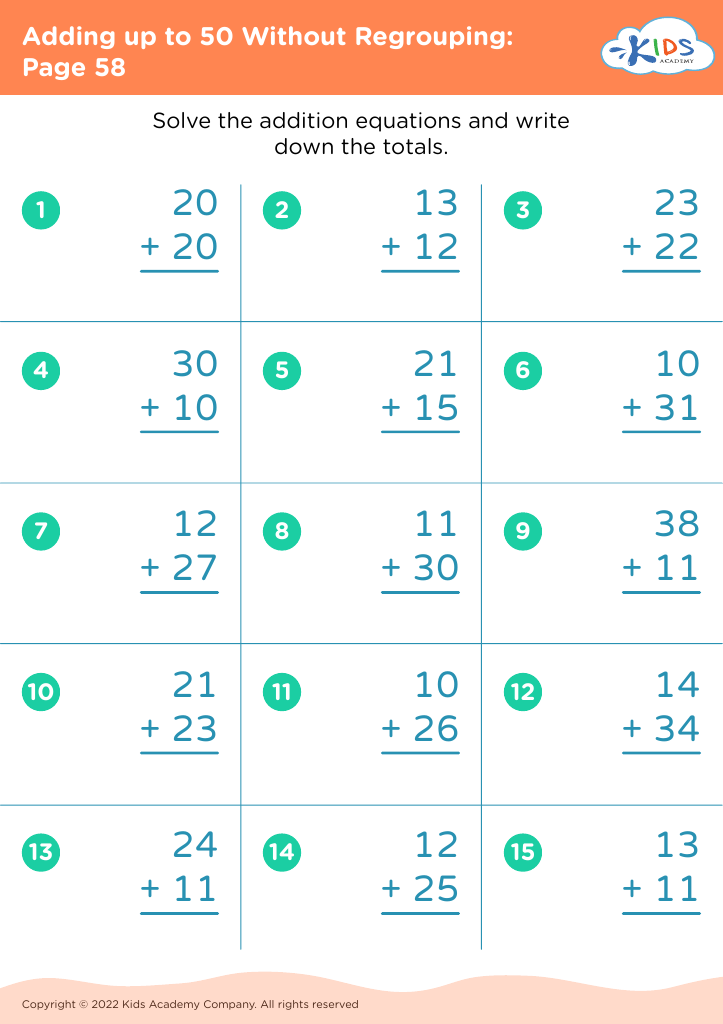
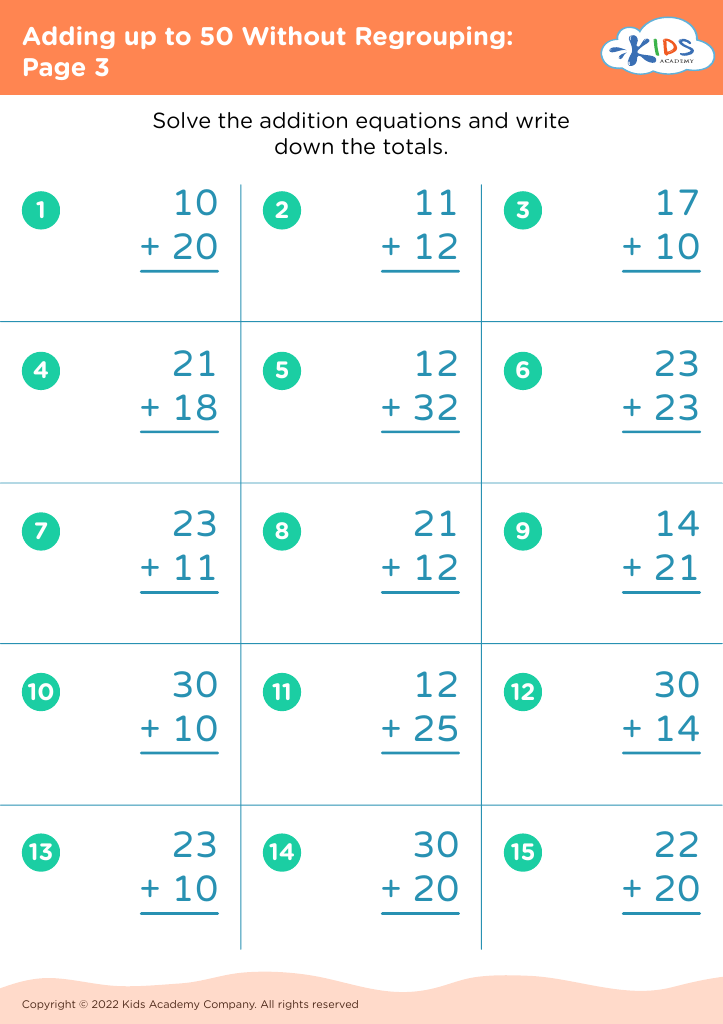
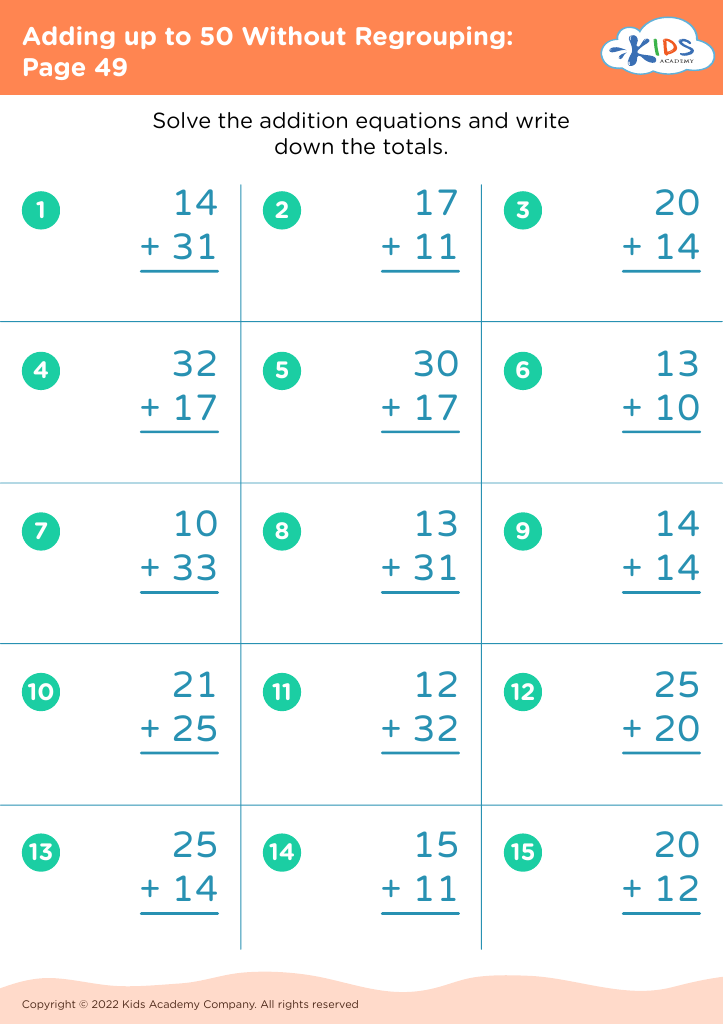
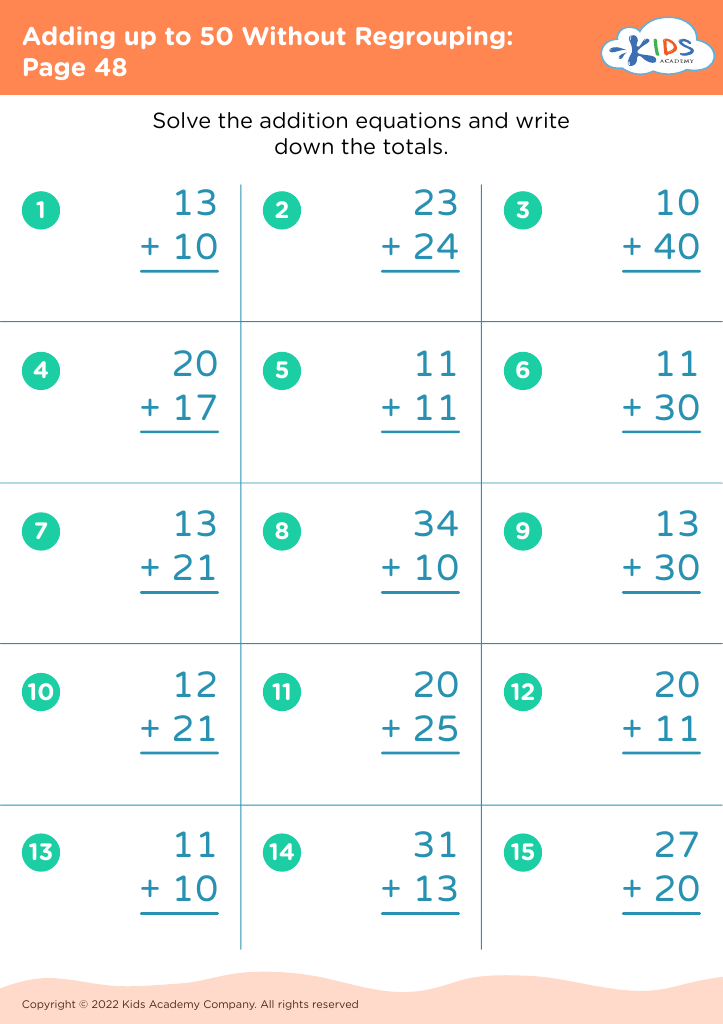
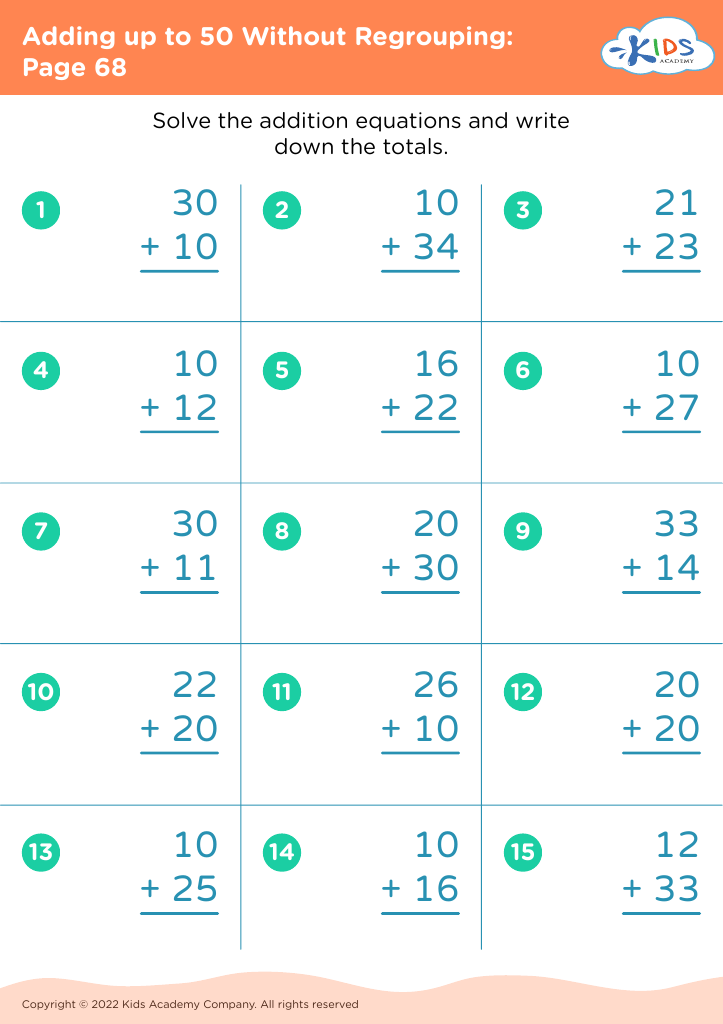


Recognizing shapes and adding numbers up to 50 without regrouping are foundational skills in a child's early education, particularly in the second grade. Understanding shapes are crucial for young learners as they promote spatial awareness, enhance critical thinking, and lay the groundwork for geometry. By recognizing different shapes, children develop the ability to categorize, compare, and analyze objects in their environment. This skill is not only essential in mathematics but also fosters creativity and problem-solving in art, science, and everyday life.
On the other hand, learning to add numbers up to 50 without regrouping helps students build strong arithmetic fundamentals. This skill fosters number fluency and boosts confidence in math, serving as a crucial step towards more complex mathematical concepts. It enhances mental math skills, as students learn to visualize sums and recognize patterns, which is beneficial for future success in higher-level math.
Both skills provide a framework for effective reasoning and decision-making. Encouraging parents and teachers to prioritize these areas ensures children develop a solid foundation in both math and spatial awareness, preparing them for more advanced concepts as they progress in their education journey. A well-rounded understanding of shapes and addition is essential for academic success and cognitive development.