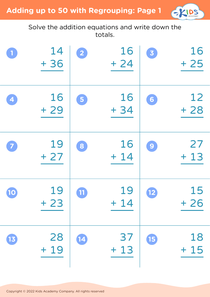
Understanding fractions Grade 2 Adding up to 50 Without Regrouping Worksheets
13 filtered results
-
From - To
Welcome to our "Understanding Fractions: Grade 2 Adding Up to 50 Without Regrouping Worksheets" page! Here, you will find engaging resources designed to help second graders grasp the foundational concepts of fractions while practicing addition skills. These worksheets provide a variety of exercises that focus on adding numbers up to 50 without regrouping, enhancing students' confidence and proficiency. Our activities incorporate visual aids and real-life examples, making learning fun and relatable. Ideal for classroom use or home practice, these worksheets inspire young learners to explore fractions and develop essential math skills. Get started today and support your child’s mathematical journey!
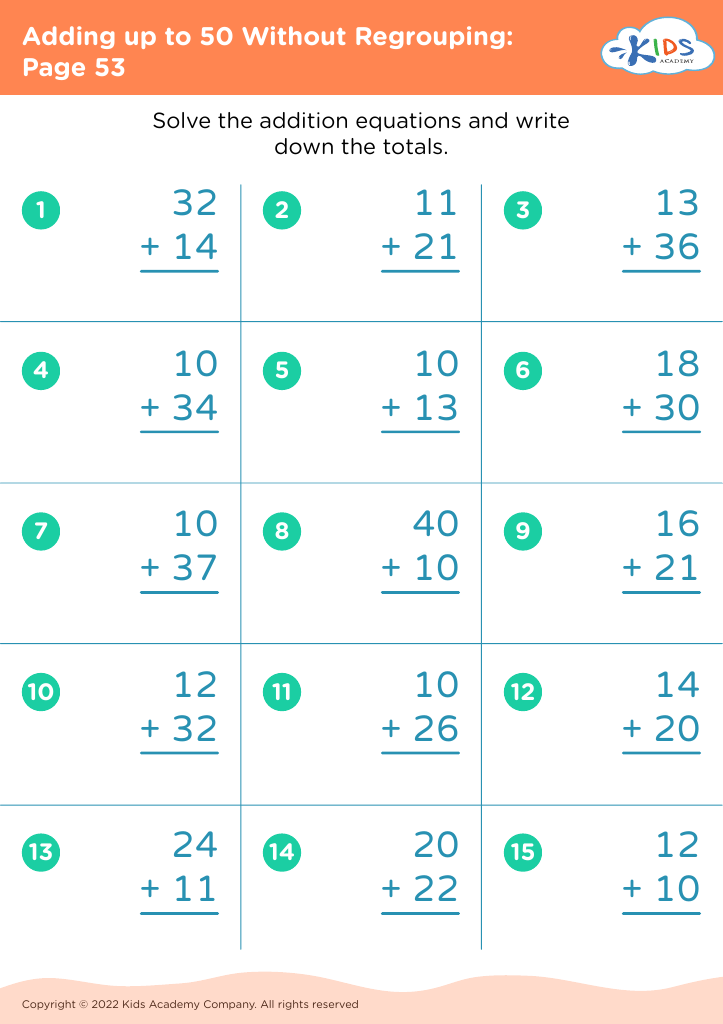
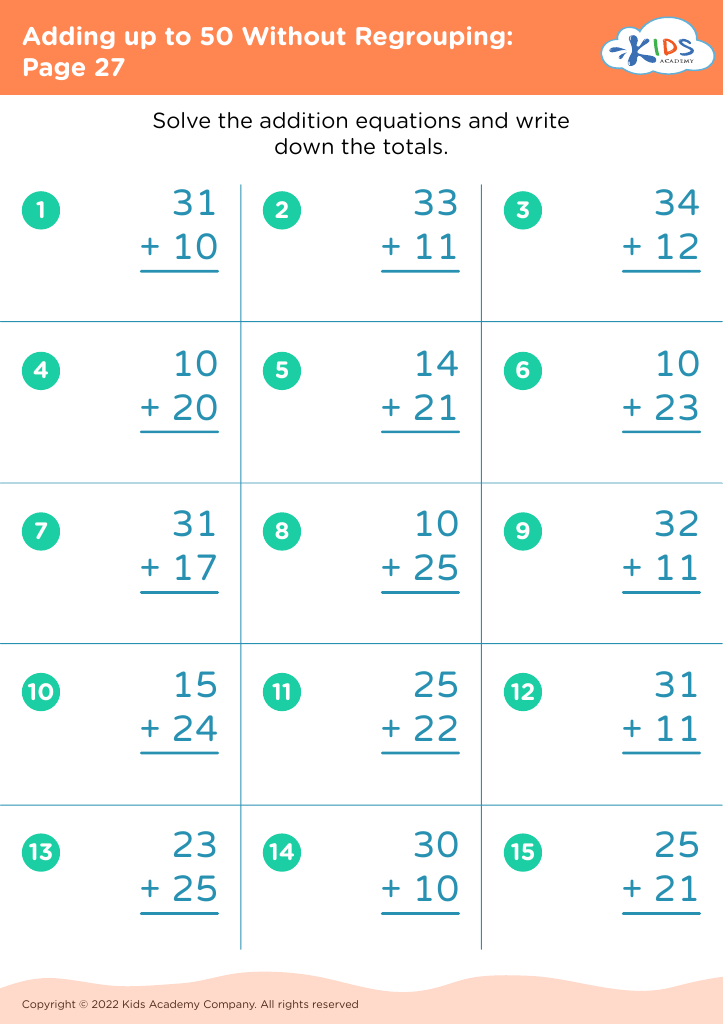
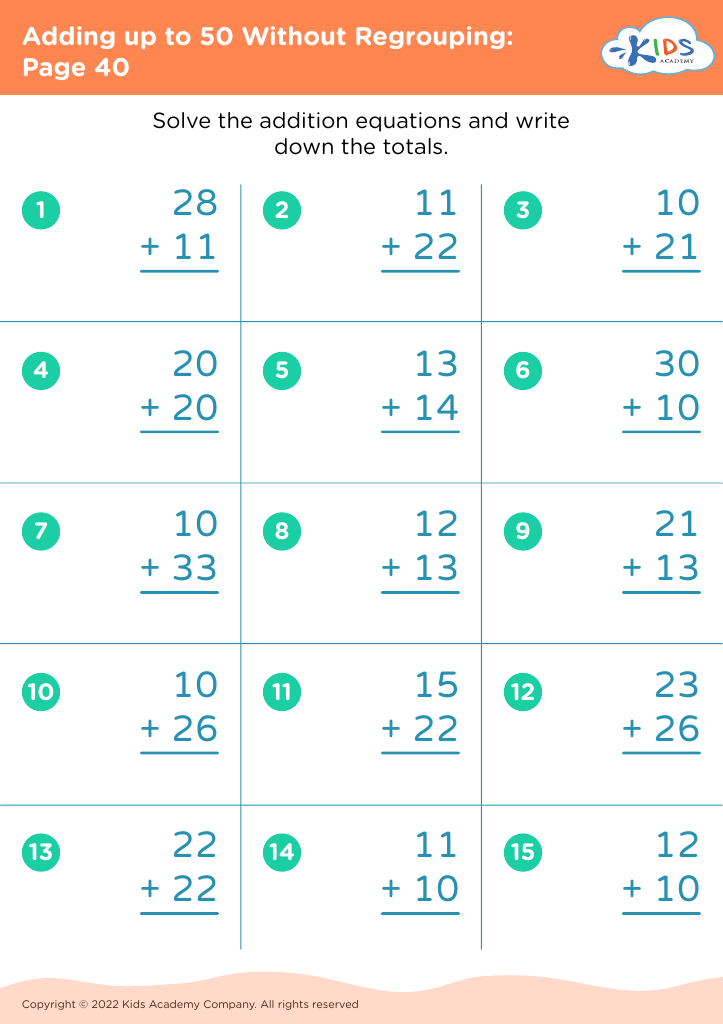
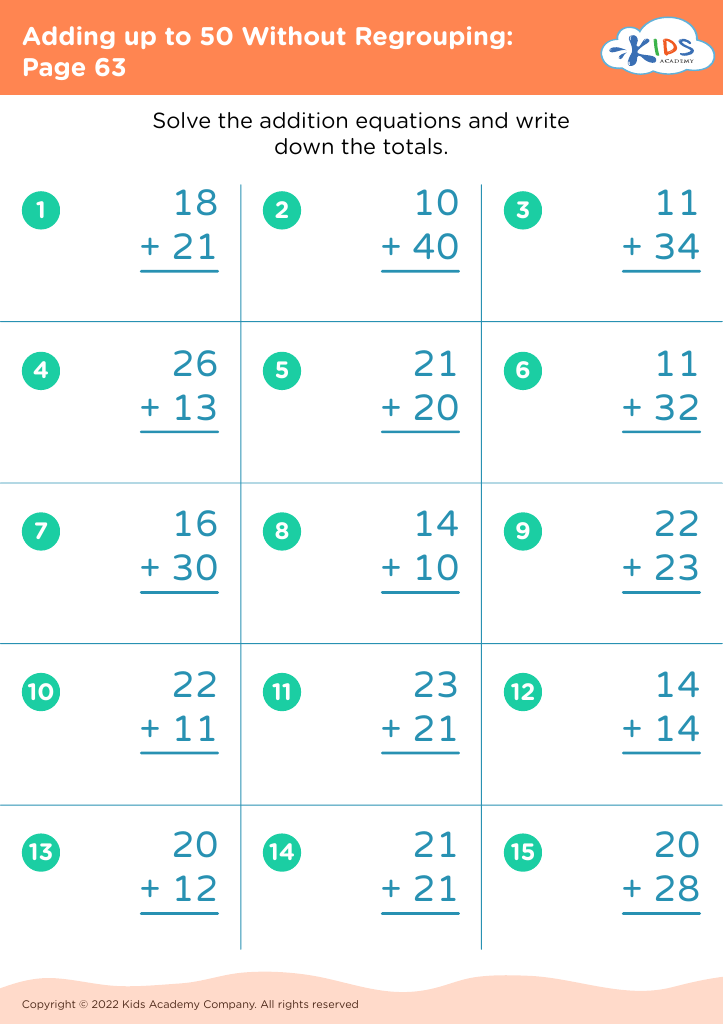
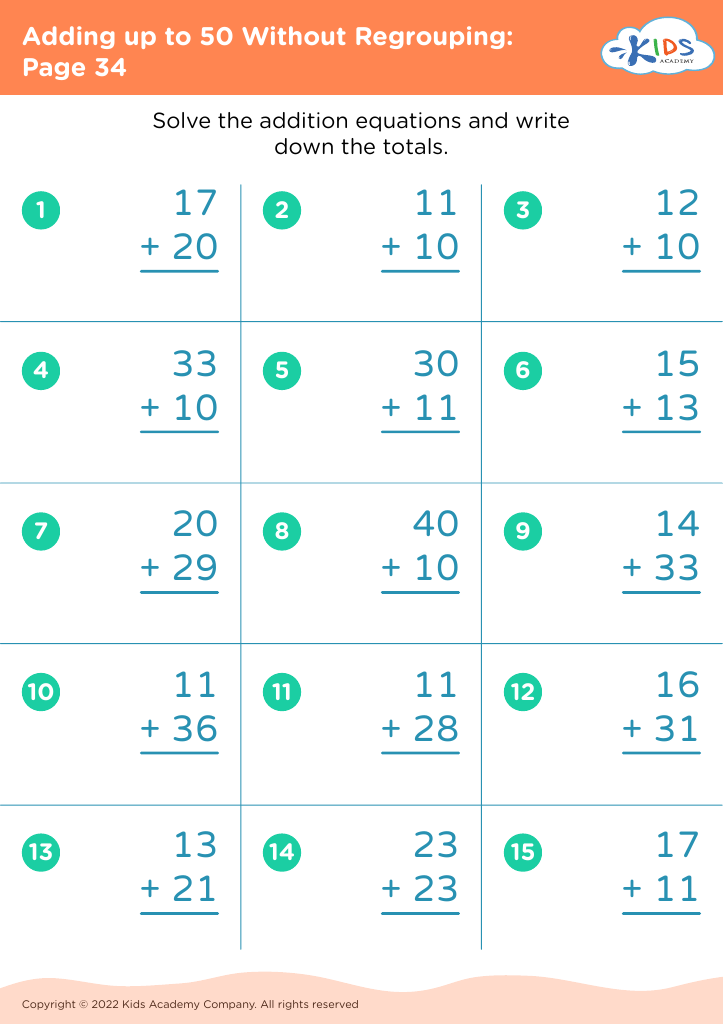
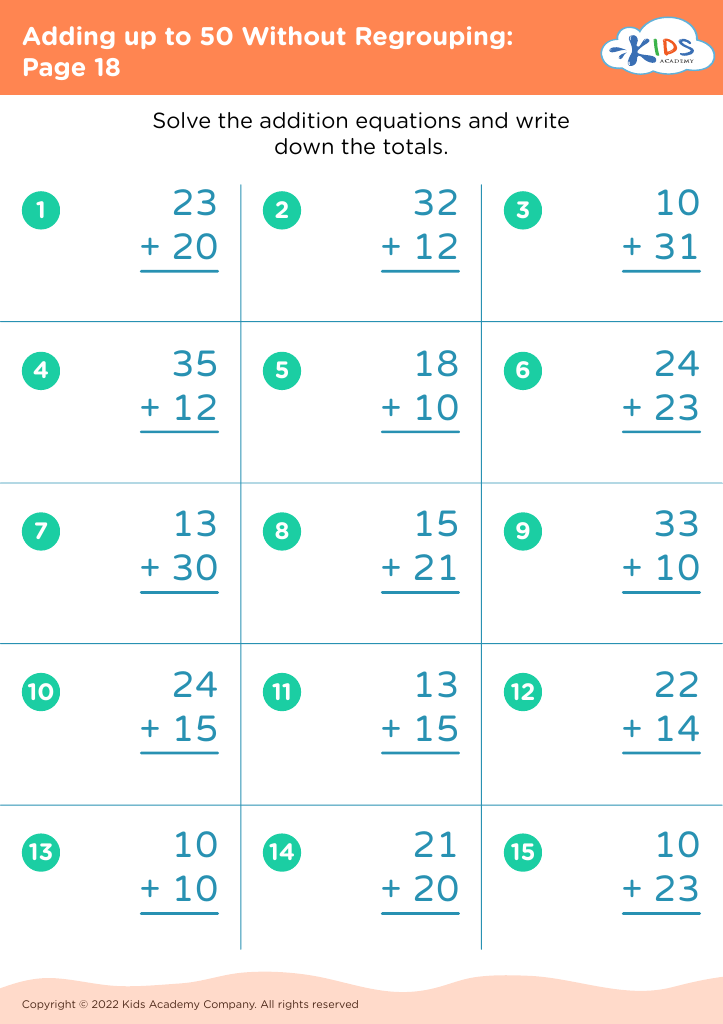
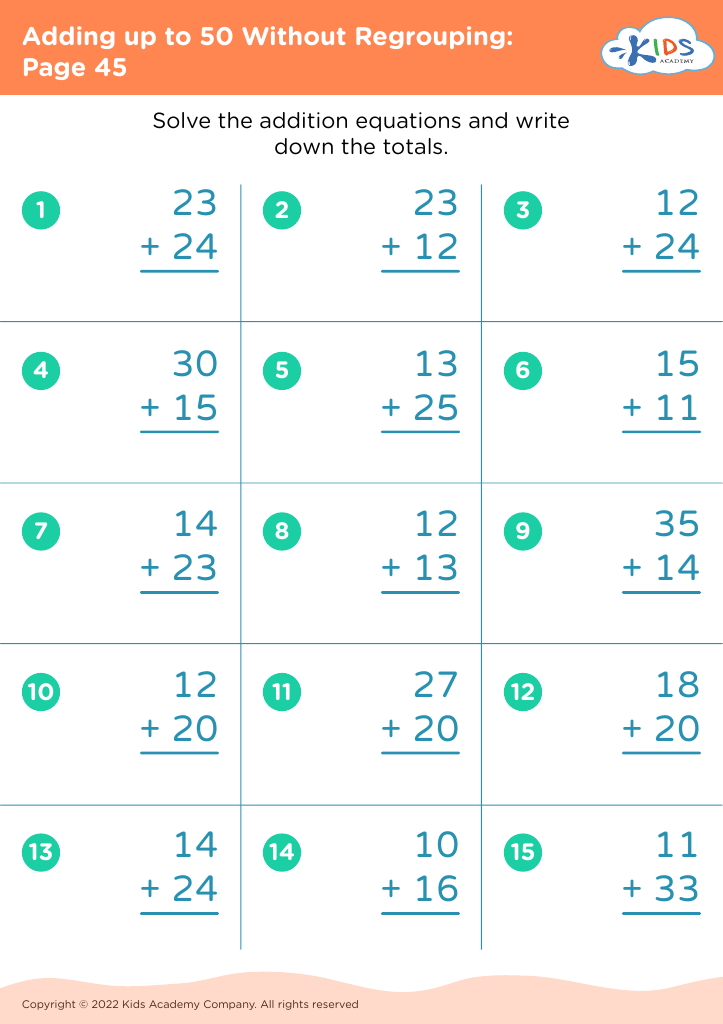
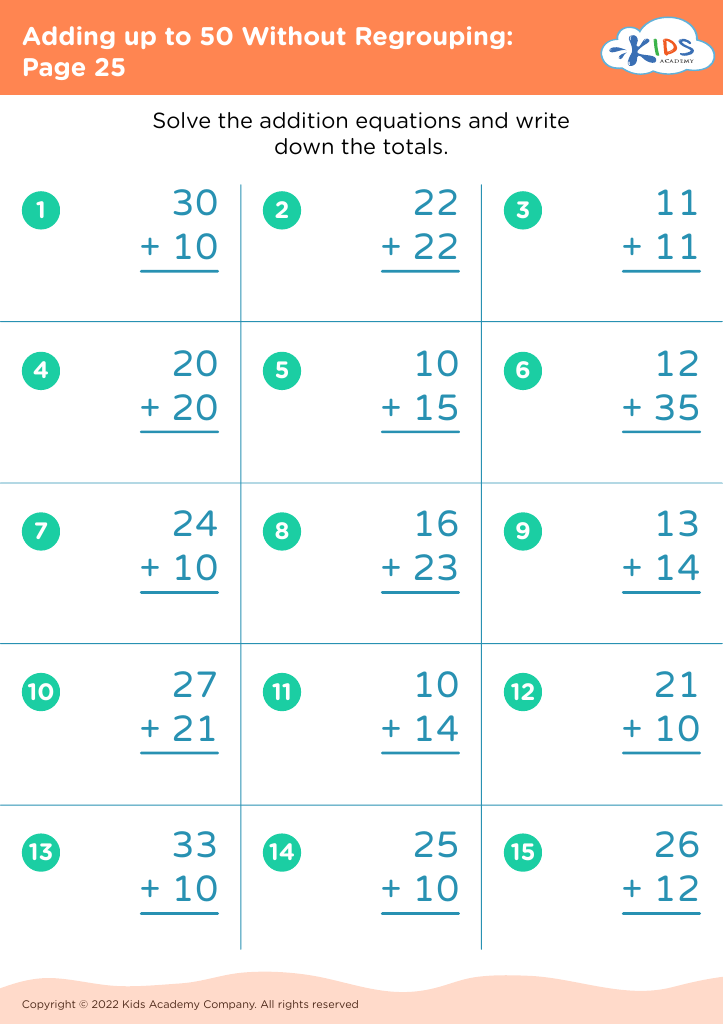
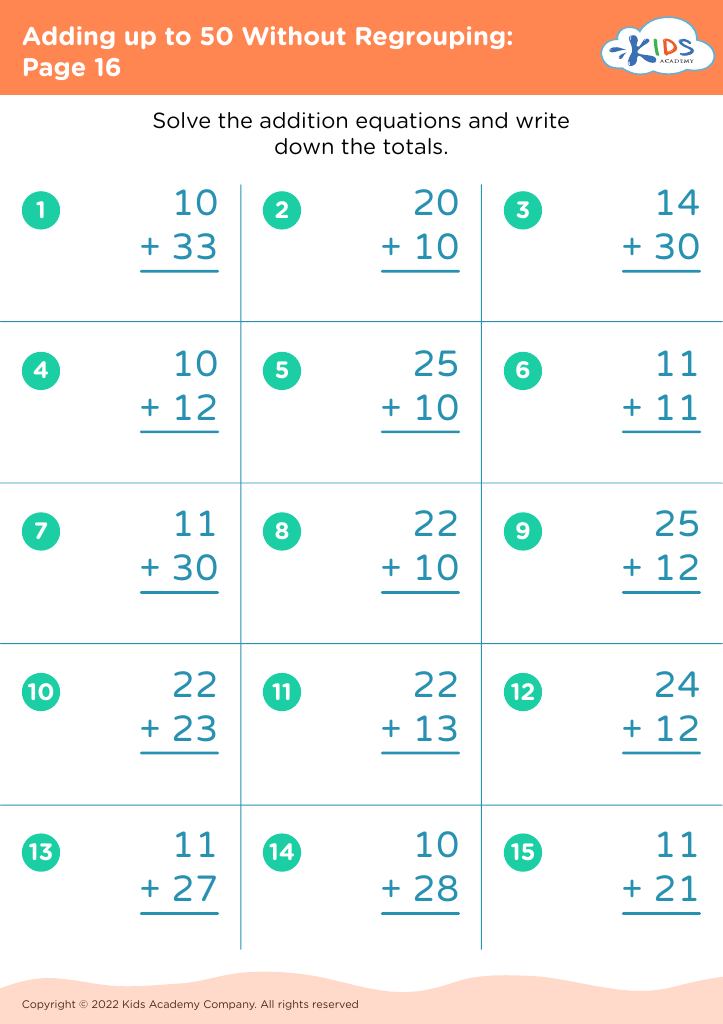
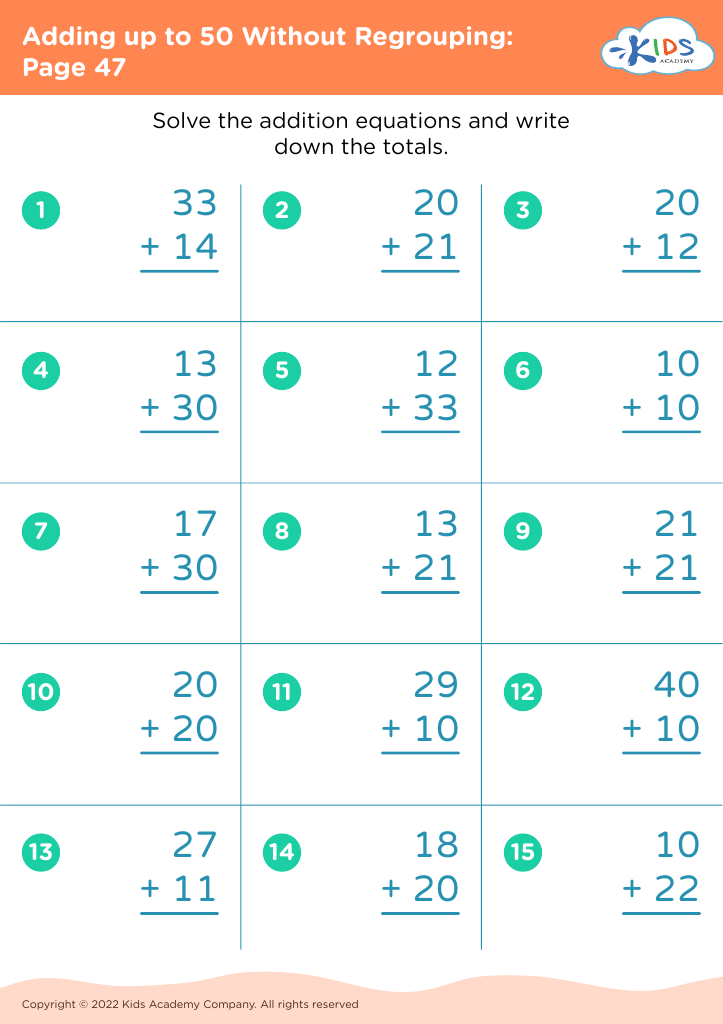
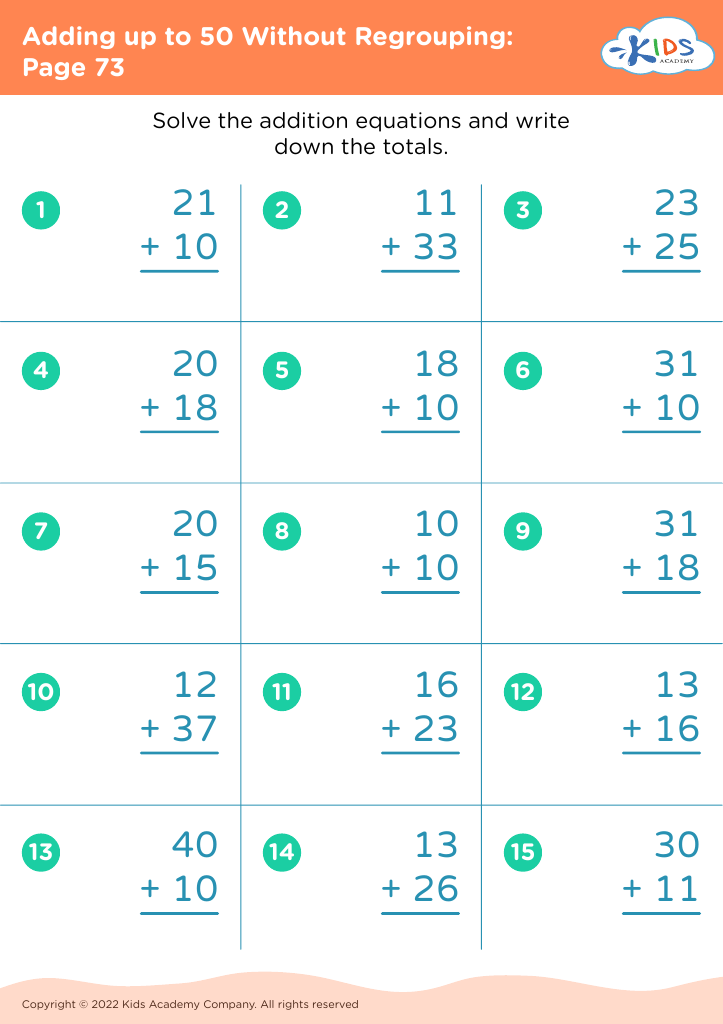
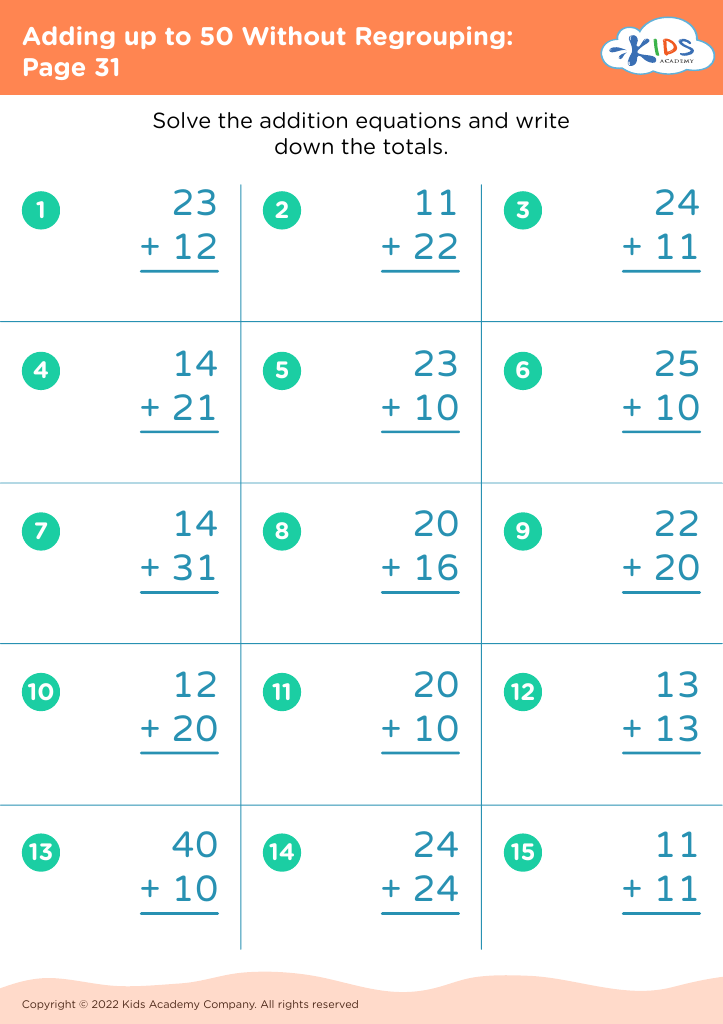
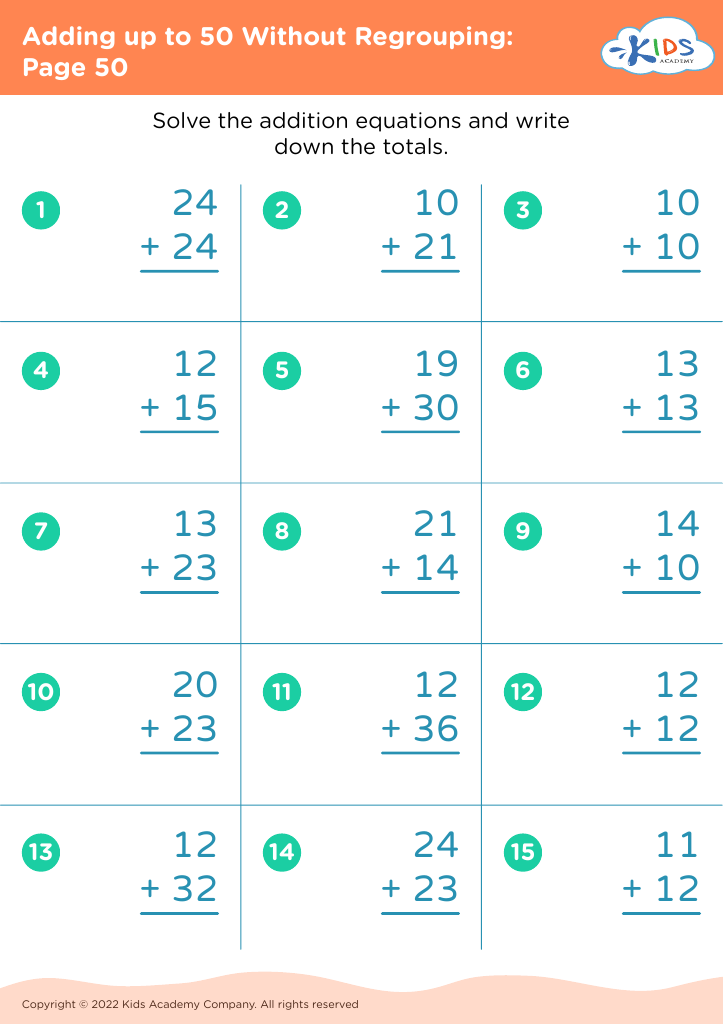


Understanding fractions is a fundamental concept in mathematics that lays the groundwork for more complex mathematical learning. For Grade 2 students, mastering the basics of fractions, especially when adding numbers up to 50 without regrouping, helps develop critical thinking and problem-solving skills. Parents and teachers should care about this topic because it enhances numeracy skills, encouraging students to recognize and work with parts of a whole.
When children learn to add fractions without regrouping, they gain confidence in their mathematical abilities, helping them to engage positively with mathematics in the future. This foundational knowledge also supports overall academic performance, as math skills are applied across various subjects, including science and even art.
Moreover, understanding simple fractions prepares students for practical life situations, such as cooking, sharing, and dividing resources among friends or family. Encouraging a positive attitude towards math, through engaging activities that involve fractions and addition, fosters a love of learning. With this early understanding, students are more likely to progress to more complex mathematical concepts with ease, helping set the stage for future academic success. Thus, investing time in building these skills is invaluable for both parents and teachers.