Understanding patterns Grade 2 Adding up to 50 Without Regrouping Worksheets
5 filtered results
-
From - To
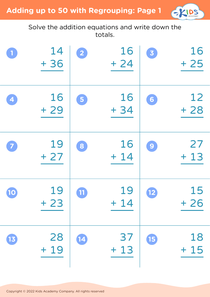
Enhance your second grader's math skills with our "Understanding Patterns: Adding Up to 50 Without Regrouping" worksheets. Designed specifically for Grade 2 students, these engaging activities focus on recognizing patterns in addition where regrouping isn’t necessary. Through a variety of exercises, children will practice adding numbers efficiently, boosting their number sense and problem-solving abilities. Each worksheet encourages students to identify both numeric and visual patterns, making learning fun and interactive. Perfect for reinforcing classroom lessons or as supplemental practice at home, these worksheets lay the foundation for confident and proficient mathematicians. Download now and support your child's math journey!
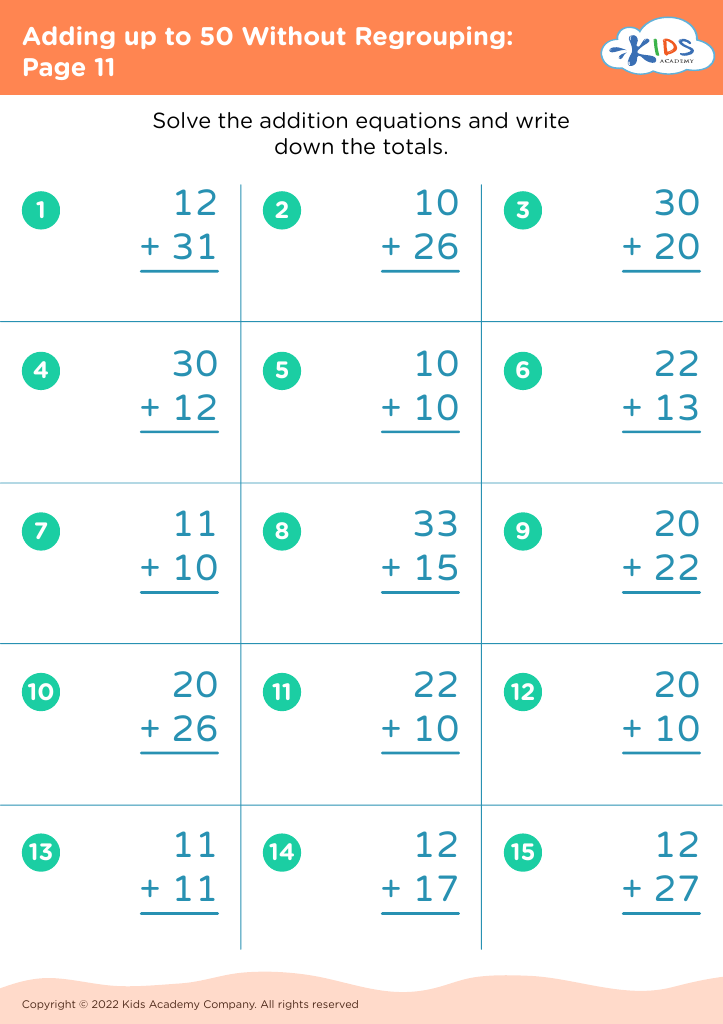
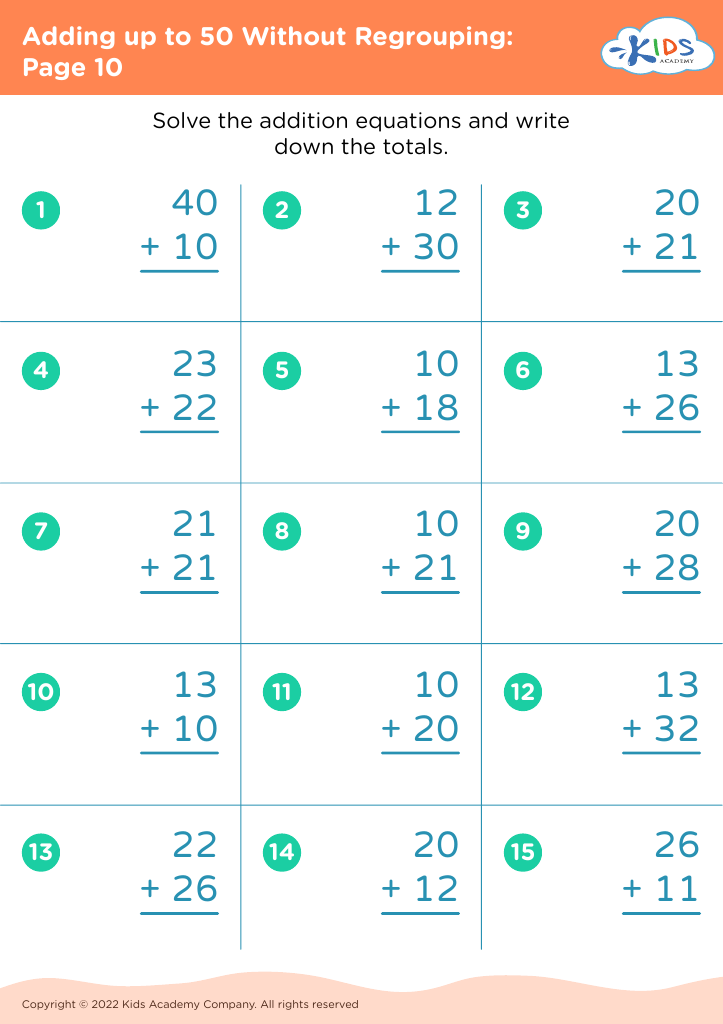
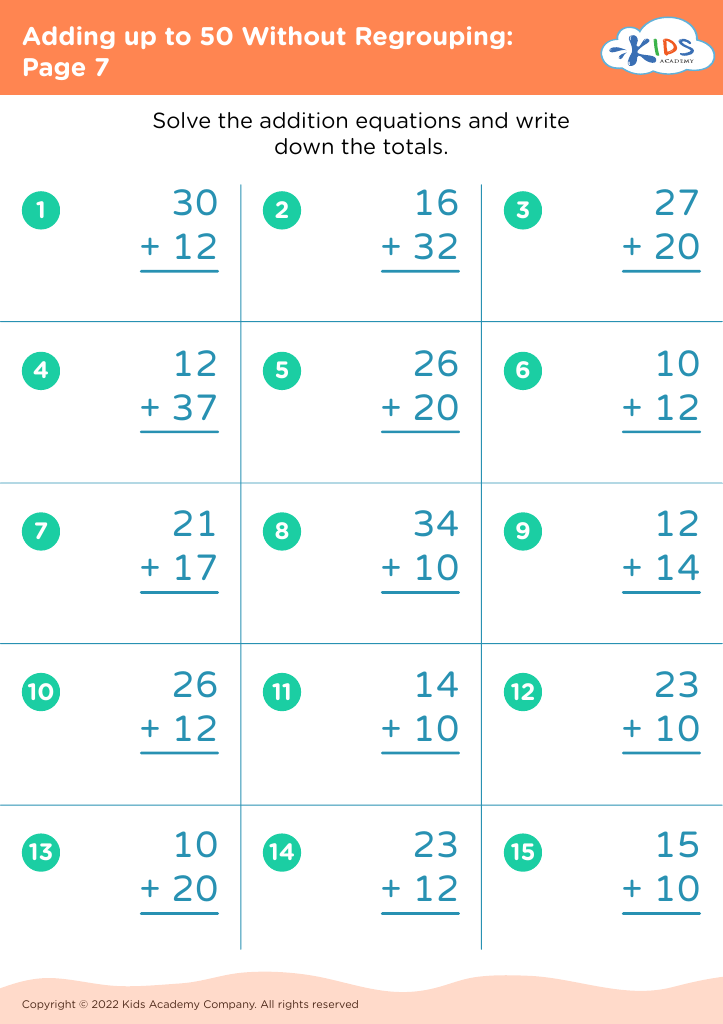
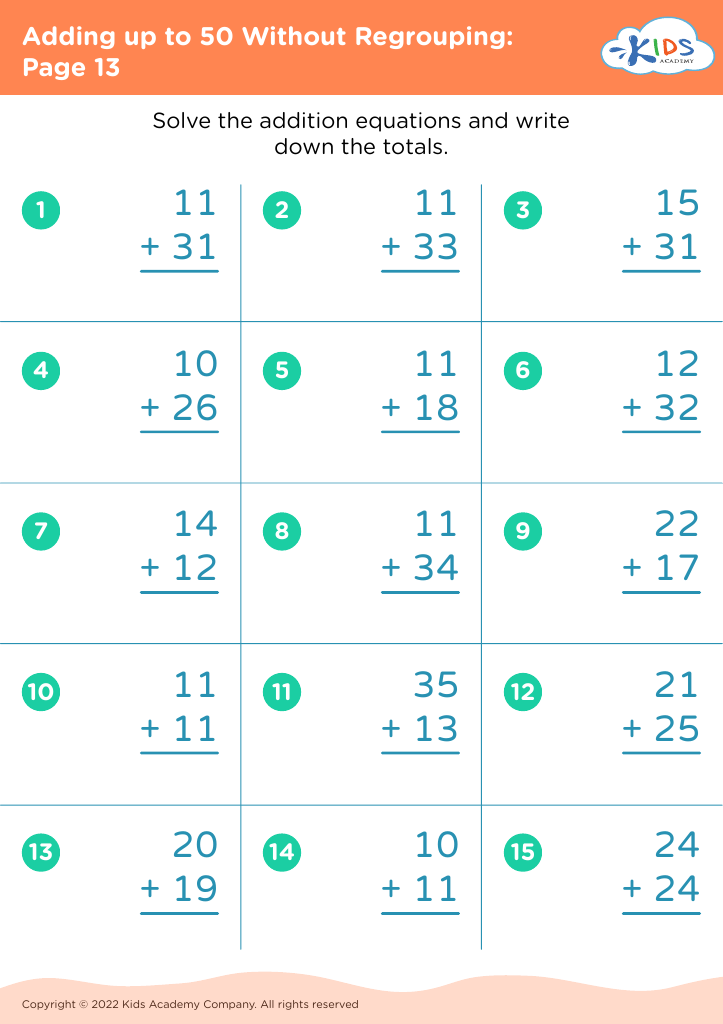
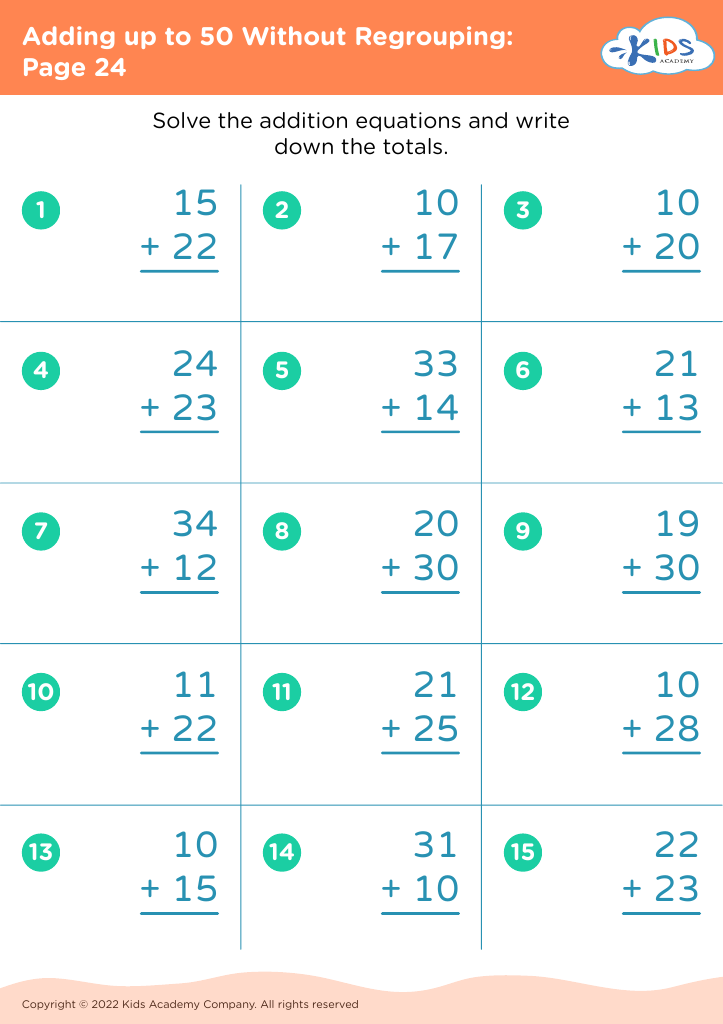


Understanding patterns in mathematics, particularly in Grade 2 when adding up to 50 without regrouping, is crucial for several reasons. First, this foundational skill enhances students' number sense, enabling them to confidently navigate more complex math concepts later on. When children recognize patterns in addition, such as pairs that make ten (e.g., 2 + 8 = 10, 3 + 7 = 10), they can solve problems more efficiently, fostering a sense of competence and enjoyment in math.
Additionally, learning to add without regrouping supports critical thinking and problem-solving skills. When students grasp how numbers work together, they’re better equipped to tackle real-world challenges. This understanding also fosters a deeper appreciation of mathematics as a logical and beautiful system.
For parents and teachers, focusing on these skills cultivates a supportive learning environment. By encouraging practice, they help children develop persistence and resilience, qualities essential for academic success. Engaging with students in pattern recognition also strengthens the home-school connection, builds confidence, and creates joyful learning experiences. Ultimately, nurturing these early math skills lays the groundwork for lifelong learners who are not only skilled in mathematics but also appreciate its role in everyday life.