Filters

16 filtered results

Clear all filters
Favorites
With answer key
Interactive

16 filtered results

Difficulty Level

Grade


Enhance your second grader's math proficiency with our engaging "Adding Up to 50" worksheets! Designed specifically for Grade 2 learners, these worksheets provide a fun way to master basic addition skills. Students will practice adding numbers up to 50, improving their numeracy and problem-solving abilities. Our varied exercises cater to different learning styles, ensuring an effective and enjoyable experience. With clear instructions and vibrant visuals, these worksheets are perfect for classroom activities or at-home practice. Help your child build confidence in math while laying a solid foundation for future success. Download your worksheets today and watch them excel in math!
Check out this FREE Grade 2 Trial Lesson on Adding up to 50!

Suffixes

Favorites
With answer key
Interactive
  • Grade 2
  • Basic Math Skills
  • Adding up to 50
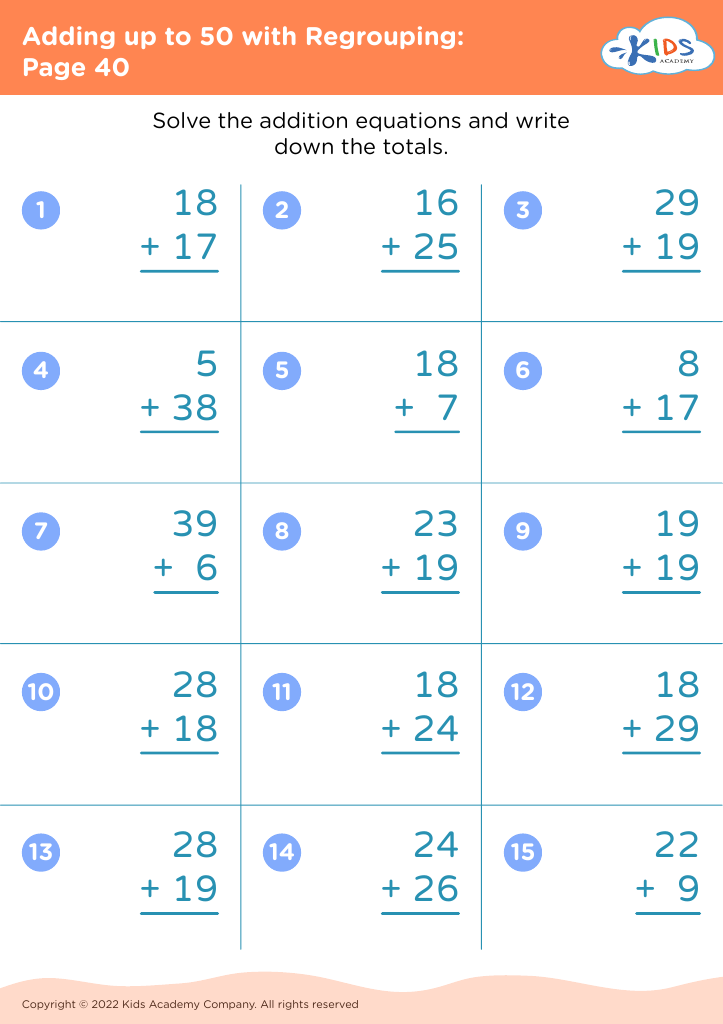
Adding up to 50 with Regrouping: Page 40
Worksheet
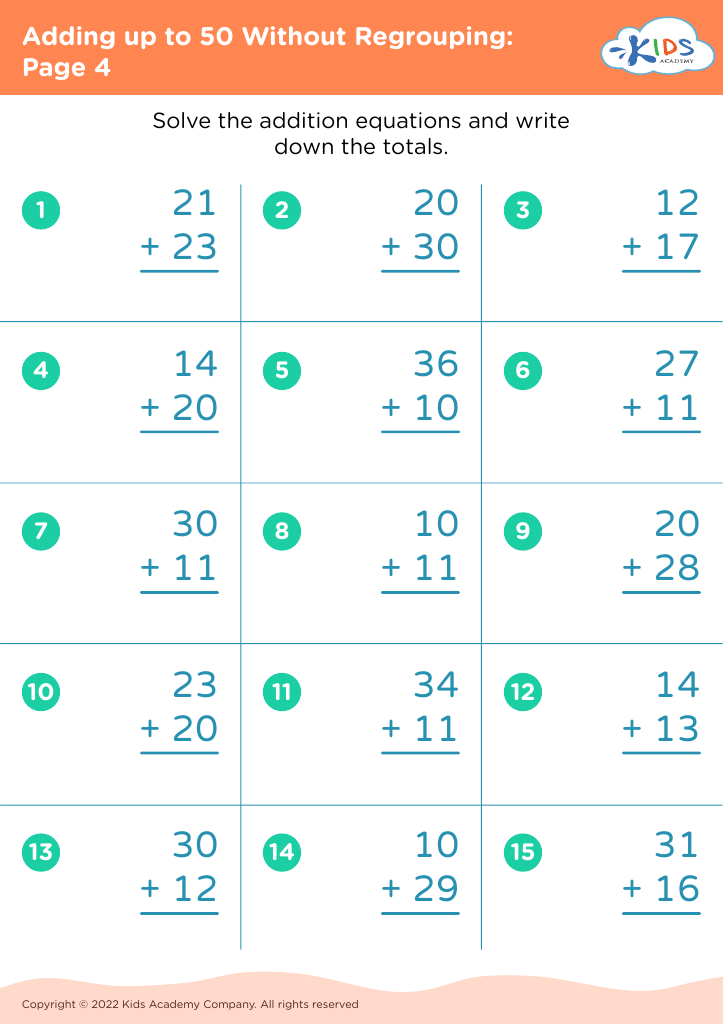
Adding up to 50 Without Regrouping: Page 4
Worksheet
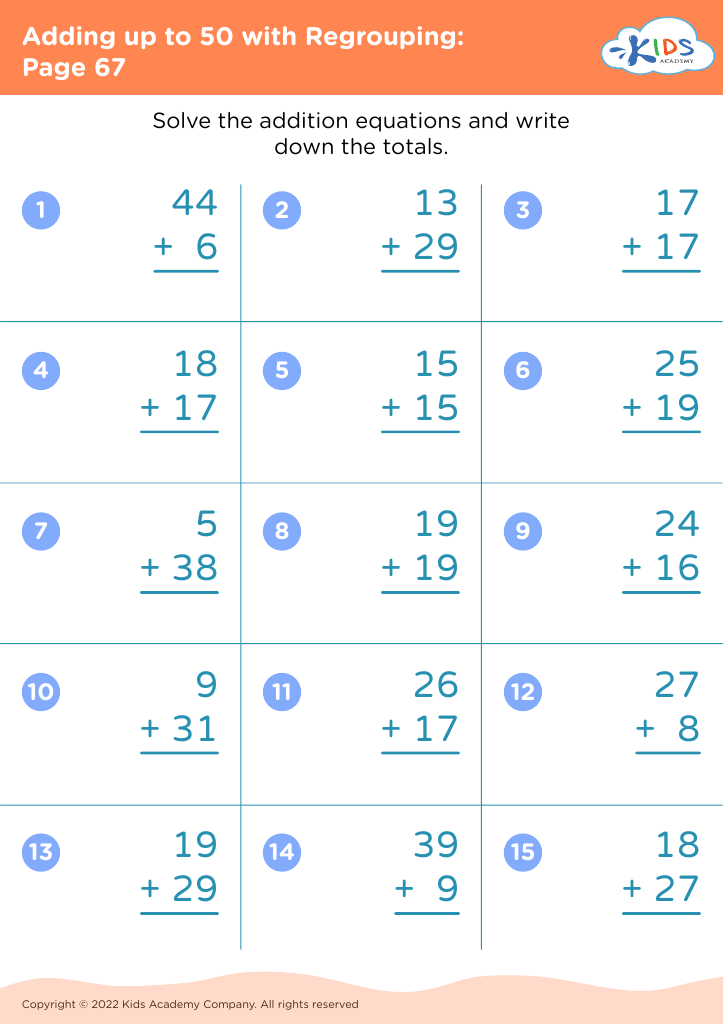
Adding up to 50 with Regrouping: Page 67
Worksheet
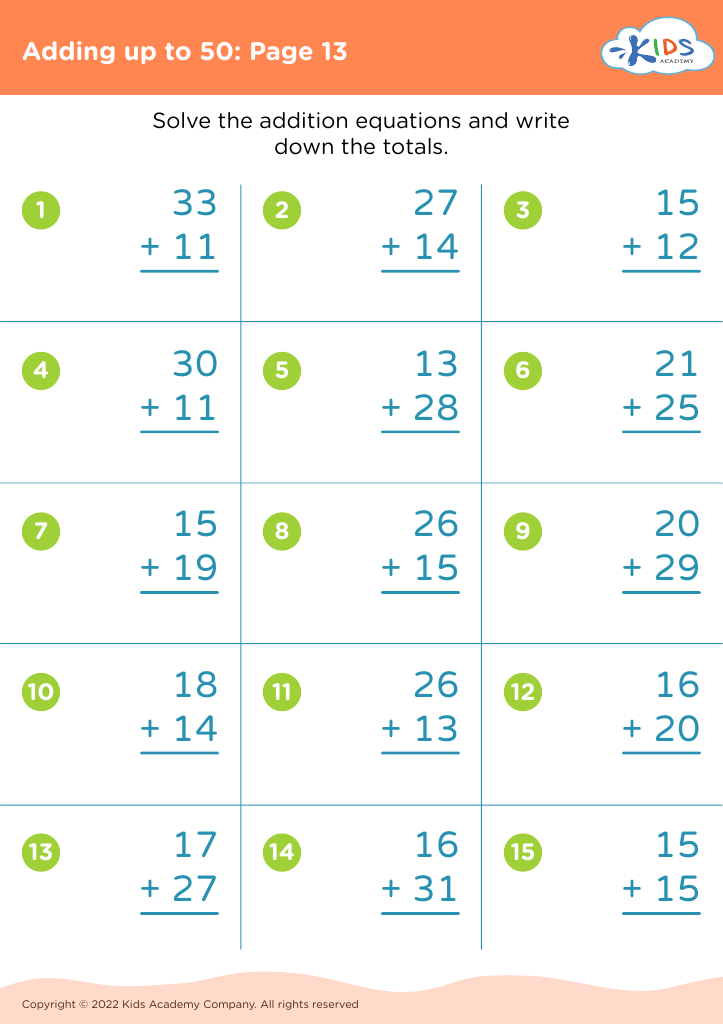
Adding up to 50: Page 13

Adding up to 50: Page 13

Adding up to 50: Page 13
Worksheet
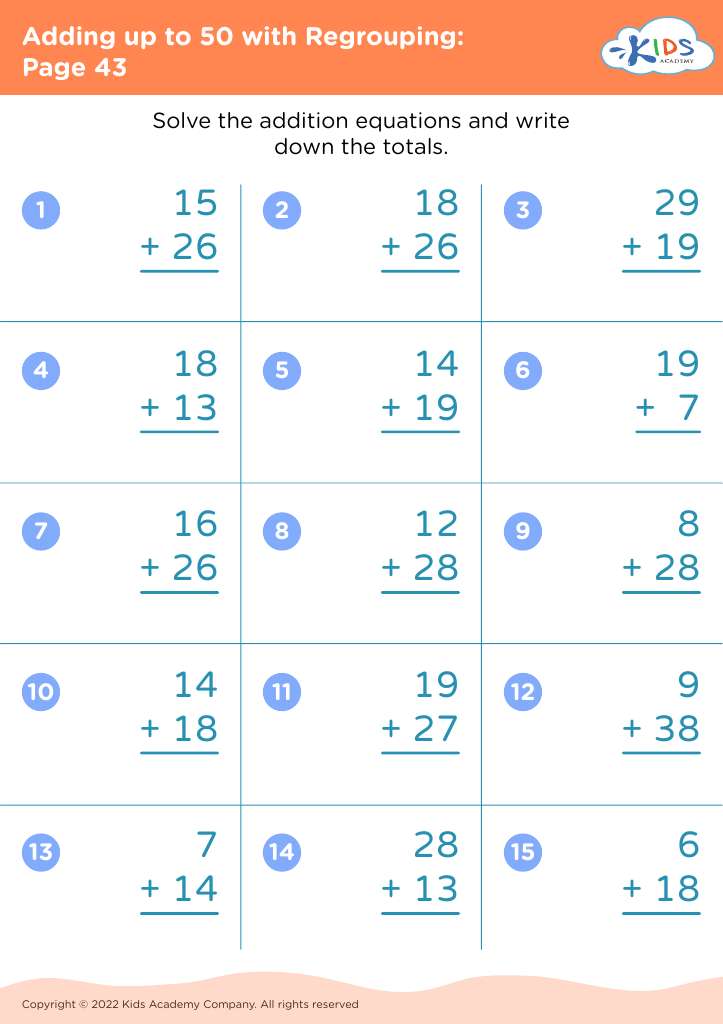
Adding up to 50 with Regrouping: Page 43
Worksheet
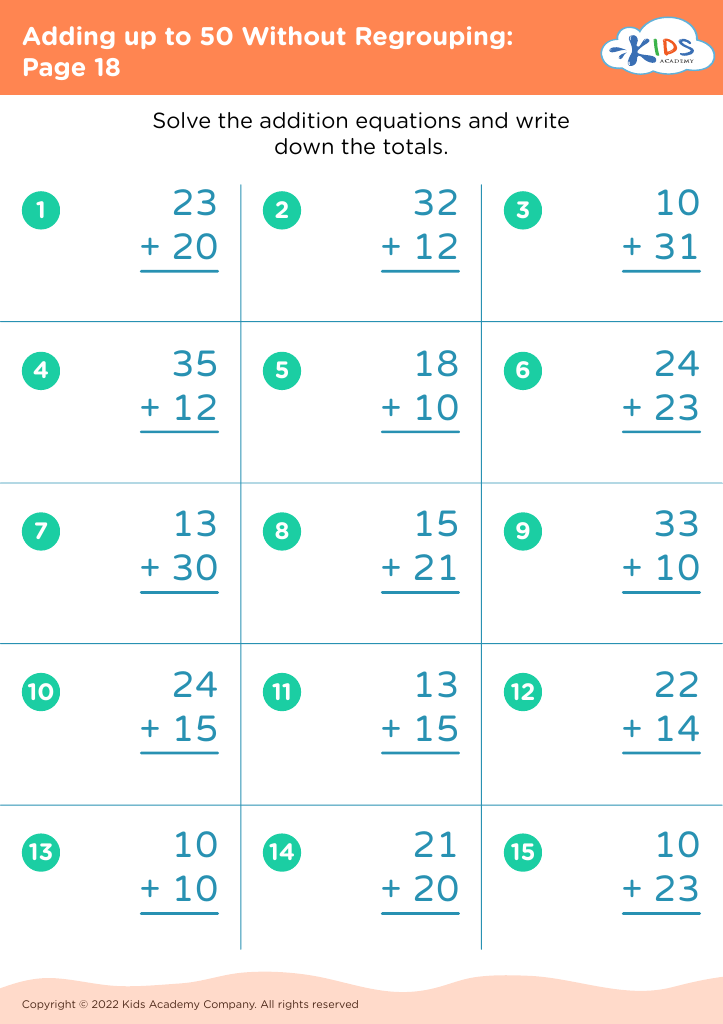
Adding up to 50 Without Regrouping: Page 18
Worksheet
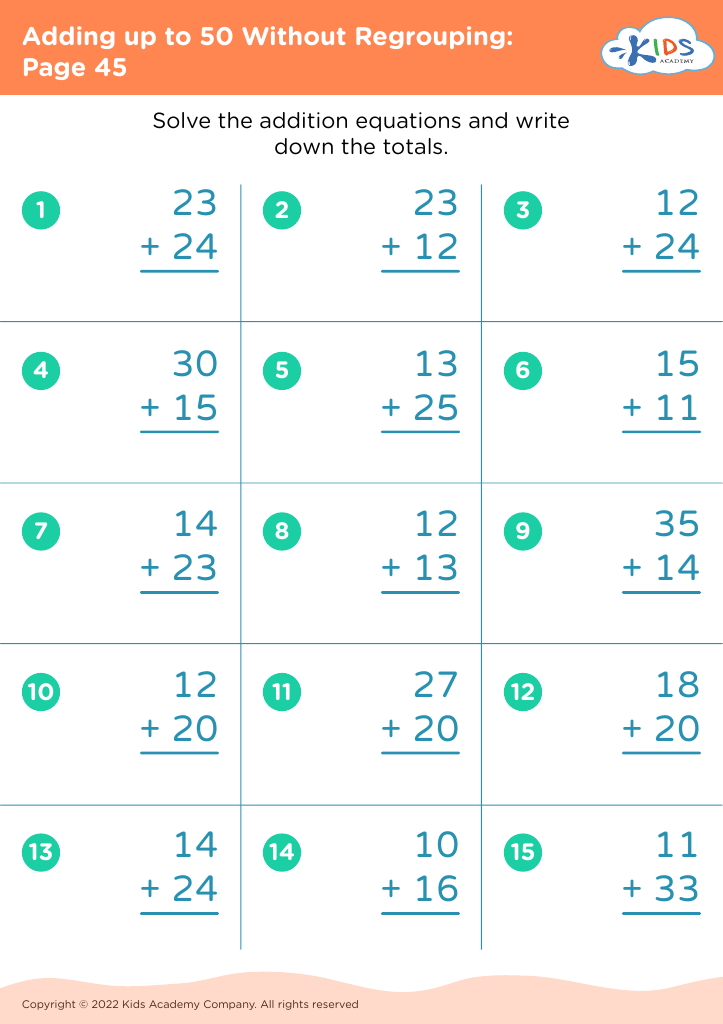
Adding up to 50 Without Regrouping: Page 45
Worksheet
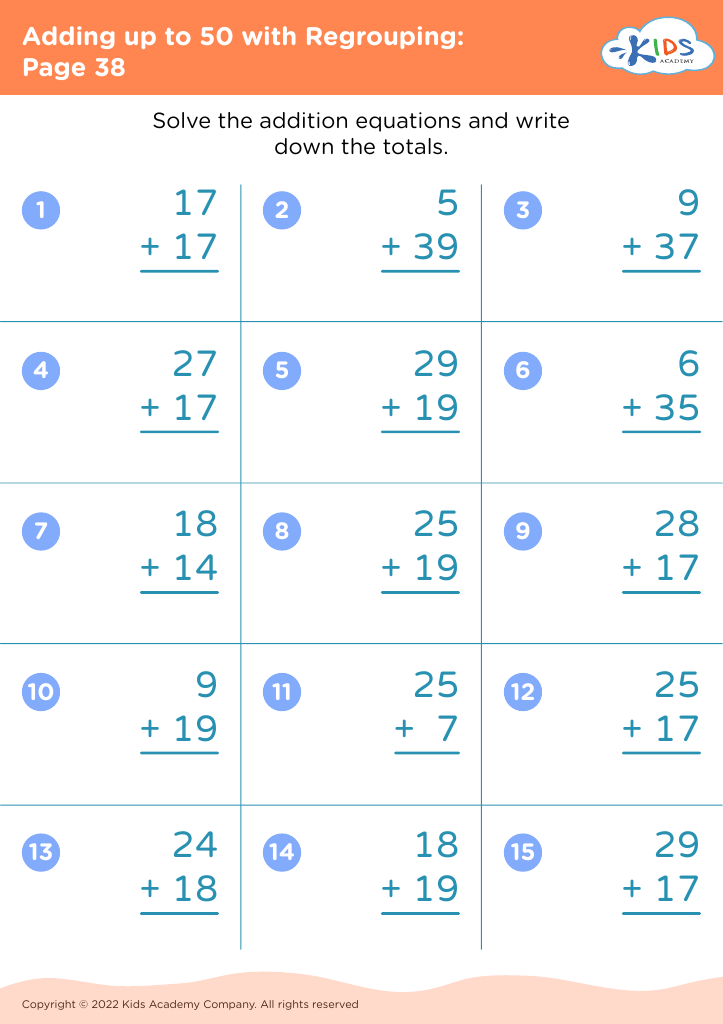
Adding up to 50 with Regrouping: Page 38
Worksheet
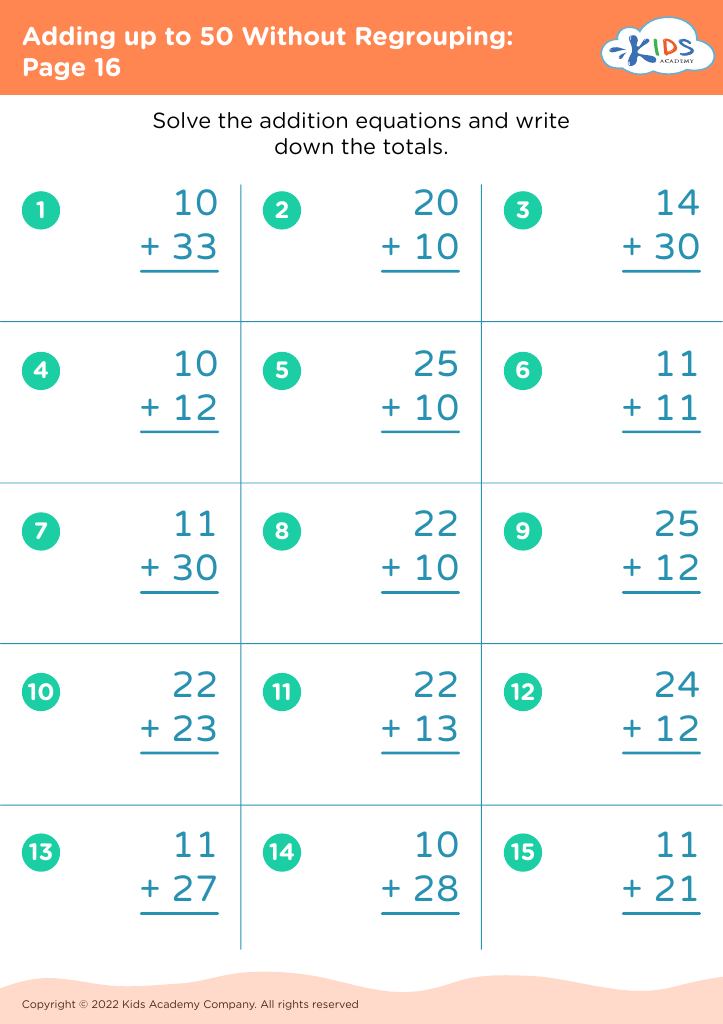
Adding up to 50 Without Regrouping: Page 16
Worksheet
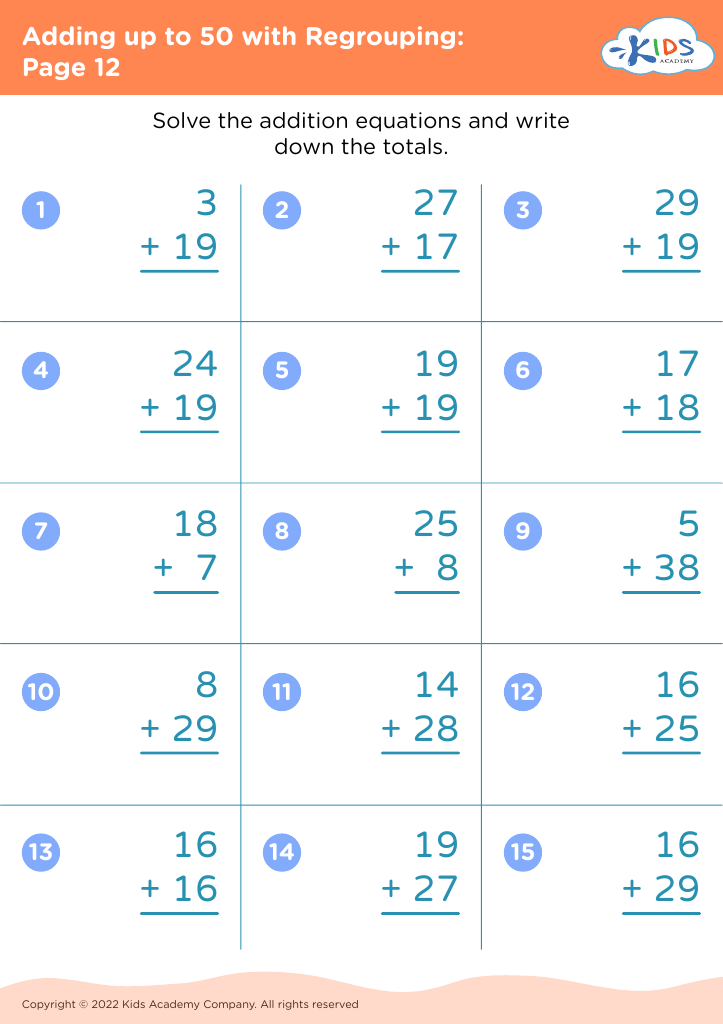
Adding up to 50 with Regrouping: Page 12
Worksheet
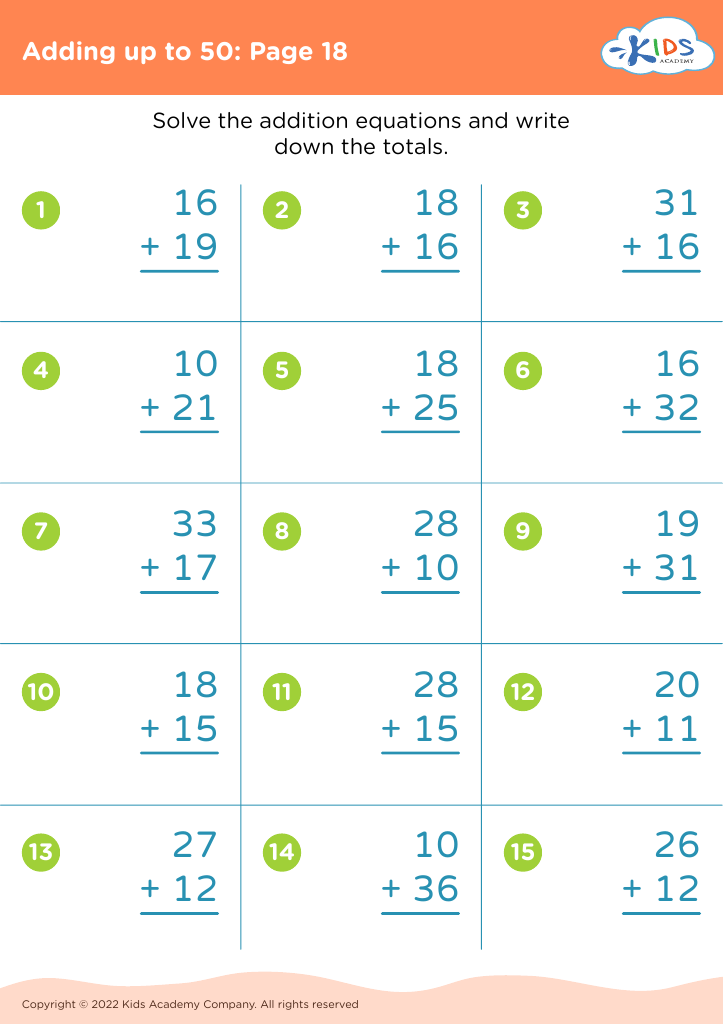
Adding up to 50: Page 18

Adding up to 50: Page 18

Adding up to 50: Page 18
Worksheet
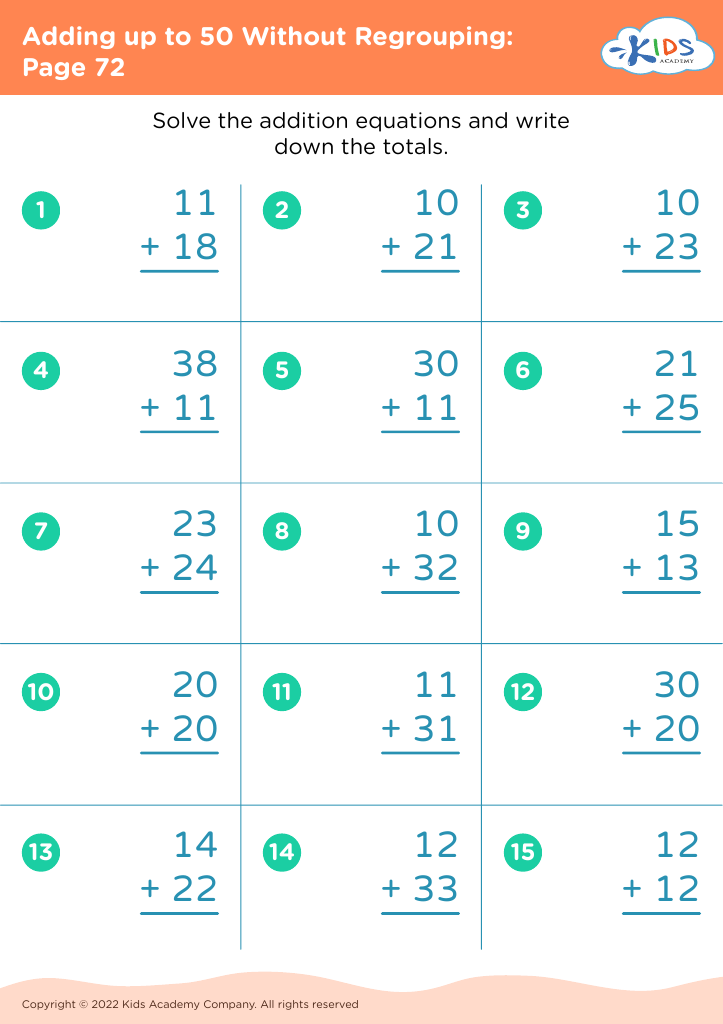
Adding up to 50 Without Regrouping: Page 72
Worksheet
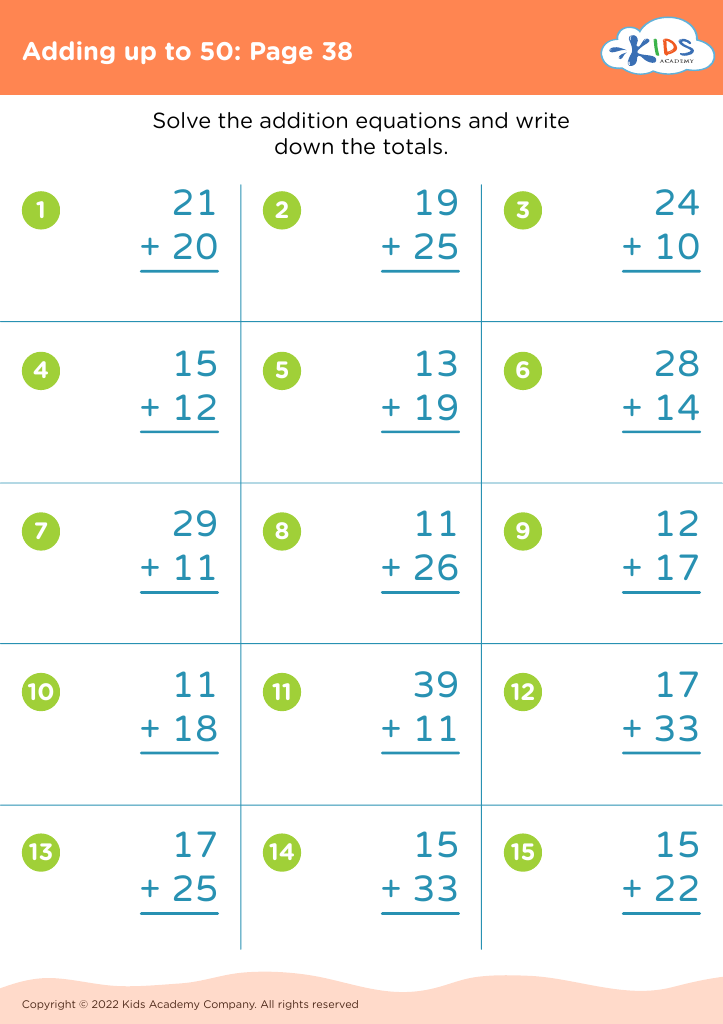
Adding up to 50: Page 38

Adding up to 50: Page 38

Adding up to 50: Page 38
Worksheet
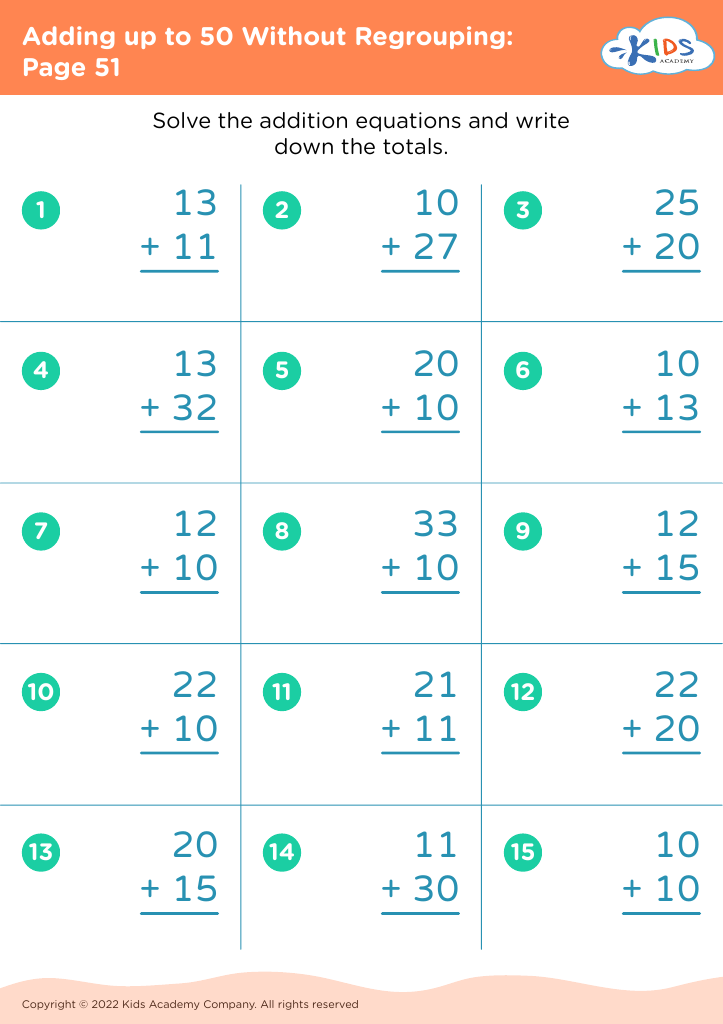
Adding up to 50 Without Regrouping: Page 51
Worksheet
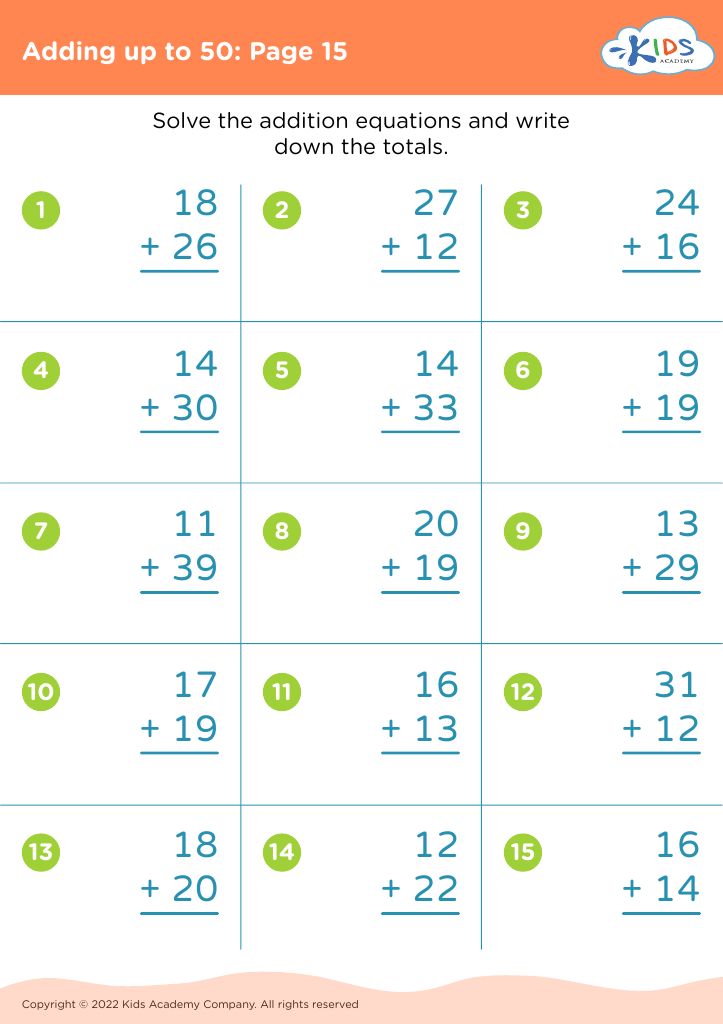
Adding up to 50: Page 15

Adding up to 50: Page 15

Adding up to 50: Page 15
Worksheet
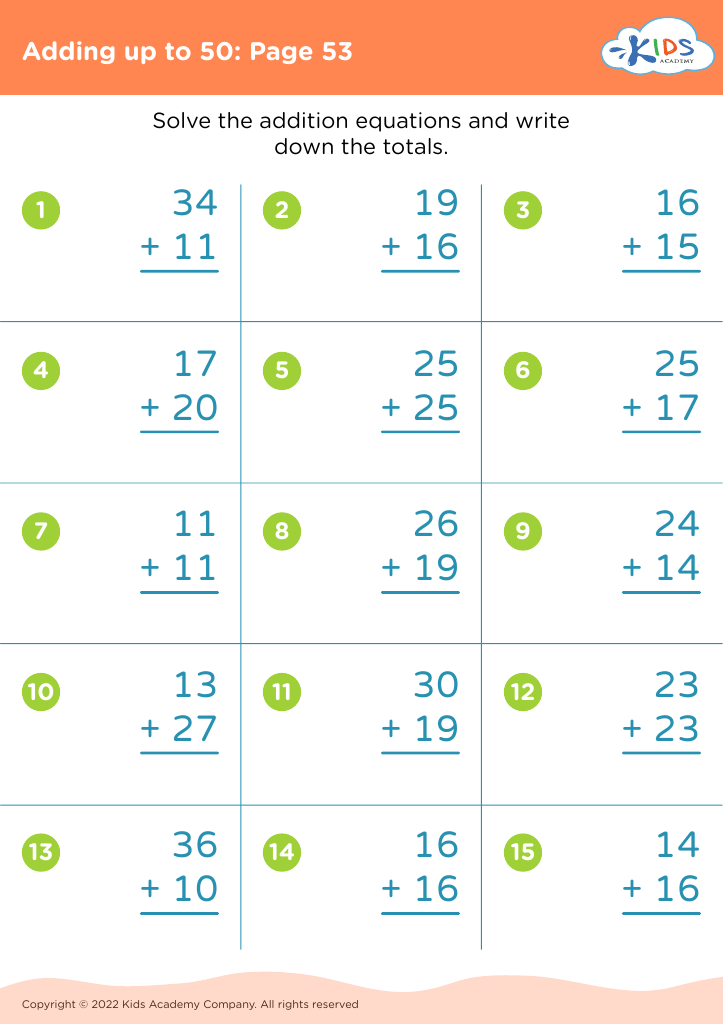
Adding up to 50: Page 53

Adding up to 50: Page 53

Adding up to 50: Page 53
Worksheet


Basic math skills, particularly in Grade 2 where students learn to add up to 50, are crucial for a child's cognitive development and future academic success. Mastering these foundational skills not only empowers students to tackle more complex mathematical concepts later but also enhances critical thinking and problem-solving abilities. When children grasp addition, they build confidence and a positive attitude towards math as a whole.

Furthermore, these early math skills are intertwined with everyday life – from budgeting money to measuring ingredients in cooking. Parents and teachers should care about this aspect, as it lays the groundwork for functional numeracy and real-world application. Additionally, children who excel in basic math often perform better across other subjects, fueling a sense of achievement that can propel their overall educational journey.

Moreover, engaging in activities that reinforce these skills can foster parent-child interaction and make learning enjoyable. It’s an opportunity for parents to support cognitive engagement and help identify their child's strengths or areas needing improvement. Ultimately, focusing on addition skills up to 50 ensures that children are prepared not just for future math challenges, but also for life's practical applications. Investing in these skills today sets the stage for success in the years to come.