Cognitive Development Grade 2 Adding up to 50 Worksheets
4 filtered results
-
From - To
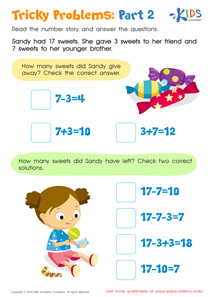
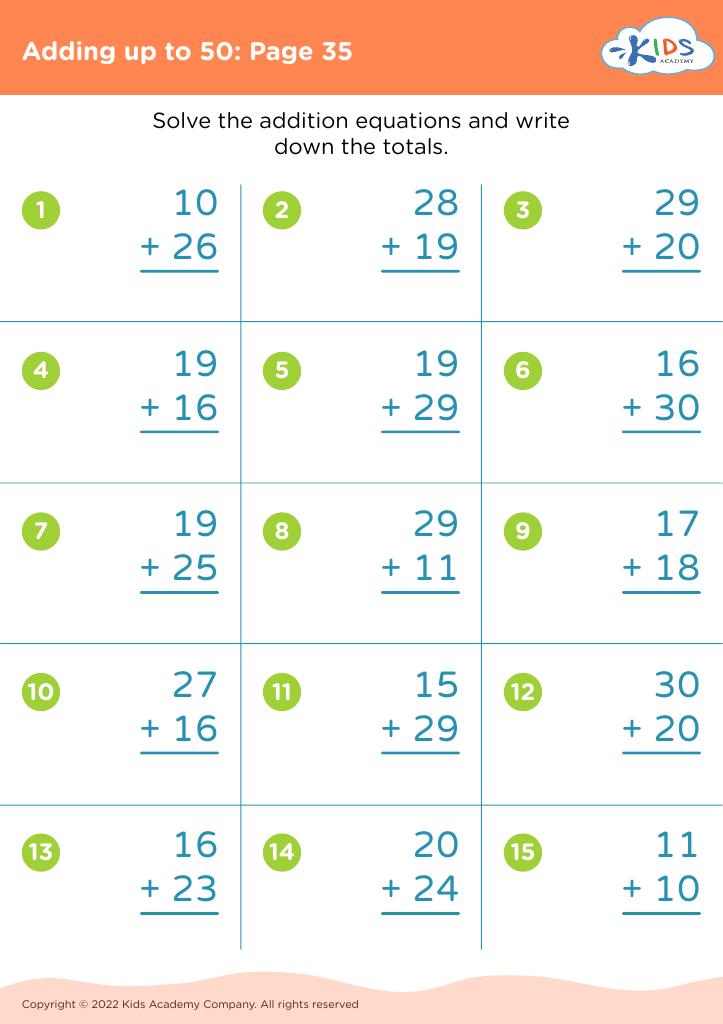
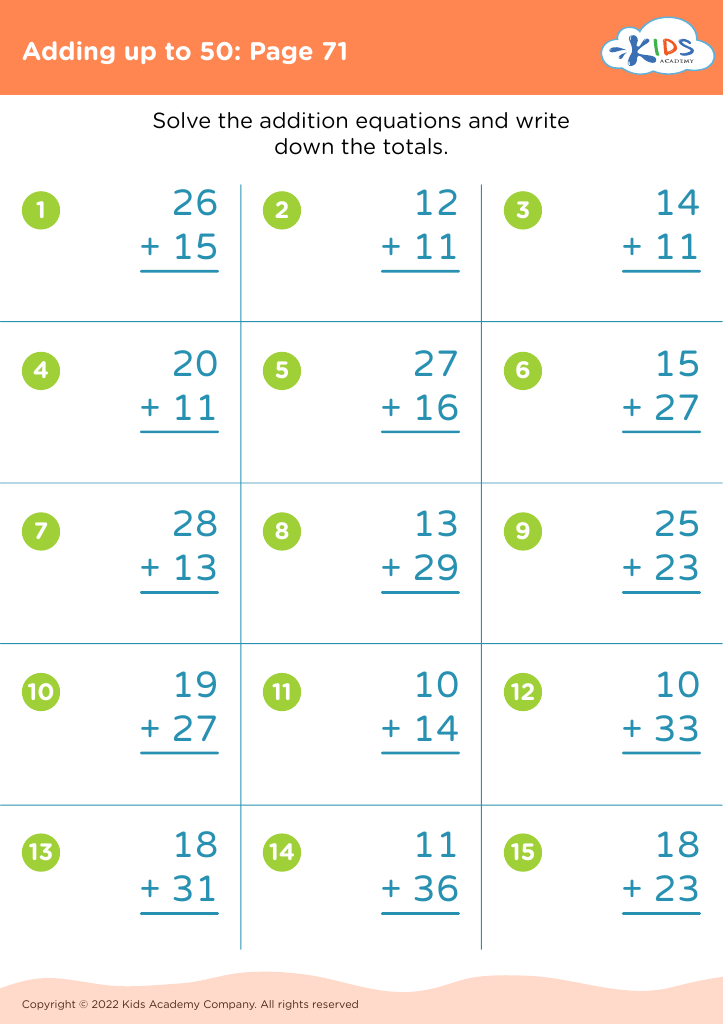
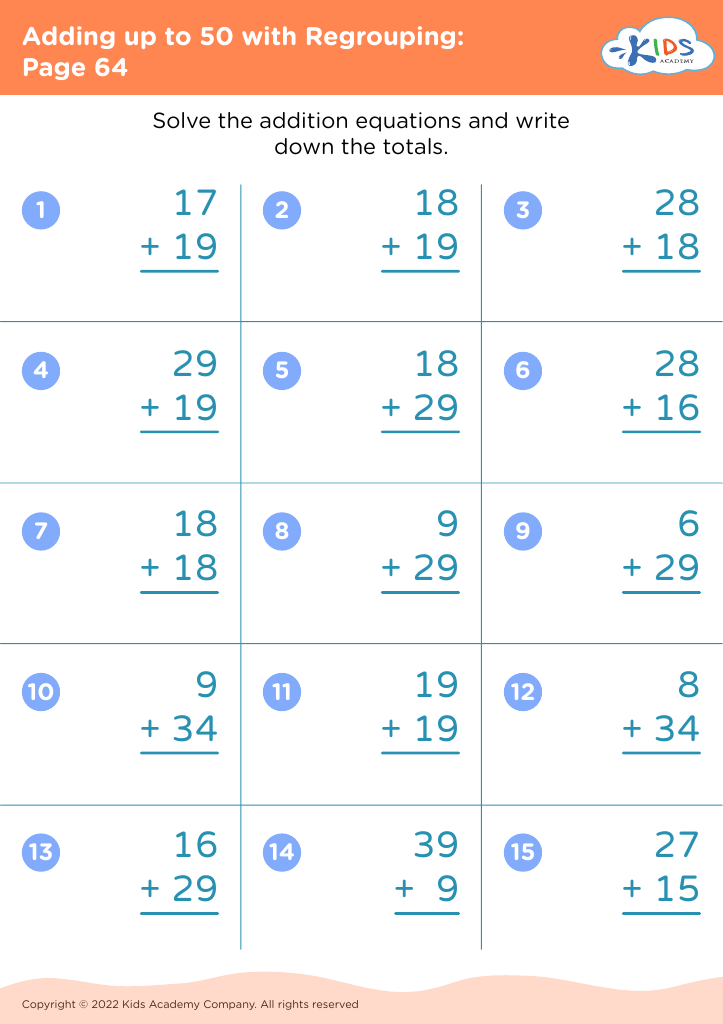
Enhance your second grader's cognitive development with our engaging "Adding Up to 50" worksheets! Designed specifically for Grade 2 students, these thoughtfully crafted activities focus on building essential addition skills while stimulating critical thinking and problem-solving abilities. Each worksheet encourages learners to practice adding numbers up to 50, helping them grasp mathematical concepts, enhance number sense, and improve overall confidence in math. Ideal for both classroom settings and at-home learning, our printable resources offer a fun, effective way for young learners to hone their skills. Start your child’s journey to math mastery today with these captivating worksheets!
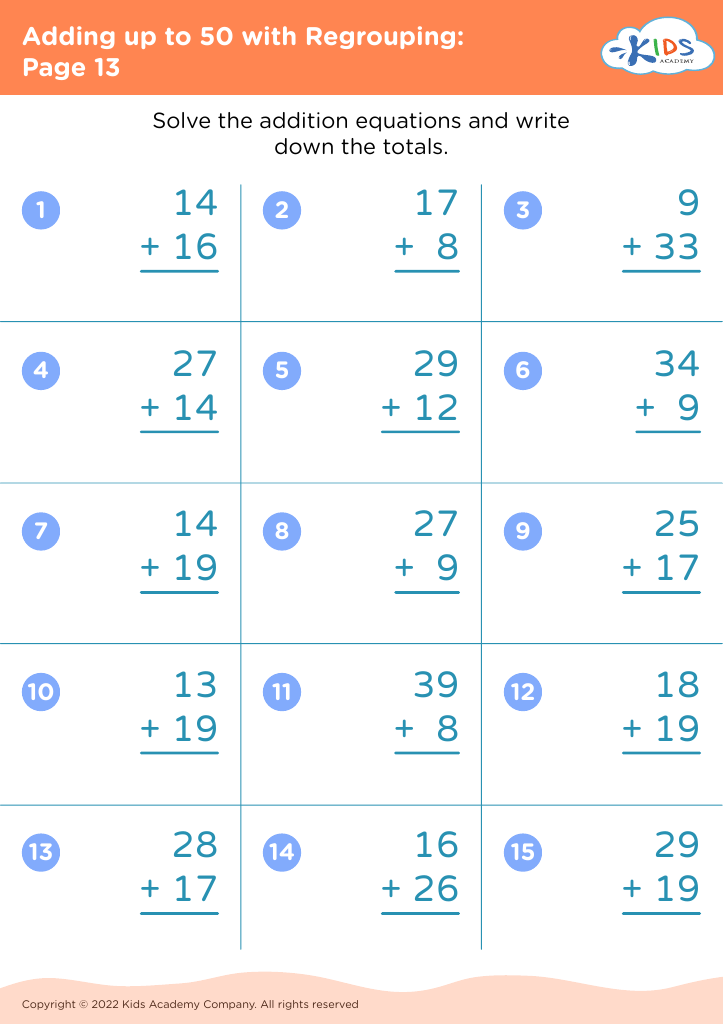


Understanding cognitive development in Grade 2, particularly in the context of adding up to 50, is crucial for parents and teachers. At this stage, children transition from concrete operational thought to more analytical and strategic ways of reasoning. Mastering addition within this range not only solidifies foundational math skills but also boosts confidence, leading to a more positive attitude towards learning.
Cognitive development in mathematics enhances critical thinking abilities. As children engage with numbers, they learn to identify patterns, make predictions, and solve problems, skills that extend beyond math into everyday life. Moreover, the ability to add up to 50 is closely tied to developing numerical fluency. This fluency serves as a prerequisite for future mathematical concepts, making it essential for success in higher grades.
Parents and teachers should actively care about this developmental milestone because they play a crucial role in creating a supportive learning environment. Encouraging practice through games, discussions, and real-life applications can significantly enhance children’s cognitive skills. Furthermore, understanding where a child may struggle allows for timely interventions, ensuring that they do not fall behind. Ultimately, fostering strong addition skills in Grade 2 paves the way for lifelong learning and achievement in mathematics and beyond.